
Review · BAVARIA
Nürnberg: Mörder, Fälscher, Messerstecher
Nuremberg’s darkest stories make a memorable walk. This two-hour German-language tour links the Hangman’s House, witch hunts, medieval prisons, and public punishment across the Old Town. I like its tight route and its focus on real people, especially Franz Schmidt, the city’s best-known executioner.
I also like the way the tour uses familiar sights, including the Hauptmarkt and town hall, to explain less cheerful parts of city life. The main drawback is clear: this is not suitable for people with mobility impairments, and the tour language is German only. Entry to the Hangman’s House, town hall, and medieval dungeons is not included.
Key points to know before booking
- Franz Schmidt gives the tour a human focus: Learn about Nuremberg’s famous hangman and the unusual record he kept.
- The route covers major sights without long walks: Stops include Weinmarkt, town hall, the medieval dungeons, Hauptmarkt, Fleischbrücke, and Schuldturm.
- Crime is tied to everyday city life: Markets, bridges, streets, and civic buildings all become part of the story.
- The tour is conducted in German: You need a good command of German to follow the explanations and ask questions.
- The cost is modest for two hours: At $15 per person, the tour offers a focused introduction to Nuremberg’s justice system and darker past.
- Bring practical clothing: Comfortable shoes and weather-appropriate clothes matter, since the experience takes place outdoors on foot.
Why Nuremberg’s crime history makes a good walking tour
Nuremberg is often introduced through its grand churches, old walls, Christmas market, and role in German history. This tour takes a different route. It asks how the medieval city dealt with crime, punishment, debt, witchcraft, and death.
I like that approach because the subject is not locked inside a museum. You move through the streets where civic power, trade, religion, and punishment once met. The Hauptmarkt was not only a market square, and the town hall was not only a handsome building. Each stop adds another piece to the way Nuremberg governed its people.
The tone is serious, but the route is designed to keep moving. You are not spending two hours in one room listening to a long lecture. The tour shifts from one Old Town landmark to the next, with short walks between stops. That keeps the pace lively and helps you connect the stories to the city around you.
The price is another strength. At $15, this is a low-cost way to add local context to a visit. It is especially useful if you have already seen the headline sights and want a tour with a sharper theme. The value depends on your German ability, though. Since the guide speaks German, limited comprehension would reduce the benefit.
Other history tours people book around Germany:
- Leipzig: City History Canal Sightseeing Tour on a Motorboat
★ 4.7 · 7,671 reviews - Leipzig: 1.5-Hour Historical Walking Tour in German
★ 4.7 · 2,217 reviews - Berlin: 3-Hour World Heritage Cruise to Potsdam
★ 4.5 · 1,569 reviews
Starting at the Hangman’s House
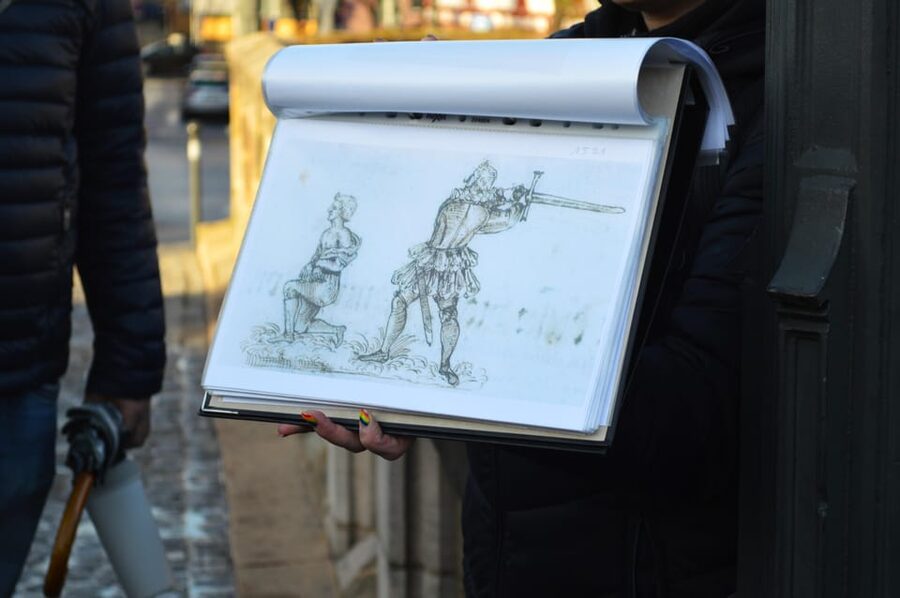
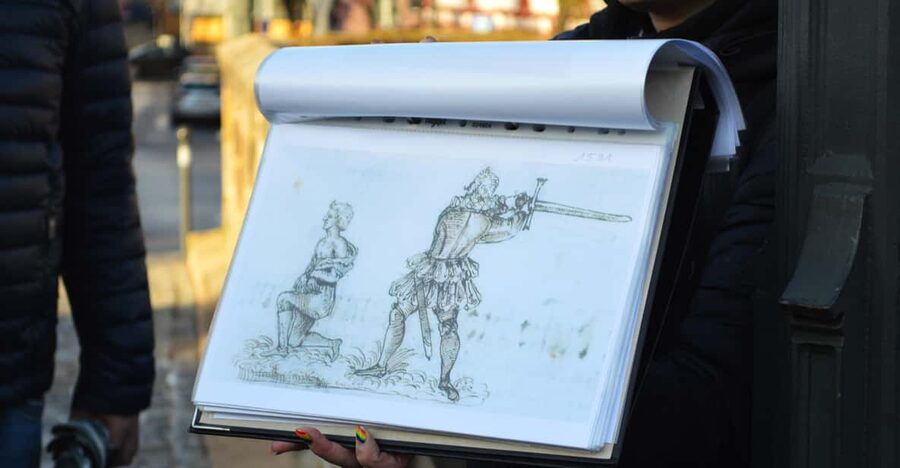
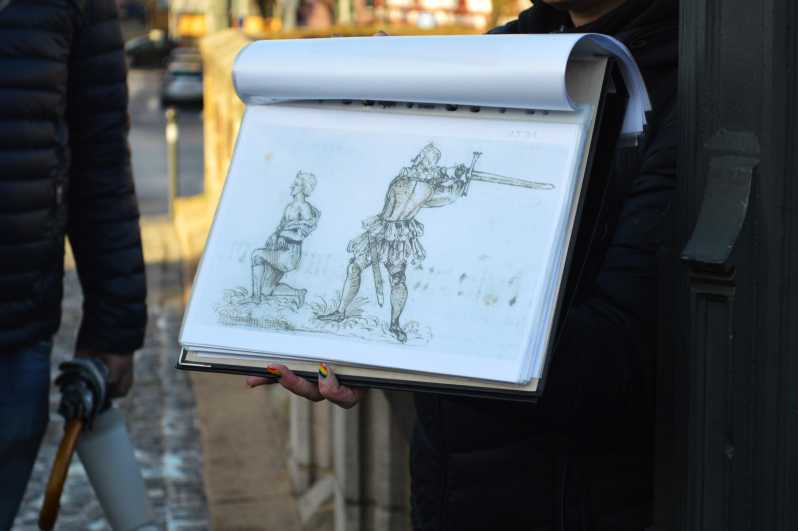
The meeting point is in front of the entrance to the Henkerhaus Museum, also called the Hangman’s House. Look for a guide carrying a picture folder and wearing a green name tag marked Geschichte Für Alle.
The building sets the mood at once. Rather than beginning with a general introduction to Nuremberg, the tour opens with the city’s executioner and the work connected to him. You learn about the house itself and Franz Schmidt, the most famous hangman linked to Nuremberg.
Schmidt is an especially useful figure for understanding medieval and early modern justice. An executioner was feared, but his work was also a formal civic function. His place in society was complicated, and his story gives the tour a human face instead of treating punishment as a list of dates and gruesome facts.
This first stop is also where you should understand the entry arrangement. The walking tour is included, but admission to the Hangman’s House is not. You may learn about the building as part of the guided walk without having museum admission included in the $15 price.
Weinmarkt and the story of witch hunts
From the Hangman’s House, the group walks about four minutes to Weinmarkt. It is a short move, but the subject changes from executioners to witch hunts in Nuremberg.
This section is valuable because witch hunts are often treated as a vague feature of the Middle Ages. Here, the focus is on how the subject affected Nuremberg and how accusations fit into the city’s justice system. You get a clearer sense of how fear, belief, and legal authority could overlap.
I appreciate the use of a public square for this part of the tour. Weinmarkt is not presented as an isolated historical site. It becomes a place to consider how ordinary urban spaces could be connected to investigations, accusations, and punishment.
The tour does not promise a theatrical performance. Its strength is the explanation. One German-language booking described the guide as open and attentive when answering questions, even in rain and darkness. That detail matters because this subject is best handled with care and clarity, not with cheap shock.
Town hall and the machinery of justice
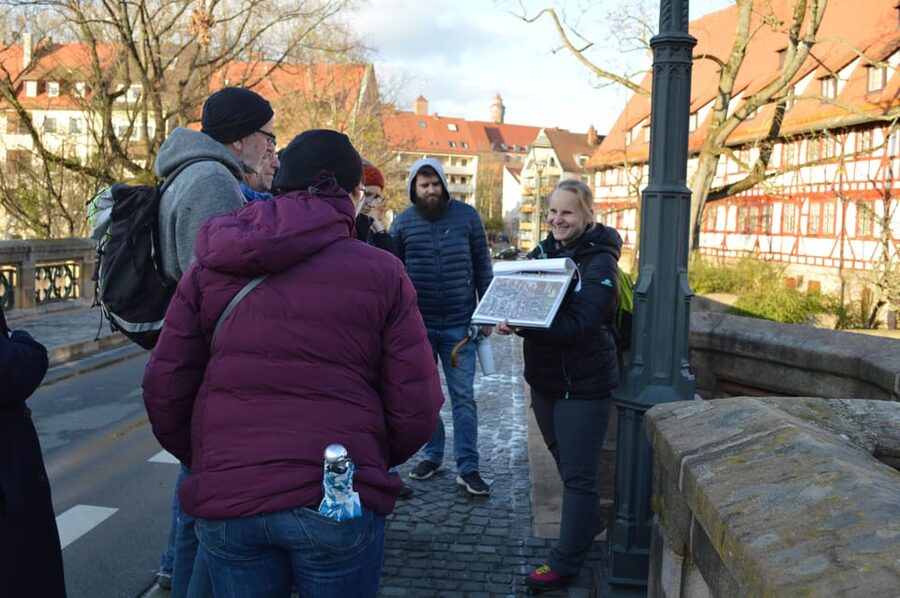
The next walk takes about three minutes to Nuremberg’s Old City Hall. This is where the tour turns toward the civic side of crime and punishment.
The town hall helps explain who made decisions, how justice was administered, and how the city’s authorities fit into everyday life. You are not just hearing about individual crimes. You are looking at the institutions that investigated, judged, and punished people.
Admission to the town hall is not included, so treat this as a guided exterior stop unless you arrange entry separately. That is important when planning your expectations. The tour uses the building as part of the walking route and its historical explanation, but the ticket does not cover going inside.
I like this stop because it adds balance. The Hangman’s House introduces the person who carried out punishment. The town hall helps explain the officials and systems behind it. Together, they show that crime history is also political and administrative history.
Same place, a different slice of the past:
- Heidelberg: Night Watchman Historic Adventure Tour
★ 4.7 · 1,186 reviews - The Local Tour of Hamburg Historic Centre
★ 5.0 · 1,058 reviews - Elbfloren: Historical city tour
★ 4.8 · 929 reviews - Berlin: History of the Third Reich Guided Walking Tour
★ 4.7 · 791 reviews
The medieval Lochgefängnisse
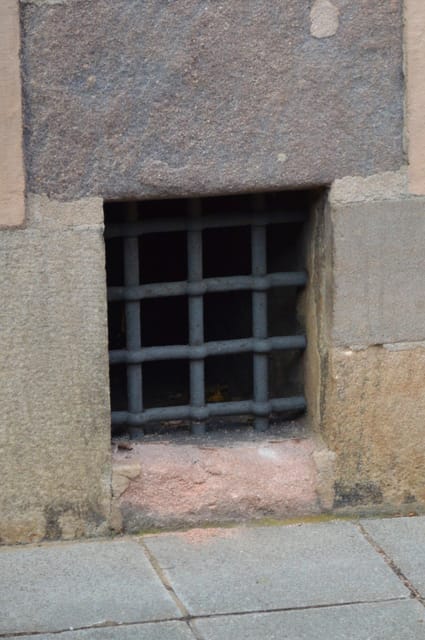
Near the town hall are the Lochgefängnisse, or medieval dungeons. The name refers to the underground prison rooms used to hold inmates.
This is one of the tour’s most distinctive stops. You learn what the dungeons were for and what conditions prisoners faced. The subject is uncomfortable, but it gives the tour a physical sense of confinement that a general talk about medieval law might lack.
Admission to the medieval dungeons is not included. If you want to go inside, check the separate entry arrangements rather than assuming the walking-tour ticket covers it.
The stop also helps you understand the difference between holding prisoners and punishing them. A dungeon was part of a legal process, not simply a place where people disappeared. The guide connects the prison to Nuremberg’s wider justice system, which makes the visit more meaningful than a quick look at old stone rooms.
For some people, this will be the strongest part of the tour. For others, the topic may feel grim. The experience is plainly built for people who want the darker side of city history, not for anyone seeking a light sightseeing stroll.
Hauptmarkt and the darker side of the Christmas market
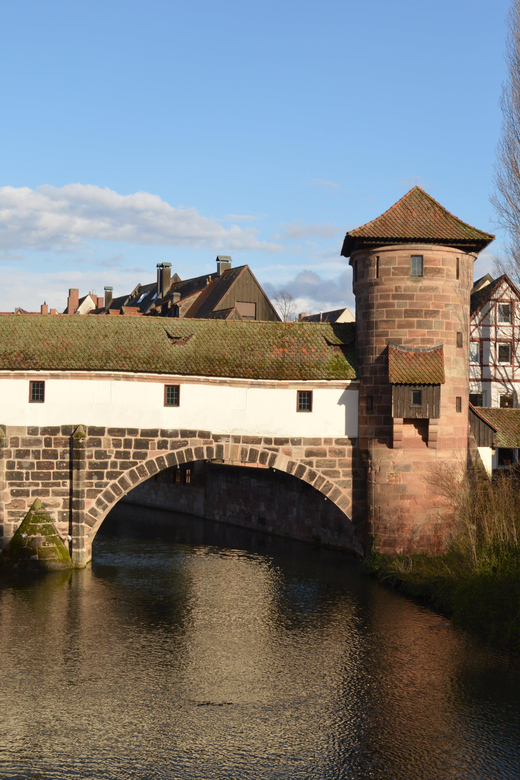
After the dungeons, the route moves only about one minute to the Hauptmarkt, Nuremberg’s famous main market square. In December, this is where the Christkindlesmarkt takes place, making it one of the city’s most recognizable public spaces.
The tour adds an unsettling layer to that familiar setting. You learn how the square related to everyday crime and the death penalty. The contrast is the point. A place now linked with lights, food stalls, and Christmas shopping also had connections to public justice and death.
I find this kind of context more useful than simply collecting another photograph of the square. You see how the meaning of a public space can change over time. The Hauptmarkt was part of daily economic life, but it could also be connected to the display of authority and punishment.
December may make this stop especially atmospheric, but it can also bring crowds and noise. The information provided does not promise a quieter route at any particular time, so keep your expectations practical. The tour is about the historical meaning of the square, not a special Christkindlesmarkt access experience.
Fleischbrücke and medieval corporal punishment
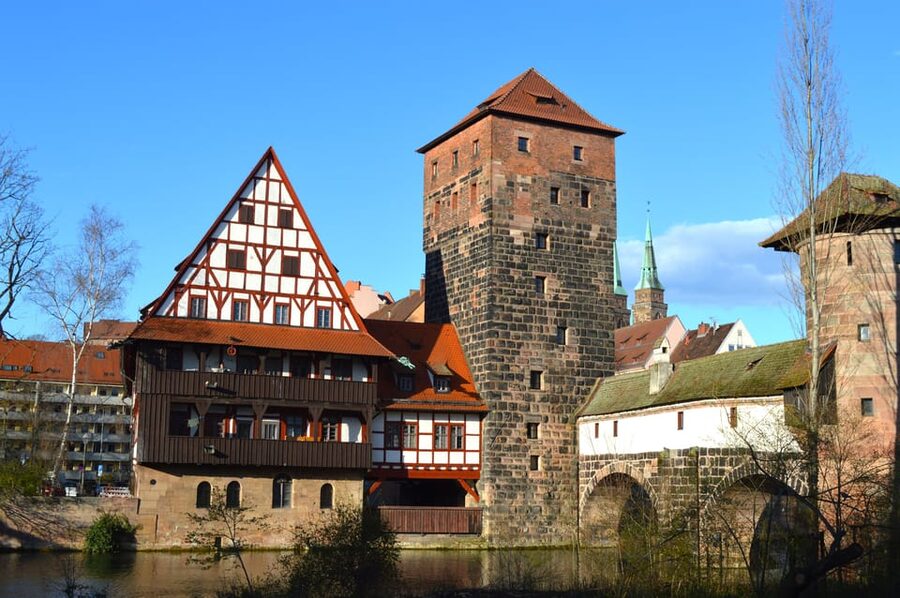
A walk of about two minutes brings you to Fleischbrücke. Here, the subject turns to corporal punishment in the Middle Ages.
This stop broadens the tour beyond executions and imprisonment. Punishment could take different forms, and the consequences were often public. The guide explains how bodily penalties fit into medieval justice and how punishment could be seen by the wider community.
The bridge is a strong location for this topic because it is part of the city’s everyday route rather than a purpose-built museum setting. You keep walking through the Old Town while learning how public spaces once carried legal and social meaning.
This section may be challenging for younger visitors or anyone who prefers a gentle introduction to Nuremberg. The tour title makes its subject plain, and the content includes crime, violence, and death penalty themes. I would choose another walking tour if those topics are likely to make you uncomfortable.
Findelgasse and Peter Henlein
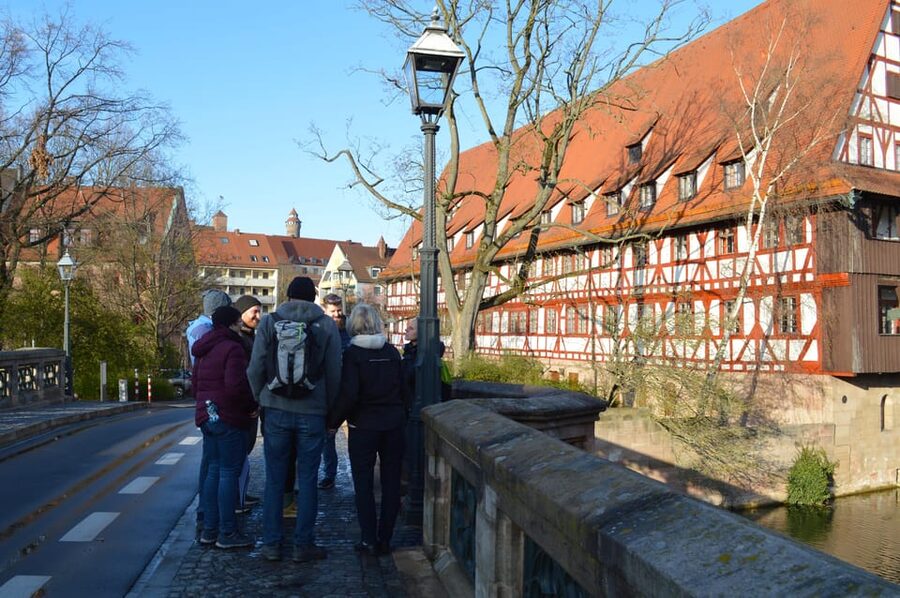
The route continues toward Findelgasse, with about five minutes of walking. Here, the tour takes a brief turn toward the story of Peter Henlein, a famous watchmaker.
At first, a watchmaker may seem unrelated to crime history. That change of subject is useful, though. It reminds you that the tour is not only a procession of punishments. It also looks at a notable person connected to the city and uses the street itself as part of the historical story.
The supplied route places this stop before the final visit to Schuldturm. The information available does not spell out every detail of Henlein’s connection to the crime theme, so you should expect the guide to provide the link during the German-language explanation rather than arrive with a fully developed museum display.
This is also a good example of the tour’s compact design. The longest listed walk is only about five minutes. You spend most of the two hours hearing stories at stops, not marching from one distant neighborhood to another.
Ending at Schuldturm
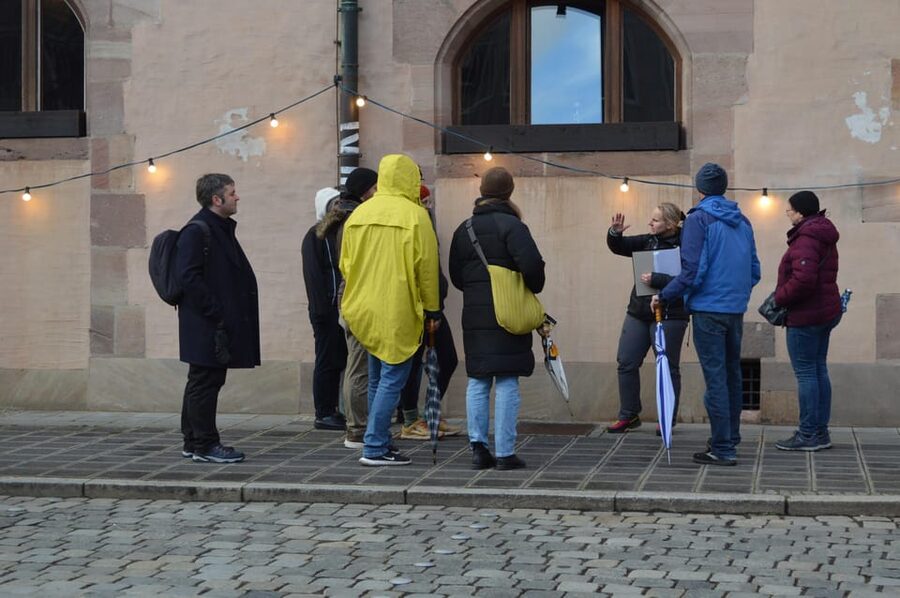
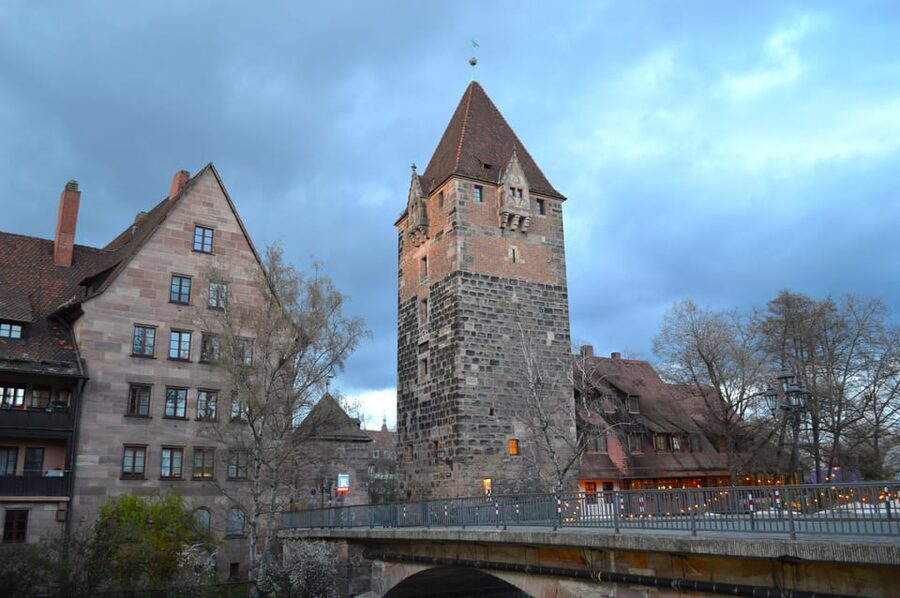
The tour finishes in front of Schuldturm on Vordere Insel Schütt, in central Nuremberg. The final subject is the tower’s purpose and the people held there.
The name points to debt, so this stop adds another kind of offense to the tour’s range. Not every person caught in the justice system was an accused murderer or violent criminal. Debt could also lead to confinement, showing how closely law, money, and social status were connected.
Ending at Schuldturm gives the walk a sensible final note. You have moved from the executioner and witch hunts through civic justice, prisons, public punishment, and the market. The tower brings the subject back to ordinary financial hardship and the penalties that could follow it.
The finish is at Vordere Insel Schütt rather than back at the Hangman’s House. Plan your next stop from there. The route is easy to follow once you know this is a point-to-point walk, not a loop.
Guide quality, pace, and language
The guide is described as a qualified live guide, and the strongest praise focuses on clear storytelling, strong subject knowledge, and careful answers to questions. One German-language description specifically praises a guide who answered questions well and kept the tour enjoyable despite rain and darkness.
That tells me the best part of the experience is likely the human delivery. A subject like medieval justice can become a dry sequence of punishments. A good guide makes the links between places, people, and institutions clear.
The tour lasts two hours. That is enough time for a useful introduction without taking up an entire day. The short walking distances should help maintain the pace, but you still need to remain outdoors and on your feet for the duration.
The only listed language is German. This is not a small detail. If you understand German well, you can ask questions and follow the guide’s explanations. If you do not, the landmarks will still be visible, but the main value of the tour will be lost.
Price, preparation, and who should book
At $15 per person, I consider this good value for a focused two-hour Old Town experience. You are paying for a guided walk led by a qualified guide, not for admission to several museums. The price works best if you want interpretation rather than a long list of included attractions.
Wear comfortable shoes. Weather-appropriate clothing is essential because the experience takes place outside, and the tour can continue in rain or darkness. The walk is not suitable for people with mobility impairments.
I would recommend it to you if you enjoy social history, crime history, medieval law, unusual city stories, and guided walks that move beyond the standard postcard sights. It should also suit anyone who has already seen Nuremberg’s main landmarks and wants to understand them from another angle.
I would skip it if you want an English-language tour, a light family outing, extensive time inside museums, or a broad overview of all Nuremberg history. The subject is narrow, and its material can be grim.
For groups of 10 or more, contact Geschichte Für Alle e.V. by email before booking. If you book through GetYourGuide, the booking confirmation serves as proof of payment, and no separate invoice can be issued.
Should you book Nürnberg: Mörder, Fälscher, Messerstecher?
Book it if you want Nuremberg’s Old Town explained through crime, punishment, and the people caught in the justice system. The route is compact, the price is fair, and the stops include major landmarks that gain new meaning through the guide’s stories.
Skip it if German is not comfortable for you or if you need step-free access. For the right audience, this is a practical, unusual way to spend two hours, with Franz Schmidt, the Lochgefängnisse, the Hauptmarkt, and Schuldturm providing memorable anchors.
FAQ
How long does the Nürnberg crime history tour last?
The tour lasts two hours.
What language is the tour conducted in?
The live tour guide speaks German.
How much does the tour cost?
The listed price is $15 per person.
Where does the tour begin?
Meet in front of the entrance to the Henkerhaus Museum, also known as the Hangman’s House.
How can I identify the guide?
The guide carries a picture folder and wears a green name tag marked Geschichte Für Alle.
Where does the tour end?
The tour ends in front of Schuldturm at Vordere Insel Schütt, 90403 Nürnberg-Mitte, Germany.
Are museum and dungeon admissions included?
No. Entry to the Hangman’s House, town hall, and medieval dungeons is not included.
Can I cancel the booking?
You can cancel up to 24 hours in advance for a full refund. Reserve now and pay later is also available.
Just added around Germany
- Rostock: Guided tour of the historic city center★ 4.5 · 311 reviews
- “Rotes Bier” and “Blaue Zipfel”. A historical-culinary walk★ 4.4 · 190 reviews
- Regensburg: City Highlights Historical Boat Tour★ 4.0 · 259 reviews
- Quedlinburg: Historical Old Town Evening Walking Tour★ 4.5 · 148 reviews
- Quedlinburg UNESCO World Heritage Group Tour (private)★ 4.6 · 32 reviews
- POTSDAM: Old historical town, a walk with a certified guide★ 4.7 · 52 reviews
- Nuremberg:Complete Tour! Castle/Old Town/World War history★ 5.0 · 45 reviews
- Nuremberg: 1.5-Hour Private Tour through Historical Old Town★ 4.8 · 283 reviews
Germany History Tours, compared.
Leipzig: City History Canal Sightseeing Tour on a Motorboat
Read our review →
Leipzig: 1.5-Hour Historical Walking Tour in German
Read our review →

Bamberg: Guided Beer History Tour with Optional Tasting
Read our review →Browse the lists this tour appears in