
Review · KIGALI PROVINCE
Kigali: Guided Art, History, and Food Tour with Moto Ride
Kigali comes into focus quickly. This $25 tour links the Genocide Memorial, Niyo Art Center, Biryogo food street, the city-center sign, and Kimironko Market with a local guide and short moto rides. I like the mix of serious history and everyday life, and I especially like that guide Aline often adjusts the outing to your interests.
The main thing to weigh is transport. Moto rides cost extra, so you need cash, and anyone uneasy on motorcycle taxis may prefer to walk or use another vehicle. The listed stop times also add up to nearly four hours, although the experience is advertised as three hours, so allow some flexibility.
Key points before you book
- Aline is the heart of the tour: She speaks English, French, Swahili, and Kinyarwanda, and her friendly, personal approach is praised again and again.
- The Genocide Memorial sets a serious tone: Expect a thoughtful visit that requires quiet attention and respect.
- Moto taxis make the city feel immediate: You move between districts like a local, but bring cash and be ready for a little road motion.
- Niyo Art Center adds color and context: You see work by Rwandan and African artists, with time to browse art and souvenirs.
- Biryogo and Kimironko show daily Kigali: One stop is about food and drinks, the other about shopping, bargaining, and local trade.
- The $25 price is strong value: The guide, memorial visit, art center, food area, market, and city orientation make this a useful first-day outing, even though food and moto fares are extra.
Starting at the Kigali Genocide Memorial
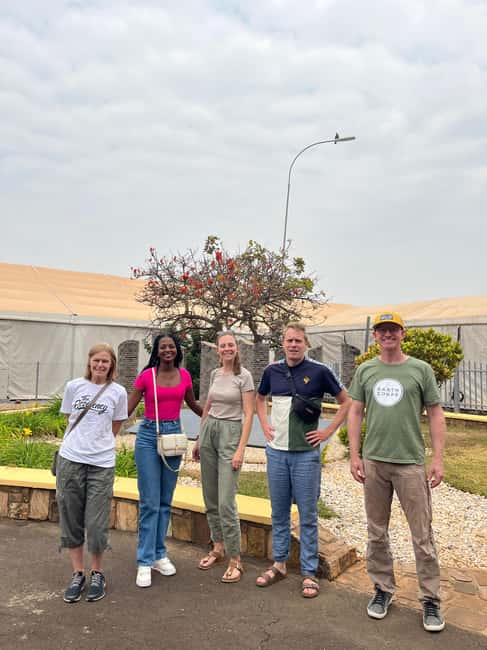
The tour begins at the main entrance of the Kigali Genocide Memorial. Look for the designated check-in room and a guide wearing a uniform with the Tourwithaline logo. The memorial is easy to identify, and the meeting point is more practical than trying to arrange a pickup across town.
Give yourself enough time to arrive calmly. Hotel pickup is not included, so you need to make your own way there. Put your phone number into the booking details so Aline can contact you if needed at the meeting point.
The memorial is not a casual sightseeing stop. It explains the 1994 Genocide against the Tutsi and its effect on Rwanda, Kigali, and families across the country. The visit is listed at about 90 minutes, making it the longest stop and the emotional center of the day.
I consider this a valuable way to begin seeing Kigali. You get historical context before moving into the city’s galleries, food streets, and markets. That order matters. Without it, the later stops can feel like disconnected attractions. With it, you begin to understand why remembrance, rebuilding, community, and national identity matter so much in Rwanda.
An optional audio guide is available at an additional cost. Your live guide can also explain the setting and answer questions, but the memorial deserves your own quiet attention. Wear respectful clothing, avoid smoking, and expect the visit to feel heavy at times. This is not a place to rush through for a few photographs.
Several accounts of the tour praise Aline for explaining the memorial with care and for sharing personal connections to Rwanda’s past. That personal element can make the visit more meaningful, but you should still give yourself space to process what you see and hear.
More Food and History Tours in the world:
- Sevilla Food Tour: Tapas, Wine, History & Traditions
★ 5.0 · 3,468 reviews - Victoria Guided Food and History Tour
★ 5.0 · 2,015 reviews - Gastown Historic Walking Food Tour
★ 5.0 · 1,863 reviews
Rwandan art at Niyo Art Center
The next stop changes the mood without ignoring the country’s story. At Niyo Art Center, you see artwork by Rwandan and African artists. The 20-minute visit is short, but the center gives you a useful look at how artists express identity, memory, daily life, and hope through color and form.
I would not treat this as a full gallery visit. It is more of a focused introduction, especially useful if you have limited time in Kigali. You may find paintings, craft items, and souvenirs, and there is an attached cafe. One particularly useful detail from the tour is the chance to stop for a mango smoothie, which one solo guest singled out as a memorable refreshment.
If art is a major reason for your visit, tell Aline in advance. She has adjusted the outing for art-focused visitors, including taking one person to two galleries instead of one. That flexibility is one of the strongest reasons to book this rather than a fixed bus tour.
The center also helps balance the memorial. Kigali is not only a place of remembrance. It is a living capital with working artists, cafes, shops, and young creative voices. This short stop gives you a glimpse of that present-day energy.
Riding motos through Kigali
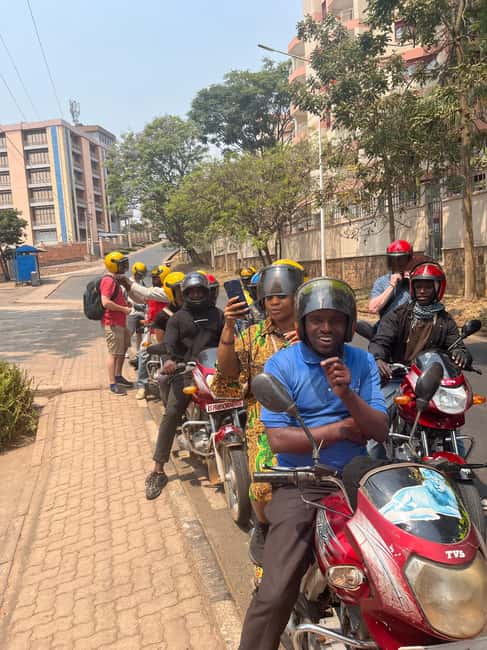
Between stops, you may travel by moto, Rwanda’s motorcycle taxi service. The ride is part of the appeal. You move through the city at street level, see more than you would from inside a car, and get a quick feel for Kigali’s hills and neighborhoods.
Moto transport is not included in the $25 price. Bring cash for the drivers. The tour information specifically warns you about this, and it is worth taking seriously because arriving without small cash can create an awkward pause.
Your comfort level matters. One person with a sports injury chose not to use the motorbikes and still completed the main sightseeing route. Pregnant women, children under five, and wheelchair users are not considered suitable for this activity. If you have a knee, back, balance, or motion concern, tell Aline before the tour so the transport plan is clear.
Aline can also help you understand how motorcycle taxis work. That is useful beyond this three-hour outing. One solo visitor valued learning how to navigate motos and what they cost for the rest of her stay. Another received a voice message in Kinyarwanda to help direct a motorcycle taxi to the meeting point.
You should still follow ordinary safety habits: wear practical clothing, keep your belongings secure, and listen to the guide’s instructions. The ride is not a separate thrill attraction. It is local transport that adds movement and a stronger sense of place.
Eating along Biryogo Car Free Food Street
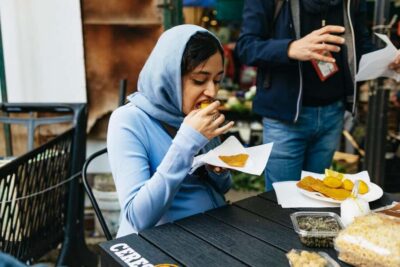
After the art center, the tour heads by moto to Biryogo Car Free Food Street. This is where the day becomes especially social and sensory. You walk through a pedestrian food area, sample local dishes, and try drinks.
Food and drinks are not included unless specifically stated at booking, so keep part of your budget available. The $25 covers the guided experience and listed visits, but not every bite or beverage. That keeps the base price low and lets you choose what appeals to you.
Biryogo is a good place to ask questions. You can ask Aline what you are eating, how it is usually served, and which drinks are common. The tour is not simply about filling time between major sights. It gives you a chance to connect Rwanda’s culture with ordinary meals and neighborhood life.
Expect this stop to feel less formal than the memorial or art center. You may be walking, choosing food, and watching the street around you. If you are a cautious eater, start with a small portion and ask about ingredients. If you enjoy trying local food, this is one of the best-value parts of the outing because you get guidance instead of guessing at an unfamiliar menu.
The food stop is listed at about an hour. That makes it long enough for a proper break, though the total timing may vary. The posted stop lengths add up to roughly three hours and 50 minutes, while the tour description gives a three-hour duration. You should ask for the exact schedule on your chosen day, especially if you have a flight, dinner reservation, or another activity afterward.
More Food Tours in the world:
- Amsterdam Food and Cultural Tour with Tastings
★ 5.0 · 4,315 reviews - Barcelona: Tapas Walking Tour with Food, Wine, and History
★ 4.8 · 4,261 reviews - Madrid Tapas & Taverns Small Group Food & History Tour
★ 5.0 · 2,664 reviews - Historic Ybor City Food Walking Tour
★ 5.0 · 2,210 reviews
Photos at the Kigali city-center sign
After eating, you walk toward the Kigali sign in the city center for photographs. The stop is listed at around 30 minutes, but it is more than a quick picture if you use it as a chance to ask about the central part of town.
This is the lightest stop on the route. It gives you a clear memory of the day and a chance to take photos after the more serious memorial visit. Aline has also been praised for taking good photographs, which is useful if you are traveling alone and want more than a rushed selfie.
Do not expect a major museum or long city-center visit here. The value is practical: you get a recognizable image, a pause between food and market shopping, and a little more orientation to Kigali’s central streets. It also gives the tour a sensible rhythm. The day moves from remembrance to art, food, public space, and commerce.
Shopping at Kimironko Market
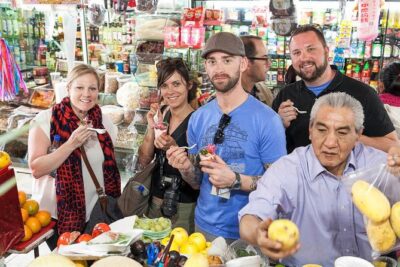
The final stop is Kimironko Local Market, reached by moto. This is where you see Kigali’s everyday commerce in a concentrated setting. Expect colorful goods, produce, local craftsmanship, and plenty to browse.
The market visit is listed at about 30 minutes, so you may need to focus. If you want gifts or fabric, say so early. Aline has helped visitors bargain and find good prices, which can make a real difference if you are unsure how to negotiate politely.
Kimironko is not a polished souvenir shop. That is precisely its value. You get closer to the ordinary buying and selling of Kigali, with the noise, choices, and quick decisions that make a market feel alive. Keep your belongings close, ask before photographing people or stalls, and avoid assuming the first price is final.
The market is also a practical end point. You finish in a place where you can continue shopping or arrange your own ride afterward. Hotel drop-off is not included, so plan your return before the tour ends.
What the guide adds to the day
The most praised part of this experience is Aline’s manner. She is repeatedly described as warm, professional, flexible, and easy to talk with. That matters because the route includes a serious memorial, unfamiliar food, motorcycle transport, and a busy market. A good guide lowers the friction between each part.
Aline’s language skills are another advantage. She offers tours in English, French, Swahili, and Kinyarwanda. That does not guarantee every explanation will be equally detailed in every language, but it gives you a better chance of communicating clearly about food, directions, timing, and transport.
The tour can also feel more personal when the group is small. Several bookings were private or had only a few people, and some visitors were able to spend extra time with Aline when the schedule allowed. Do not assume an extended private day is guaranteed, but you can ask if your interests can be included.
I would book this early in a Kigali stay. It teaches you how the city is arranged, gives you practical experience with motos, and helps you understand the tone of local memorial spaces before you explore alone. It is also a good choice for solo visitors who want company without committing to a large coach group.
Is the $25 price good value?
Yes, with two qualifications: motos and food cost extra, and the duration needs clarification.
For $25, you receive a guide, a memorial visit, an art-center stop, a food-street visit, a city-center photo stop, and a market visit. That is a lot of ground for the price. The real value is not admission alone. It is the local explanation, help with transport, support at the market, and the chance to ask questions throughout the day.
The extra costs are manageable if you plan for them. Bring cash for moto drivers and food or drinks. If you want the optional audio guide at the memorial, budget for that separately.
The main issue is pace. The route covers several parts of Kigali, and the listed time at each stop totals more than the advertised three hours. You may spend less time at some locations, or the actual outing may run longer. Confirm the timing if your day is tightly scheduled.
Who should book this Kigali tour?
I would recommend it to first-time visitors, solo visitors, couples, and small groups who want a broad introduction rather than one single attraction. It is particularly useful if you want history, art, food, shopping, and city orientation in one outing.
It suits people who enjoy walking and do not mind short moto rides. Comfortable shoes, water, sunscreen, and a camera are sensible. You should also be ready for the memorial to be emotionally difficult.
I would choose another format if you need wheelchair access, are pregnant, are traveling with a child under five, or strongly dislike motorcycle taxis. You can ask about walking alternatives, but the advertised experience is built around moto transport and is not suitable for every visitor.
FAQ
Where does the tour start?
It starts at the main entrance of the Kigali Genocide Memorial. Look for the designated check-in room and a guide wearing a uniform with the Tourwithaline logo.
Where does the tour finish?
The tour finishes at Kimironko Local Market. Hotel pickup and drop-off are not included.
Are moto rides included in the $25 price?
No. You need to bring cash to pay moto drivers separately.
Are food and drinks included?
No. Meals and drinks are not included unless specifically stated at booking. Bring extra money if you want to eat or buy drinks at Biryogo Car Free Food Street.
Which languages are available?
The live guide is available in English, French, Swahili, and Kinyarwanda.
What should I bring?
Bring comfortable walking shoes, water, sunscreen, a camera, and cash. Smoking is not allowed, and you should behave respectfully at the Genocide Memorial.
Should you book it?
Book it if you want a personal first look at Kigali and like your sightseeing mixed with real city life. Aline’s warmth, language skills, help with motos, and willingness to tailor the route make this more than a checklist of stops.
Skip it if you need a perfectly timed three-hour schedule, cannot use motorcycle taxis, or want a tour focused only on museums and formal sights. For most first-time visitors who can handle the emotional weight of the memorial and the extra cash costs, this is a strong introduction to Kigali for $25.
Just added around the world
- The Queenstown Story @ Cobh Heritage Centre , Great Stories of Emigration.★ 4.5 · 181 reviews
- Visit 16 Sites Key Historical Sites And Experience Cobh Rebel Tours★ 5.0 · 167 reviews
- Historical Bicycle Tour of Dunedin★ 5.0 · 44 reviews
- Cincy Brunch History and Streetcar Tour with Riverside Food Tours★ 5.0 · 108 reviews
- 2.5 Hour Kayaking with Manatee and History Tour in Tarpon Springs★ 5.0 · 24 reviews
- Private Tour in Chichen Itza Official History Guide★ 5.0 · 36 reviews
- Dazu Ancient Rock Carvings Private Tour Extension★ 5.0 · 24 reviews
- Chicago River Architecture Tour Aboard a Historic Yacht★ 5.0 · 45 reviews
Food & History Tours, compared.
Sevilla Food Tour: Tapas, Wine, History & Traditions
Read our review →


Dublin Historical Centre Food Tour with 8 Food Tastings & Drinks
Read our review →
The Great Indian Food Tour: Old Delhi Food and Heritage Walk
Read our review →
Browse the lists this tour appears in