
Review · QUEBEC CITY
Historical Lower Town & Neighborhoods Bike Tour: Is It Worth 5 Stars?
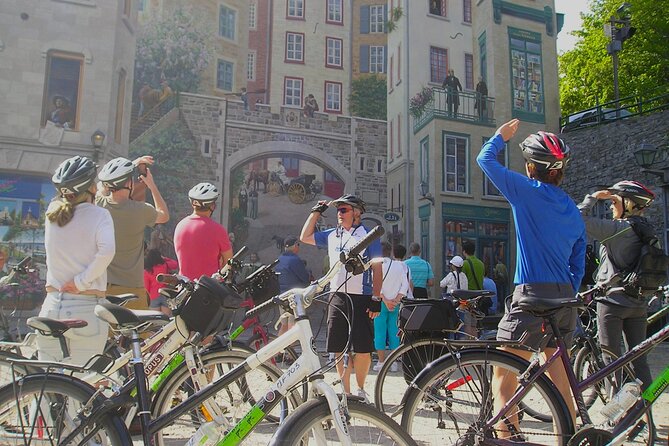
Quebec City reveals itself best at bike speed. This three-hour ride combines Place-Royale and Petit Champlain with quieter streets, river paths, and the Cartier-Brébeuf National Historic Site. I especially like the small maximum group of eight and the chance to reach parts of the city that are easy to miss on foot. The ride is mostly flat and bike-friendly, but you should be ready to pedal about eight miles on your own.
I also like the mix of history and everyday Quebec life: fortified Old Quebec, the Old Port, a farmers market, and the green St. Charles River trail all fit into one outing. Guides such as Guy, Annabelle, Raymond, Luc, and Simon have earned praise for clear storytelling and flexible pacing. The main caution is cost: at $138.94 per person, this is not a cheap city tour, and an e-bike costs extra.
Key points to know before you book
- Small groups make a difference: The tour caps participation at eight people, allowing guides to adjust the pace and answer questions.
- You ride beyond the postcard center: The route includes Place-Royale, Petit Champlain, the Old Port, Limoilou, the St. Charles River, and a local market.
- The terrain is mostly manageable: Much of the route uses flat streets and bike paths, though you still need to ride independently for about eight miles.
- History comes from several angles: You hear about French settlement, Quebec architecture, the river, and modern neighborhood life rather than only seeing major monuments.
- The farmers market adds local flavor: Le Grand Marché de Québec is a 20-minute stop with producers, bakeries, artisans, and snacks.
- The e-bike requires planning: Riders must be at least 18, and the bike shop needs advance notice to prepare the electric bike.
Starting in Lower Town, where the ride feels right
You meet your guide at the bike shop at 285 QC-136 in Old Quebec’s Lower Town. The tour begins with a bike and helmet fitting, a short safety briefing, and a chance to settle your handlebars and seat before leaving.
That first step matters. A poorly fitted bike can turn three pleasant hours into a battle with your knees, hands, or back. Take a moment to speak up if the saddle feels wrong. You receive a small handlebar bag for personal items, plus water and snacks, so you do not need to carry a full day pack.
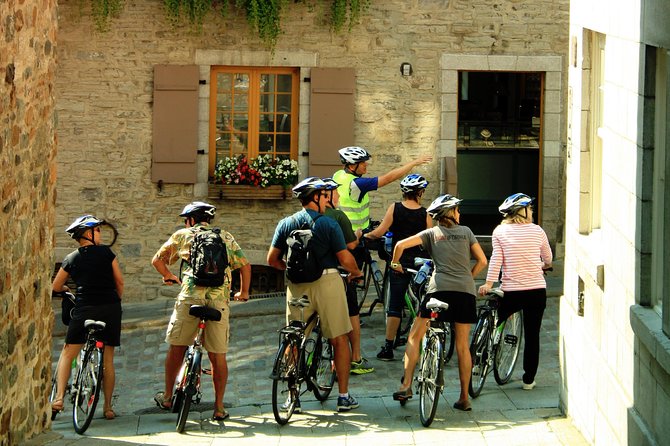
The tour uses a maximum of eight participants. That is a useful size for city cycling. You are not buried in a long line of riders, and the guide can keep an eye on less confident cyclists. Several outings have also been adjusted for people who were slower than the rest of the group, which is reassuring if you ride only now and then.
Children must be able to ride by themselves for roughly eight miles. Children ages five to seven can use a trail-a-bike pulled by an adult. The electric bike option is limited to riders at least 18 years old and carries an additional charge, reported as $30. Contact the shop ahead of time if you need one, since the bike must be configured before departure.
More History Bike, Segway and Tuk-Tuk Tours in Canada:
- Guided Bike Tour on Historical Kettle Valley Railway at Myra Canyon & Wine Tour
★ 5.0 · 19 reviews - Historical Singapore Bike Tour on Full-Sized Bicycles
★ 5.0 · 1,421 reviews - Charlotte’s Ultimate Southern Charm Historical City Cart Tour
★ 5.0 · 1,347 reviews
Place de la FAO and the feel of Lower Town
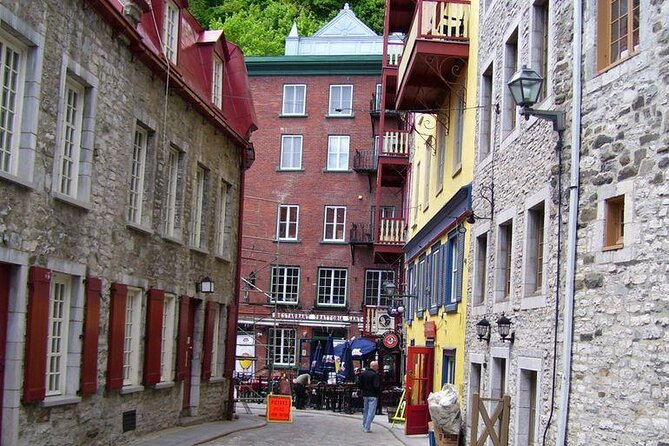
The opening stretch takes you through narrow streets lined with the typical architecture of Old Quebec. This is a good warm-up because you start by seeing how Lower Town works as a neighborhood, not just as a collection of famous buildings.
Your guide can point out details that disappear when you walk quickly toward the main sights: the scale of the streets, the stone facades, and the way the old district meets newer parts of the city. The stop at Place de la FAO is brief, about five minutes, but it helps set the scene before the more concentrated history at Place-Royale.
Cycling gives you a wider view than walking while avoiding the sluggish pace of a bus. You can cover more ground, yet still stop often enough to listen. That balance is one of the tour’s best features.
Place-Royale, the first French settlement
Place-Royale is the historical heart of the route. It marks the first permanent French settlement in North America, and the surrounding buildings make the history feel physical rather than abstract.
The guide discusses the Mural of Quebecers and Notre-Dame-des-Victoires, the oldest church in Quebec City. You have about ten minutes here, enough to look closely, hear the main story, and take photographs without turning the stop into a long lecture.
Notre-Dame-des-Victoires is especially important because it helps explain the age and character of the square. Place-Royale is compact, so a guide adds real value by sorting out what you are seeing and why it matters. Without context, the stone buildings can blend into one handsome scene. With context, you begin to read the square as a record of early French settlement and later city life.
The cobblestones and narrow streets also require care. You are not racing through this part of the ride. Keep your speed controlled, listen to the guide’s instructions, and expect a more stop-and-start rhythm than on the river path.
Petit Champlain and the old commercial district
From Place-Royale, you continue through Quartier Petit Champlain, known for its stone buildings, boutiques, cafés, and restaurants. It is described as the oldest commercial district in North America, and the setting gives you a strong sense of how trade and daily life developed around Lower Town.
This is one of the prettiest parts of the outing, but it is also the most visitor-focused. You will see shops and restaurants rather than a quiet residential street. The benefit of arriving by bike is that you can enjoy the architecture and then move on before spending the whole day in the shopping zone.
The ride does not treat Petit Champlain as the entire city. That is important. Many first-time visitors remain close to the best-known streets and leave with a narrow picture of Quebec City. This route uses Petit Champlain as a starting point, then takes you toward parks, river paths, and neighborhoods with a different pace.
More Bike Tours in Canada:
- Barcelona: 2.5-Hour Bike or E-Bike Historical Tour
★ 4.5 · 1,262 reviews - Asheville Historic Downtown Guided Electric Bike Tour with Scenic Views
★ 5.0 · 1,234 reviews - Historic Athens: Small Group Electric Bike Tour
★ 4.9 · 966 reviews - Bordeaux: Historic Center & Chartrons District Bike Tour
★ 4.8 · 709 reviews
The Old Port and views toward the St. Lawrence
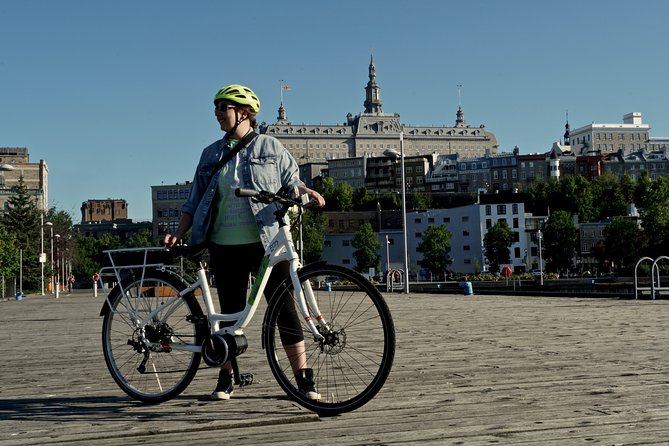
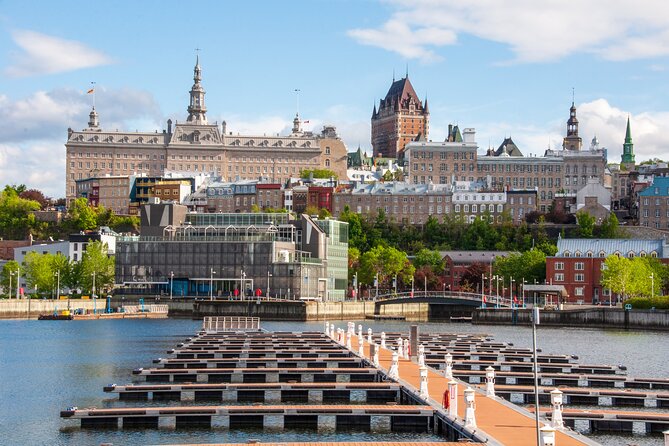
The waterfront stop at the Old Port lasts about five minutes. It offers views of the St. Lawrence River, Château Frontenac, and the fortified walls of Old Quebec.
This short pause is well placed. After the close streets of Lower Town, the river opens the view and helps you understand Quebec City’s position on the water. You can also connect the buildings above you with the working waterfront below.
The nearby Musée de la Civilisation is Quebec City’s most popular museum, and the route passes close to it. The tour does not include museum admission or a museum visit, so treat this as useful orientation rather than a substitute for going inside. If you want to visit, save it for another part of your schedule.
The Old Port also gives you a chance to judge the city’s vertical layout. Quebec City has hills, stairs, and elevated viewpoints, but this ride focuses on the lower streets and paths. That makes the route less punishing than a tour built around constant climbing.
Along the St. Charles River, the tour’s best change of pace
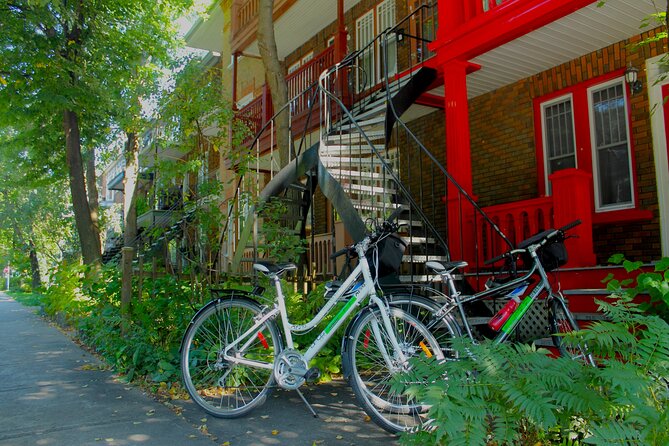
The ride becomes more relaxed as you reach the St. Charles River bike trail. This green corridor offers an oasis close to downtown and leads toward surrounding neighborhoods.
I like this section because it changes the character of the tour. Instead of looking up at old facades or pausing beside churches, you are riding beside open greenery and water. The path also gives you a break from cobblestones and crowded streets.
Several guides have adjusted the speed for riders with different abilities. That matters here, where the group can enjoy the trail without treating it like a race. Some outings have included only two or three people, creating an almost private feel. Even with a full group of eight, the small format should make it easier to stay together.
The route continues to the Cartier-Brébeuf National Historic Site, a city park on the river’s north shore in the Limoilou district. Here you learn about the arrival of French explorers and see a part of Quebec that many visitors never reach.
The stop is brief, about five minutes, but its value comes from location. You are not only hearing about exploration in a historic square. You are standing in a park connected to the river corridor that helped shape movement through the region.
Le Grand Marché de Québec and a taste of local life
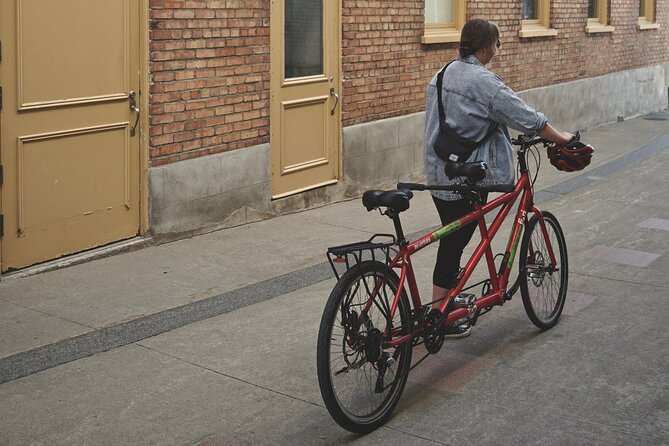
The 20-minute stop at Le Grand Marché de Québec gives the tour its most everyday moment. Your guide introduces you to local flavors, producers, bakeries, and artisans.
This is more than a quick snack break. A market shows you what people in the region make, sell, and eat now. It also gives the tour a welcome change from monuments and dates. You might find local products to take home, and one family outing included a frozen strawberry drink.
The market stop is also practical. You can browse without committing to a separate market visit, and the supplied snacks help keep your energy up. Still, 20 minutes is not enough for a leisurely food expedition. If you love markets, you may want to return later with more time.
How the guides shape the experience
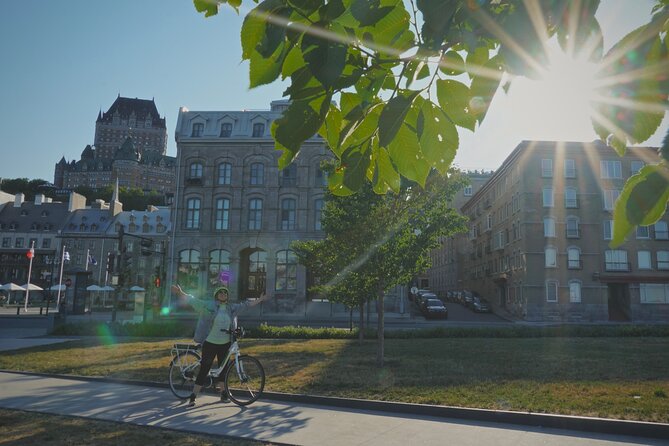
The route is fixed enough to cover the main sights, but the guide seems to be the key variable. Guy is praised for history, humor, and a comfortable pace. Annabelle is known for strong enthusiasm and a real interest in the city. Raymond, Luc, Simon, Yves, Uli, Denis, Denny, Robert, Barry, and Mark have also led outings, with particular praise for their friendliness, safety instructions, local knowledge, and ability to accommodate different riders.
The strongest pattern is not simply that guides know facts. They explain the city while keeping an eye on the group. Simon and his colleague helped a slower rider without making the situation uncomfortable. Uli paid close attention to a family with children. Guy changed the route or pace when someone was not a regular cyclist.
There is one useful warning in the feedback: one rider found a guide a little slow with the history and wished the group had moved faster in cold weather. That is a fair possibility on any history tour. A guide who gives careful explanations may feel too slow if you prefer constant motion, especially on a chilly day.
Guides also offer personal recommendations. Simon suggested the La Barbarie microbrewery to one rider, a reminder that the best local advice often comes during a relaxed small-group outing rather than from a printed list.
Price, pace, and who gets good value
At $138.94 per person, the tour costs more than simply renting a bicycle. You are paying for the bike, helmet, water, snacks, guide, route planning, and three hours of interpretation.
The value is strongest if you have limited time in Quebec City and want an overview that reaches beyond the central streets. You cover historic Lower Town, the waterfront, Petit Champlain, a river trail, Limoilou, Cartier-Brébeuf, and a farmers market in one morning or afternoon. Doing all of that independently would require route planning and a separate bike rental.
The price is harder to justify if you already know Quebec City, own a bike, or prefer to linger at each site. The tour gives you an introduction, not unlimited time. The market, Place-Royale, and Old Port stops are short, and the museum is only passed nearby.
You also need to account for the e-bike surcharge if hills or distance concern you. Regular bikes have been described as easy to ride, and the route is mostly flat, but the total distance still matters. This is not a short sightseeing loop around one square.
Weather, cancellations, and practical planning
The experience requires good weather. If poor weather cancels it, you receive the choice of another date or a full refund. That policy is helpful in Quebec City, where rain, wind, and cold can quickly change the feel of a bicycle outing.
You can cancel for a full refund up to 24 hours before the local start time. Changes or cancellations inside that window are not accepted and are not refunded.
The activity ends back at the meeting point, with no hotel pickup or drop-off. The start is near public transportation, and the meeting point is in Lower Town, making it useful for people already visiting Old Quebec or arriving from the cruise area. Confirmation normally arrives when you book, but bookings made within 12 hours of departure are confirmed as soon as possible, subject to availability.
Should you book the Lower Town bike tour?
I would choose this tour if you want history, movement, and city orientation in one outing. It suits couples, families with children who can ride, friends, and anyone who wants to see more than the most photographed streets. The small group, flexible guides, and river trail are the strongest reasons to book.
Think twice if you dislike cycling, need long visits at museums and churches, or expect a completely effortless ride. You must pedal independently for about eight miles, and weather can affect the day.
For most first visits, the timing is excellent. Book it early in your stay so you can use the guide’s recommendations for later meals, neighborhoods, and sights. If you need an e-bike, arrange it before arrival and expect the extra charge. Done under decent weather with a guide such as Guy, Annabelle, Raymond, Luc, or Simon, this is a useful and enjoyable way to get your bearings while seeing the city at street level.
FAQ
How long is the Historical Lower Town & Neighborhoods Bike Tour?
The tour lasts approximately three hours.
How large is the group?
The activity has a maximum of eight participants.
What is included in the price?
The price includes a qualified guide, an urban bicycle, helmet, water, a small handlebar bag, and snacks. An e-bike is available for an additional charge.
Can children join the tour?
Yes. Children must be able to ride a bicycle independently for about eight miles. Children between five and seven can use a trail-a-bike pulled by an adult.
Where does the tour begin and end?
The tour begins at 285 QC-136 in Quebec City’s Lower Town and ends back at the same meeting point. Hotel pickup and drop-off are not included.
What happens if the weather is poor?
The activity requires good weather. If it is canceled because of poor weather, you can choose another date or receive a full refund.
Just added around Canada
- Immersion Quebec: Virtual Reality Experience of Quebec City’s History★ 4.5 · 51 reviews
- 5-course Progressive Dinner on Grande-Allée and History Tour★ 5.0 · 27 reviews
- Old Quebec City Private Walking Tour : History and Nature★ 5.0 · 104 reviews
- Old Québec & French Canada Private History Walking Tour★ 5.0 · 41 reviews
- Mi’kmaq Heritage Path Tour★ 5.0 · 23 reviews
- Admission 1 person – Visit of the Acadian Historic Village★ 4.5 · 40 reviews
- Private Montreal City Tour by Car, History & Hidden Gems★ 5.0 · 22 reviews
- Rabbis, Writers and Radicals: Montreal Jewish History Walking Tour★ 4.5 · 52 reviews
History Bike, Segway & Tuk-Tuk Tours, compared.
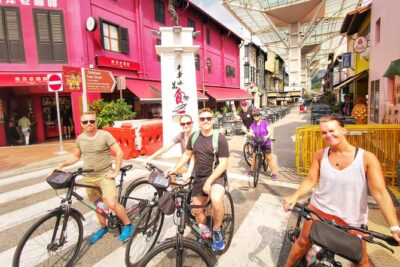
Historical Singapore Bike Tour on Full-Sized Bicycles
Read our review →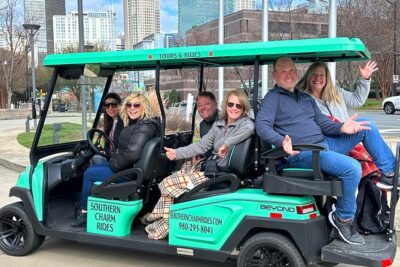
Charlotte’s Ultimate Southern Charm Historical City Cart Tour
Read our review →
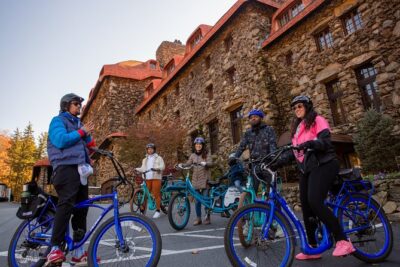
Asheville Historic Downtown Guided Electric Bike Tour with Scenic Views
Read our review →
Private Guided Historic Electric Cart Tour of St. Augustine
Read our review →
60-Minute Guided Segway History Tour of Savannah
Read our review →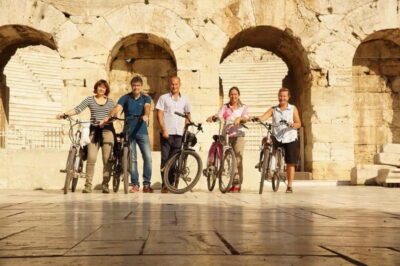
Historic Athens: Small Group Electric Bike Tour
Read our review →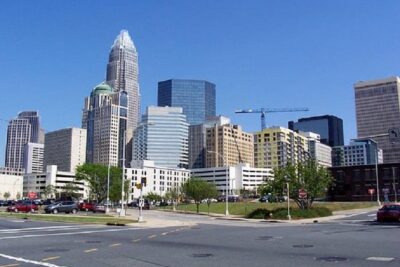
90 Minute Historic Uptown Neighborhood Segway Tour of Charlotte
Read our review →Browse the lists this tour appears in