
Review · CHIANG MAI PROVINCE
Chiang Mai: Historic Temples and City Guided Walking Tour
Chiang Mai’s old city rewards slow steps. This three-hour walk links four important temples with the Three Kings Monument, giving you a useful introduction to Lanna architecture, Buddhist customs, and local history. I especially like the small group limit of 10 and the route’s variety, from the oldest temple in town to a huge ruined chedi.
I also like that the tour begins early on some schedules, which helps you avoid the worst heat. Guides such as Jen, Pun, Danny, and Faan have been praised for clear explanations, friendly humor, and good food and coffee suggestions. The main drawback is that temple admission costs extra, and three hours of walking in the tropical sun may not suit anyone with back problems or limited stamina.
Key points at a glance
- Four very different temples: Compare Wat Chiang Man, Wat Phra Singh, Wat Phan Tao, and Wat Chedi Luang instead of seeing one temple in isolation.
- A strong first-day introduction: The route explains Chiang Mai, Buddhism, Lanna design, and the layout of the old city in one compact outing.
- Small groups matter: With no more than 10 people, you have a better chance to hear the guide and ask questions.
- Bring temple-appropriate clothing: Your shoulders and knees must be covered, and shorts, short skirts, and sleeveless shirts are not allowed.
- Budget around 100 THB for admissions: Wat Phra Singh and Wat Chedi Luang each charge 50 THB, separate from the tour price.
- Walking is the point: You see the old town at street level, with shops and cafes appearing between the major sights.
Why this three-hour walk works so well
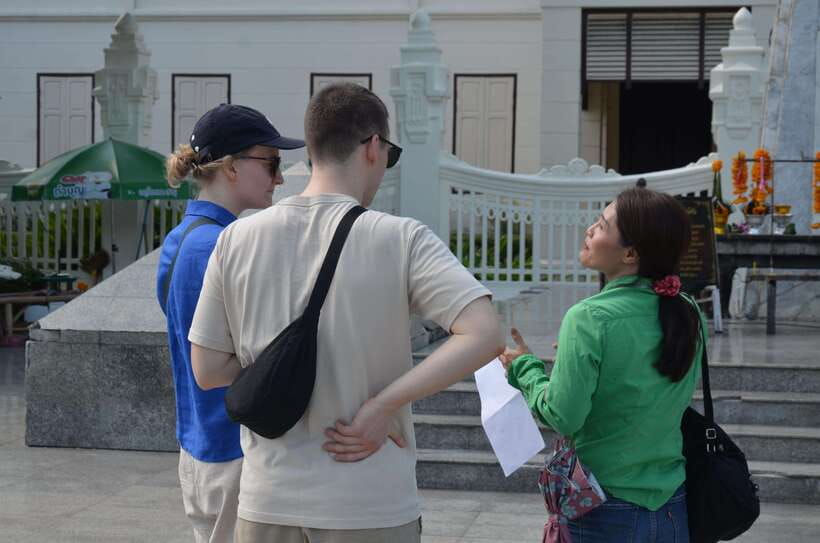
At $21 per person, this is a low-cost way to get your bearings in Chiang Mai’s old city. You are not paying for transport, a large meal, or a packed sightseeing schedule. You are paying for a local English-speaking guide who connects several famous sites and explains what you are looking at.
That distinction matters. A temple can be beautiful while still leaving you unsure why it was built, why the roof is shaped that way, or how Buddhist images fit into local worship. The best part of this tour is the context. Guides explain the city’s past, Lanna culture, Buddhist stories, and the purpose of the buildings rather than simply pointing out decorative details.
The route is also easy to understand geographically. You start at Wat Chiang Man in the old city, continue west to the Three Kings Monument and Wat Phra Singh, then visit Wat Phan Tao before finishing at Wat Chedi Luang. You can continue exploring from the final stop afterward, so the tour fits neatly into a first full day in Chiang Mai.
I would choose an early starting time if one is available. Several people specifically valued the cooler pace and the fact that the group began before the day became too hot. Afternoon departures can still work, but you should expect heat, strong sun, and the occasional need for a short pause.
More Architecture and Landmark Tours in Thailand
- Bangkok City Highlights Tour: Grand Palace & Three Iconic Temples
★ 4.5 · 542 reviews - Bangkok: Backstreets and Historic Temples Bike Tour
★ 4.9 · 98 reviews - Bangkok: Backstreets and Temple Historic Bike Tour
★ 5.0 · 84 reviews
Wat Chiang Man, the old city’s starting point
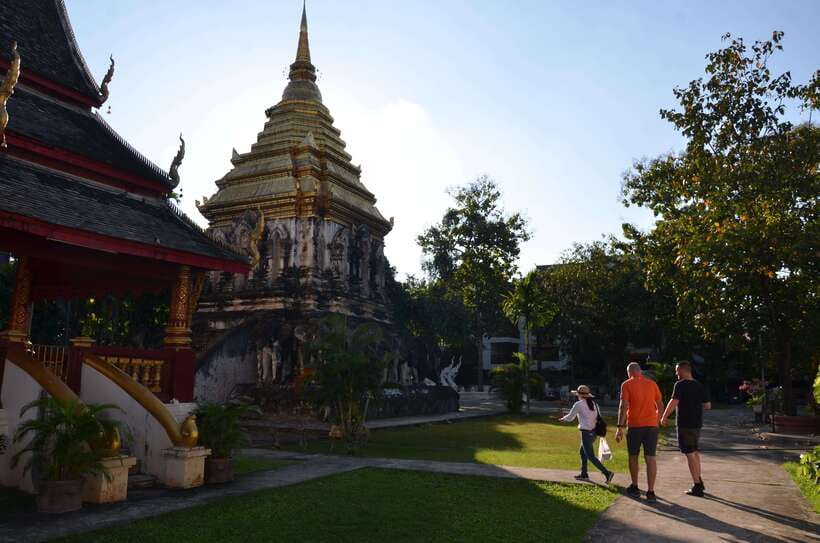
The tour begins at Wat Chiang Man, Chiang Mai’s oldest temple, built in 1296. That gives the walk a strong opening. Instead of starting with a broad city introduction in a square or on a busy road, you begin inside a working religious site with centuries of local importance.
Your guide spends about 30 minutes here. That is enough time to see the grounds, hear the temple’s place in Chiang Mai’s origins, and ask questions before the group moves on. It also gives you a first look at the style of northern Thai temple design that appears in different forms throughout the morning.
The meeting point is inside Wat Chiang Man. Look for the Beyond Experience sign, and allow a little time to locate it. One person had trouble finding the sign after being dropped off in the wrong place, though the guide helped by keeping in touch through WhatsApp. The practical lesson is simple: do not wait outside the temple grounds if you cannot see the group.
Wear shoes you can walk in comfortably and remove easily. You will be entering temple areas, and a light scarf can help if your clothing does not fully cover your shoulders.
Three Kings Monument and Chiang Mai’s civic center
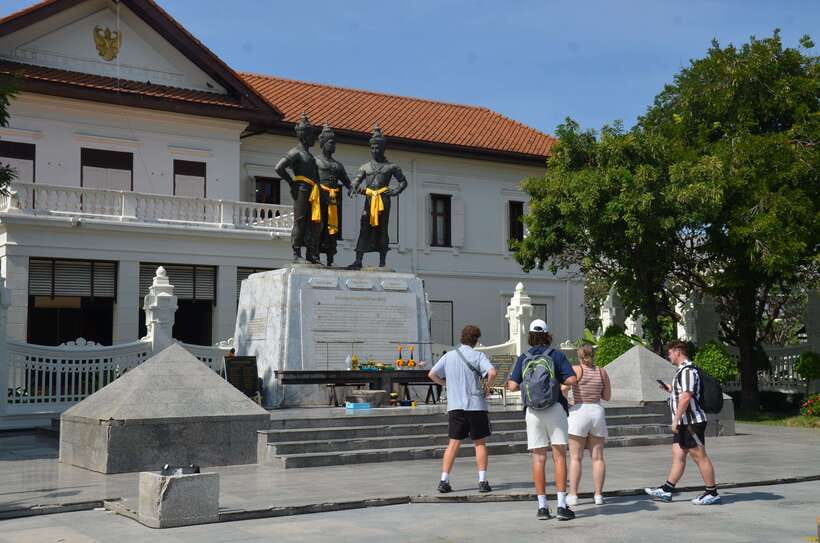
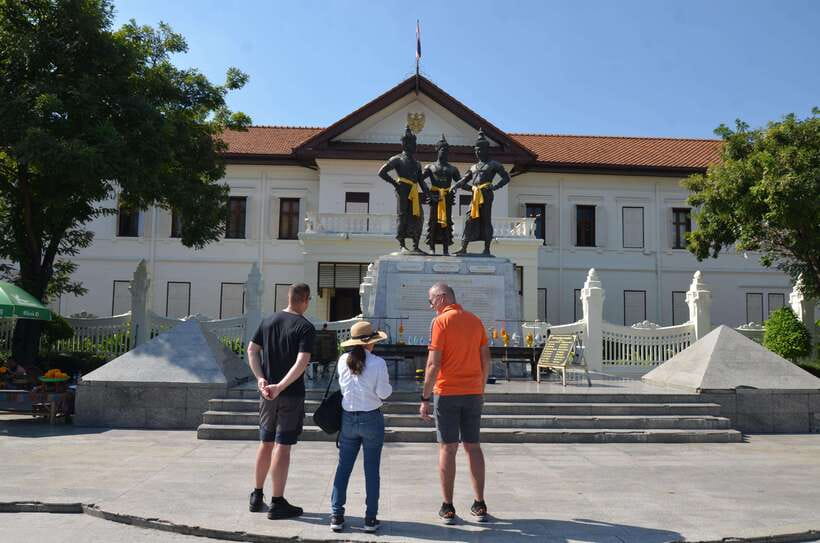
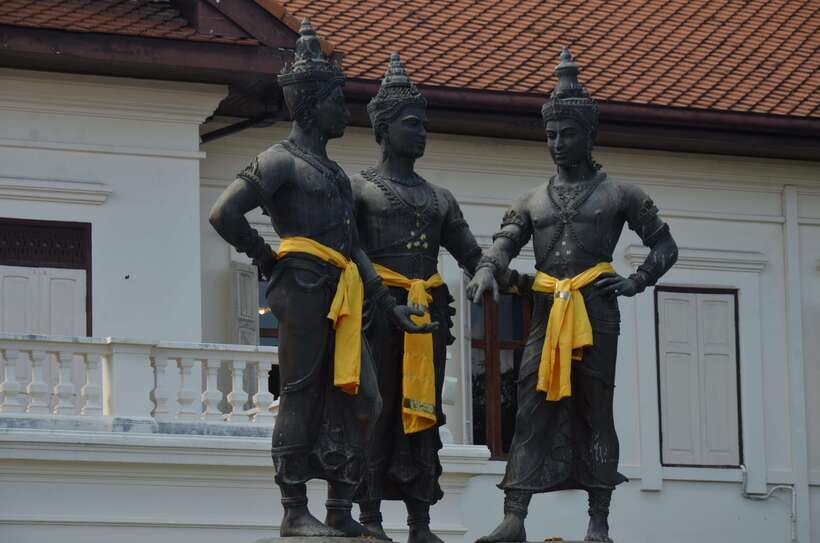
The next stop is the Three Kings Monument, a large open square in the middle of the walled old city. The stop lasts about 10 minutes, mainly for photographs and a short explanation.
This is not as ornate as the temples, but it gives the route a useful change of pace. The monument helps place Chiang Mai’s founding story in a civic setting, while the surrounding streets show how the old city functions today. You are walking between religious sites, cafes, small shops, and ordinary local traffic rather than moving through a sealed museum circuit.
Ten minutes is enough for the purpose. If you want a long look or quiet photographs, you may find the stop brief. The value here comes from the guide’s explanation and from seeing the monument in relation to the old city around it.
Wat Phra Singh and classic Lanna design
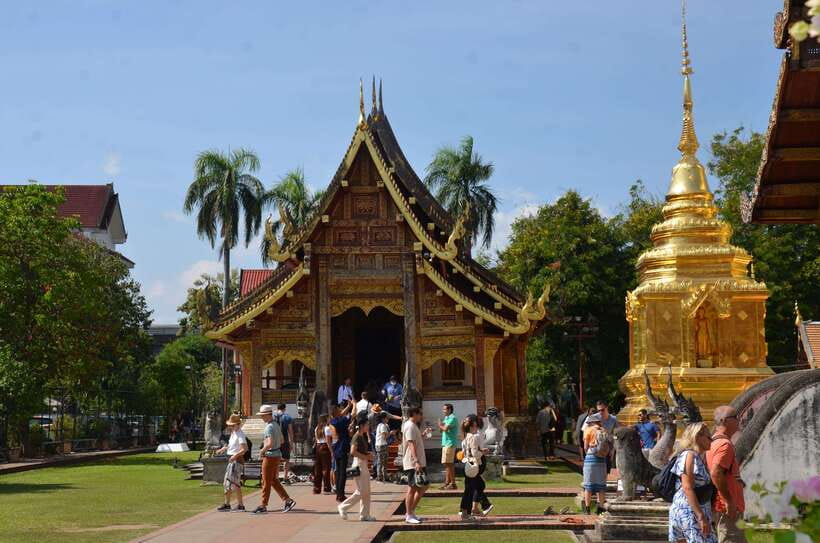
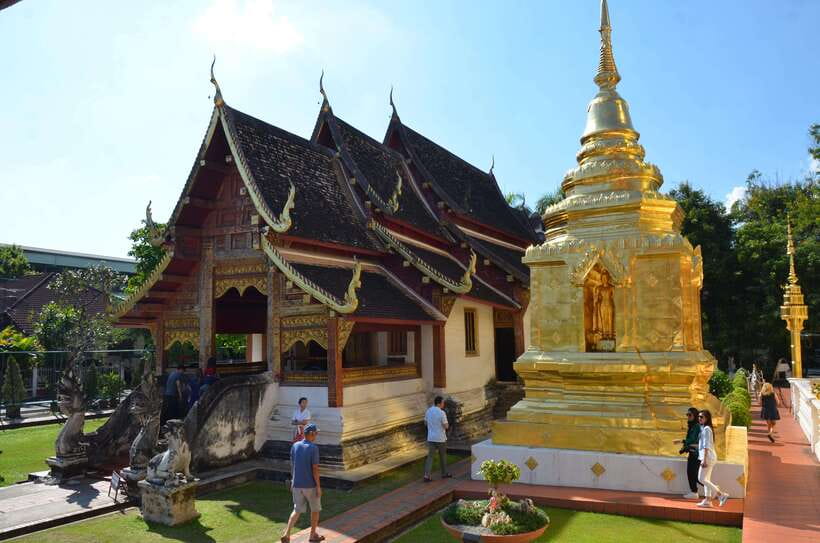
Wat Phra Singh receives about 40 minutes, making it one of the major stops. It is presented as one of Thailand’s finest examples of classic Lanna temple architecture, and this is where the tour’s design discussion becomes especially useful.
Lanna refers to the northern Thai cultural tradition associated with Chiang Mai and the surrounding region. Your guide can help you notice the features that make the temple feel distinct, rather than leaving you to treat every Thai temple as interchangeable. The buildings, roofs, decorative work, and Buddha images become easier to read when someone explains their religious and regional setting.
This is also one of the two paid temple stops. Admission is 50 THB, not included in the $21 tour price. Bring cash, since cash is listed among the recommended items.
Forty minutes gives you a reasonable look at the complex, some time for photos, and room to listen without feeling hurried. Still, this is a guided overview, not an exhaustive study of every building. If you love temple art, you may want to return later at your own pace.
The guide’s role is especially valuable here. Jen has been praised for explaining Buddhist traditions in a clear way, while Pun has been noted for answering questions patiently and helping people understand the meaning behind each site. The individual guide changes, but the consistent strength is the effort to explain rather than rush.
Same place, a different slice of the past:
- From Bangkok: Ayutthaya Historical Park Guided Day Trip
★ 4.6 · 3,020 reviews - UNESCO’s Ayutthaya Historical Park: Full-Day Tour from Bangkok
★ 4.5 · 1,559 reviews - From Bangkok: Historical Day Tour to River Kwai
★ 4.6 · 868 reviews - Historical City of Ayutthaya – Unesco Full Day Tour From Bangkok
★ 5.0 · 847 reviews
Wat Phan Tao, a quieter stop with royal connections
Wat Phan Tao is a smaller stop, with about 15 minutes set aside for a visit and photos. Its main hall is made almost entirely of teak wood, which gives it a very different feel from the more elaborate temple structures nearby.
The building was originally part of a royal palace, and the main hall contains a large teak throne once used by Chiang Mai’s rulers. Those details give you something specific to look for. Instead of simply admiring a wooden building, you can consider how royal and religious functions overlapped in the city’s past.
The shorter visit is sensible. Fifteen minutes lets you hear the key story, look closely at the hall, and take photographs before moving to the larger final site. If this is the temple that catches your eye, note its name and return later. A short guided stop can introduce the place, but it cannot cover every detail.
This stop also helps balance the itinerary. Wat Phra Singh offers a major example of Lanna religious architecture, while Wat Phan Tao gives you a more intimate wooden structure with a direct connection to the former rulers of Chiang Mai.
Wat Chedi Luang and the tour’s dramatic finish
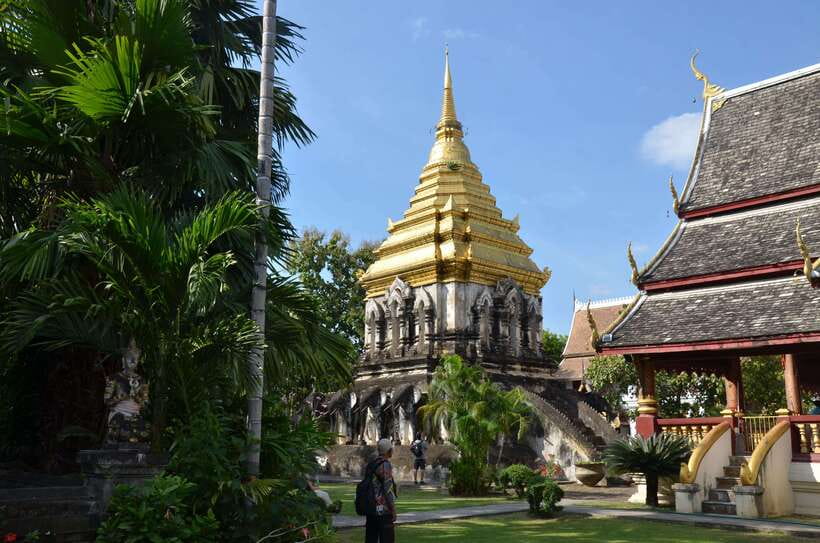
The final major stop is Wat Chedi Luang, with about 40 minutes for the visit. Its enormous ruined chedi gives the tour its most striking architectural moment. The scale and damaged form make it easy to picture the old city as something shaped by time, not just a collection of freshly painted religious buildings.
The guide also takes you into the main prayer hall to see the majestic standing Buddha. That creates a useful contrast: outside, the focus is on the massive ruined chedi; inside, the attention shifts to a single powerful image in a functioning worship space.
Admission is another 50 THB, so the two paid temples together cost 100 THB. Add that to the tour price when working out your day’s budget.
You should have time for photographs and an explanation of the site, but do not expect a long period of independent wandering. The schedule is designed to finish in three hours. The end point is Wat Chedi Luang, officially listed as Watchediluang Varaviharn, which makes it easy to continue on your own afterward.
The guides are the heart of the experience
The temples provide the setting, but the guide determines how much you take away. The strongest praise has gone to guides who speak clear English, keep a relaxed pace, answer questions, and add local recommendations without turning the walk into a lecture.
Jen appears often in positive feedback, with praise for her humor, patience, and explanations of Thai culture and Buddhism. Pun is also noted for careful answers, temple stories, and help with photographs. Danny has a particularly interesting background as a former monk for 12 years, which can add a personal angle to discussions of Buddhist practice.
Other guides named by people on recent tours include Faan, John, Jane, Jackie, Gin, Ponky, and Twotwo. You cannot choose a particular guide from the information provided, but the range of positive comments suggests that the experience is not built around just one person.
A small group helps here. With up to 10 participants, you can usually hear the guide more easily than in a large coach group. Some departures have been much smaller, even just two or four people, though you should treat that as luck rather than a promise.
Heat, clothing, and the realities of walking
This is an easy-paced walking tour, but it is still a three-hour outing in a warm climate. Comfortable shoes are essential. Bring sunscreen, a hat, water, and an umbrella or raincoat during the rainy season, which runs from July to mid-October.
A bottle of water is included, but I would not depend on one small bottle for the entire walk. The route passes through the old city, and guides have pointed out cafes and restrooms along the way. Still, carrying your own refill or extra drink is sensible in hot weather.
Temple dress rules are firm. Your shoulders and knees must be covered when entering the temples. Do not arrive in shorts, a short skirt, or a sleeveless shirt. A scarf can help with coverage, but it should be large enough to cover your shoulders properly.
The tour is not suitable for pregnant women or people with back problems. If you tire easily, ask about an early start and tell the guide at the beginning. One guide was praised for looking after older participants, pointing out restrooms, and keeping people safe near busy roads, but you should still judge the walk against your own fitness.
How much value do you get for $21?
The price is attractive because the tour covers several major sights and supplies a local guide for three hours. Even after adding the 100 THB in temple admissions, the total remains modest for a first look at the old city.
The value is highest for first-time visitors. You get an overview of Chiang Mai’s history, Lanna architecture, Buddhist traditions, and old city layout before deciding which places deserve a longer return visit. That can save you from walking into a temple, taking a few pictures, and leaving without understanding what made it important.
The price is less compelling if you prefer complete independence or want to spend an hour at each temple. The schedule gives you a guided introduction, not unlimited time. You also pay extra for the two admission tickets and need to buy your own food.
No meal is included, though that may be an advantage. Several guides have offered useful suggestions for coffee and local food, including a recommendation for excellent khao soi. You can turn the final stop into the start of your own lunch or cafe search.
Who should book this temple walk?
I would recommend it most strongly to first-time visitors staying in or near Chiang Mai’s old city. It gives you a clear mental map and enough cultural background to make later temple visits more meaningful.
It also suits solo visitors and couples who want company without joining a huge group. History fans, architecture enthusiasts, and anyone curious about Buddhism will get the most from the explanations. The small group format makes it easier to ask about details that catch your eye.
Families with young children should think about the heat and the three-hour duration. The walk is not presented as a children’s activity, and the temple rules require suitable clothing. People with back problems or those who cannot comfortably walk for several hours should choose something less demanding.
The tour is also a good first activity after arriving in Chiang Mai. You see the city at street level, learn the basic story, and leave with practical ideas for food and coffee afterward. It is a low-impact way to explore because the route uses walking rather than a motorized sightseeing vehicle.
Should you book it?
Book this tour if you want a friendly, affordable introduction to Chiang Mai’s central temples, with enough explanation to understand what you are seeing. The combination of Wat Chiang Man, Wat Phra Singh, Wat Phan Tao, and Wat Chedi Luang gives you real variety in only three hours.
Skip it if you dislike group schedules, cannot manage a long walk in heat, or want to study each temple at length. For most first-time visitors, the $21 price is easy to justify, especially if you choose an early start, bring proper clothing, and carry the extra 100 THB for admissions.
FAQ
How long does the Chiang Mai temple walking tour last?
The tour lasts three hours, including guided visits to four temples and the Three Kings Monument.
Where does the tour begin?
The meeting point is Wat Chiang Man. Look for the Beyond Experience sign inside the temple grounds.
Where does the tour finish?
The tour finishes at Wat Chedi Luang, also listed as Watchediluang Varaviharn.
Which temples are included?
The route includes Wat Chiang Man, Wat Phra Singh, Wat Phan Tao, and Wat Chedi Luang.
Are temple entrance fees included?
No. Wat Phra Singh costs 50 THB and Wat Chedi Luang costs 50 THB. Food is also not included.
What language is the tour conducted in?
The live tour guide speaks English.
What should I wear?
Wear comfortable clothing that covers your shoulders and knees when entering temples. Shorts, short skirts, and sleeveless shirts are not allowed.
More History Walking Tours in Thailand
- Chiang Mai: Historical and Culture Exploration Walking Tour
★ 4.6 · 40 reviews - Bangkok Wat Pho and Flower Market Historical Walking Tour
★ 5.0 · 28 reviews - History and Hauntings of Salem Guided Walking Tour
★ 5.0 · 14,564 reviews - Lisbon: History, Stories and Lifestyle Walking Tour
★ 4.8 · 10,902 reviews
Just added around Thailand
- 1 Day Sukhothai Historical Park from Chiang Mai Private Tour★ 5.0 · 29 reviews
- Full Day Sukhothai Historical Park Tour★ 5.0 · 96 reviews
- Full-Day Historical Park and Countryside Tour in Sukhothai★ 5.0 · 27 reviews
- Full Day Cycling tour to Sukhothai Historical Park★ 5.0 · 163 reviews
- River Kwai Day Tour from Bangkok: History, Scenic Views & Culture★ 4.5 · 36 reviews
- Bangkok Heritage Highlights: Grand Palace & Three Temples Tour★ 4.5 · 52 reviews
- Private Tour to Ayutthaya, World Heritage Site with Boat Tour★ 5.0 · 39 reviews
- Private Tour to Ayutthaya, World Heritage Site with Boat Tour★ 5.0 · 55 reviews
Architecture & Landmark Tours, compared.
St. Mark’s Basilica Guided Tour & VR History Intro
Read our review →
Venice’s Best: Basilica, Doge’s Palace, Gondola & History Gallery
Read our review →
Córdoba: Skip-the-Line Great Mosque-Cathedral History Tour
Read our review →
Pantheon Elite Guided Tour – Rome’s Iconic Ancient Temple
Read our review →
Abu Dhabi Grand Mosque, Palace, and Heritage Village
Read our review →
Chicago in a Day: Food, History & Architecture Walking Tour
Read our review →

Colosseum Special Access Tour, with Ancient Temples & Tombs
Read our review →Browse the lists this tour appears in