
Review · MASSACHUSETTS
Boston: Underground Railroad History Tour of Beacon Hill
History feels different when it is under your feet. This 150-minute walk through Beacon Hill connects Boston’s Black Heritage Trail with homes, churches, schools, and meeting places tied to the fight against slavery and racial inequality. I like the small-group format, which keeps the narrow streets manageable, and I like the way the tour links famous sights to people often left out of standard Boston history. The main drawback is that it is entirely outdoors, with steep hills and uneven, non-ADA-compliant sidewalks.
The tour costs $35 per person, a fair price for two and a half hours with a local historian. Guides such as Will, Dana, Joe, and William have been praised for clear storytelling, passion, visual aids, and thoughtful answers. You should know, though, that the Underground Railroad receives less attention than some visitors may expect, since the broader focus is Boston’s Black community and the political struggle that led to the Civil War.
Key points to know before you go

- Follow the Black Heritage Trail: See homes, schools, churches, and gathering places connected to Boston’s free African-American community.
- Enter the African Meeting House: This is the tour’s main interior stop, with about 20 minutes set aside for a guided visit and break.
- Walk roughly 2 miles: The route takes about 150 minutes, though it can run up to three hours.
- Hear overlooked pre-Civil War stories: The tour covers education, integration, abolitionist politics, slavery, and resistance.
- Expect a serious walking route: Steep Beacon Hill streets and rough sidewalks make comfortable shoes essential.
- Meet at a clear landmark: Find the Soldiers and Sailors Monument in Boston Common, near the Boston Common Visitors Center.
Starting at Boston Common with the Black Heritage Trail
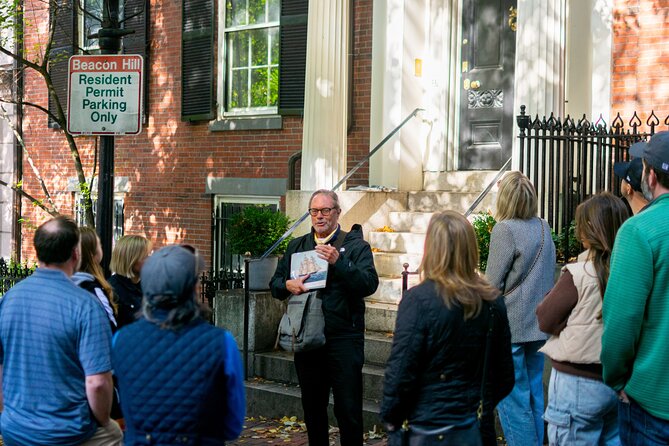
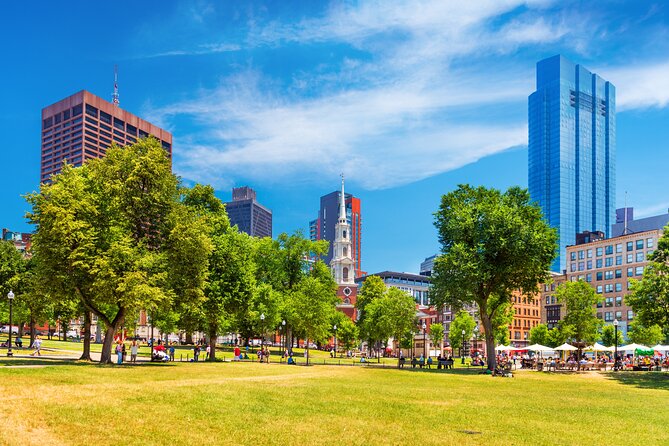
Your guide meets you at the Soldiers and Sailors Monument, the tall white granite column in the center of Boston Common. A female figure holding a flag tops the column, and four bronze statues sit around its base. It is only a few steps from the Boston Common Visitors Center at 139 Tremont Street, so you have a useful place nearby for directions, restrooms, or a last-minute water stop.
The tour begins with Boston Common and the origin of the Black Heritage Trail. This opening matters because it places the story in the middle of the city, not in a remote museum or a separate historical corner. The people you learn about lived and worked close to Boston’s political and economic center.
Your guide sets the stage with the three decades before the Civil War. You will hear about the growing conflict over slavery, the expansion of anti-slavery politics, and the daily fight for equal treatment in a city that often liked to see itself as more progressive than it really was.
The group then moves toward Beacon Hill. The tour is designed to avoid the worst congestion, and its small size should make it easier to hear the guide on narrow sidewalks. Still, Boston streets can be busy, so you will need to stay close and pay attention when crossing.
A few more history tours around Boston worth a look
- Boston: Freedom Trail History Small Group Walking Tour
★ 5.0 · 6,450 reviews - Tour of Historic Fenway Park, America’s Most Beloved Ballpark
★ 4.5 · 3,013 reviews - Boston Food & History: Pizza, North End & Freedom Trail
★ 5.0 · 1,772 reviews
Beacon Hill’s elegant streets and difficult contradictions
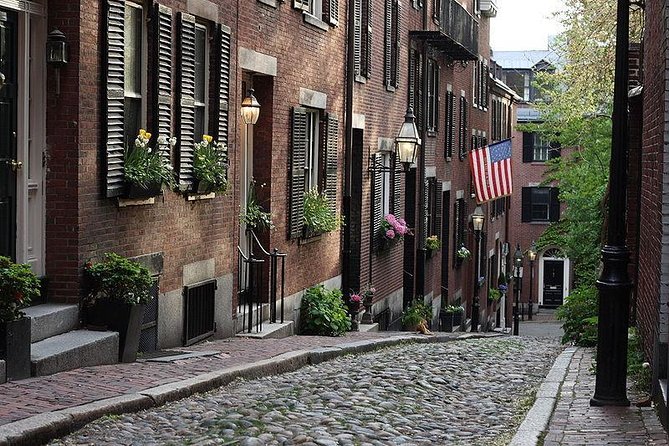
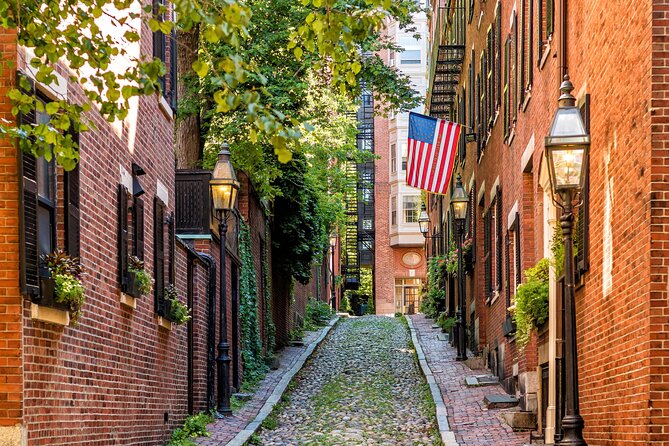
Mount Vernon Street, Acorn Street, and Louisburg Square show Beacon Hill at its most polished. Brick homes, tidy lanes, and grand residences create the postcard version of Boston. The tour adds a harder question: who lived here, who served here, and who had the power to shape the neighborhood?
Acorn Street receives only a short guided stop, but its value is visual. The lane helps you picture the tight urban setting in which these events unfolded. It also makes clear why this is a walking tour rather than a bus excursion. You are moving through the actual streets where the story took place.
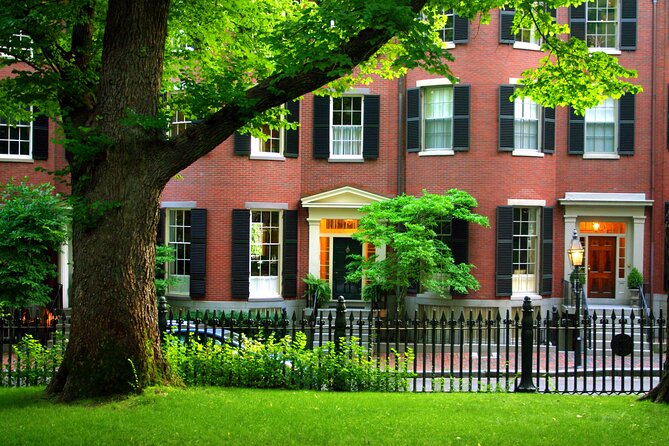
Louisburg Square brings the contrast into sharper focus. Wealthy white Bostonians lived only blocks from a free Black community that fought for education, voting rights, safety, and equal treatment. The physical distance was small. The social and political distance was much wider.
I appreciate this approach because the tour does not treat Beacon Hill as a collection of pretty buildings. It uses the neighborhood to explain how race and wealth shaped daily life. The drawback is that some early stops are brief, usually five to ten minutes, so you should listen closely. The guide cannot spend long at every address.
Schools, churches, and the fight for equal education
The Phillips School is one of the more important stops because it brings the question of education into plain view. You will hear about the struggle for equal schooling and the debates over integration. These were not abstract political arguments. They affected where children could study and what kind of future was open to them.
From there, the route introduces the John J. Smith House. Smith was a Black community leader and abolitionist, and his home helps shift the story from general movements to individual people. The tour’s strength is this steady movement between public issues and private homes.
The Charles Street Meeting House adds another layer. The building is connected to religious life and anti-slavery activity, and the stop lasts about 15 minutes. As with many landmarks on this route, the exterior alone cannot tell you why the building matters. Your guide supplies the political and social context.
You then continue along Charles Street toward the John Coburn House. Coburn was part of Boston’s Black community and abolitionist network. The house is a useful reminder that the Underground Railroad depended on ordinary residents who took serious personal risks, not just famous national figures.
The Lewis and Harriet Hayden House is one of the most compelling stops. It is tied directly to Underground Railroad activity and to the Haydens’ work helping freedom seekers. The tour gives you a chance to think about what a safe house meant in practice, including the courage and danger involved.
If your main interest is the Underground Railroad, pay close attention here and ask questions. One recent participant wanted more detail about the railroad itself, while still finding the wider African-American history strong. That is a fair description of the tour’s balance: it covers the network, but it does not tell only a railroad story.
Passing historic churches and homes on the route
The walk passes the Otis House Museum and the Old West Church without an interior visit. These brief exterior moments help connect Beacon Hill’s Black history with the wider architecture and institutions of old Boston. You will not tour every building, so think of these stops as part of the route’s visual setting rather than full museum visits.
The Charles Sumner House receives about 15 minutes. Sumner was a major anti-slavery politician, and his home links local activism to national political conflict. The tour explains how anti-slavery ideas gained force in Boston and how those ideas fed into the bitter divisions that eventually produced the Civil War.
This section is especially useful if you know the broad outline of American history but want to understand Boston’s role. The tour shows that the city was not simply observing events elsewhere. Local residents argued, organized, resisted, taught, worshiped, and helped shape the national debate.
The walking pace is described as moderate rather than hurried. That is important on Beacon Hill, where slopes and uneven pavement can make even two miles feel longer. You get time to hear the guide, take in the buildings, and ask questions, but you will still be on your feet for most of the afternoon.
Same place, a different slice of the past:
- Boston: Freedom Trail History Small Group Walking Tour
★ 4.9 · 1,590 reviews - City Cruises Boston Historic Sightseeing Harbor Cruise
★ 4.5 · 1,388 reviews - Boston Pizza Lovers Food and History Walking Food Tour
★ 4.5 · 1,082 reviews - Boston Freedom Trail History Pub Crawl Small-Group Tour
★ 5.0 · 996 reviews
Smith Court and the African Meeting House
Smith Court brings together several major pieces of the Black Heritage Trail. You will see the Smith Court residences and the Abiel Smith School, both central to understanding Boston’s free Black community and the fight over education.
The Abiel Smith School is particularly valuable because the building represents an effort to create educational opportunities for Black children. It also helps explain why questions of separate schooling and integration became such a fierce part of Boston’s racial politics.
The tour’s main interior visit is the African Meeting House. Set aside around 20 minutes here for a guided visit and break. This is the point where the route shifts from street-level interpretation to a stronger sense of place inside a historic institution.
The African Meeting House was a center of worship, community life, political organizing, and abolitionist work. Its importance goes beyond the building itself. It represents a community building its own institutions in a city where equal access to white-led institutions was often blocked or contested.
I would plan this tour around that stop. If you arrive tired, hungry, or distracted, the meeting house portion may lose some of its effect. Bring water, wear shoes that can handle hills, and avoid carrying a large bag, since luggage and large bags are not allowed.
George Middleton House and the road toward the Civil War
The George Middleton House follows the African Meeting House. Middleton was a Black Revolutionary War veteran and community leader, and this stop broadens the timeline beyond the immediate abolitionist period. You see how Black Bostonians claimed civic identity and public respect in a nation that denied equality in law and practice.
This is one of the tour’s recurring strengths. It does not present Black Bostonians only as victims of slavery and discrimination. You also learn about leadership, military service, property ownership, education, community institutions, and organized resistance.
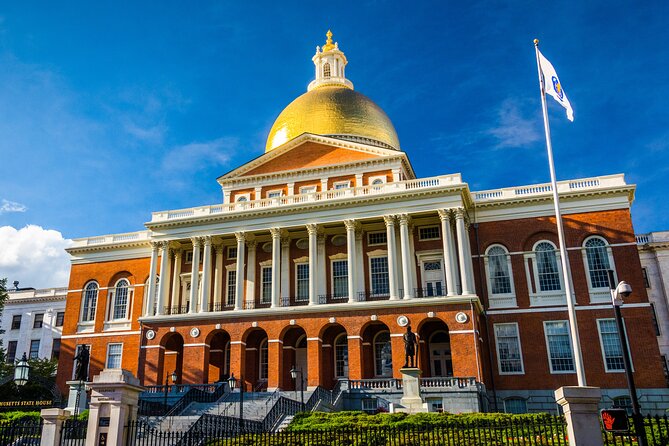
The route then passes Park Street Church and offers views toward the Massachusetts State House. These are scenic moments rather than full guided visits. The State House is especially useful as a visual reminder of where laws and political decisions were made, while the earlier homes and meeting places show how people pushed those decisions from the ground up.
The walk concludes near the Robert Gould Shaw and the 54th Massachusetts Regiment Memorial on Boston Common. The memorial honors Shaw and the Black soldiers of the 54th Massachusetts Regiment, one of the best-known Black Union regiments of the Civil War.
The final guided portion lasts about 20 minutes. It gives the tour a strong ending by connecting the antebellum debates of Beacon Hill with Black military service during the war. You begin with the buildup to the conflict and finish with people who fought in it.
What the $35 price delivers
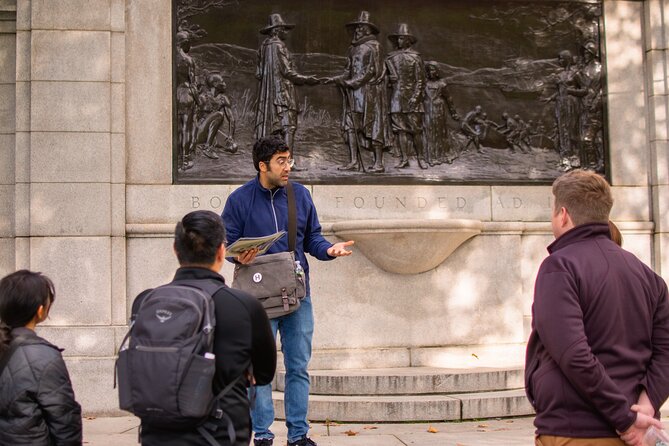
At $35, this is not the cheapest way to spend an afternoon in Boston, since much of the route can be walked independently. The value comes from the order, context, and human stories. A guide shows you how the homes, schools, churches, and memorial fit together instead of leaving you with isolated plaques and attractive buildings.
The price includes a local historian and the Black Heritage Trail’s 10 landmarks. Museum admission is not included, although the African Meeting House visit is part of the planned experience. Gratuity is optional.
The high rating, 4.9 from 38 reviews, matches the strongest pattern in the feedback: guides are the reason people remember the tour. Will is praised for answering many questions and bringing scenes to life. Dana receives similar praise for enthusiasm and strong knowledge of lesser-known history. Joe used visual aids and kept the group moving safely, while William was praised for clear, energetic explanations.
Guide quality can vary because several people lead the experience, but the consistent theme is preparation and passion. If you enjoy asking questions, this appears to be a good fit. If you prefer silent sightseeing or a fast list of facts, the emotional and political focus may feel heavy.
Who should book this Beacon Hill walk
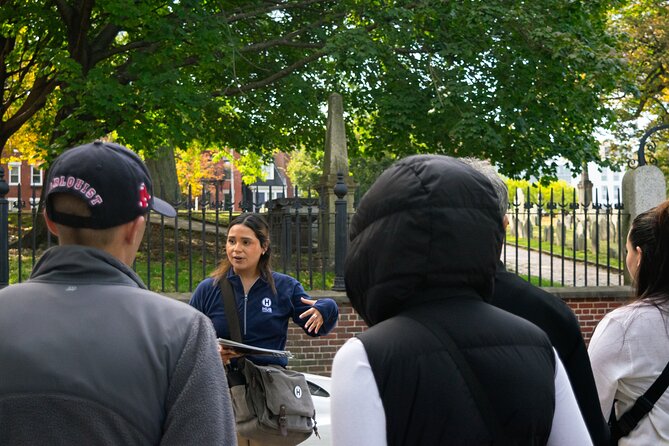
I would recommend this tour to anyone who wants Boston history beyond the Freedom Trail’s most familiar landmarks. It suits adults, older children over six, history students, and visitors who want a fuller understanding of Black life and abolitionism in Boston.
It is also a smart choice for a short Boston visit. In two and a half hours, you cover a lot of ground without spending a full day inside museums. One participant who had lived in Boston for four years said the tour still introduced many new facts, which says something about how much standard sightseeing can leave out.
The tour is less suitable for young children, people with low fitness, wheelchair users, or anyone with mobility limits. The route covers about 2 miles, includes steep hills, and uses sidewalks that are not ADA-compliant. It operates rain or shine, so check the forecast and dress for the weather.
Bring comfortable shoes and weather-appropriate clothing. Do not bring luggage or a large bag, and video recording is not allowed. The tour is in English, and the length can vary, though it will not exceed three hours.
Should you book the Underground Railroad History Tour?
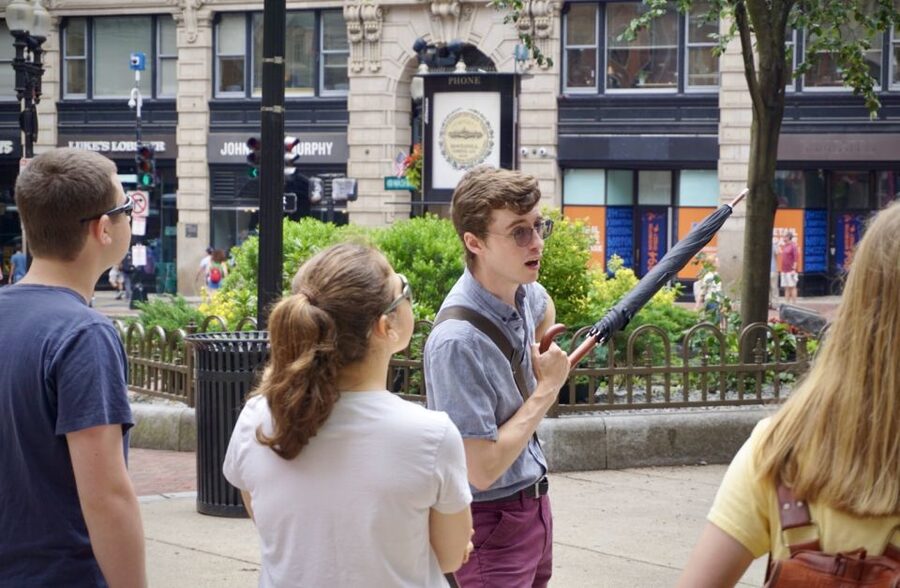
Book it if you want a thoughtful, place-based look at Boston’s Black history and the decades before the Civil War. The strongest parts are the African Meeting House, the Lewis and Harriet Hayden House, the schools, and the closing memorial to the 54th Massachusetts Regiment.
Do not book it expecting every minute to focus on the Underground Railroad. The tour gives that subject an important place, but it also covers education, integration, abolitionist politics, Black leadership, and Boston’s role in the national slavery debate.
For $35, I think the tour offers good value, especially with a strong guide such as Will, Dana, Joe, or William. Choose a dry day if you can, wear shoes with real grip, and arrive ready to listen. This is not a light sightseeing stroll. It is a serious, useful walk through the people and places that helped push Boston, and the country, toward war and emancipation.
FAQ
How long does the tour last?
The planned duration is 150 minutes, or two and a half hours. The tour can vary in length but will not last more than three hours.
How far does the tour go?
The walking route covers approximately 2 miles, or 3.2 kilometers.
Where does the tour meet?
Meet at the Soldiers and Sailors Monument in the center of Boston Common. It is near the Boston Common Visitors Center at 139 Tremont Street.
Where does the tour finish?
The tour finishes at the Robert Gould Shaw and the 54th Massachusetts Regiment Memorial on Boston Common.
Is the African Meeting House included?
Yes. The African Meeting House is part of the guided route, with about 20 minutes set aside for a visit and break.
Is the tour suitable for wheelchair users?
No. The route includes steep hills and sidewalks that are not ADA-compliant, and the experience is not suitable for wheelchair users or people with mobility impairments.
What should I bring?
Bring comfortable shoes and clothing suited to the weather. The tour operates rain or shine.
Can I cancel for a refund?
You can cancel up to 24 hours in advance for a full refund. A reserve-now, pay-later option is also available.
Just added around Boston
- Boston: Ultimate Historic Food & Drink Tour★ 4.7 · 20 reviews
- Boston: Seafood Tasting & Historical Walking Tour★ 5.0 · 28 reviews
- Boston: Historic Pubs Walking & Ferry, Food & Drink Tour★ 4.9 · 56 reviews
- Boston History & Highlights Tour: From Revolution to Today★ 4.8 · 178 reviews
- Boston: Haunted Pub Crawl of Historic Pubs and Taverns★ 4.6 · 127 reviews
- Boston: Tour of The Freedom Trail with Historic North End★ 4.5 · 154 reviews
- Boston: History & Haunts Guided Ghost Tour★ 4.3 · 154 reviews
- Boston: 2-Hour Historic Walking Tour★ 4.7 · 88 reviews
Boston History Tours, compared.
Freedom Trail History Small Group Walking Tour
Read our review →
Tour of Historic Fenway Park, America’s Most Beloved Ballpark
Read our review →
Boston Food & History: Pizza, North End & Freedom Trail
Read our review →Freedom Trail History Small Group Walking Tour
Read our review →
City Cruises Boston Historic Sightseeing Harbor Cruise
Read our review →
Boston Pizza Lovers Food and History Walking Food Tour
Read our review →
Boston Freedom Trail History Pub Crawl Small-Group Tour
Read our review →
Boston City View Bicycle Tour: History and Landmarks
Read our review →Browse the lists this tour appears in