
Review · HESSEN
Frankfurt: Old Town Historical Walking Tour with Geo Epoche
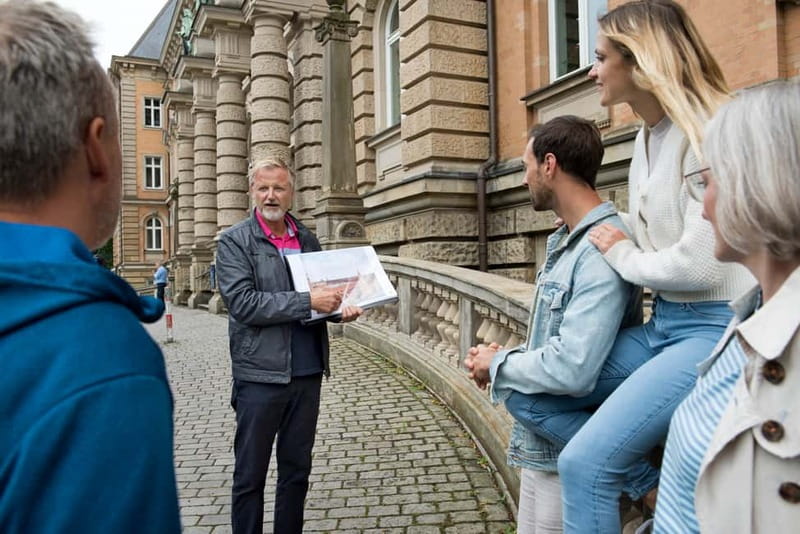
Frankfurt’s past hides behind its modern skyline. This two-hour walk takes you through narrow Old Town streets while a local historian explains how markets, shopkeepers, money, and politics shaped the city. I like the clear economic storyline, which connects everyday commerce to Frankfurt’s role as Europe’s financial center. I also like the small historical details, including stories about local tradespeople and famous or notorious residents. The main drawback is simple: the tour is conducted in German, with English available only by request.
The meeting point is in front of the Goldene Waage coffee house, a useful landmark in the Old Town. Guides such as Karl Alois and Nicole have earned warm praise for their enthusiasm and preparation. Still, two miles of walking in all weather can feel long on a cold day, and the tour ends somewhere different from where it begins.
Key points to know before booking
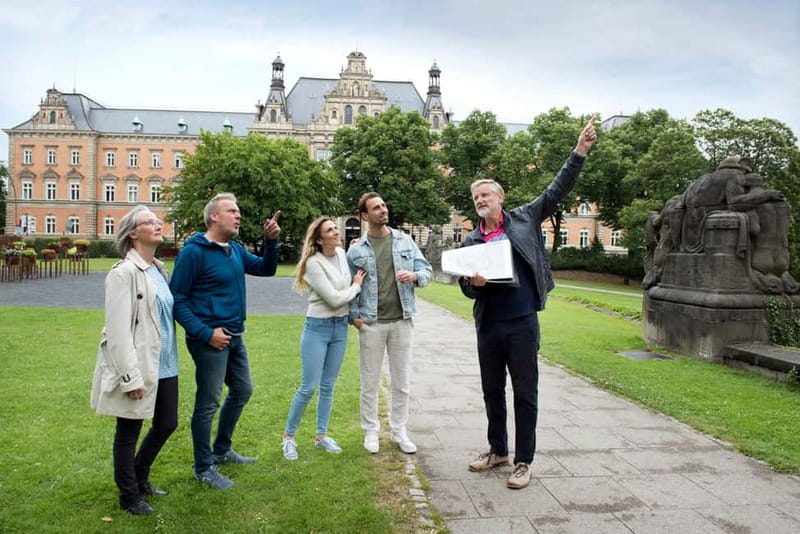
- A historian leads the walk: The guide focuses on Frankfurt’s political and economic development, not just dates and buildings.
- The route covers about two miles: Wear good shoes, and expect to remain outdoors for the full two hours.
- The story runs from markets to the European Central Bank: You get a broad explanation of how Frankfurt gained financial power.
- Old Town details matter: Narrow lanes, shopkeepers, and local personalities bring the city’s past down to street level.
- German is the normal tour language: Ask for an English departure before booking, since it is offered only on request.
- The tour costs about $29 per person: That is fair if you want a focused history lesson, but less appealing if you prefer a quick architectural stroll.
Starting at the Goldene Waage in Frankfurt’s Old Town
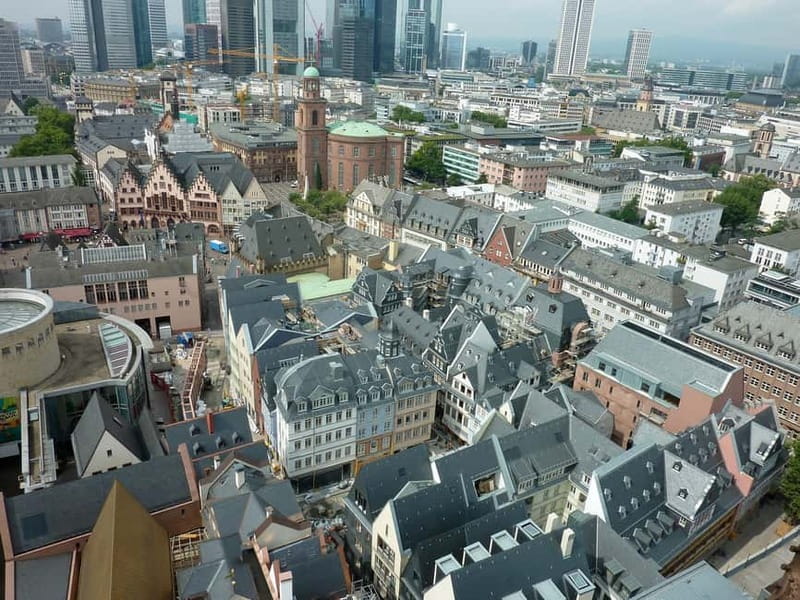
Your walk begins in front of the Goldene Waage coffee house, an easy place to identify in the Old Town. This setting fits the subject well. You are not starting in a coach park or outside a modern office tower. You begin among the streets where Frankfurt’s civic and commercial life took shape.
The opening matters because this tour is built around connection. Rather than treating each building as a separate photo stop, the guide explains how the city’s first market activity led to larger economic and political changes. You begin with the practical side of urban life: people buying, selling, making goods, and building reputations.
I would arrive a little early so you can locate the meeting point without rushing. The tour does not return to its starting place, so note where you finish and keep that in mind if you have a train, restaurant booking, or another timed activity afterward.
The setting is also a reminder that Frankfurt’s Old Town has two identities. It is a pleasant place to walk today, but the tour asks you to picture it as a working district filled with commerce, local rivalries, and political debate. That shift in viewpoint is one of the better reasons to take a guided walk instead of simply wandering with a map.
More History Walking Tours in Germany
- Leipzig: 1.5-Hour Historical Walking Tour in German
★ 4.7 · 2,217 reviews - Berlin: History of the Third Reich Guided Walking Tour
★ 4.7 · 791 reviews - Trier: Guided Old Town Highlights and History Walking Tour
★ 4.7 · 687 reviews
Narrow streets and the daily world of shopkeepers
The route leads through the Old Town’s winding, narrow streets. These lanes give the tour its strongest sense of place. They help you think about movement in an older city, where trade and social life took place at close quarters rather than along wide modern avenues.
The guide’s attention to shopkeepers is especially useful. Big financial institutions can make Frankfurt’s past sound abstract. Stories about local businesses and middle-class residents show how economic power was built from ordinary work and steady commercial activity.
You may hear about the kinds of people who gave the city its character, including well-known and less admirable residents. These accounts add a human edge to the larger story. A city does not become a financial center only through famous bankers or grand political figures. It also changes through shop owners, customers, families, and local officials.
This is where the quality of the guide matters most. A strong guide keeps the details connected to the main argument. The most praised guides, including Karl Alois and Nicole, were described as passionate, prepared, and able to hold attention. Nicole was also noted for being nervous despite having strong background knowledge, a useful reminder that presentation style can vary from one departure to the next.
The narrow streets may also slow the group down. That is good for listening and looking, but it means this is not a rapid checklist of Old Town sights. You are paying for explanation as much as for movement.
How a market became a financial center
The central idea of the tour is Frankfurt’s economic evolution. You follow the city from its early market activity toward its present role as a major European financial center and home of the European Central Bank.
That broad arc gives the walk a useful shape. You are not simply told that Frankfurt is important in finance. You are shown how commercial activity created economic influence, and how economic influence affected the city’s political life.
For me, this is the tour’s strongest feature. Frankfurt can be puzzling at first glance. It has a rebuilt Old Town, a modern business district, and a reputation for banks and trade fairs. The walk helps tie those pieces together. The financial center is not presented as an isolated modern invention. It is part of a much longer process.
The guide also explains how the middle class gained economic power and how that change helped Frankfurt become important in German democracy. That is a worthwhile angle because it moves beyond the usual royal and military stories. You learn about power from below, through people who earned influence through trade and civic life.
Do not expect a specialist seminar on European banking. The experience lasts two hours and covers many centuries. You will receive a guided overview with selected stories, connections, and historical examples rather than a complete account of every institution or financial crisis.
That limit is not necessarily a weakness. It makes the tour approachable for someone who knows little about Frankfurt. If you already study German economic history, you may want more detail than this format can provide. If you want a clear framework before exploring alone, the balance works well.
Frankfurt’s political story through its middle class

The political section gives the tour more weight than a standard sightseeing walk. The guide links growing commercial strength to Frankfurt’s role in German democracy, showing how wealth and civic influence affected the city’s direction.
This connection is valuable because it avoids treating politics as something that happened only in palaces or government chambers. The tour presents the city’s middle class as an active force. Economic independence gave certain residents more influence, and that influence helped shape Frankfurt’s political identity.
You should listen for the cause-and-effect links. The guide is not only naming events. The aim is to explain why Frankfurt developed as it did. One especially strong aspect of the experience is the effort to keep a red thread through the centuries, connecting the market, local commerce, public life, and European finance.
A past participant described the guide as able to connect the centuries and explain how the different pieces fit together. That is exactly what you want from this kind of walk. Dates are easy to find online. A good tour explains why one change led to another.
The political material may be more interesting to adults and older children than to very young children. Nothing in the supplied information suggests a special family program, and the two-hour walk includes a fair amount of listening. Families should also consider the two-mile distance and the German-language format.
More Old Town and Historic Centre Walks in Germany
- The Local Tour of Hamburg Historic Centre
★ 5.0 · 1,058 reviews - Cologne: Old Town Beer History Tour
★ 4.7 · 659 reviews - Heidelberg: Experience our history 1.5-hour walking tour through the old town
★ 4.7 · 306 reviews - Berlin: Historic Center Walking Tour with a Real Berliner
★ 5.0 · 134 reviews
Famous residents, difficult characters, and local stories
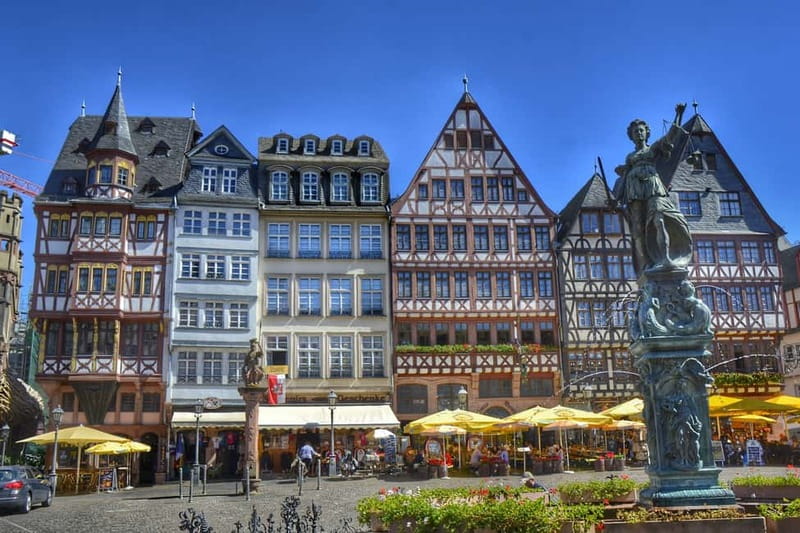
The tour includes accounts of Frankfurt’s famous and infamous residents. This gives the larger economic story a personal face. Instead of hearing only about markets and institutions, you encounter the people who shaped the city’s reputation or revealed its darker side.
These stories can be the most memorable part of a historical walk. A date about a market may fade. A strange local character, ambitious merchant, or controversial resident can make the past easier to remember.
The exact personalities discussed can vary with the guide and departure. That is one reason I would not book this expecting a fixed celebrity route. The supplied information promises stories about notable local figures, but it does not name a set list of stops or residents.
This flexibility can work in your favor. A guide may spend more time on a subject that catches the group’s interest. It also means the experience is not a theatrical performance with every sentence locked in place. Guide quality matters, and the warm comments about passionate leaders suggest that many departures benefit from a personal approach.
At the same time, the walk may feel less polished if your guide is nervous. Nicole was described as well prepared but initially anxious. That did not erase her historical skill, but it shows that enthusiasm and confidence are not always identical. If you value a smooth, highly rehearsed presentation, keep your expectations realistic.
The pace, distance, and weather factor
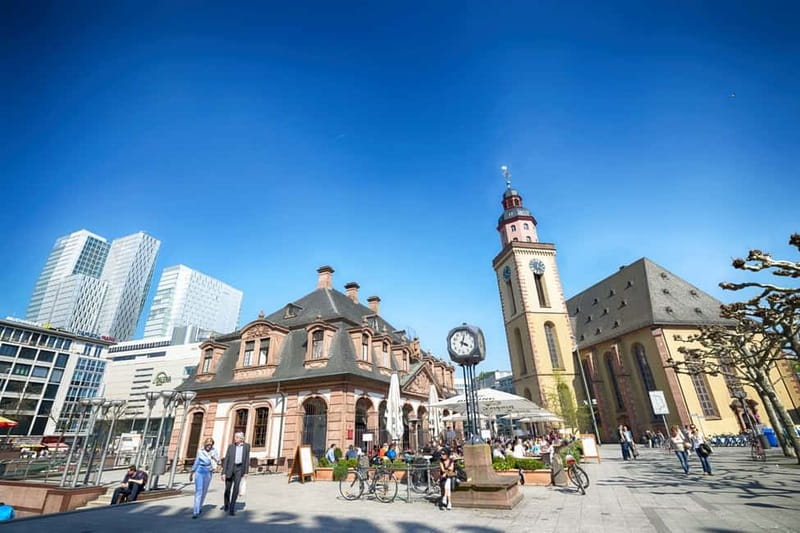
Two hours and approximately two miles make this a moderate walk, but the format is more demanding than the distance alone suggests. You will spend the entire experience outdoors, moving between streets and listening to explanations. There is no included transportation, food, or drink.
Comfortable shoes are essential. The Old Town’s narrow streets make walking the main activity, and the route does not end where it begins. Bring weather-appropriate clothing as well. The tour runs rain or shine, so a damp or cold day can change your experience considerably.
One person found two hours almost too long in cold weather, even while praising the guide’s ability. That is sensible advice. On a pleasant day, the time gives the historian room to explain the city properly. On a raw winter afternoon, standing and listening can test your patience.
I would schedule this earlier in your Frankfurt visit. The historical framework can improve later walks through the Old Town because you will recognize the difference between the city’s commercial past and its modern financial image. Since the walk finishes elsewhere, the end point may also place you closer to your next Old Town activity, though the exact finish is not specified.
The tour is not suited to people with mobility impairments. The distance, outdoor conditions, and changing route make that restriction important. Pets are not allowed.
German language and the English request
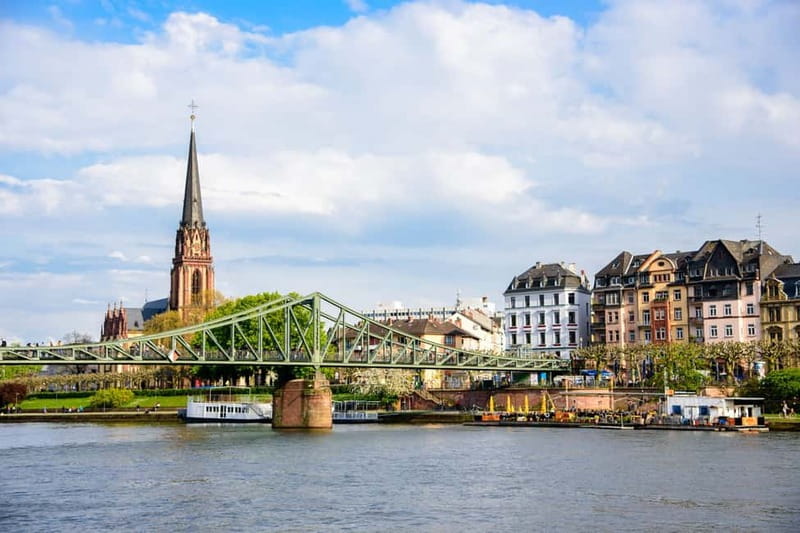
The standard tour is in German. This is not a minor detail. You need enough German to follow a sustained historical explanation, because the value of the experience comes from the guide’s stories and connections.
English tours are available only on request. You should contact GetYourGuide or ask the provider directly before making plans. Do not assume that an English departure will be available at every starting time.
If you secure an English tour, the format should appeal to anyone who wants more than surface-level sightseeing. If English cannot be arranged, booking makes little sense unless your German is strong enough for a two-hour lecture-style walk.
The language issue also affects the atmosphere. A German-speaking visitor may find the experience especially natural, while an international visitor needs to handle the request in advance. This is the single biggest booking question, more important than the price.
Is $29 a fair price for two hours?

At about $29 per person, the tour sits in a reasonable range for a two-hour guided city walk. You receive a local historian, a tour brochure, and a focused explanation of Frankfurt’s development. Food, drinks, and transportation are not included, but they are not central to this experience.
The real value depends on what you want. If you prefer to wander freely, stop for coffee, and take photographs at your own pace, $29 may feel high. One German participant considered a price of 25 euros expensive, even while saying the guide delivered excellent value through strong historical explanation.
If you enjoy history, the price is easier to justify. You are paying for interpretation, not just access to streets that you can visit for free. The guide connects the market, middle class, democracy, and European finance in a way that would take time to assemble on your own.
The brochure is a small but useful extra. The main product is the guide. Because guide quality shapes the experience, the praise for passionate leaders such as Karl Alois and the well-prepared Nicole is encouraging, but no two departures will feel exactly alike.
Free cancellation up to 24 hours before the start and reserve-now, pay-later booking also reduce some planning risk. Those policies are helpful if your Frankfurt schedule is still moving, but they do not solve the language question. Confirm English availability first if you need it.
Who will enjoy this Old Town walk most?
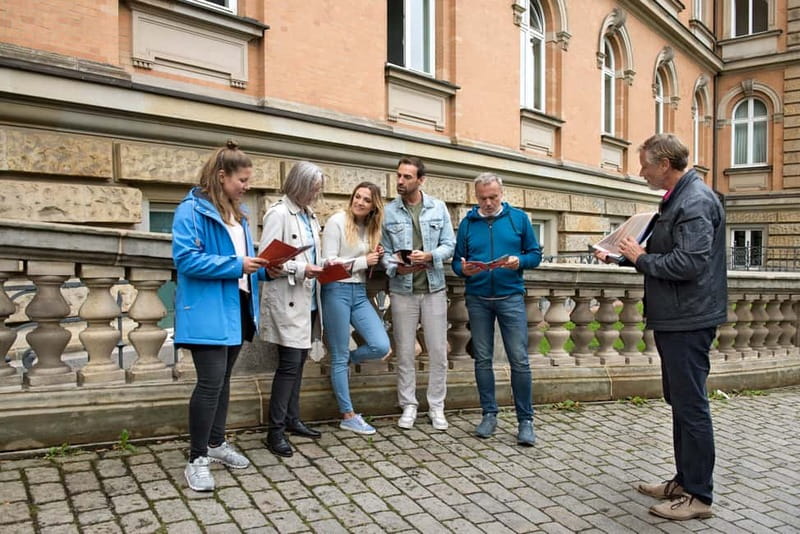
I would choose this tour for:
- History fans who want economic and political context
- First-time visitors who want a clear introduction to Frankfurt
- German speakers interested in local stories and civic development
- People who enjoy walking at a steady pace while listening
- Visitors curious about how ordinary commerce helped shape public power
I would be more cautious if you want only famous buildings, photography stops, or a brief orientation. The walk gives priority to explanation and historical connections. It also requires two miles on foot in changing weather.
The experience can suit a solo visitor particularly well. One person who joined alone found plenty to learn, even as a native of Frankfurt. That says something important: the tour is not limited to outsiders who know nothing. It can reveal overlooked details to people who already recognize the city streets.
Should you book the Frankfurt Old Town Historical Walking Tour?
Book it if you want Frankfurt to make sense beyond its banks and skyscrapers. The walk’s best quality is its clear story: local markets helped create commercial power, commercial power shaped civic life, and that long development led toward the financial center you see today.
I would book early enough to confirm the language, wear shoes suited to two miles, and leave your schedule open after the finish because the route does not return to the Goldene Waage. German speakers get the easiest fit. English speakers should make a direct request and wait for confirmation.
Skip it if you dislike standing outdoors for long explanations, need an accessible route, or want a short photo-focused stroll. For everyone else, the $29 price is fair when a strong historian is leading. You come away with more than Old Town snapshots. You get a working explanation of why Frankfurt became Frankfurt.
FAQ
Where does the tour meet?
The meeting point is in front of the Goldene Waage coffee house in Frankfurt’s Old Town.
How long does the tour last?
The tour lasts two hours.
How far do you walk?
The tour includes approximately two miles of walking.
Does the tour return to the meeting point?
No. The tour ends somewhere different from where it begins.
What language is the tour in?
The standard tour is in German.
Can I request an English tour?
Yes. English tours are available on request. Contact GetYourGuide or ask the provider directly.
Who leads the tour?
A local historian serves as the live tour guide. Guides named in the available information include Karl Alois and Nicole.
Is food or drink included?
No. Food and drinks are not included.
Is transportation included?
No. Transportation is not included.
What should I bring?
Bring comfortable shoes and clothing suited to the weather. The tour operates rain or shine.
Are pets allowed?
No. Pets are not allowed.
Is the tour suitable for people with mobility impairments?
No. The experience is not suitable for people with mobility impairments.
Just added around Germany
- Historic Christmas tour of Lübeck★ 4.3 · 47 reviews
- Historic Berlin Pubs & History Tour★ 4.9 · 73 reviews
- Heidelberg: Experience our history 1.5-hour walking tour through the old town★ 4.7 · 306 reviews
- Heidelberg: Discover Heidelberg Castle – experience history up close★ 4.7 · 171 reviews
- Hamburg: Speicherstadt Historical Guided Walking Tour★ 4.7 · 71 reviews
- Berlin: Cold War History and Berlin Wall Guided Walking Tour★ 5.0 · 33 reviews
- Görlitz: Ghosts and Spooky Historical Night Walking Tour★ 4.8 · 197 reviews
- German Hamburg Historic City Center Pay-What-You-Want Tour★ 4.8 · 80 reviews
Old Town & Historic Centre Walks, compared.
Live Fado Show with Port Wine in Historic Center
Read our review →
Valencia Old Town Tour with Wine & Tapas in 11th Century Historic Monument
Read our review →
Prague Old Town, Medieval Underground and Dungeon Historical Tour
Read our review →
Historic Center and Getsemaní Shared Walking Tour
Read our review →
Old Town Walking Tour History and Tales in Edinburgh
Read our review →
Philadelphia Old City Historic Walking Tour with 10+ Top Sites
Read our review →
Saadian Tombs & Bahia Palace, Medina Guided Tour
Read our review →Browse the lists this tour appears in