Review · PORTO
Porto Guided Tour to the Historical Center on a Tuk Tuk
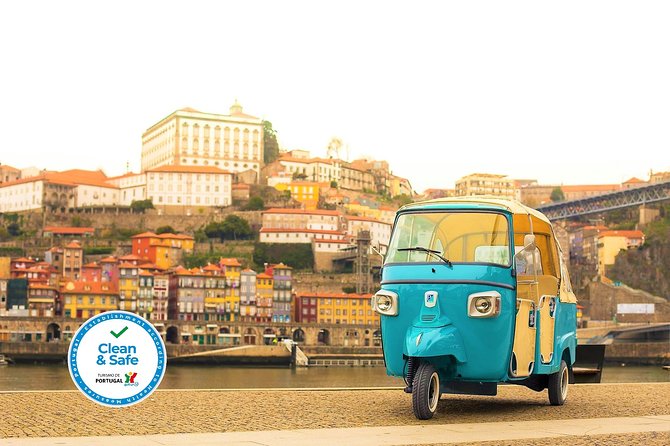
Porto reveals itself quickly from a tuk tuk. I like the way this private tour slips through narrow cobbled lanes that larger vehicles cannot reach, and I like the high viewpoint at Serra do Pilar, where Porto, Gaia, the Douro, and the bridges come together in one grand view. The included glass of Port wine adds a pleasant local touch.
The main drawback is the short running commentary while the tuk tuk is moving. Road noise and wind can make the guide hard to hear, and one poorly delivered tour left a guest feeling they had simply been driven from place to place. Traffic can also eat into sightseeing time, especially when streets are closed or roadworks slow the route.
At $42.33 per person, this is fair value if you want a fast orientation and your own small group. It works best on your first day in Porto, when you need help understanding the city’s steep layout, major sights, and river crossings before exploring on foot.
Five useful things to know before booking
- You see Porto from a private tuk tuk: Only your group rides together, with a minimum booking of two people.
- The route links Porto and Vila Nova de Gaia: Serra do Pilar gives you one of the finest city views on the tour.
- You get nearly two hours of sightseeing: The listed duration is about 1 hour 50 minutes, with several short stops.
- A Port tasting is included: You receive one glass during the experience.
- Vehicles are small: Each tuk tuk carries two, three, or four adults of average height, up to 75 kilograms each.
- Weather and traffic matter: Rain, wind, road closures, and congestion can change the experience or cause cancellation.
Why a tuk tuk works well in Porto
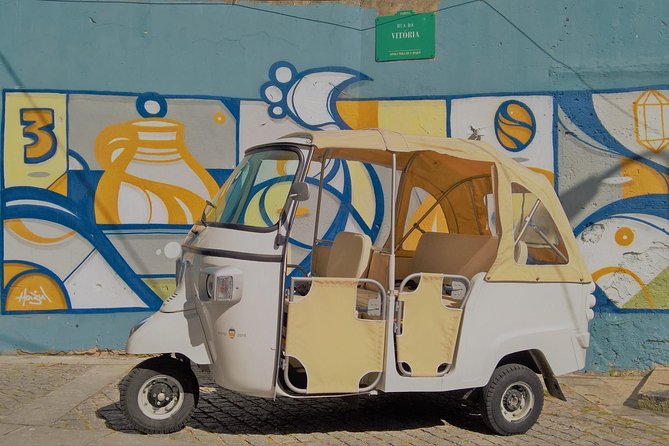
Porto is compact, but it is not easy ground. Streets rise sharply from the Douro, paving stones can be uneven, and some lanes are too tight for a normal sightseeing bus. A tuk tuk gives you a moving overview without asking you to climb every hill on foot.
I especially like this format for a first look at the city. You can cover the cathedral, São Bento Station, Clérigos, the old commercial quarter, the riverfront, Gaia, and two major bridges in less than two hours. You will not study every monument in detail, but you will learn where everything sits.
The small vehicle also gives the route a more personal feel. Guides such as Anna, Ana, Victor, Natalia, Bernardo, Fabian, Gabby, and Gonçalo have been praised for their humor, local tips, clear explanations, and enthusiasm. The quality depends on the individual guide, so expect a lively history lesson with a good guide, but not a formal lecture with museum-level detail.
The tour is private, which matters. Your group does not share the vehicle with strangers, and the guide can sometimes adjust the route or stop longer when traffic and timing allow. One guide even took a group toward the beach because two people had never seen the ocean, although that kind of detour should not be treated as guaranteed.
More History Bike, Segway and Tuk-Tuk Tours in Portugal
- Historic Porto by Private Electric Tuk Tuk to Top Landmarks
★ 4.5 · 735 reviews - Porto: Historic Center Tuk-Tuk Tour
★ 4.5 · 244 reviews - Explore Lisbon by Tuk Tuk: History and Viewpoints
★ 5.0 · 840 reviews
Starting near Porto Cathedral
The meeting point is at Rua de Augusto Rosa 180, close to Porto Cathedral. This is a useful starting area because the cathedral sits high above the old city and gives you an early sense of Porto’s steep streets and layered rooftops.
The Sé Cathedral began in the twelfth or thirteenth century. Its Romanesque core was enlarged and altered over time, with later work creating the medieval appearance you see today. The planned stop lasts about 10 minutes, but entry is not included, so you should not assume there will be time for a full interior visit.
Nearby, the Pelourinho da Sé is a modern reproduction of an older civic monument. The original surroundings were changed in 1940 under the Estado Novo, when buildings near the cathedral, including the Casa do Cabido and Bishop’s Palace, were removed to create a paved terrace. The stone pillory placed there in 1945 recalls Porto’s municipal authority.
The Bishop’s Palace, or Paço Episcopal, adds a grand Baroque note to this high part of town. It likely began in the thirteenth century and was remodelled in the eighteenth century, with the work often linked to Nicolau Nasoni. The façade has a large arched entrance, pilasters, decorated windows, and the coat of arms of Bishop Rafael de Mendonça.
You should expect brief exterior explanations rather than a long architectural visit. That is the pattern of this experience: see many places, learn the key point, then move on.
São Bento Station and Porto’s civic heart
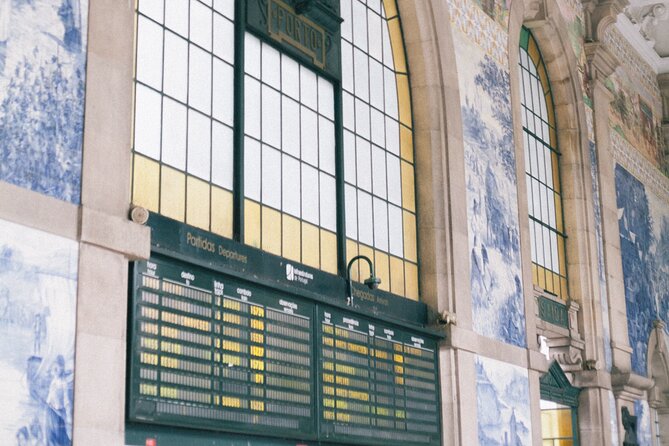
São Bento Railway Station is one of the strongest stops on the route. The building dates from the early twentieth century, but its real prize is inside the entrance hall: about 20,000 blue-and-white tiles by Jorge Colaço show scenes from Portuguese life and history.
The station is free to enter, and the planned stop lasts about 10 minutes. If you want photographs, this is one place where the short pause can feel too short. The tiled hall rewards a slow look, especially at the way the panels fill the walls above the busy station floor.
The tuk tuk then passes through central squares shaped by Porto’s changing civic life. One square began as a project in 1718, when new streets and a large open space replaced older medieval walls and urban palaces. Another, now known as Praça de Carlos Alberto, was once associated with blacksmiths. Its current name honors Charles Albert of Sardinia, who lived in Porto in exile.
At Fonte dos Leões, you will see a nineteenth-century fountain cast in France. The four lions were made by the Val d’Osne foundry, and the design is largely copied from a fountain in Leicester, England. It is a small but amusing reminder that city decoration often travels farther than you expect.
Churches, gardens, and the Clérigos skyline
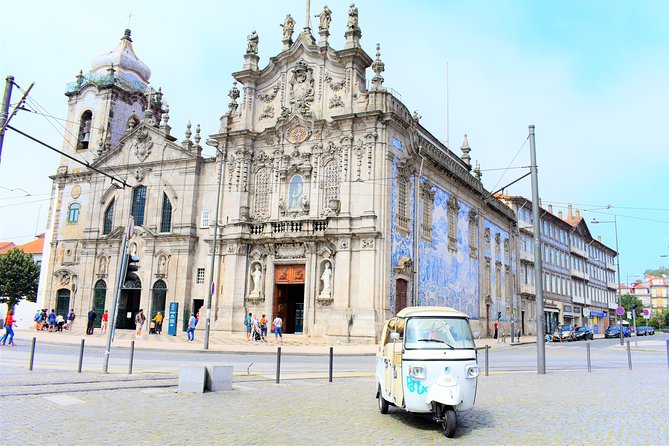
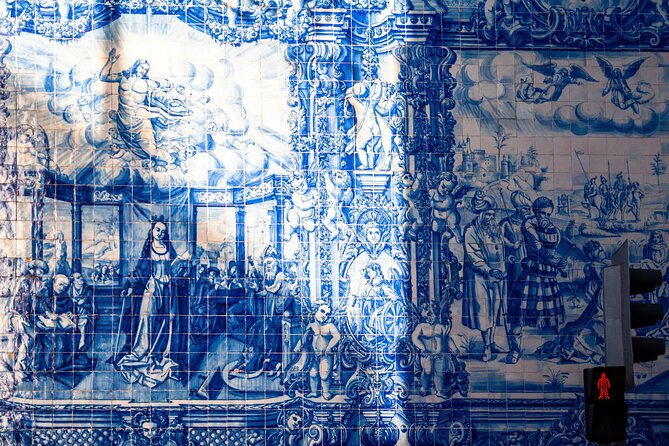
The middle portion of the tour brings several major religious buildings into view. One is a seventeenth-century church with a classical façade dating from the 1850s and a notable Porto Rococo altarpiece. Another was built in the second half of the eighteenth century and is known for its carved interior and blue-and-white tile-covered side façade, added in 1912.
The itinerary does not always give these churches a long stop, so ask your guide to identify them clearly if you want to return later. Since monument entrances are not included, you will need to plan separate visits if you want to see the interiors.
The Cordoaria Garden offers a welcome change from stone streets. Its formal public garden was laid out in the nineteenth century on an area once linked with rope makers. You will find statues of Portuguese writers, modern sculptures by Juan Muñoz, and a work showing the kidnapping of Ganymede.
Then comes Clérigos Tower, Porto’s most recognizable vertical marker. The Baroque church and its tall bell tower can be seen from many parts of the city, which makes it useful for orientation. The planned stop is only about five minutes, and tower admission is not included, so treat this as a photo and explanation stop rather than a climb.
The guide may point out the São Bento da Vitória Monastery next. The late-sixteenth-century complex has served religious, cultural, archival, and performance purposes. Part of it is connected with the São João National Theatre, and its Noble Cloister has hosted concerts and theatrical events.
More Old Town and Historic Centre Walks in Portugal
- Porto: Historical Center Walking Tour
★ 4.8 · 898 reviews - Porto: Private Tour to the Historic Center in a Classic Car
★ 4.9 · 268 reviews - Porto: Private & Flexible Walking Tour in Historic Center
★ 4.5 · 35 reviews - Porto: Historical Center Walking Tour
★ 4.8 · 33 reviews
Porto’s grand commercial quarter
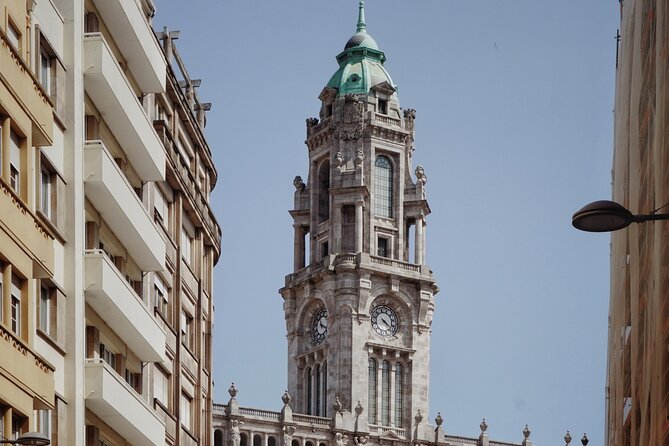
The route continues toward the Palácio da Bolsa, or Stock Exchange Palace. Built in a neoclassical style from 1842, it is now home to Porto’s Commercial Association and is one of the city’s best-known monuments. Its Arabian Room is the famous interior highlight.
The palace is not included in the tour price, so you will need a separate ticket and enough time if you want to enter. The tuk tuk gives you the useful overview first, allowing you to decide if the palace deserves a return visit.
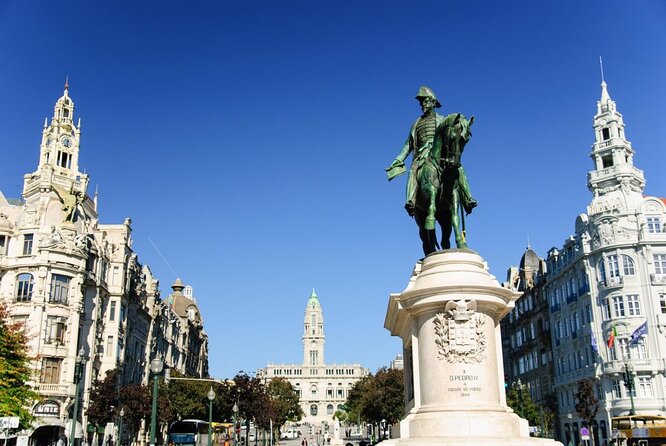
Nearby is the monument to Dom Pedro, created by sculptor Célestin Anatole Calmels and architect Joaquim da Costa Lima. Its reliefs refer to Dom Pedro’s connection with Porto and his role in the constitutional struggle. It is a quick stop, but the guide can add meaning to what would otherwise be just another large statue in a city square.
The Livraria Lello building is another likely talking point. The library opened in 1906 and has an ornate Art Nouveau exterior with Neo-Gothic details inside. A painted staircase, stained-glass skylight, and wood-like decorative plaster make it one of Porto’s most photographed interiors.
The tuk tuk tour does not include library entry. You should also avoid assuming that the short stop means you can visit inside. Use the tour to locate it, then return separately if the library is high on your list.
The Mercado Ferreira Borges adds a different kind of architecture. Built in 1885 as a replacement for the Ribeira Market, it is an important example of Porto’s iron construction. It no longer operates as a traditional market and now houses Hard Club, an entertainment venue.
Across the way, Praça do Infante D. Henrique includes a small garden and a monument celebrating Portugal’s navigation tradition. The square is surrounded by the market building and Palácio da Bolsa, making it a compact lesson in Porto’s commercial and maritime past.
Gold, iron, and the Douro riverfront
The Church of São Francisco is one of the most dramatic buildings on the route. Construction began in the fourteenth century, but the interior was transformed by Baroque gilded carving in the seventeenth and eighteenth centuries. The sheer amount of gold gave the church its famous nickname, the Church of Gold.
The Tree of Jesse and the catacombs are key reasons to return for an interior visit. The church is a national monument and part of Porto’s UNESCO-listed historic center, but entry is not included in the tuk tuk price.
The former Alfândega Nova, or New Customs House, presents another side of Porto. This nineteenth-century neoclassical building uses iron alongside stone, brick, and wood. It now houses the Museum of Transport and Communications and a congress center.
These stops help explain why Porto feels less like a single-style old town and more like a working city built in layers. Religious wealth, trade, transport, and engineering all appear within a short distance.
The best view at Serra do Pilar
For many people, the high point is the move across the river to Vila Nova de Gaia and the Monastery of Serra do Pilar. The monastery began in 1538 and was completed around 1670. Its circular church and circular cloister are unusual in Portugal, and the cloister has 36 Ionic columns.
The terrace is the real prize on a short city tour. From here, you can look back toward Porto Cathedral, the Dom Luís I Bridge, the riverfront, Fontainhas, and the São João Bridge. You can also see along the river toward the Arrábida Bridge.
The planned stop lasts about 15 minutes and is free. That is enough for photographs and a basic orientation, though you may wish you had longer if the weather is clear. Ana’s visit to this viewpoint was singled out as a favorite part of the experience, and I can understand why: it gives you the city’s geography in one glance.
Two bridges and a lesson in Porto’s engineering
The Dom Luís I Bridge is one of Porto’s defining sights. Designed by Teófilo Seyrig, a disciple of Eiffel, it opened in 1886 with two overlapping iron decks. Its large arch once held the record for the world’s biggest forged-iron arch.
Today, the upper deck carries Porto’s metro, linking the cathedral area with Vila Nova de Gaia and the Garden of Morro. Seeing it from Serra do Pilar helps you understand how the bridge binds the two sides of the Douro together.
The newer Infante Bridge opened in 2003 and replaced road traffic on the upper deck of Dom Luís I. Its arch design is technically notable, with a 280-metre span. The guide may point out how its position differs from the older bridge and how the crossings serve separate parts of the city.
This final section makes the tour more than a parade of old buildings. You get a clear sense of Porto as a river city shaped by steep hills, bridges, railways, and trade.
Price, comfort, and practical limits
At $42.33 per person, the tour offers reasonable value for a private vehicle, a driver-guide, nearly two hours, and a Port wine tasting. The value is strongest when two or three people share the tuk tuk and use the tour as a city introduction.
The small vehicles carry two, three, or four adults of average height, with a stated limit of 75 kilograms per person. Larger groups use more than one tuk tuk and travel together, stopping at the same places. If six people are placed in a vehicle intended for four, comfort and seatbelt arrangements may become a concern, so confirm the vehicle plan before booking.
Wear a raincoat if the forecast looks uncertain. The tuk tuk is open enough for wind and rain to affect your comfort, and poor weather can make the route less enjoyable. The experience requires good weather, and a weather cancellation comes with the choice of another date or a full refund.
Road noise is the other practical issue. Some guides provide excellent commentary at stops, but speech can be difficult to catch while driving. If you miss a detail, ask the guide to repeat it when the vehicle stops.
Free cancellation is available up to 24 hours before the start time. Cancellations made later are not refunded, and changes within that period are not accepted. The company can also face sudden street closures, especially during metro construction, so leave some flexibility in a tightly planned day.
Who should book this Porto tuk tuk tour?
I would choose it for a first morning or afternoon in Porto, especially if you have limited time, children in your group, or anyone who would rather not tackle the city’s hills immediately. It is also useful for people who want a quick photo circuit before selecting which interiors deserve a proper visit.
Families can do well here. One family with children aged three and five found the short stops and viewpoint easy to enjoy, and the private format avoids the strain of a large group schedule.
I would not choose it as your only cultural tour if you want long church visits, detailed architectural discussion, or quiet time at each monument. You will see a great deal, but most stops are brief, and several important entrance fees are extra.
Should you book it?
Book this tour if you want to get your bearings fast, see both Porto and Gaia, and enjoy a small-group ride through streets that are tiring to cover on foot. The best guides, including Anna, Ana, Victor, and Gonçalo, can turn the route into a friendly and useful introduction, with local restaurant tips and good photo stops.
Skip it if you dislike open vehicles, need extensive commentary while moving, or prefer to spend an hour inside one monument. For most short stays, though, the tuk tuk makes a sensible first pass. Take notes on the places that catch your eye, then return on foot for São Bento, Clérigos, São Francisco, Palácio da Bolsa, or Livraria Lello.
FAQ
How long does the Porto tuk tuk tour last?
The experience lasts approximately 1 hour and 50 minutes.
Where does the tour begin?
It begins at Rua de Augusto Rosa 180, 4000-528 Porto, Portugal.
Where does the tour finish?
It finishes back at the meeting point.
Is this a private tour?
Yes. Only your group participates in the activity.
How many people can ride in one tuk tuk?
Each tuk tuk carries two, three, or four adults of average height, with a stated limit of 75 kilograms per person.
What happens if my group is larger?
Larger groups use multiple tuk tuks and travel together, making the same stops at the same time.
Is Port wine included?
Yes. One glass of Port wine is included.
Are monument entrance fees included?
No. Entrance fees for monuments are not included.
Is the tour offered in English?
Yes. English is one of the offered languages.
Can I cancel for a refund?
You can cancel at least 24 hours before the start time for a full refund. If poor weather cancels the experience, you will be offered another date or a full refund.
More History Bike, Segway and Tuk-Tuk Tours in Porto
- Historical Singapore Bike Tour on Full-Sized Bicycles
★ 5.0 · 1,421 reviews - Charlotte’s Ultimate Southern Charm Historical City Cart Tour
★ 5.0 · 1,347 reviews - Barcelona: 2.5-Hour Bike or E-Bike Historical Tour
★ 4.5 · 1,262 reviews - Asheville Historic Downtown Guided Electric Bike Tour with Scenic Views
★ 5.0 · 1,234 reviews
More Old Town and Historic Centre Walks in Porto
- Madrid Essential: Historic Center, Plaza Mayor & Royal Palace
★ 5.0 · 6,416 reviews - Lisbon: Live Fado Show with Port Wine in Historic Center
★ 4.7 · 4,166 reviews - Valencia Old Town Tour with Wine & Tapas in 11th Century Historic Monument
★ 5.0 · 3,234 reviews - Prague Old Town, Medieval Underground and Dungeon Historical Tour
★ 4.5 · 3,227 reviews
Just added around Porto
- Porto: Walking Tour Through History, Culture & Amazing Views★ 4.5 · 20 reviews
- Porto: Private & Flexible Walking Tour in Historic Center★ 4.5 · 35 reviews
- Porto: Private Tour to the Historic Center in a Classic Car★ 4.9 · 268 reviews
- Porto Region Museum: a Thousand Years Of History★ 4.2 · 22 reviews
- Porto: Historical Center Walking Tour★ 4.8 · 33 reviews
- PORTO: Historical Walking Tour★ 4.8 · 92 reviews
- Porto: History & Lengends walking tour★ 5.0 · 31 reviews
- Porto: Historic Center Tuk-Tuk Tour★ 4.5 · 244 reviews
Old Town & Historic Centre Walks, compared.
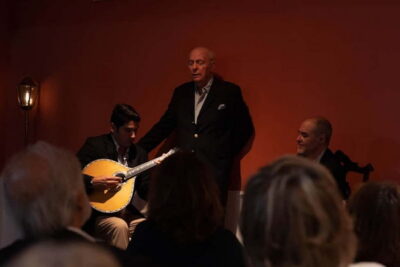
Live Fado Show with Port Wine in Historic Center
Read our review →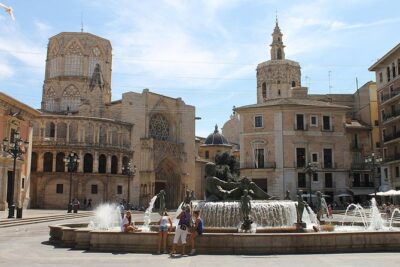
Valencia Old Town Tour with Wine & Tapas in 11th Century Historic Monument
Read our review →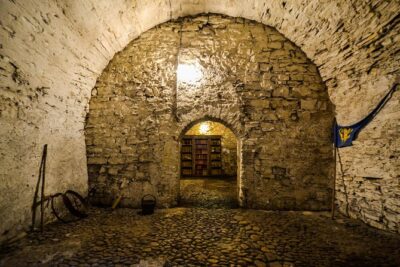
Prague Old Town, Medieval Underground and Dungeon Historical Tour
Read our review →
Historic Center and Getsemaní Shared Walking Tour
Read our review →
Old Town Walking Tour History and Tales in Edinburgh
Read our review →
Philadelphia Old City Historic Walking Tour with 10+ Top Sites
Read our review →