Review · POMPEII
Small Group Guided Walking Tour of Ancient Pompeii Highlights: Why It Scores 5/5
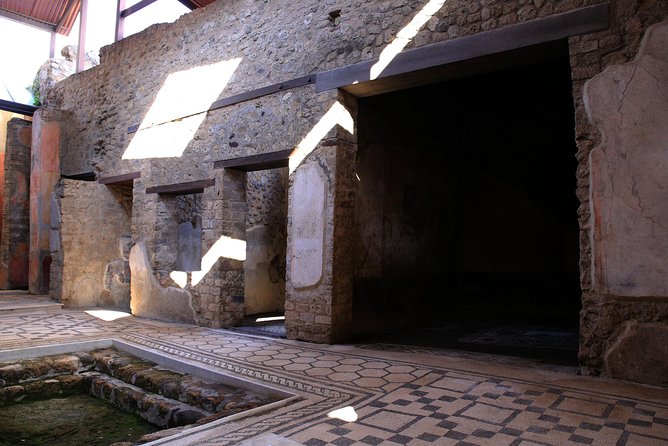
Pompeii rewards a guide. This two-hour walk takes you through the Roman city’s best-known remains, including its theaters, Forum baths, and Lupanar, with entrance tickets and skip-the-line access included. I especially like the small group limit of 18 people and the chance to learn from guides with archaeological training, including Lello, Italo, and Susanna. You are not simply pointed toward old walls. The guide helps explain what each building was for and how daily life worked before Vesuvius erupted in 79 AD.
I also like the clear focus. You see major highlights without committing to a long full-day tour, and past groups have continued exploring on their own after the guided portion. The main drawback is the price, $107.23 per person for about two hours. That can be good value if your guide is as strong as Lello or Italo, but it is a sizable cost for a short visit, especially since hotel transportation, drinks, and lunch are not included.
Key Points Before You Book
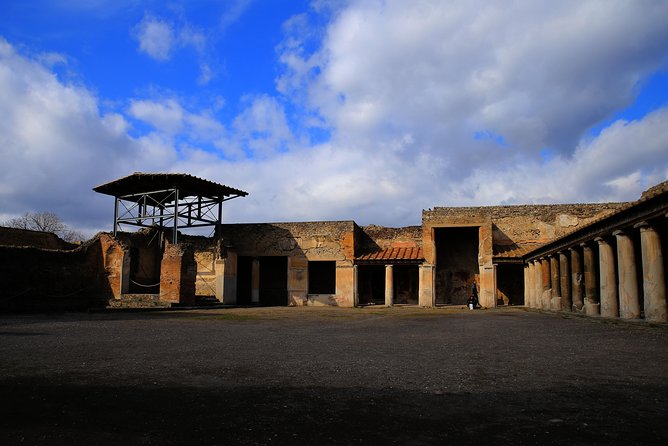
- Archaeologist-led storytelling: Guides such as Lello have archaeological backgrounds and bring extra context to Pompeii’s ruins.
- Four major stops: The route includes the Teatro Grande, Odeon, Terme del Foro, and Lupanar.
- Small group setting: The group can include up to 18 people, though some departures have been much smaller.
- Skip-the-line entry: Entrance tickets are included, helping you avoid long ticket queues at the archaeological site.
- Ancient streets require good shoes: You will walk over original Roman paving, so comfort matters more than style.
- Strict meeting time: Arrive at Coffee Shop Vittoria at least 10 minutes early because the guide cannot wait for late arrivals.
What This Pompeii Walk Does Well
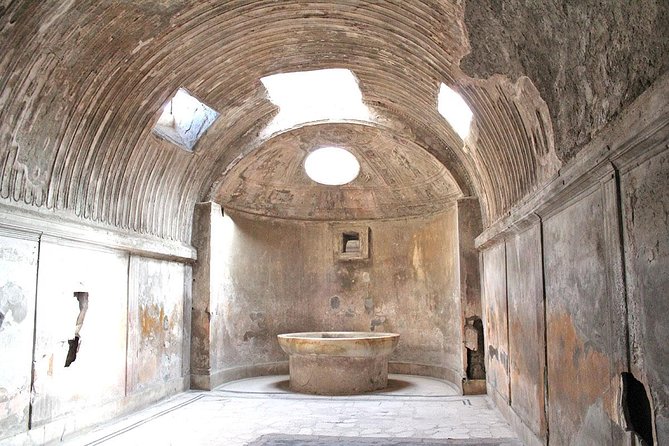
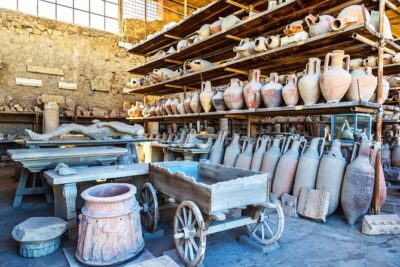
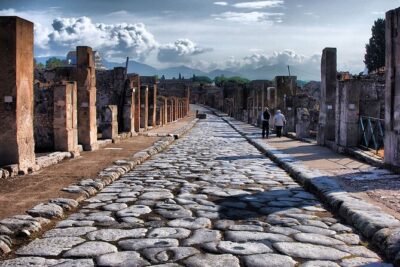
Pompeii is easy to underestimate. On a map, it can look like a collection of walls and columns. On foot, it is a large ancient city with theaters, bathhouses, homes, shops, religious buildings, and streets that still show wheel ruts from carts.
I like having a guide for a first visit because the ruins rarely explain themselves. A stone platform may have been part of a public building, while a plain-looking room may have served a very specific purpose. The best guides connect the remains to ordinary routines: entertainment, bathing, work, food, politics, and sex.
This tour also keeps the pace manageable. Two hours is long enough to see important sites without asking you to walk with a group all day. It is especially useful in hot weather, when a shorter route can preserve your energy. One family with teenagers found the amount of information and the length well judged, which makes sense for younger visitors who may lose interest during a much longer archaeological lecture.
The group size is another practical advantage. The maximum is 18 people, but some departures have had only seven or ten participants. A smaller group makes it easier to hear the guide, ask questions, and stay together on narrow streets. It also reduces the stop-and-start feeling common with large sightseeing groups.
There is one important distinction to understand before paying: your confirmation is for the guided experience, not a stand-alone ticket that you can use independently. You need to meet the guide and enter with the group. If you arrive late, the booked entry time may pass without you.
More Ancient History Tours in Italy
- Colosseum: Underground and Ancient Rome Tour
★ 4.7 · 12,691 reviews - Colosseum & Ancient Rome with Arena Floor Option I Max 6 People
★ 5.0 · 3,306 reviews - Rome: Colosseum, Ancient Rome Tour or AudioGuided Tour
★ 4.4 · 2,879 reviews
Meeting at Coffee Shop Vittoria in Pompeii
The tour begins at Coffee Shop Vittoria on Via Mare in Pompei. You should arrive at least 10 minutes before departure. That advice is not a polite suggestion. The guide has a timed group entry, and the group cannot wait for a late arrival.
Hotel pickup and drop-off are not included, so you need to arrange your own way to the meeting point. The location is near public transportation, which helps if you are staying in or around Pompeii, but you should still allow time to find the coffee shop and get oriented.
At the end, the walk returns to the same meeting point. That makes planning easier if you have a train, lunch booking, or another activity afterward. Still, I would not schedule a tight connection immediately after the tour. The stated duration is approximately two hours, and walking tours can vary slightly in pace.
The dress code is smart casual, though practical clothing is the better choice. Wear comfortable shoes with firm soles. The streets are ancient, uneven, and made from original paving stones in places. Sandals or fashionable shoes with little support could make the walk less pleasant.
Teatro Grande: Pompeii’s 5,000-Seat Stage
The first major theater stop is Teatro Grande, an open-air theater built to hold about 5,000 people. Its size gives you a quick sense of Pompeii as a functioning city rather than a quiet ruin.
I find theaters useful places to begin because they are easy to picture. Rows of seating, the stage area, and the shape of the structure show how public entertainment fit into Roman life. A guide can point out how the space was arranged and help you imagine the crowds that once gathered there.
The theater is also a good test of your guide’s style. A dry explanation of dates and construction can make any ruin feel distant. A strong storyteller makes the building feel used, noisy, and social. Lello and Italo received especially warm praise for combining facts with humor and energy, and that approach suits a site like this.
You should not expect a full theater performance or a long architectural lecture. The stop lasts about 20 minutes, so the guide will focus on the main points. That brevity is helpful if you want to cover several highlights, but it means you will not study every feature in detail.
Odeon, the Smaller Theater
The Odeon, also called Teatro Piccolo, is a more compact open-air theater with about 800 seats. Its smaller scale creates a useful contrast with Teatro Grande.
I like seeing both theaters in one visit because the comparison gives the tour more meaning. One was built for a large public audience, while the smaller venue had a more intimate feel. You can better understand that Pompeii had several kinds of entertainment and several settings for public life.
The stop lasts roughly 20 minutes. That is enough time to see the structure, hear its basic purpose, and ask a question or two. If you are fascinated by ancient theater design, you may want more time than the schedule allows. The benefit is that you do not spend half the tour at one building while missing other major parts of the site.
Families may appreciate this portion of the walk. The two theaters provide a simple visual comparison, and the guide can explain their differences without turning the visit into a technical class. The teenagers who enjoyed this tour found the information substantial but not overwhelming, which is a good sign for mixed-age groups.
More History Walking Tours in Italy
- Venice: City Center Historical Guided Walking Tour
★ 4.2 · 1,873 reviews - Palermo: Street Food and History Walking Tour
★ 4.9 · 1,486 reviews - Verona: History and Hidden Gems Guided Walking Tour
★ 5.0 · 1,379 reviews - Naples Spanish Quarters Walking Tour Street Art, Folklore & Sweet
★ 5.0 · 797 reviews
Terme del Foro and Roman Bathing Culture
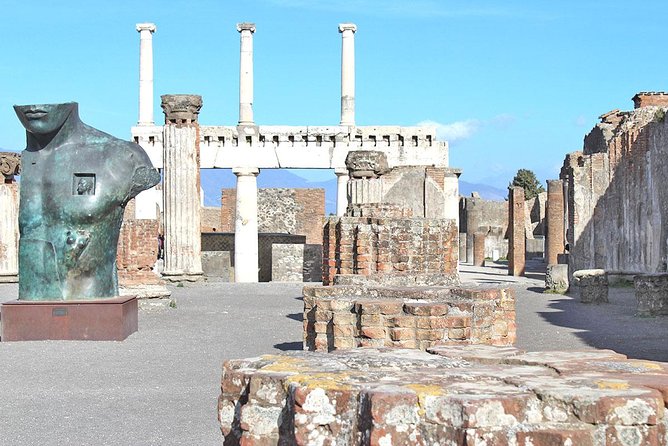
The Terme del Foro is a Roman bath complex buried by the eruption of Vesuvius in 79 AD. Baths were not just places to wash. They were important public spaces where people spent time, met others, and followed a routine that included different rooms and temperatures.
I value this stop because baths help connect the ruins to daily life. A theater tells you how people were entertained. A bath complex helps explain how they spent ordinary hours. The building may not have the instant visual drama of a theater, but it adds social context to the tour.
The guide’s interpretation matters here. Without explanation, bath ruins can look like a series of small rooms. With the right details, the layout becomes easier to understand. You might find yourself noticing how the spaces were organized and why Romans invested so much effort in public bathing.
This is another 20-minute stop, so expect an overview rather than an exhaustive examination of every room. If your main interest is Roman engineering, architecture, or domestic life, you may want to remain in the site after the tour ends. The guided route gives you a framework, then you can explore further on your own.
The Lupanar and Pompeii’s More Direct Side
The Lupanar is one of Pompeii’s most talked-about sites. It functioned as a brothel, and some frescoes remain visible. Those images helped identify the room’s purpose and the services associated with the women who worked there.
This can be an awkward stop for families, but it is also an honest part of the ancient city. Pompeii was not only temples, theaters, and grand public buildings. It was a working town with businesses and private lives, including aspects that modern visitors may find blunt or uncomfortable.
The planned stop lasts about 30 minutes, making it one of the longer parts of the route. That gives the guide room to explain the visible paintings and the building’s purpose rather than rushing past it. I would expect the guide to handle the subject with discretion, but parents should decide in advance if the content suits their children.
For adults, the Lupanar offers a useful reminder that archaeology often deals with ordinary life, not just noble monuments. It can also be one of the most memorable sections of the tour because the surviving visual evidence is direct.
Why the Archaeologist Guide Matters

The strongest reason to book this experience is not the route alone. You can walk past many of these buildings without a guide and still see the stones. The value comes from understanding what you are looking at.
Lello is described as an archaeologist who brings excitement and strong subject knowledge to the visit. Italo is praised for being friendly, animated, and passionate about Pompeii. Susanna is described as educational, entertaining, and kind, with clear communication before the tour. Guides also use a small radio system with an earpiece, according to one group, which makes it easier to hear without the guide shouting.
That equipment can matter in an archaeological site. Wind, nearby groups, and the general noise of a busy entrance area can make spoken commentary hard to follow. A personal earpiece lets you look at the building while listening, rather than crowding around the guide.
I would not assume every departure will feel identical. The individual guide shapes the experience, and the strongest feedback centers on the people leading the walks. Still, the repeated praise for the guide’s humor, clarity, and archaeological background suggests that the company places real value on interpretation rather than simply escorting people through the gate.
Is $107.23 Good Value for Two Hours?
At $107.23 per person, this is not a budget entry option. You are paying for more than access to the ruins. The price includes the entrance ticket, a professional guide, and skip-the-line entry, with a small group capped at 18 people.
The value improves if you care about context and have limited time. A guide can help you see the most important sections quickly, while the skip-the-line arrangement reduces the risk of wasting part of your visit in a ticket queue. If you plan to spend only a few hours in Pompeii, that efficiency has a real benefit.
The price is harder to justify if you already know the site well, prefer to explore alone, or plan to spend most of the day wandering independently. The tour lasts about two hours, but you may want to remain afterward to continue exploring. Previous groups have spent more than two additional hours on their own once they knew what they were seeing.
Group discounts may be available, but the exact savings are not provided here. Lunch, drinks, and transportation from your hotel are extra. I would budget for those separately rather than treating the tour fee as the full cost of the outing.
Who Will Get the Most From This Tour?
I would choose this walk if you are visiting Pompeii for the first time and want a clear introduction without an all-day commitment. It suits adults who enjoy archaeology, families with older children, and anyone who wants the main sights explained in plain language.
It is also a good match for people visiting in hot weather. The August heat was specifically noted as a challenge, and a two-hour guided route can help you see key sites before deciding how much more walking you want to do.
The tour may be less suitable if you need a slow pace, extensive time for photography, or detailed access to every building. You will be walking on uneven ancient streets, and the schedule moves between several sites. Most participants can take part, and service animals are allowed, but the supplied information does not provide detailed accessibility measurements.
Children must be accompanied by an adult. Parents should also consider the Lupanar’s subject matter before booking.
Cancellation is free up to 24 hours before the local start time. Cancellations made later are not refunded, and changes within that period are not accepted. The experience also requires a minimum number of participants, so if the company cancels for that reason, you are offered another date or experience, or a full refund.
Should You Book the Pompeii Highlights Walk?
I would book it if you want the main Pompeii sights explained by a lively guide and you value a smaller group over the lowest possible price. The combination of included entry, skip-the-line access, archaeological storytelling, and a focused route makes the tour a practical first look at the city.
I would skip it if you want to explore at your own speed or already have strong knowledge of Pompeii. In that case, the two-hour schedule and per-person price may feel restrictive.
For most first-time visitors, the best plan is to take the guided route, then stay inside Pompeii afterward if you have the time and energy. The guide gives you the map in your head. The extra wandering lets you follow your own interests.
FAQ
How long does the Pompeii walking tour last?
The tour lasts approximately two hours.
What sites are included?
The route includes the Teatro Grande, Odeon or Teatro Piccolo, Terme del Foro, and Lupanar. It also includes a guided visit to the Pompeii archaeological site.
Are entrance tickets included?
Yes. Entrance tickets are included, along with skip-the-line access.
Is this confirmation usable as a stand-alone ticket?
No. It is a confirmation for the guided tour and can only be used with the guide.
Where does the tour begin and end?
The tour begins at Coffee Shop Vittoria on Via Mare in Pompei and ends back at the same meeting point.
How large is the group?
The activity has a maximum of 18 participants. Some departures may be smaller.
What should I wear and bring?
Wear smart casual clothing and comfortable shoes. You will walk on original ancient streets, which can be uneven. You should also arrive at least 10 minutes early because the guide cannot wait for late arrivals.
More Pompeii and Vesuvius History Tours in Italy
- Discover the Ancient Ruins of Pompeii: Day Trip from Rome
★ 3.5 · 2,247 reviews - Ancient Pompeii Private Tour: Skip the Line & Kid-Friendly Option
★ 5.0 · 167 reviews - Skip-the-Line Half-Day Private Tour Ancient Pompeii Highlights with Native Guide
★ 5.0 · 146 reviews - Ancient Pompei in the afternoon
★ 5.0 · 140 reviews
More Small-Group History Tours in Italy
- VIP Colosseum Underground and Ancient Rome Small Group Tour
★ 4.5 · 332 reviews - Lecce History and Street Food Tasting Small Group Tour
★ 5.0 · 288 reviews - Small-Group Rome to Pompeii & Amalfi: Day of History & Sea
★ 5.0 · 239 reviews - Colosseum Forum Ancient Rome Small Group Tour for Kids Families
★ 5.0 · 198 reviews
Just added around Italy
- Historical Cellar Visit and Wine Tasting in Salento★ 5.0 · 19 reviews
- Visit + Experience at the Historical Museum of Firefighters and the Italian Red Cross★ 5.0 · 30 reviews
- Skip-the-line Exclusive Private Full-Day Complete Ancient Pompeii Guided Tour★ 5.0 · 30 reviews
- Guided Tours of Pompeii Excavations Historical and Cultural Itineraries★ 5.0 · 56 reviews
- Pompeii Small Group Tour – Tickets Included★ 5.0 · 85 reviews
- Fast Access Exclusive Private Ancient Pompeii Half Day Tour with Local Guide★ 5.0 · 54 reviews
- Ancient Pompei in the afternoon★ 5.0 · 140 reviews
- Discover Palermo in 3 hours. Art, history, markets and street food★ 5.0 · 352 reviews
Pompeii & Vesuvius History Tours, compared.
Discover the Ancient Ruins of Pompeii: Day Trip from Rome
Read our review →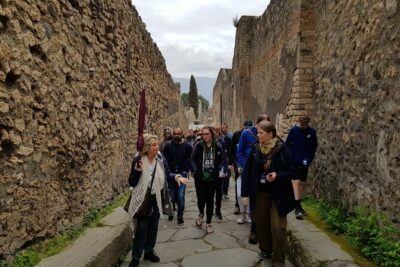
Small-Group Rome to Pompeii & Amalfi: Day of History & Sea
Read our review →Ancient Pompeii Private Tour: Skip the Line & Kid-Friendly Option
Read our review →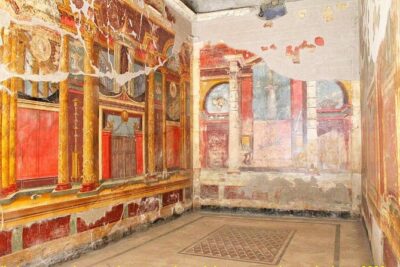
Skip-the-Line Half-Day Private Tour Ancient Pompeii Highlights with Native Guide
Read our review →
Guided Tours of Pompeii Excavations Historical and Cultural Itineraries
Read our review →