
Review · NEWCASTLE-UPON-TYNE
Lightfoot Tours: Historical Tour
Newcastle reveals itself on foot. I like the way this small-group walk packs medieval buildings, railway history, industry, and local stories into roughly 60 to 90 minutes. I also like that it ends at Grey’s Monument, close to central shops and restaurants. The main drawback is the brisk format: you see many important places, but you will not have long to explore each one.
At $40, this is a fair buy if you want a quick introduction before exploring Newcastle on your own. Guides including Wes and Adam have been praised for clear stories, personal touches, and a willingness to answer questions. You should expect steady walking, city streets, and a moderate level of fitness.
Key points about the Newcastle historical walk
- Blackfriars Court opens with medieval Newcastle: Learn about the friary, religion, city walls, and the city’s wartime past.
- Newcastle Central Station links several eras: The stop covers railway construction, St Mary’s Cathedral, Roman origins, and social change.
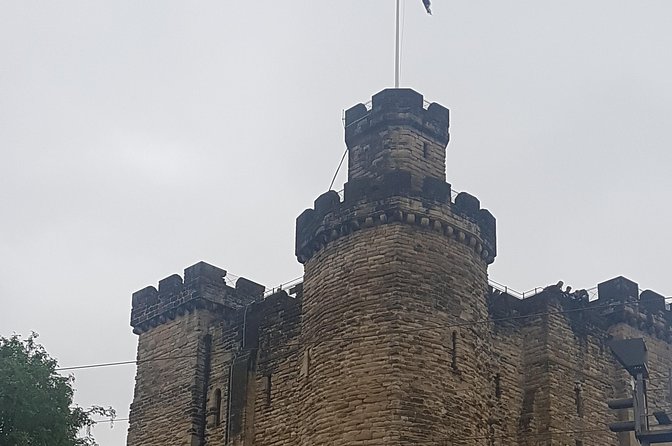
- The route includes major city sights: You pass Newcastle Castle, the Quayside, and the Tyne Bridge while moving through the center.
- Local guides bring the stories to life: Wes is praised for enthusiasm and personal anecdotes, while Adam is noted for his wit and entertaining explanations.
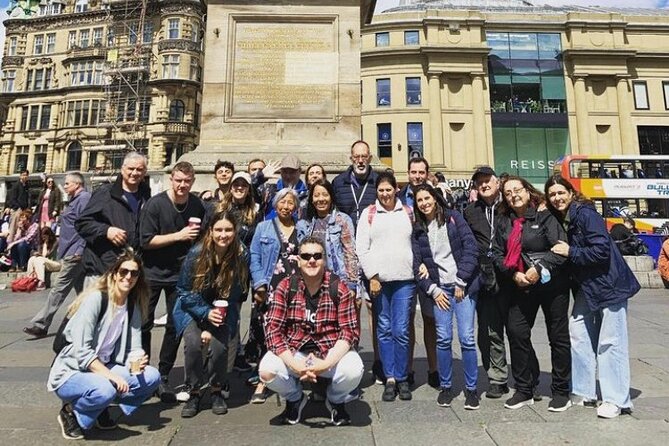
- The group is capped at 15 people: That gives you a better chance to hear the guide and ask questions than on a large city tour.
- Grey’s Monument is a useful finish: You end near the center’s shops, restaurants, and transport links.
Why this short Newcastle tour works well
Newcastle-upon-Tyne can feel like several cities layered together. Roman roots sit beneath a medieval walled town. Railways and factories changed the city during the industrial era. Grand Victorian streets later gave the center a more formal face. A short guided walk helps you connect those pieces before they blur into a list of names and dates.
I like this approach because it does not ask you to spend hours preparing. You get a quick framework for the city, then you can return to the places that catch your interest. The route also includes more than the obvious postcard stops, with stories about underground rivers, Vikings, inventions, theatres, and people linked to Newcastle.
The tour begins at 10:00 a.m. on Newgate Street and ends at Grey’s Monument. The advertised length is about one hour to one hour and 30 minutes, although the four listed sections are each planned for about 20 minutes. That makes this a useful morning activity, especially if you have a full day ahead or a Monday itinerary that needs a reliable early stop.
The group limit of 15 matters. A guide can speak to a small crowd without turning the walk into a noisy procession. If your group is especially small, the commentary may be adjusted to your interests. One past booking had only one participant, allowing Wes to shape the discussion and offer suggestions for places to eat and other things to see.
A few more history tours around the UK worth a look
- London Small Group Tour of Historical Pubs
★ 5.0 · 10,422 reviews - Edinburgh: Edinburgh Castle Guided History Tour with Tickets
★ 4.8 · 9,933 reviews - A History of Terror – Belfast City Centre Walking Tour
★ 5.0 · 2,883 reviews
Blackfriars Court and Newcastle’s medieval walls
The first stop is Blackfriars Court, where the tour turns to medieval and religious Newcastle. You hear about the Blackfriars Medieval Friary and the role of religion in the city before moving toward the old walls and their connection to Newcastle’s military past.
This is a strong opening because it gives you a sense of Newcastle before the railway, factories, and broad Victorian streets changed its character. The wall stories also show that the city was not simply a trading center. It had to defend itself, control movement, and manage the pressures that came with its position in the northeast of England.
You should expect about 20 minutes here, with no admission charge. The stop is mainly about looking, listening, and understanding the setting rather than entering a paid attraction. That keeps the tour moving, but it also means you will not receive a long indoor visit to the friary itself.
The city wall details can be especially rewarding if you already know Newcastle a little. One local account recalled learning why there is a gap in the wall, along with details about the monastery at Blackfriars and the wall at Westgate. Those small explanations are exactly what can turn a familiar street into a place with a story.
Newcastle Central Station, St Mary’s Cathedral, and the railway age
The second section moves to Newcastle Central Station. Here the guide explains how the station and railway were built, then connects that development with St Mary’s Cathedral, Roman origins, and the city’s social history.
This is where the tour starts showing how Newcastle changed from an old fortified town into a modern industrial city. Railway construction was not just an engineering project. It altered how people moved, how goods were carried, and how Newcastle related to the wider country.
I like the range of this stop. You are not given railway facts in isolation. The discussion also brings in the cathedral, Roman beginnings, and everyday social change. That mix helps you understand the city as a place shaped by both major construction and ordinary life.
Allow about 20 minutes. Newcastle Central Station is a busy urban location, so keep your attention on the guide and be ready for city noise. The walk does not appear to include a station interior tour or cathedral admission. Its value is the explanation of what you are seeing and how the parts fit together.
This section should suit you if you enjoy history that moves beyond kings and battles. The tour gives space to engineering, transport, religion, and social development. That wider view is one reason the experience has worked for people who already live in Newcastle or grew up nearby. A good local guide can still show you a familiar station in a new way.
St John the Baptist and the making of Grainger Town
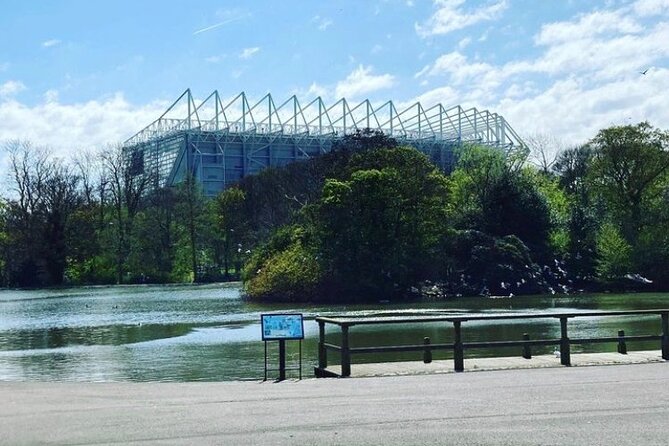
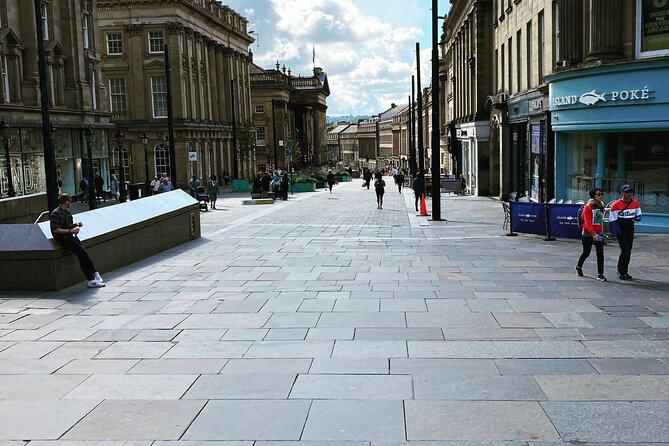
At the Church of St John the Baptist, the focus shifts to Grainger Town. The route continues toward the Bigg Market and High Bridge, introducing the planned streets and grander architecture associated with central Newcastle.
This part of the walk helps explain why the center can feel more formal than the older areas around the castle and walls. You move from a medieval setting into a later city shaped by civic ambition, commerce, and large-scale street planning.
The church serves as a useful point of orientation. From there, the route leads through areas where Newcastle’s past remains visible in the shape of the streets and the mix of old buildings. The Bigg Market and High Bridge add a more everyday urban side to the tour, rather than keeping the focus only on grand monuments.
Again, plan on about 20 minutes. The stop is free, and the emphasis is on exterior views and spoken interpretation. You may want to take notes or mark places to revisit later, because the route covers several names in a short time.
The walk can be useful early in your stay because it gives you a mental map of central Newcastle. You will know where the main areas sit in relation to one another, which makes later wandering easier. It is also a practical way to find places you might otherwise pass without noticing.
Same place, a different slice of the past:
- Edinburgh: Whisky Tasting with History and Storytelling
★ 4.9 · 2,451 reviews - Edinburgh: Old Town History and Tales Walking Tour
★ 4.8 · 2,361 reviews - Old Town Walking Tour History and Tales in Edinburgh
★ 5.0 · 2,168 reviews - Soho Music & Historic Pubs Tour
★ 5.0 · 1,993 reviews
Grey Street, the theatre, and stories below the pavement
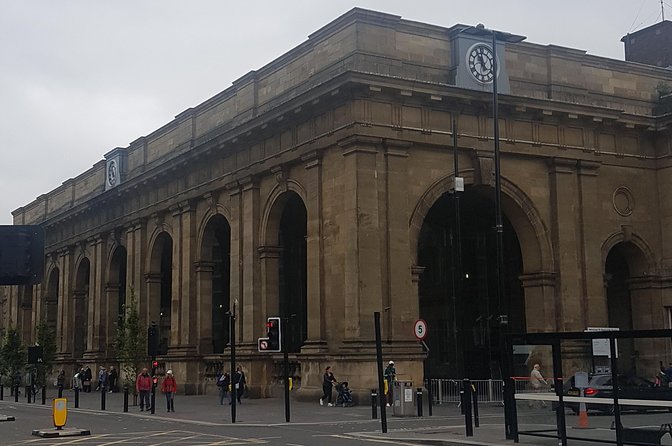
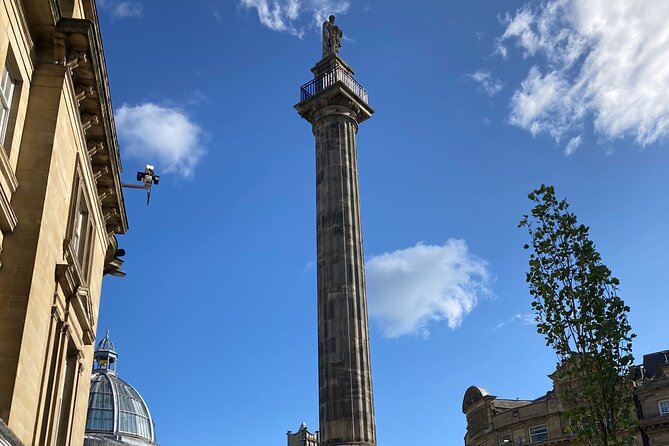
The final section brings you to Grey Street and Grey’s Monument. The route includes Newcastle’s grandest theatre, important inventions, underground rivers, and Vikings. These subjects may sound unrelated, but together they show how the city’s identity has been built from many eras and kinds of achievement.
This part is likely to feel more like a collection of memorable stories than a single historical chapter. You might hear about an invention, then turn to a theatre, a river below the street, or an earlier Viking connection. That variety suits a short walking tour because it keeps the final stretch lively.
The route also includes local cultural details that give the city a human scale. One account recalled the former Stoll Theatre, the steps toward the Quayside via the Castle, the kittiwakes around the Tyne Bridge, Pink Lane, and the Grey’s Hotel, connected with the Beatles’ writing of A Hard Day’s Night. These details help move the tour beyond standard dates and building names.
The Tyne Bridge, Quayside, and Newcastle Castle are important parts of the broader route, even though the four formal stops focus on specific sections of the center. You should understand that this is a walking overview, not a ticketed visit inside every landmark. The benefit is coverage. The trade-off is limited time at each sight.
Grey’s Monument is a convenient ending. You finish in the heart of the city, close to restaurants and shops. That makes it easy to continue sightseeing, stop for lunch, or follow up on one of the guide’s suggestions.
How the guides shape the experience
The guide is the main reason to choose this tour instead of simply following a free map. The strongest praise has gone to Wes and Adam, who use stories, humor, personal observations, and local pride to make the route more than a sequence of stops.
Wes is described as enthusiastic and easy to get along with. His style includes historical facts, personal anecdotes, and stories about people from Newcastle who made an impact beyond the city. He also takes time to answer questions and can connect local events with wider British social and military history.
Adam is praised for being helpful, fun, and clever in the way he explains the past. That matters on a short tour. Clear storytelling can make a complicated city easier to follow, especially when the route jumps from medieval religion to railways, theatres, inventions, and Vikings.
The guides also appear comfortable talking with both first-time visitors and locals. Several people who already knew Newcastle still found new details and fresh ways to look at familiar places. If you live in the area, do not assume the tour is only for outsiders.
The small group limit helps the conversation. You can ask a question without holding up a large crowd, and the guide has a better chance to adjust the pace or subject matter. Still, the quality of a walking tour depends partly on the guide assigned that day, so it is sensible to treat Wes and Adam’s strong feedback as a sign of the tour’s style, not a guarantee of one specific guide.
Is $40 good value?

The price is $40. That is not the cheapest way to see Newcastle, but the comparison should be with the time and effort needed to build the same introduction yourself.
For that price, you receive a guided city walk, a route through several major areas, historical interpretation, and the chance to ask questions in a group of no more than 15. You do not pay separate admission for the listed stops. The tour also ends in a useful central location, which saves you from arranging transport back to the starting point.
I see the best value if you have only a short stay, want context before exploring alone, or prefer a human guide to a phone screen. It is also a good fit if you want a compact morning activity rather than a half-day museum program.
The value is weaker if you want long visits inside Newcastle Castle, the cathedral, or other buildings. This tour is designed to explain the city from the streets. You are paying for interpretation and orientation, not extensive interior access.
A 4.9 rating from 38 reviews, with 100 percent recommending the experience, points to a very strong response. The comments repeatedly praise the guides’ enthusiasm, friendliness, storytelling, and ability to teach even people who already know the city.
Timing, walking, and practical comfort
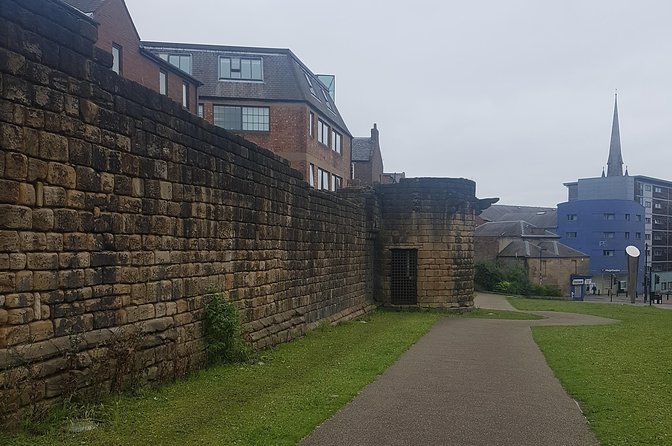
The meeting point is on Newgate Street, Newcastle upon Tyne, NE1 5TG. The walk begins at 10:00 a.m. and finishes at Grey’s Monument, 150 Grainger Street, NE1 5AF.
You need a moderate level of physical fitness. The experience involves walking through the city for around an hour to an hour and a half, with stops for explanations. Wear comfortable shoes and allow enough room in your schedule for the longer end of the stated duration.
The route is near public transportation, and the end point is close to central shops and restaurants. That makes it easy to add breakfast beforehand, lunch afterward, or another city sight later in the day. A mobile ticket is provided, so keep the booking information available on your phone.
Service animals are allowed. Confirmation is provided at booking. The group can include up to 15 people, although it may be smaller.
The biggest practical issue is weather. The supplied details do not promise indoor shelter or a weather adjustment, so dress for an outdoor city walk. The tour’s compact length helps, but Newcastle weather can still affect your comfort.
Free cancellation is available if you cancel at least 24 hours before the 10:00 a.m. start time. Changes or cancellations made inside that window are not accepted for a refund.
Who should book this walk?
I would choose this tour if you want a fast, story-led introduction to Newcastle. It suits first-time visitors who want to get their bearings, history fans who enjoy connections between different periods, and local residents who suspect they have missed a few stories in their own city.
It also works well for a solo visitor. A small group gives you company without the scale of a coach tour, and a guide can help you decide what to see next. Families with older children may appreciate the variety of subjects, although the walk still requires attention and steady movement.
You may want another option if you dislike outdoor walking, need a slow pace, or want detailed time inside individual landmarks. This experience covers a lot of ground in a short span. Its strength is the broad picture, not an exhaustive examination of one building.
Should you book Lightfoot Tours’ Historical Tour?
Yes, if you want a compact and friendly introduction to Newcastle with real local character. The route connects Blackfriars, the city walls, Central Station, Grainger Town, Grey Street, the Quayside, Newcastle Castle, and the Tyne Bridge. Guides such as Wes and Adam add the human stories that make those places easier to remember.
Book it early in your visit so you can use the guide’s suggestions for the rest of your time in the city. Choose something else only if you need extensive interior visits or cannot manage a moderate walking route. For most people seeking a short historical overview, $40 is a reasonable price for the context, coverage, and conversation.
FAQ
Where does the Newcastle historical tour start?
It starts on Newgate Street in Newcastle upon Tyne, postcode NE1 5TG.
What time does the tour begin?
The start time is 10:00 a.m.
Where does the tour end?
The walk ends at Grey’s Monument, 150 Grainger Street, Newcastle upon Tyne, NE1 5AF.
How long does the tour last?
The expected duration is about one hour to one hour and 30 minutes.
How much does the tour cost?
The listed price is $40.
What landmarks are included?
The route passes Newcastle Castle, the Quayside, the Tyne Bridge, Blackfriars Court, Newcastle Central Station, Grainger Town, St John the Baptist, and Grey’s Monument.
How many people can join the tour?
The maximum group size is 15 people.
Is the tour suitable for people with limited fitness?
The tour requires a moderate level of physical fitness because it is a walking experience.
Are service animals allowed?
Yes, service animals are allowed.
Can I cancel for a full refund?
Yes. You can cancel at least 24 hours before the start time for a full refund. Cancellations or changes made less than 24 hours before the start time are not accepted for a refund.
Just added around the UK
- Historical Tour and Seafood Experience★ 4.5 · 27 reviews
- Historic Walking Tour of Colchester★ 5.0 · 35 reviews
- Cruise Wells Next The Sea on Historic RNLI and Dunkirk Veteran Lifeboat★ 5.0 · 199 reviews
- The Padstow History Walk – Tales, Tales and Traditions★ 5.0 · 25 reviews
- Newcastle: History and Highlights Private Guided Walking Tour★ 5.0 · 29 reviews
- Walkabout Durham History Tour★ 5.0 · 89 reviews
- Pub and History Tour of Durham with Alcohol Tasting★ 5.0 · 20 reviews
- A Taste of Manchester History with Meals Drinks and Guide★ 5.0 · 35 reviews
UK History Tours, compared.

Edinburgh Castle Guided History Tour with Tickets
Read our review →
A History of Terror – Belfast City Centre Walking Tour
Read our review →
Old Town Walking Tour History and Tales in Edinburgh
Read our review →

Browse the lists this tour appears in