
Review · SOUTH OF FRANCE
Aix-en-Provence: Between History and City Charm
Aix reveals itself one story at a time. This 90-minute walk makes the city appealing through personal stories about Cézanne, kings, and local characters, not just dates and building names. I like the use of images to show how Aix changed over time, and I like the guide’s easygoing way of handling questions, jokes, and odd details. The main consideration is pace: the route covers a lot, and the advertised duration is short for so many stops.
I also like the starting point at La Rotonde, where you can quickly get your bearings before heading into the old center. Guides such as Paula have been praised for speaking clear English, adjusting the talk for families, and offering useful ideas for the rest of your time in Aix. You will not enter museums, and the route ends at Saint Sauveur Cathedral, so anyone wanting a slow indoor visit should plan extra time afterward.
Key points at a glance
- A personal look at Aix: Learn about Paul Cézanne, the city’s royal connections, and people who lived in its grand houses.
- A strong first-day activity: The route gives you a useful introduction before you explore Aix on your own.
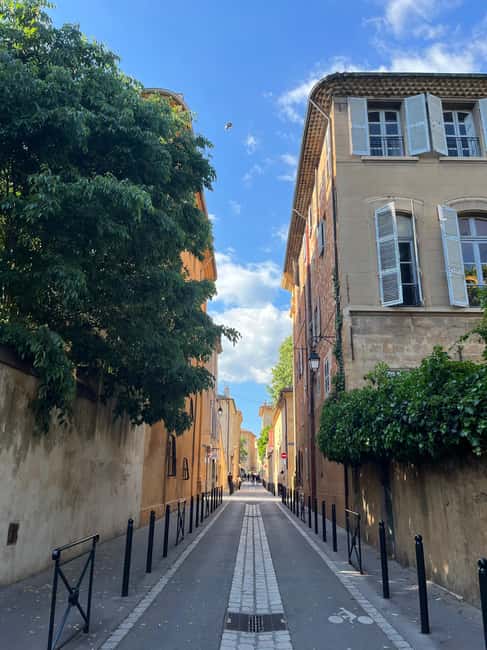
- A lively city walk: Cours Mirabeau, Passage Agard, Place d’Albertas, and the cathedral all bring a different side of Aix.
- A guide-led experience: Tours are offered in English, Portuguese, and Spanish, with guides using images to explain changes over time.
- A good price for orientation: At $29 per person, the walk is reasonably priced if you want context rather than museum admission.
- A few practical limits: The walk is full of stops, but the advertised 90 minutes may feel tight, and museum tickets are not included.
Aix-en-Provence is easy to like at street level. Fountains, plane trees, pale stone, cafés, shops, and narrow lanes give the city a pleasant rhythm. Yet its story can be hard to read without help. Roman roots, royal connections, old religious institutions, artists, courts, and modern city life all overlap here.
This walking tour is designed to make those layers readable. You move through the center on foot, stopping for short explanations, photographs, and stories about the people connected with the city. It is not a museum tour or a long historical lecture. It is a compact introduction to Aix that helps you notice more when you continue exploring alone.
The experience costs $29 per person and lasts about 90 minutes. That is a fair price for a guided introduction, especially if you are new to Aix and want someone to connect the buildings to the people and events behind them.
Starting at La Rotonde with the city in view
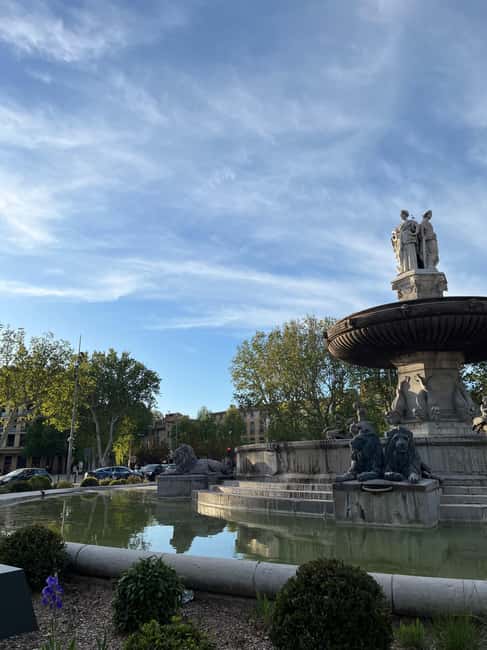
The meeting point is at the fountain in the roundabout across from the Five Guys restaurant. Look for the guide holding a sign that says Happy Walking Tour.
La Rotonde is a useful place to begin. It sits at the edge of the central streets and provides a simple reference point for the rest of the walk. The opening explanation gives you a short outline of Aix’s past before the group moves toward the historic center.
That opening matters. Without it, Aix can seem like a collection of attractive streets with no clear order. With a basic timeline in mind, the later stops make more sense. You can connect the city’s religious buildings, royal memories, schools, markets, and grand squares instead of seeing each one as a separate photo stop.
The roundabout itself is busy, so do not expect a quiet lecture here. The point is orientation, not a long stay. Arrive ready to walk soon after the guide begins.
A few more history tours around France worth a look
- Paris: Louvre Museum Entry with History of Mona Lisa
★ 3.9 · 2,823 reviews - Paris: Dark History and Ghostly Guided Walking Tour
★ 4.7 · 1,000 reviews - Vieux Lyon Cultural & Historical Walking Guided Tour (English)
★ 5.0 · 942 reviews
Cours Mirabeau: the city’s social spine
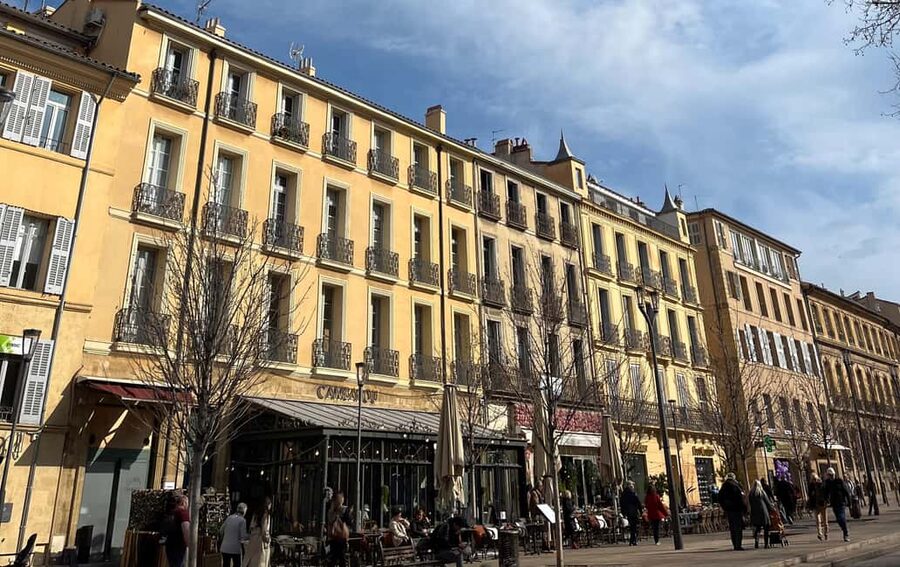
The tour spends about 25 minutes along Cours Mirabeau, the broad, tree-lined avenue that links modern Aix with the old center. This is one of the best places to understand how the city feels today.
You will pass boutiques, restaurants, and cafés while the guide explains the avenue’s place in Aix life. Cours Mirabeau is not only a pretty street for photographs. It is a meeting place, a shopping route, and a clear example of how Aix mixes daily life with historic architecture.
I like this part because it gives the tour some breathing room. After the opening summary, you are not immediately pushed into a tight alley. You have space to look around and see how residents use the city.
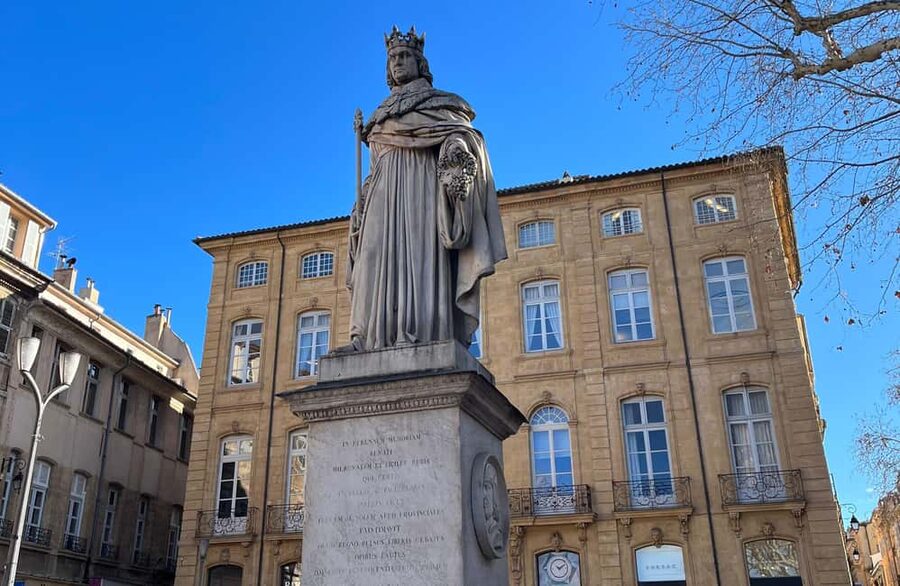
The route also includes Fontaine du Roi René, connected with the memory of the beloved King René. This stop adds a human angle to royal history. Instead of treating the past as a list of rulers, the guide explains why this particular king still matters to Aix.
Expect a guided explanation and photo opportunities rather than time to sit at every fountain. If you want café time on Cours Mirabeau, save it for later. The tour keeps moving.
Lycée Mignet and the young Paul Cézanne
The stop at Lycée Mignet brings the story closer to modern artistic life. The school is connected with Paul Cézanne and other artists from Provence who began their lives there.
This is one of the tour’s more useful choices because it connects a famous name with a real place in the city. Cézanne is often presented through paintings and museum labels. Here, you get a sense of his early surroundings and the local setting tied to his education.
The guide also shares anecdotes about other artists and figures linked with the area. These details help keep the talk from becoming a standard list of famous names. You may hear small human stories, jokes, or curious facts that are unlikely to appear in a basic city guide.
This is where the guide’s style matters most. Paula has been praised for bringing personal stories into the history, answering family questions, and adapting the content to suit the group. If she leads your walk, you can expect clear English and a warm presentation rather than a formal classroom speech.
Saint Jean de Malte and Europe’s larger story
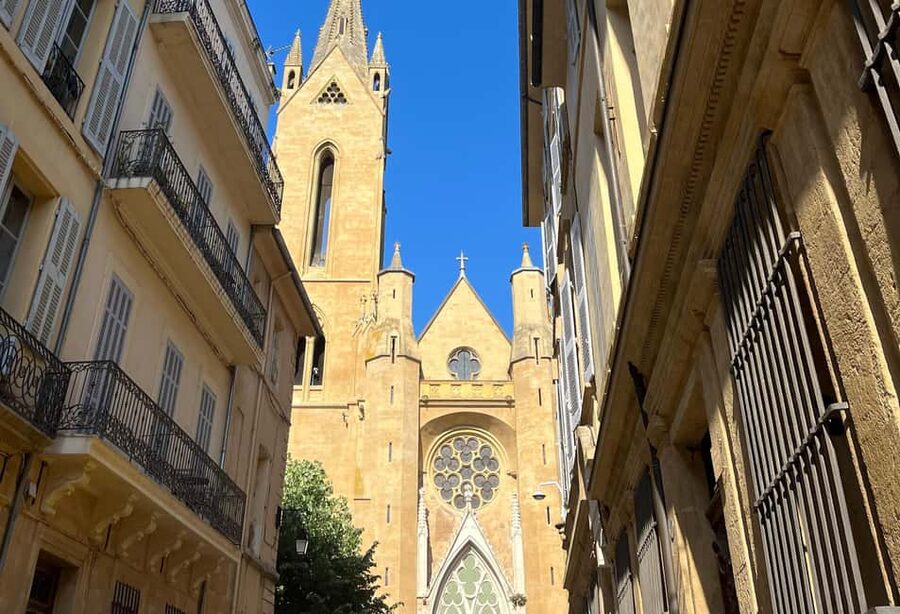
Saint Jean de Malte is a church with a connection to European history. The stop lasts about 20 minutes, including a photo opportunity and guided explanation.
The church gives the walk a different tone. After the commercial energy of Cours Mirabeau and the artistic link at Lycée Mignet, you turn toward religious and political history. The guide places Saint Jean de Malte within a wider European setting, showing how Aix was connected to institutions beyond Provence.
You should expect to view the building from the outside as part of the walking route. Museum or interior access is not included in the $29 price. If you want to enter places independently, ask the guide for advice about the best time to return.
The stop is valuable even without an interior visit because the architecture becomes easier to read when you know what role the church played. It also breaks up the route with a major landmark before you continue through the central squares.
Same place, a different slice of the past:
- Bordeaux: Historic Center & Chartrons District Bike Tour
★ 4.8 · 709 reviews - From Strasbourg: Best Of Alsace Historical Day Trip
★ 4.7 · 633 reviews - Toulouse Food & History Tour with a Chef (in English)
★ 5.0 · 503 reviews - Notre Dame Cathedral: Exterior Guided Tour & Unscheduled Access
★ 4.5 · 409 reviews
Place des Prêcheurs and the stories behind the stones
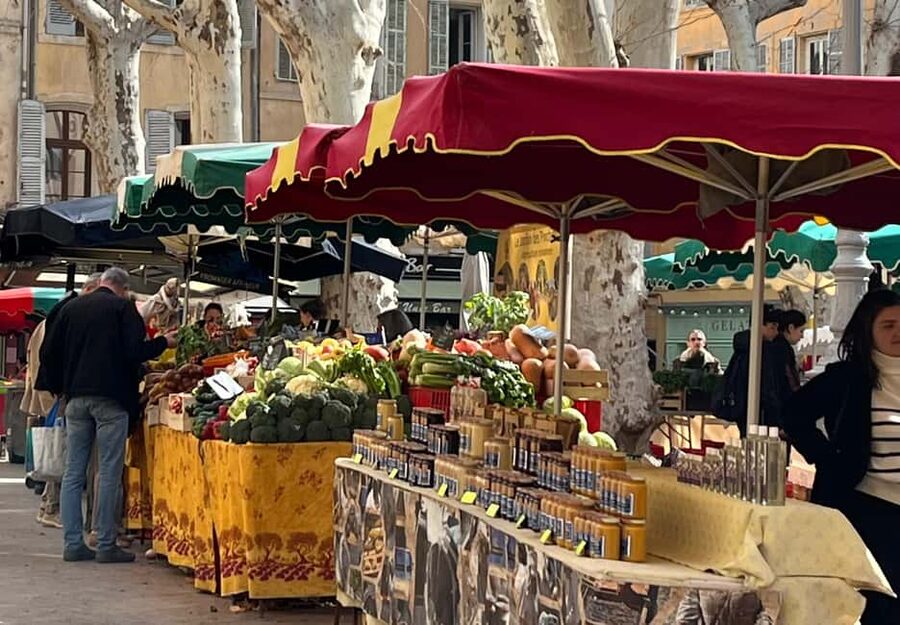
The itinerary then moves to Place des Prêcheurs, with around 20 minutes for a guided stop and photographs. This area brings together architecture, public space, and the city’s legal and religious past.
You will hear about the Palais de Justice and the ruins connected with the site. The market square adds another layer. Aix is not presented here as a frozen old town. It is a working city where public buildings, commerce, and daily routines share the same spaces.
This is also where the tour’s promise of architectural curiosities becomes useful. The guide points out details and jokes left by architects, giving you a reason to look up and study façades rather than simply walk past them.
I find this sort of detail more useful than a long list of dates. Once you learn to search for odd features, symbols, and playful touches, you can keep spotting them after the tour ends.
Place d’Albertas: a calmer square
Place d’Albertas receives about 10 minutes. It is smaller and quieter than Cours Mirabeau, with elegant buildings arranged around a central fountain.
This stop gives the walk a change of pace. The square is a good place to pause, take photographs, and notice how Aix shifts from broad avenues to more enclosed architectural spaces. The guide explains the square’s character and the buildings around it.
Do not expect a long break. Ten minutes is enough for a short explanation and photographs, but not a full rest stop. If you want to linger, mark the location and return after the walk.
Place d’Albertas is also a reminder that the appeal of Aix lies in its smaller spaces. The grand sights may draw attention first, but quiet squares often give you the clearest sense of the city’s design.
Passage Agard and the city’s smaller details
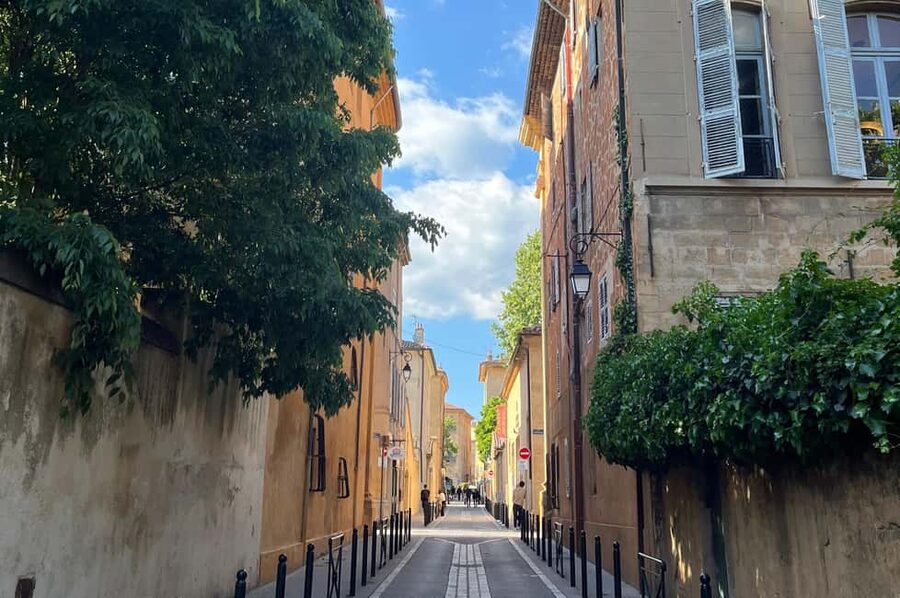
Passage Agard is a pedestrian passageway lined with shops and art galleries. It offers a change from open squares and wide streets.
The passage is not presented as a major monument. Its value is more practical and atmospheric. You see how Aix’s historic center folds commercial life into older buildings, with shops and galleries occupying spaces that might otherwise be easy to miss.
This is a good part of the walk for people who like local texture. You are not only being taken from one famous landmark to the next. You are also shown the connections between them, including routes that reward a slower look.
The guide’s jokes and architectural curiosities fit well here. Small passages often contain the kind of details that are easy to overlook when you are navigating on your own.
Hôtel de Ville and the civic heart of Aix
The Hôtel de Ville stop includes a photo opportunity and a guided explanation. The city hall area helps explain Aix as a civic center, not just a pretty Provençal destination.
This part of the route connects public authority with the surrounding streets and squares. The guide discusses the building and its place in the city’s development, adding another piece to the story already introduced at the Palais de Justice.
The timing listed for this stop is about 15 minutes. That should be enough for an explanation and some photographs, though the exact pace may depend on questions and group size. The guide has been praised for making room for questions and for stopping when people want photographs.
That flexibility is important on a walking tour. A rigid speech can make a historic city feel like a checklist. A guide who responds to the group can make the same route feel more personal.
Saint Sauveur Cathedral: the final landmark
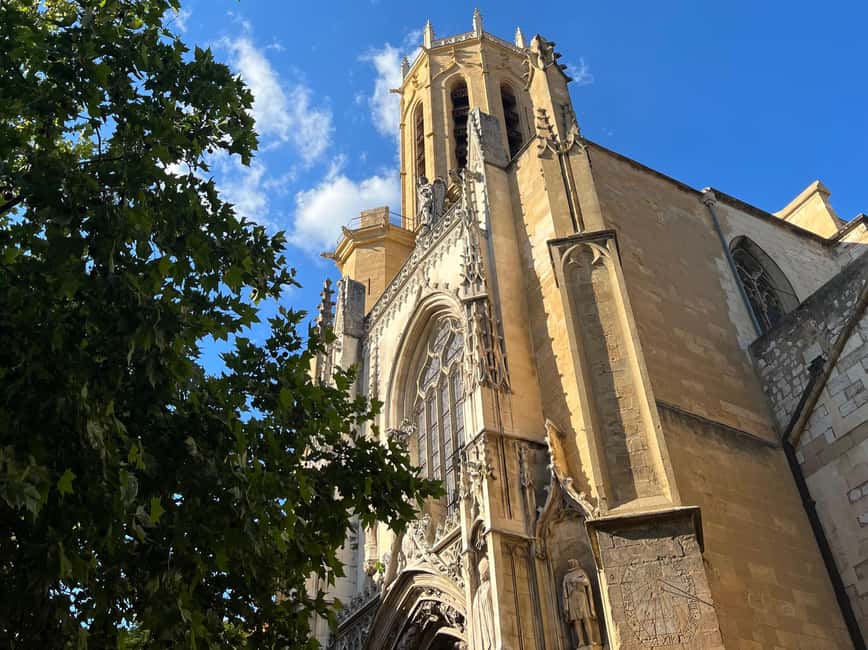
The walk ends at Saint Sauveur Cathedral, also called the Cathedral of the Holy Savior. The cathedral combines Gothic architecture, stained glass, and other details that reward a close look.
Ending here makes sense. After moving through fountains, schools, churches, squares, courts, and civic buildings, you finish with one of Aix’s major religious landmarks. The cathedral gives the tour a strong visual conclusion and leaves you in a useful part of the old center.
The guided stop lasts about 15 minutes in the schedule provided. That is enough for an introduction and exterior details, but you should not confuse the tour with a full cathedral visit. Access to museums is not included, and the walk does not promise extended time inside.
If you want to study the stained glass and architecture slowly, plan to return or continue your visit independently. The tour gives you the background needed to know what deserves a closer look.
How much can fit into 90 minutes?
The official duration is 90 minutes, but the stop-by-stop timings provided add up to more than that. The listed portions include 25 minutes at Cours Mirabeau, 5 minutes for one photo stop, 20 minutes at Saint Jean de Malte, 20 minutes at Place des Prêcheurs, 10 minutes at Place d’Albertas, 15 minutes at Hôtel de Ville, and 15 minutes at Saint Sauveur Cathedral.
That adds up to 110 minutes before counting the opening at La Rotonde. Treat those numbers as approximate rather than a strict promise. The actual walk may move faster, combine nearby stops, or adjust based on questions and group needs.
This is worth knowing if you have a train, restaurant booking, or museum reservation immediately afterward. Give yourself extra time. The route covers a lot, and the best parts of a city walk often happen when someone asks a question or pauses for a photograph.
The guide’s style and language options
The tour is offered in English, Portuguese, and Spanish. Some content may appear in its original language, so ask for clarification if a name or phrase is not clear.
The strongest praise has gone to the guide’s manner. Paula is described as warm, funny, curious, considerate, and able to explain Aix in clear English. She has also adjusted the talk around family interests and answered questions in a way that made the route work for both adults and children.
That suggests this tour suits you if you like conversation rather than a memorized speech. It may be especially useful for families, couples, and small groups with different levels of interest in history.
The tour is wheelchair accessible. Still, because it takes place on city streets and through pedestrian areas, you should confirm any specific mobility needs when booking.
Is $29 a fair price?
At $29 per person, I consider this good value if you want a guided orientation to Aix. You are paying for a live guide, a planned route, historical context, and visual material that shows how the city changed over time.
The value is strongest if you take the walk early in your stay. A guide can point out places you may want to revisit, and Paula has offered suggestions for other things to do in Aix after the walk. That can help you use the rest of your time more wisely.
The price does not include museum access. If your main goal is to spend time inside churches, galleries, or museums, you will need to budget separately. The tour is best understood as a city introduction, not an all-inclusive cultural pass.
The high current rating of 4.9 from 30 ratings also fits the experience’s main strengths: clear explanations, a friendly guide, and stories that make the city easier to understand.
Who should book this Aix walking tour?
I would choose this walk if you are visiting Aix for the first time, want a quick overview, or prefer learning through stories instead of reading plaques. It suits you if you enjoy architecture, local personalities, Provençal culture, and short explanations tied to real streets.
Families may also like it because the guide can adjust the content and add humor. Art lovers will appreciate the Cézanne connection, while history fans will get churches, kings, courts, and civic buildings in one route.
You may want a different plan if you dislike walking tours, want long indoor visits, or prefer to explore every stop at your own speed. The route is full, and the 90-minute format leaves little room for lingering.
Should you book it?
Book this tour if you want a friendly, story-led introduction to Aix for $29. It gives you a clear route through the center, connects the city to Cézanne and King René, and ends at Saint Sauveur Cathedral.
I would schedule it near the start of your stay, then use the guide’s suggestions to plan the next day or two. Allow extra time after the advertised 90 minutes, and do not expect museum entry. For a first look at Aix with useful human detail and a guide who welcomes questions, this is a sensible choice.
FAQ
Where does the Aix-en-Provence walking tour begin?
It begins at the fountain in the La Rotonde roundabout, across from the Five Guys restaurant. The guide will hold a sign saying Happy Walking Tour.
Where does the tour finish?
The tour finishes at Saint Sauveur Cathedral, also called the Cathedral of the Holy Savior.
How long does the tour last?
The advertised duration is 90 minutes. The individual stop times provided add up to more than 90 minutes, so allow some flexibility in your schedule.
What languages are available?
The live tour guide can provide the experience in Portuguese, English, or Spanish. Some content may be shown in its original language.
Is the tour wheelchair accessible?
Yes, the activity is listed as wheelchair accessible.
Are museum tickets included?
No. Access to museums is not included in the $29 price.
Can I cancel the booking for a full refund?
Yes. You can cancel up to 24 hours in advance for a full refund. You can also reserve now and pay later.
Just added around France
- The History of Paris: Historical Le Marais Private Tour★ 4.5 · 47 reviews
- Private Half Day Historic Tour★ 5.0 · 58 reviews
- History of Paris City Center w/ Notre Dame Semi-Private 12ppl Max★ 5.0 · 194 reviews
- Private Guided History tour of Lourdes★ 5.0 · 64 reviews
- Rouen: Guided Tour of the Historic Center★ 4.8 · 145 reviews
- Strasbourg: Private Walking Tour of the Historical Center★ 4.2 · 107 reviews
- Paris: Le Marais & Montmartre Jewish History Walking Tour★ 4.8 · 170 reviews
- Paris City of Fashion History Private Guided Walking Tour★ 5.0 · 221 reviews
France History Tours, compared.
Louvre Museum Entry with History of Mona Lisa
Read our review →
Vieux Lyon Cultural & Historical Walking Guided Tour (English)
Read our review →
Bordeaux: Historic Center & Chartrons District Bike Tour
Read our review →
From Strasbourg: Best Of Alsace Historical Day Trip
Read our review →
Toulouse Food & History Tour with a Chef (in English)
Read our review →
Notre Dame Cathedral: Exterior Guided Tour & Unscheduled Access
Read our review →
Strasbourg: Guided Historical Neighborhoods Walking Tour
Read our review →Browse the lists this tour appears in