
Review · NEW BRUNSWICK
Mi’kmaq Heritage Path Tour
Culture here is shared under canvas and trees. The Mi’kmaq Heritage Path Tour brings you into Elsipogtog First Nation for a traditional greeting, a smudging ceremony, forest teachings, and time inside a wigwam, longhouse, and sweatlodge. I like the personal cultural setting and the chance to learn through places and practices, not just displays. I also like that the experience ends with open questions at the Cultural Center.
The main consideration is pace. The visit lasts about two hours, with the core guided portion listed at roughly 90 minutes, so you will not get a full-day program. The visit also depends on good weather and a minimum number of bookings, and the heritage path may not suit someone looking for a highly active outdoor excursion.
Key points to know before you go
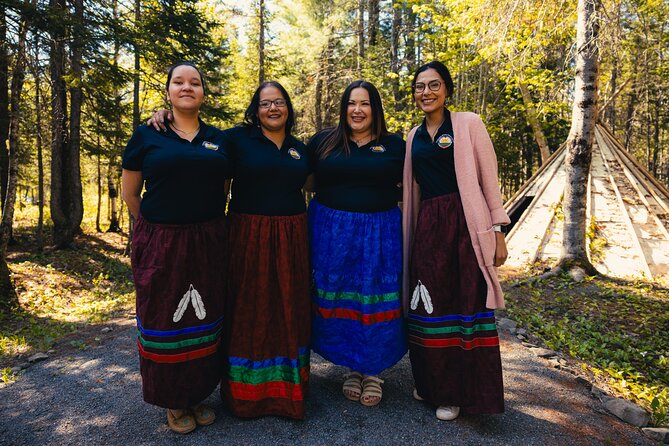
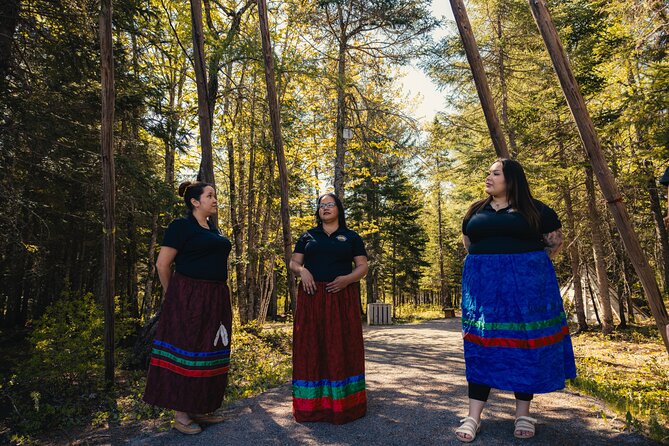
- The tour takes place in Elsipogtog First Nation, at 29 Big Cove Rd in New Brunswick.
- A smudging ceremony begins the visit, followed by teachings about Mi’kmaq customs and present-day cultural life.
- The forested Heritage Path focuses on traditional uses of plants, medicines, and natural materials.
- You can enter an authentically constructed wigwam, longhouse, and sweatlodge, made locally by an elder and knowledge keeper.
- A traditional snack is served near the end, with freshly baked bread singled out as a highlight.
- The group is limited to 25 people, and the tour is offered in English with mobile ticketing.
Starting with a greeting and smudging ceremony
Your visit begins at the Elsipogtog Mi’kmaq Cultural Center, Artisan Gift Shop & Tours, at 29 Big Cove Rd. After the traditional greeting, you enter a raised teepee for a smudging ceremony.
This opening matters because it sets the tone for the rest of the visit. You are not simply walking through a collection of objects or listening to a standard museum talk. The ceremony introduces a cultural practice and gives the group a respectful way to begin learning about Mi’kmaq customs.
The setting also helps. A raised teepee offers a clear change from an ordinary visitor center. You move into a place designed for gathering, listening, and teaching. The ceremony is followed by explanations that connect earlier Mi’kmaq ways of life with cultural practices that continue today.
I would approach this part with patience and respect. It is not a performance designed to rush you toward the next attraction. The value comes from listening carefully and allowing the guide to explain what the ceremony means within the wider visit.
The tour is offered in English, which makes the explanations accessible to English-speaking visitors. Since the group can include up to 25 people, your experience may depend somewhat on where you are standing or sitting during the opening. A smaller group would feel more intimate, but the stated limit is still moderate for a guided cultural program.
A few more history tours around Canada worth a look
- Victoria Guided Food and History Tour
★ 5.0 · 2,015 reviews - Gastown Historic Walking Food Tour
★ 5.0 · 1,863 reviews - Vancouver: Gastown Historical Walking Food Tour
★ 4.8 · 539 reviews
Following the Heritage Path through the forest
After the opening, an interpretive knowledge keeper leads you onto the natural, forested Heritage Path. This is the central outdoor portion of the experience.
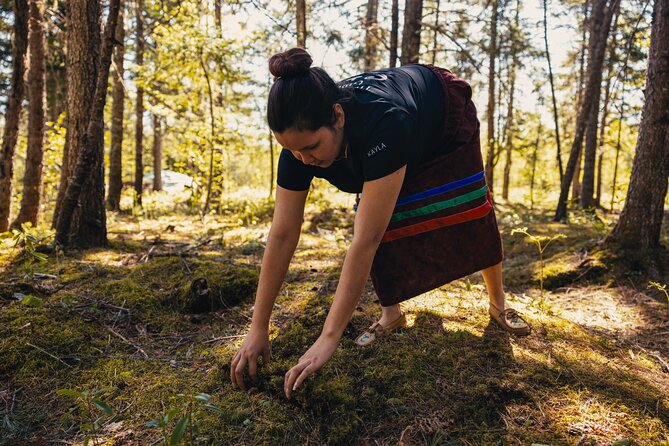
The focus is on traditional and time-honored ways of using what Mother Nature provides. You learn about plants, medicines, and natural materials, along with the role these resources have played in supporting individual well-being and the wider community.
That focus gives the walk a practical purpose. You are not simply passing through trees for scenery. The path becomes a place to understand how Mi’kmaq knowledge is connected to the natural world and to everyday life.
I like this part because it brings cultural teaching out of the classroom. A plant or forest material can seem ordinary when you pass it on your own. With an interpreter explaining its traditional use, the same setting becomes a source of knowledge and reflection.
Do not expect a strenuous hike. The information describes a forested path, but it does not give a distance, trail grade, or surface details. You should therefore think of this as a guided cultural walk rather than a fitness outing. Wear sensible outdoor shoes and clothing suited to the weather, but do not assume that the program includes a long backcountry trek.
The tour requires good weather. That is important because the forest walk is a major part of the visit, and some of the teaching takes place outdoors. If poor weather cancels the activity, you are offered another date or a full refund.
Stepping inside the wigwam, longhouse, and sweatlodge
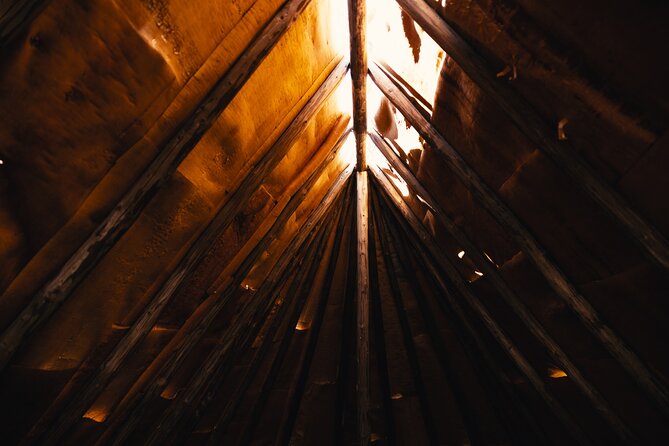
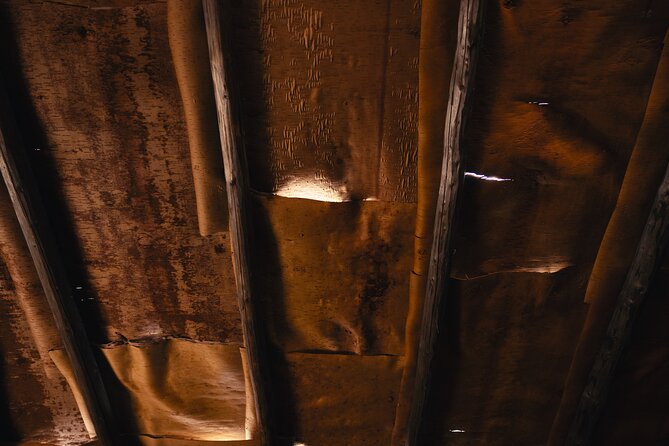
One of the most appealing parts of the experience is the opportunity to enter three traditional structures: an authentically constructed wigwam, a longhouse, and a sweatlodge.
These are not just background props for photographs. The purpose is to help you picture how life may have been organized in ancestral times. Moving through the structures gives the teaching a physical scale. You can see the type of spaces used for shelter, gathering, and cultural practice rather than trying to imagine everything from spoken descriptions alone.
The structures were made locally by an elder and knowledge keeper. That local connection adds weight to the visit. The buildings are part of the cultural teaching, not detached replicas placed in a distant museum.
The wigwam and longhouse can help you think about the practical side of earlier Mi’kmaq life: how people gathered, how space was used, and how homes and community buildings supported daily routines. The sweatlodge introduces another kind of cultural space, connected to ceremony and well-being.
The supplied information does not say that you take part in a sweatlodge ceremony, so you should not expect that. The clear promise is that you can step inside and experience the structures as part of the guided interpretation.
This section is likely to work especially well for families and first-time visitors. Children often grasp cultural ideas faster when they can enter a structure and compare it with their own homes. Adults benefit from the same direct sense of scale. Just keep your attention on the teaching, not only on taking pictures.
Ending at the Cultural Center with time for questions
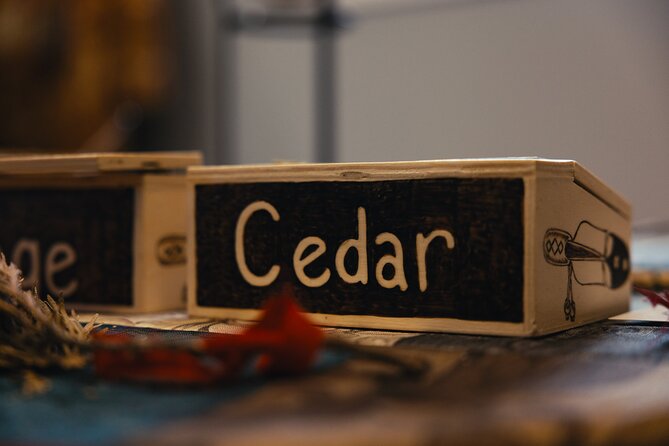
The final part of the tour takes place at the Cultural Center. This gives you a quieter setting for questions and further discussion about Mi’kmaq culture and life in Elsipogtog.
I consider this an important finish. Cultural programs can leave you with half-understood details if there is no chance to ask what you missed. Here, you have a designated place to clarify ideas and connect the outdoor teachings with the larger story of the community.
The question period also helps keep the visit personal. You can ask about customs, the structures, the Heritage Path, or other points raised during the tour. The exact discussion will depend on the questions in your group, so two visits may not unfold in exactly the same way.
The Cultural Center also provides a useful transition back to ordinary sightseeing. You have moved from the teepee to the forest and traditional structures, then returned indoors to reflect. That sequence gives the two-hour visit a clear beginning, middle, and end.
Same place, a different slice of the past:
- Evening Gourmet Tour 5 Course Dinner – History and Food in Old Quebec City
★ 5.0 · 496 reviews - Quebec City: Old Quebec Historical Walking Tour
★ 4.8 · 409 reviews - Peggy’s Cove & Halifax Historic Tour
★ 4.5 · 375 reviews - Montreal History Guided Sightseeing Cruise
★ 3.5 · 363 reviews
A freshly baked snack adds a warm final touch

A traditional snack is served near the end of the tour. One especially appealing detail is the freshly baked bread, which has been praised as yummy and adds a friendly, home-style touch to the program.
The snack is not the reason to book this experience, but it matters. Food often makes cultural learning feel less formal and creates a natural moment for conversation. It can also give you a small taste of local hospitality after the walk and teachings.
The practical point is that snacks are not listed among the included fees, even though a traditional snack is part of the visit. I would treat the food as an expected part of the experience but avoid assuming that a full meal is provided. If you need substantial food, plan accordingly.
The warm welcome is another strong feature. One review describes the tour as warm and praises the guide and assistant as very sweet. No guide names are provided, so I cannot tell you who will lead your specific departure, but the experience clearly depends on the guide’s ability to create a comfortable space for learning.
What the two-hour timing means for your day
The tour lasts approximately two hours. The main visit is described as about one hour and 30 minutes, with the remaining time likely covering movement between areas, questions, and the snack.
That makes it easy to fit into a day in New Brunswick. You do not need to give up an entire morning or afternoon, and the fixed meeting point keeps the schedule straightforward. The activity begins and ends at 29 Big Cove Rd, so you should arrange your own way to the meeting point.
The short format also creates a limit. You will receive an introduction to several important subjects, but you will not cover every part of Mi’kmaq culture in two hours. Think of the tour as a thoughtful starting point, not a complete course.
A group limit of 25 people is useful. It is large enough to keep the tour viable but small enough that the guide can usually maintain a connection with the group. If you prefer very quiet, one-on-one interpretation, you may find a private visit more suitable, but that is not offered as part of the information provided here.
Who will get the most from this visit
I would recommend the Heritage Path Tour to you if you want cultural context alongside your New Brunswick sightseeing. It suits first-time learners, families, couples, and anyone who prefers a guided introduction to Mi’kmaq traditions rather than trying to piece information together alone.
It is also a good choice if you value local interpretation. The program takes place in Elsipogtog First Nation and uses local structures and cultural spaces. That gives the visit a stronger connection to the community than a generic heritage display.
The tour may appeal less if you want a long hike, a packed schedule of activities, or a large entertainment-style presentation. The strength here is quiet learning, conversation, and the chance to see traditional structures from inside.
Because most people can participate and service animals are allowed, the activity is open to a broad range of visitors. Still, the available details do not describe trail surfaces, restroom arrangements, seating, or specific mobility accommodations. If you have access needs, contact the provider before booking so you can confirm the conditions for your visit.
Is the experience good value?
No tour price is provided, so I cannot judge it against a specific dollar amount. The listed price includes all fees and taxes, and the experience provides a guided cultural program, access to the Heritage Path, entry into the wigwam, longhouse, and sweatlodge, a traditional snack, and time for questions.
That is a fair value proposition if you care about interpretation and local connection. You are paying for the guide’s teaching and for access to cultural spaces that you would not understand as well by simply arriving on your own.
The value is also strongest for visitors who take part actively. Listen during the smudging explanation, ask respectful questions, and pay attention to how the forest teachings connect with community life. If you treat the visit as a quick photo stop, you will miss much of what makes it worthwhile.
The 4.8 rating from 23 ratings and the 96 percent recommendation rate suggest a strong level of satisfaction, though the sample is not large. The most praised elements are the warm welcome, useful information, kind guide and assistant, and freshly baked bread. Those details point to a tour that succeeds through personal contact as much as through formal content.
Booking, weather, and cancellation details
You receive confirmation at the time of booking, and a mobile ticket is available. The experience is offered in English.
Free cancellation is available if you cancel at least 24 hours before the start time. Changes or cancellations made less than 24 hours before the start time are not accepted for a refund, and the cut-off follows local time.
The provider may cancel if the weather is poor or if the minimum number of participants is not reached. In either case, you are offered another date or experience, or a full refund.
I would avoid booking this as the one and only fixed activity on a tightly packed day. Weather or minimum participation can affect the schedule, so leave some flexibility if this visit is important to you.
Should you book the Mi’kmaq Heritage Path Tour?
Yes, if you want a respectful, local introduction to Mi’kmaq culture with a guide, a forest walk, traditional structures, and time for questions. The warm tone, freshly baked bread, and small-group limit add a human touch that makes the program more than a quick stop.
Book it with realistic expectations. This is a two-hour introduction, not an exhaustive cultural course or a demanding hike. If that sounds like the right scale for your day, the visit offers a thoughtful way to connect with Elsipogtog First Nation and learn through place, practice, and conversation.
FAQ
Where does the Mi’kmaq Heritage Path Tour begin?
It begins at 29 Big Cove Rd, Elsipogtog First Nation, New Brunswick, E4W 2S1, Canada.
Where does the tour end?
The activity ends back at the meeting point.
How long does the tour take?
The full experience lasts approximately two hours. The main visit is listed at about one hour and 30 minutes.
What language is the tour offered in?
The tour is offered in English.
What happens during the opening of the tour?
You receive a traditional greeting and enter a raised teepee for a smudging ceremony, followed by teachings about Mi’kmaq customs and cultural ways.
Can I enter traditional Mi’kmaq structures?
Yes. The experience includes access to an authentically constructed wigwam, longhouse, and sweatlodge.
Is food provided?
A traditional snack is served near the end of the tour. Freshly baked bread has been highlighted as part of the food experience.
How many people can join the tour?
The activity has a maximum group size of 25 people.
Can I cancel for a full refund?
Yes, if you cancel at least 24 hours before the experience start time. Poor weather or failure to reach the minimum number of participants may also lead to an alternative date or a full refund.
Just added around Canada
- Admission 1 person – Visit of the Acadian Historic Village★ 4.5 · 40 reviews
- Private Montreal City Tour by Car, History & Hidden Gems★ 5.0 · 22 reviews
- Rabbis, Writers and Radicals: Montreal Jewish History Walking Tour★ 4.5 · 52 reviews
- In the Shadow of the Mountain: Montreal Jewish History Walking Tour★ 4.5 · 33 reviews
- Montreal History Guided Sightseeing Cruise★ 3.5 · 363 reviews
- Making Their Mark: Montreal Jewish History Walking Tour★ 5.0 · 166 reviews
- Bicyle Tour on Historical Kettle Valley Railway from Myra Canyon to Penticton★ 5.0 · 62 reviews
- Guided Bike Tour on Historical Kettle Valley Railway at Myra Canyon & Wine Tour★ 5.0 · 19 reviews
Canada History Tours, compared.

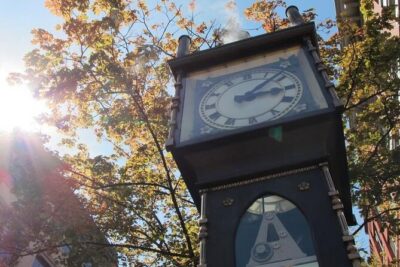

Vancouver: Gastown Historical Walking Food Tour
Read our review →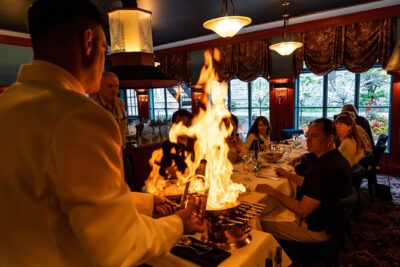
Evening Gourmet Tour 5 Course Dinner – History and Food in Old Quebec City
Read our review →


Browse the lists this tour appears in