
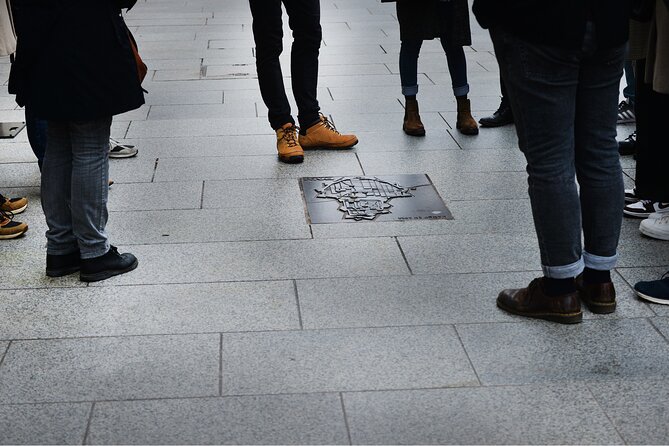
Review · NANCY
Guided tour of Nancy, Great History and Little Anecdotes
Nancy rewards a slower look. This 90-minute walking tour connects the city’s grand squares, medieval streets, and leafy park with clear explanations from Léopold Fousnaquer, a history-trained guide who works with the Tourist Office. I like the way he joins major events with small human details, and I like that he adjusts his explanations for both beginners and people who already know French history.
The price is about $17.42 per person, a fair deal for a guided introduction to Nancy’s center. The tour is conducted in French, so you will get the most from it if you can follow spoken French comfortably. The main drawback is that the group can reach 30 people, and the tour does not include admission to any museums or monuments.
Key Points Before You Book
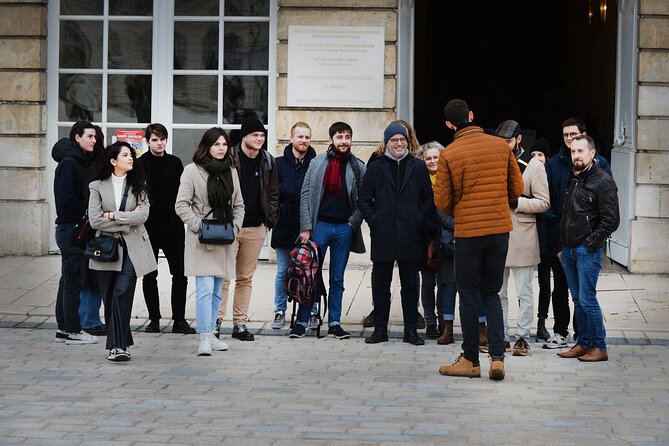
- A French-language history walk: Léopold Fousnaquer explains Nancy’s past in French, with a clear pace and plenty of anecdotes.
- Four central stops: The route covers Place Stanislas, Place de la Carrière, Grande Rue, and Parc de la Pépinière.
- A strong first look at Nancy: You see the city’s grand 18th-century squares alongside its older medieval core.
- No attraction admission is needed: The experience focuses on streets, façades, public art, and outdoor spaces.
- Small details matter: Architecture, old street life, local figures, and curious stories are given as much attention as famous names.
- Easy cancellation terms: You can cancel for a full refund up to 24 hours before the start time.
Why This Nancy Walk Works So Well
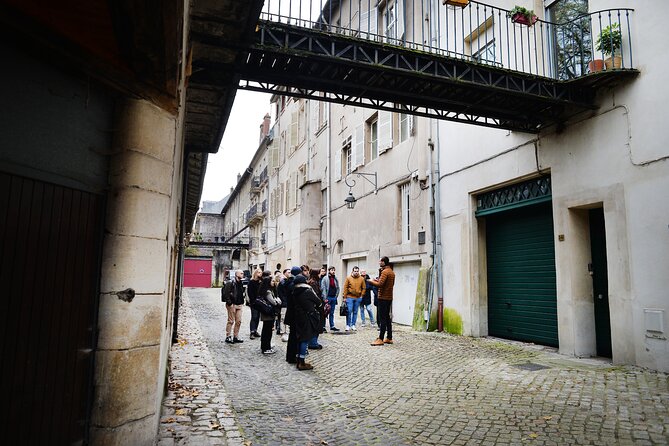
Nancy can look polished and self-explanatory at first. Place Stanislas has its golden gates, grand façades, and open space. But the city makes more sense once you understand why the square was built, who paid for it, and how it linked older parts of Nancy with a newer royal quarter.
That is the main value of this tour. You are not simply taken from one attractive view to the next. Léopold places Nancy inside the wider story of Lorraine, Poland, France, the dukes of Lorraine, and the city’s changing political role.
His academic background is useful without making the walk feel like a lecture. The strongest praise for his guiding style centers on his organization, pleasant speaking pace, humor, and ability to answer questions. That combination matters on a walking tour. Historical facts are easier to remember when they are attached to a building, statue, railing, or street corner you can see.
The route is also sensibly arranged. It begins with the most famous square, moves toward the old town, and finishes in the city’s large park. You get the big public face of Nancy first, then the older and more intimate streets, followed by a calmer outdoor ending.
The tour is offered in French. This is not a problem if you are comfortable listening to French, but it is an important booking point. The guide takes care to adapt to his audience, yet a history walk still depends on understanding spoken explanations.
More Guided Tours in France:
- Paris: Dark History and Ghostly Guided Walking Tour
★ 4.7 · 1,000 reviews - Vieux Lyon Cultural & Historical Walking Guided Tour (English)
★ 5.0 · 942 reviews - Notre Dame Cathedral: Exterior Guided Tour & Unscheduled Access
★ 4.5 · 409 reviews
Place Stanislas: Nancy’s Grand Opening Scene
The tour begins on Place Stanislas, the obvious place to start and one of Nancy’s finest public spaces. The square is named for Stanislas Leszczynski, a remarkable figure who was King of Poland, Duke of Lorraine, and father-in-law to Louis XV of France.
That list alone gives Léopold plenty to work with. Stanislas was not simply a decorative statue in the middle of a handsome square. His family ties and political position connected Lorraine to the French monarchy and to a much wider European story.
Stanislas commissioned this Baroque-style Place Royale in the 18th century. The square was inaugurated in the middle of that century, and its design helped create a link between different parts of Nancy. You will look at it as a complete architectural setting rather than as a single monument.
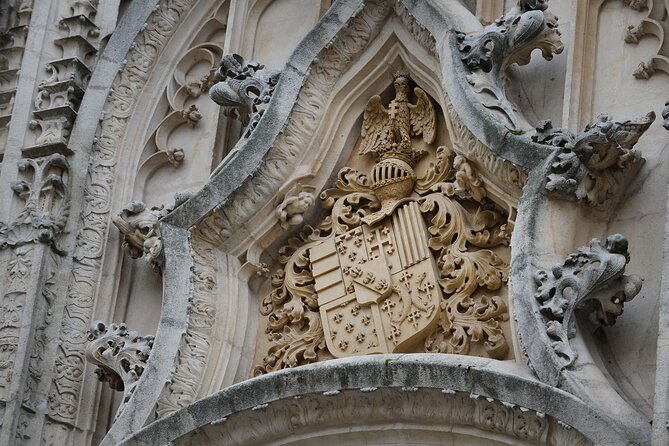
Jean Lamour’s famous rococo railings provide some of the tour’s most memorable details. Their gilded metalwork frames the square and gives it a bright, almost theatrical edge. Léopold’s approach is especially useful here because the decoration can easily distract you from the political purpose of the space.
Allow about 30 minutes for this stop. That is a good amount of time for the guide to explain Stanislas, the square’s creation, and the architectural details without rushing you through the setting.
The outdoor format also keeps the experience direct. You are standing in the place being discussed, not looking at a reproduction in a museum room. Since admission is free, this part of the visit gives you a great deal for no additional cost.
One thing to keep in mind is that Place Stanislas is Nancy’s best-known sight. You may already have seen photographs before arriving. The benefit of the tour is not simply seeing it in person, but learning how to read the square and noticing details you might otherwise pass by.
Place de la Carrière: A Former Riding Ground
From Place Stanislas, the tour continues to Place de la Carrière. This square was created at the end of the 16th century within the city walls and originally served as a place where the dukes’ riders could train.
That old use gives the square a different character from Place Stanislas. It was not first conceived as a ceremonial royal plaza. It was a practical urban space linked to the dukes, their horses, and nearby stables.
The stables were located only a short distance away in an adjoining lane that has kept its charm. Details like this are exactly where a guide adds value. Without an explanation, you may see a graceful square and move on. With the story, you can picture the movement of horses and riders through the older city.
Duke Leopold later improved the area, and Stanislas continued the work. Their changes produced a coherent architectural group that still survives today. The square helps you see how Nancy developed in stages rather than appearing all at once according to one plan.
This stop lasts about 15 minutes. That may sound brief, but it fits the scale of the site. You get the story, the architecture, and the connection to the nearby streets without letting one square take over the whole walk.
I particularly like this part for anyone interested in urban design. It shows how a space can change purpose over time while keeping traces of its earlier life. Nancy’s public places are not just pretty backgrounds. They reveal how power, movement, ceremony, and daily life shaped the city.
Grande Rue: Walking Through the Medieval Core
Grande Rue brings you into the old town and offers the most varied stretch of the tour. Historically, it was Nancy’s busiest street, and it has held the same name since medieval times.
That continuity gives the street a strong sense of place. You are following an old route through the city rather than walking through a modern shopping district with a few historic buildings placed along it.
Several important sights appear along the way. These include the Basilica of Saint-Epvre, the Palace of the Dukes of Lorraine, the Church of the Cordeliers, and the Porte de la Craffe. The tour does not treat these buildings as isolated photo stops. Instead, they form part of the story of how the old town worked.
The Basilica of Saint-Epvre contributes a later religious layer. The Palace of the Dukes of Lorraine points you back to the rulers who shaped the region. The Church of the Cordeliers connects with religious and dynastic life, while the Porte de la Craffe recalls Nancy’s fortified past.
You will spend about 20 minutes on this part of the route. The timing suggests a guided walk through the street rather than a full interior visit to each building. That is worth understanding before you book. You receive context and exterior views, but entrance fees to monuments and museums are not included.
For me, Grande Rue is where the title of the experience makes the most sense. The large historical themes are present, but so are the small clues: an unchanged street name, an old gateway, a lane connected to the dukes’ stables, or a detail in a church façade.
Léopold’s style seems well suited to this setting. He has been praised for making the walk interactive and for responding to questions rather than delivering a fixed speech. That makes a difference in a street full of buildings competing for your attention.
If you have children or a mixed-age family group, this section may help keep the walk moving. One description of the experience specifically praised it as suitable for a family ranging from age seven to 74. The variety of buildings and stories gives younger participants something concrete to look at, while adults can follow the political and architectural background.
A few more history tours around France worth a look
- Paris: Louvre Museum Entry with History of Mona Lisa
★ 3.9 · 2,823 reviews - Bordeaux: Historic Center & Chartrons District Bike Tour
★ 4.8 · 709 reviews - From Strasbourg: Best Of Alsace Historical Day Trip
★ 4.7 · 633 reviews - Toulouse Food & History Tour with a Chef (in English)
★ 5.0 · 503 reviews
Parc de la Pépinière: A Calm Finish
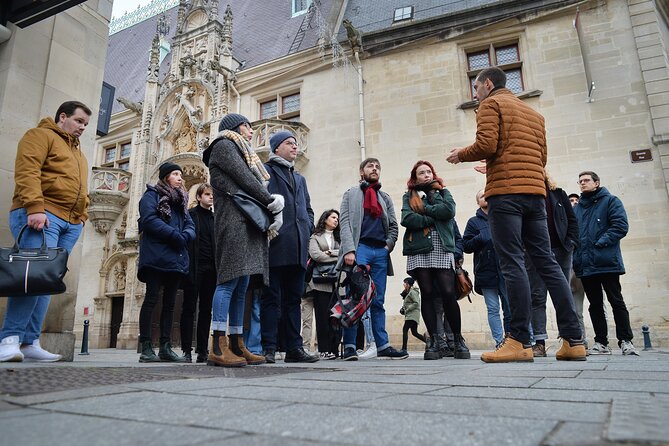
The final stop is Parc de la Pépinière, Nancy’s 22-hectare green space. It serves as the city’s main open-air breathing space and gives the tour a quieter ending after the formal squares and historic streets.
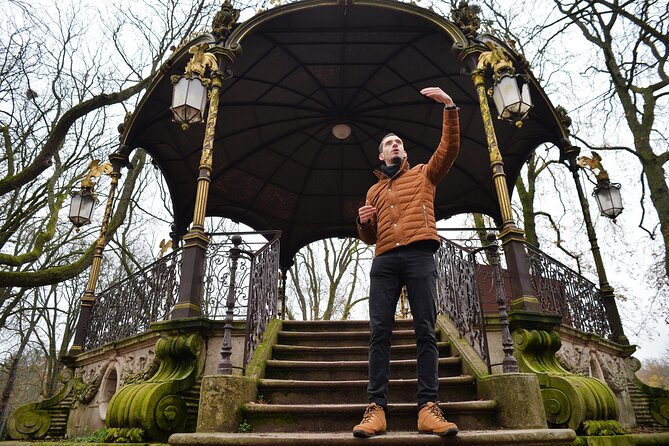
The park is not presented as an afterthought. It contains several different kinds of interest. Some are botanical, including centuries-old trees. Others are sculptural, such as the statue of Claude Lorrain by Rodin. There is also the Mozart kiosk, a small structure that invites you to pause and look around.
This last stop lasts about 10 minutes. That is enough for an introduction, but not enough for a full park visit. If you enjoy gardens, sculpture, or quiet city walks, I would return here later and explore at your own pace.
The park also gives the guide a chance to connect Nancy’s public art with its everyday life. After hearing about kings, dukes, walls, and churches, you finish in a place used for rest and contemplation. That change of mood is welcome.
The route ending back at the starting point keeps the logistics simple. You do not have to work out where the guide has left you or arrange a separate ride across town. The tour is a walking experience, and its central route stays close to major urban sights and public transportation.
What the Guide Adds
The guide is Léopold Fousnaquer, who has a master’s degree in history and works with Nancy’s Tourist Office alongside his independent guiding work. His background explains the amount of historical detail built into a 90-minute walk, but the strongest part of the experience is his delivery.
The praise is remarkably consistent around a few points: he is clear, organized, friendly, attentive, and passionate about Nancy. He is also described as a good storyteller who mixes major events with small anecdotes. That balance is important because a city tour can fail in two opposite ways. It can become a list of dates, or it can become entertaining but shallow.
Léopold appears to aim between those extremes. His explanations are described as didactic but accessible, and his humor helps keep the material from becoming heavy. He also answers questions, which gives you room to follow the subjects that interest you most.
His speaking pace has been singled out as comfortable. That matters in French, particularly if you are listening in a second language. A guide who talks too fast can turn even a well-prepared walk into hard work.
You should still be realistic about the language. This is a French-language experience, not a bilingual tour. If you understand only a little French, you may enjoy the buildings and atmosphere, but you will miss much of the historical value.
Timing, Group Size, and Physical Effort
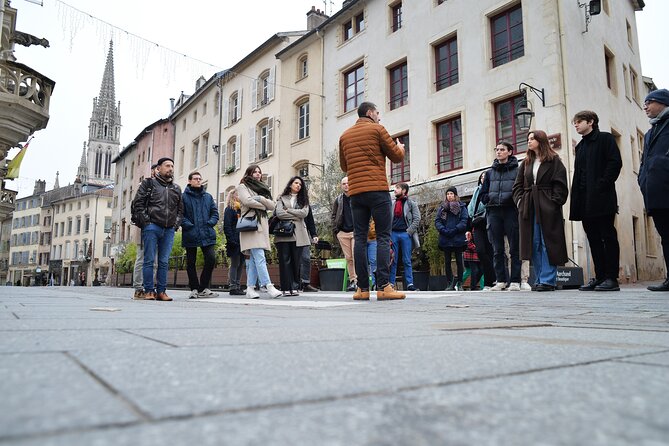
The stated duration is about one hour and 30 minutes. One comment described the experience as lasting roughly an hour and 35 minutes, so allow a little flexibility rather than planning your next activity down to the minute.
The group can include up to 30 people. That is a reasonable cap for a public walking tour, though it is not an intimate private walk. A larger group may make it harder to stand close to the guide or ask several questions, especially in narrow parts of the old town.
Most people can take part, and service animals are allowed. The tour stays outdoors and includes walking between four central areas. The supplied information does not provide a precise distance, accessibility assessment, or seating plan, so anyone with mobility concerns should ask the provider before booking.
Bring clothing suited to the weather. The route includes open squares and a large park, so cold, wind, or rain can affect your comfort. The guide has even led the walk on January 1, showing that the experience can operate in colder conditions, but that does not make winter clothing optional.
The mobile ticket is convenient. You do not need a printed voucher, and confirmation arrives when you book. The meeting point is Place Stanislas, at Place Stanislas, 54000 Nancy, France. The activity ends back at the meeting point.
Is $17.42 a Good Value?
At about $17.42 per person, this is a low-cost way to get a structured introduction to Nancy. You are paying for the guide’s preparation, interpretation, and time, not for entry to a museum or monument.
That distinction is important. If you want interiors, you will need to arrange and pay for those separately. The tour gives you outdoor access to the city’s major public spaces and the historical background needed to understand them.
The value is strongest if Nancy is new to you. In 90 minutes, you cover the most important central sights, learn who Stanislas was, see the relationship between the old town and later planned squares, and finish with the Pépinière.
The price also makes sense for families and small groups who want more than a self-guided walk but do not want a costly private guide. The group limit of 30 keeps the tour from becoming unlimited in size, though it may not suit you if you prefer a quiet, highly personal experience.
I would not choose it as your only Nancy activity if you want long interior visits or specialist art commentary. I would choose it as your orientation walk, then return to the places that caught your attention.
Who Should Book This Tour?
This experience suits first-time visitors who want to understand Nancy quickly. It is especially useful if you have only part of a day and want a guide to sort out the city’s major periods and buildings.
It also suits people who enjoy history but dislike dry lectures. The focus on anecdotes, architecture, curiosities, and local personalities keeps the walk connected to what you can see around you.
Families can benefit from the variety of stops and the short sections. Couples may appreciate the mix of grand squares, old streets, and the park, while history students or well-read visitors can ask questions and explore the broader context.
French speakers will get the full benefit. If you are still learning French, consider your listening ability honestly. The guide is praised for speaking clearly and at a good pace, but the explanations remain central to the experience.
You may want a different option if you need a wheelchair-specific route, prefer a private guide, or want museum interiors included. The provided details confirm that most people can participate, but they do not promise a fully step-free route or access inside every monument.
Practical Booking Advice
Book this walk near the beginning of your stay in Nancy. The route gives you useful bearings, and the guide’s suggestions may help you decide which buildings or areas deserve a longer visit afterward. The experience is booked, on average, about 14 days in advance, so reserving ahead is sensible if your schedule is fixed.
The cancellation policy is friendly. You can cancel up to 24 hours before the local start time for a full refund. Changes or cancellations made less than 24 hours before the start are not accepted for a refund.
Remember the main details:
- The tour is in French.
- It lasts about 90 minutes.
- It begins and ends at Place Stanislas.
- The group may have up to 30 people.
- Monument and museum entrance fees are not included.
- Service animals are allowed.
- The activity is close to public transportation.
Should You Book It?
I would book this tour if you want a lively, affordable introduction to Nancy and can follow French comfortably. Léopold Fousnaquer brings solid historical training, a friendly manner, and a clear structure to a route that covers the city’s essential outdoor sights.
The tour’s best feature is its balance. You get Stanislas and royal politics, but also old stables, a medieval street name, church façades, city gates, sculpture, trees, and the Mozart kiosk. That mix helps Nancy feel like a lived-in city rather than a set of grand monuments.
Skip it if you need a fully private experience, a tour in another language, or included admission to museums and monuments. For everyone else, $17.42 buys a useful first look at Nancy, with enough stories to make the city easier to understand and more rewarding to explore on your own.
FAQ
Where does the guided tour of Nancy begin?
The tour begins at Place Stanislas, Place Stanislas, 54000 Nancy, France.
Where does the tour end?
The activity ends back at the meeting point, Place Stanislas.
How long does the tour last?
The tour lasts approximately one hour and 30 minutes.
What language is the tour conducted in?
The discovery tour is conducted in French.
What places are included in the route?
The route includes Place Stanislas, Place de la Carrière, Grande Rue, and Parc de la Pépinière.
Are museum or monument entrance fees included?
No. Entrance fees to monuments and museums are not included.
How many people can join the tour?
The activity has a maximum group size of 30 people.
Are service animals allowed?
Yes. Service animals are allowed on the tour.
Can I cancel for a full refund?
Yes. You can cancel at least 24 hours before the experience start time for a full refund. Changes or cancellations made less than 24 hours before the start are not accepted for a refund.
Just added around France
- A Private Guided Historical and Cultural Tour in Nîmes★ 4.5 · 32 reviews
- Guided tour of the Historic Center of Nancy★ 4.5 · 18 reviews
- All Inclusive Food & History Tour of Marseille with Local Guide★ 4.5 · 27 reviews
- Segway Tour by ComhiC – The Highlights – 1h30★ 5.0 · 27 reviews
- Lyon’s History and Must-Sees with a Local! (English Walking Tour)★ 5.0 · 86 reviews
- Unique Tour of Great Women in Lyon history★ 5.0 · 23 reviews
- Small-Group Full-Day Tour of Côte de Nuits, Côte de Beaune Vineyards and Beaune Historical District★ 5.0 · 364 reviews
- Bordeaux Historic and Gourmet Food Walking Tour★ 4.5 · 82 reviews
France History Tours, compared.
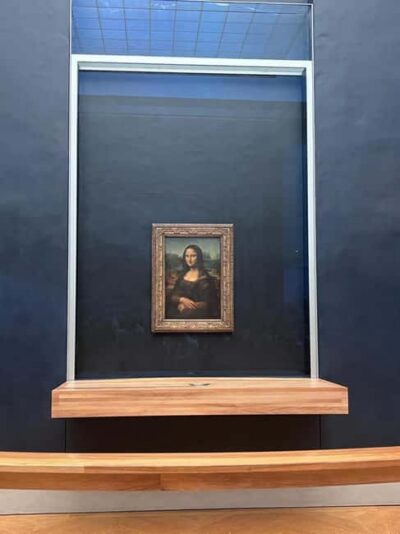
Louvre Museum Entry with History of Mona Lisa
Read our review →
Vieux Lyon Cultural & Historical Walking Guided Tour (English)
Read our review →
Bordeaux: Historic Center & Chartrons District Bike Tour
Read our review →
From Strasbourg: Best Of Alsace Historical Day Trip
Read our review →
Toulouse Food & History Tour with a Chef (in English)
Read our review →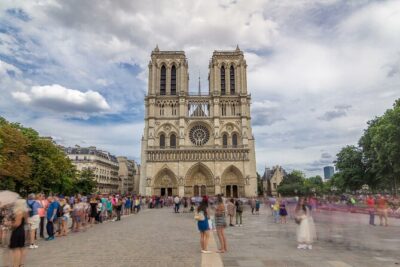
Notre Dame Cathedral: Exterior Guided Tour & Unscheduled Access
Read our review →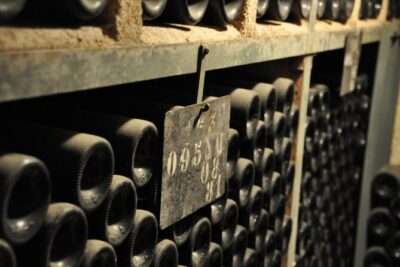
Small-Group Full-Day Tour of Côte de Nuits, Côte de Beaune Vineyards and Beaune Historical District
Read our review →Browse the lists this tour appears in