
Review · MEXICO CITY
Mexico City’s Historical Center Icons
History is everywhere in Mexico City’s center. This private four-hour walk links the city’s major sights with a local guide who explains how Mexica, colonial, imperial, and modern Mexico fit together. I like the private format, which lets you ask questions and adjust the pace, and I like the clear route from the Zócalo to Palacio de Bellas Artes. The main drawback is that you walk for most of the four hours, and transportation, snacks, drinks beyond bottled water, and some museum fees are not included.
Guides such as Alejandro and Tlilal have earned especially strong praise for clear English, warm personalities, and lively explanations. Alejandro’s chronological approach helps you follow Mexico City from the 1500s through the 1950s, while his ability to suggest an alternate mural stop when the National Palace was closed shows the value of having a private guide. At $98 per person, this is not the cheapest way to see the Centro Histórico, but it can be a good buy if you want orientation and context on your first day.
Key points to know before booking
- A private route through six major sights: You visit the Metropolitan Cathedral, Templo Mayor, Gran Hotel, House of Tiles, Palacio Postal, and Palacio de Bellas Artes with only your own group.
- A strong first-day introduction: The walk connects archaeology, religion, politics, architecture, and modern city life in one compact outing.
- Guides make the difference: Alejandro and Tlilal are praised for clear English, careful answers, and an obvious affection for Mexico City.
- Mostly an outdoor walking experience: The route covers the historic center on foot, so comfortable shoes and a moderate fitness level matter.
- Weekend timing only: The stated operating window is Saturday and Sunday from 10 a.m. to 2 p.m.
- Finish near Bellas Artes: The final stop is Palacio de Bellas Artes square, a useful point for continuing your own sightseeing.
Why this four-hour walk works as a city introduction
Mexico City’s historic center can feel confusing at first. The streets hold remains of the Mexica capital, Spanish churches, grand commercial buildings, government offices, and modern cultural institutions, often within a few blocks of one another. A good guide helps you see those layers as part of one story instead of a collection of unrelated façades.
That is the main strength here. You are not simply moving from one photo stop to another. The route gives you a basic timeline and shows how power, faith, trade, art, and architecture shaped the center. This matters because several of the buildings make more sense once you understand what came before them.
The private setup also changes the tone. You can ask why a building looks the way it does, stop for a closer look, or tell the guide what interests you most. If archaeology matters more to you than decorative architecture, you can say so. If you want more attention on murals, politics, or current events, the guide can respond to that better than a large group tour usually can.
At four hours, the tour is long enough to give you a useful framework without taking your entire day. It is particularly sensible near the start of a Mexico City stay. Once the walk ends, you can return to the places that caught your attention or continue toward another part of the city.
More Old Town and Historic Centre Walks in Mexico
- Historic Downtown Walking Tour
★ 5.0 · 1,289 reviews - Historic Center Food Tour in Mexico City
★ 5.0 · 1,263 reviews - Mexico City: Historic Downtown Walking Tour
★ 4.8 · 1,039 reviews
Starting at the Metropolitan Cathedral
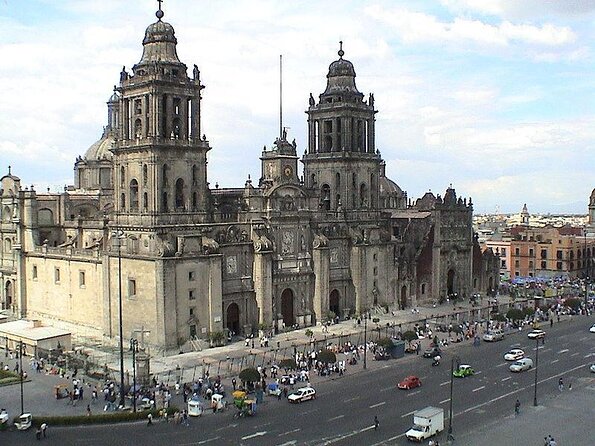
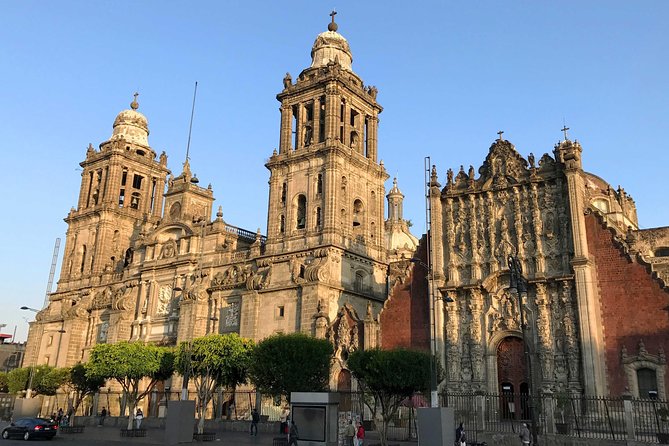
The walk begins at Plaza de la Constitución, better known as the Zócalo, where the Metropolitan Cathedral dominates one side of the square. You spend about 30 minutes here discussing the church and its role as the head of the Catholic Church in Mexico.
This is a useful opening because the cathedral introduces the colonial chapter of the city. Its scale makes an immediate impression, but the guide’s explanation is what gives the building meaning. You can expect attention to its history rather than a rushed exterior photo.
The stop is listed with no admission charge, though the tour does not cover fees for museums or attractions not specifically included. That distinction is worth keeping in mind as you plan your day. The supplied information describes the cathedral visit as free, but you should still follow the guide’s instructions about any optional entry during the tour.
The Zócalo is also a practical place to begin. It gives you a clear sense of the center’s size and puts you close to several other major sights. After this stop, the route moves into an older layer of Mexico City, one that predates Spanish rule.
Seeing Mexica ruins at Templo Mayor
At the Museo del Templo Mayor, you spend about 30 minutes looking at the remains of the pre-Columbian Mexica city. This is one of the most important stops for understanding why Mexico City has such unusual historical depth.
The ruins sit beside the colonial center, and that physical closeness tells you something important. The present-day city was built over an earlier capital rather than in an empty place. A guide can help connect the stones and excavated remains to the larger story of the Mexica world and the Spanish conquest.
Thirty minutes is enough for an introduction, not a full museum visit. If archaeology is your main interest, you may want to return later with more time. The tour’s value here is the explanation and orientation. You get a reason to care about what you are seeing, then you can decide if the museum deserves a longer visit.
The information for this experience lists admission as free at this stop, while also noting that museum entrance fees not specified in the tour are excluded. Read that as a warning to confirm what is included if you plan to enter exhibition areas beyond the brief scheduled visit.
Gran Hotel and the elegance of an earlier Mexico City
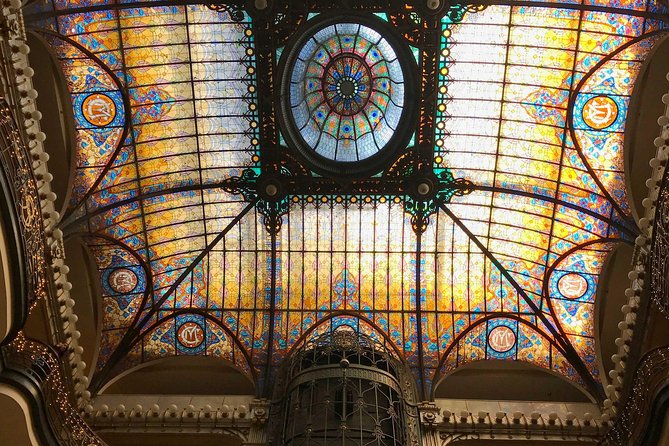
The Gran Hotel Ciudad de Mexico receives about 15 minutes. That may sound brief, but this is a quick architectural stop rather than a long museum visit.
The building is known here as an impressive Art Nouveau structure from the transition between the 19th and 20th centuries. This part of the route shifts your attention from ancient ruins and colonial religion to the city’s later ambitions. The interior is especially important, since the guide may show you details you could easily miss if you only walked past the entrance.
That insider access is one of the most useful features of a guided walk. Historic buildings can be visually crowded with detail. Without context, you may notice only that a place looks grand. With a guide, you can learn why its design matters and how it fits the period when Mexico City was presenting itself as a modern capital.
Because the stop is short, do not expect a full architectural lecture. Think of it as a sharp introduction that helps you notice the building when you pass it again.
Same place, a different slice of the past:
- Walking Tour of the Historic Center of Mexico City
★ 5.0 · 870 reviews - Mexico City Historical Centre Food Tour with 7 Authentic Tastings
★ 5.0 · 723 reviews - Historical and Cultural Walking Tour of San Miguel de Allende
★ 5.0 · 641 reviews - Historical and Cultural Walking Tour of San José del Cabo
★ 5.0 · 576 reviews
House of Tiles, a compact architectural lesson
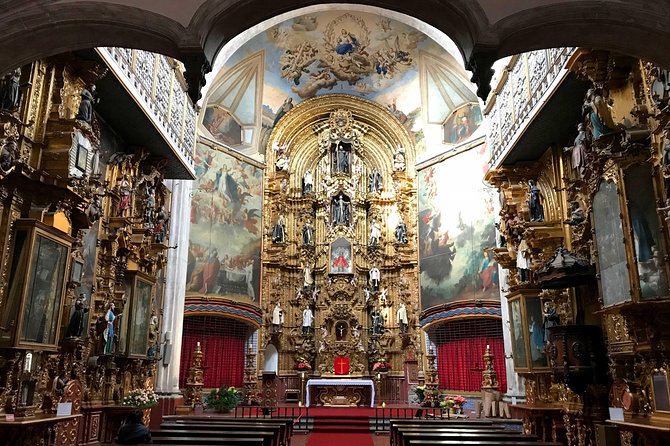
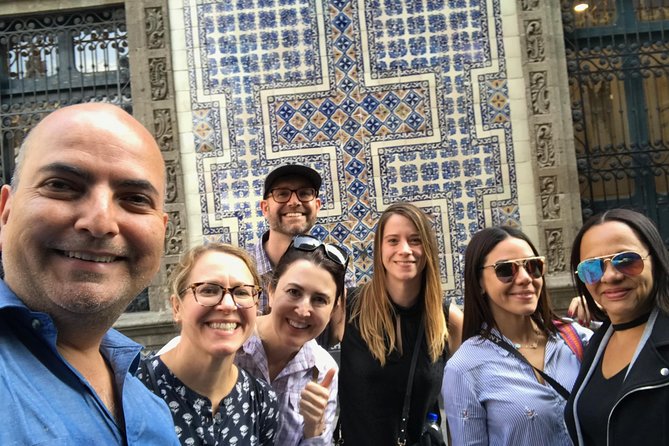
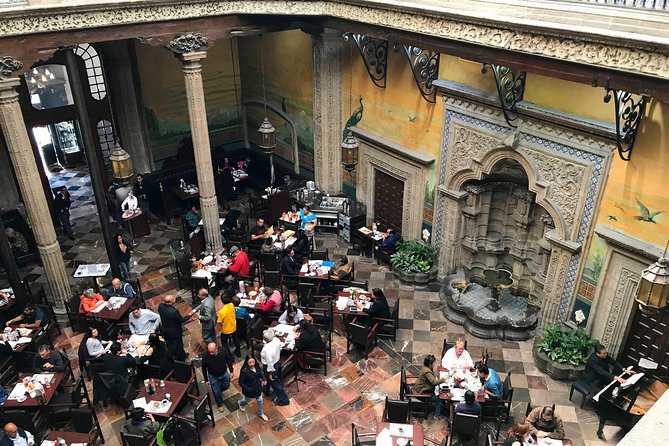
The House of Tiles receives about 30 minutes. This 18th-century house is described as unique and beautiful, and it offers a different kind of visual experience from the cathedral or the hotel.
The name tells you what to look for, but the guide’s commentary should help you see beyond the surface. The building represents the decorative side of the historic center, where a private residence could become a public symbol of wealth, taste, and changing city life.
I like this stop because it breaks up the heavier historical subjects. You move from conquest and religion to craftsmanship and domestic architecture. The result is a more complete picture of the center.
The tour information does not promise a meal or refreshment stop here. Snacks and beverages are your responsibility, so carry some money and plan ahead. Bottled water is included, but you should not count on food being supplied during the walk.
Palacio Postal and the city’s turn toward modernity
The route then reaches Palacio Postal, admired for its grand early-20th-century design. You spend about 15 minutes here.
Like the Gran Hotel, this stop shows how Mexico City changed as the 19th century ended and the 20th century began. The building’s role as a post office also gives the discussion a practical angle. This was not merely a decorative palace. It served the communications needs of a growing capital.
Fifteen minutes is enough to admire the architecture and hear the main points, but not enough for an extended visit. That is a pattern throughout the tour. The walk gives you a broad framework across many places rather than allowing long, detailed visits to one or two museums.
That approach suits you if you want to get your bearings quickly. It may frustrate you if you prefer to read every plaque or linger in each interior. The private format helps somewhat, since you can ask to pause, but the overall route still has six major stops to cover.
Finishing at Palacio de Bellas Artes
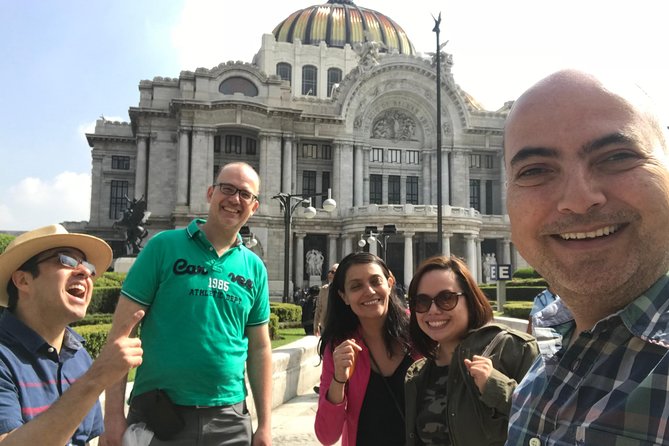
The final major stop is Palacio de Bellas Artes, the monumental theater and one of the best-known symbols of the historic center. You spend around 30 minutes here before finishing in the square on Avenida Juárez.
This is a strong ending. Bellas Artes brings together architecture, theater, visual art, and national identity. It also gives the tour a memorable final landmark rather than ending on a minor street.
The guide may discuss the building itself and its cultural importance. The square is also a practical place to continue exploring after the tour. You can use the remaining day for nearby museums, more architecture, or a return to an earlier stop that deserved extra time.
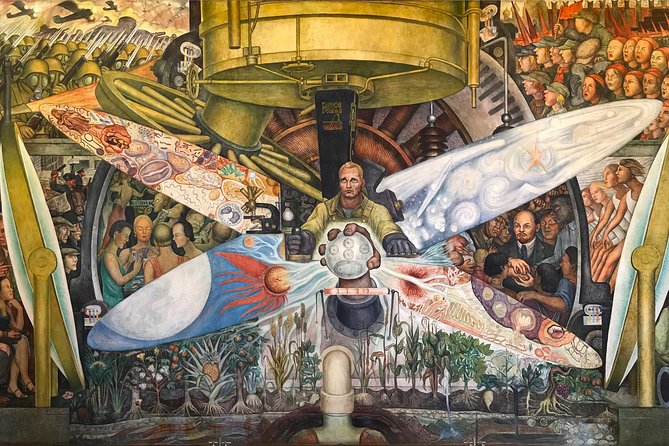
One useful lesson comes from the way Alejandro handled a closed mural site for one group. When the National Palace murals were unavailable on a Monday, he found another place to see murals instead. That kind of adjustment is valuable on a private tour, though you should not assume every alternate stop is guaranteed. Sites can close, and the exact route may change.
How the guides shape the experience
The strongest praise goes to the guides, especially Alejandro and Tlilal. Alejandro is described as thorough, easy to understand in English, and able to answer questions about history, architecture, culture, politics, economics, and current events. That range matters because Mexico City’s center cannot be explained through buildings alone.
His chronological method is also useful. If you sometimes lose track of Mexican history, having the guide connect the 1500s to the 1950s can make the sequence easier to follow. You get a basic map of time as well as place.
Tlilal is praised for friendliness and strong knowledge. The tone appears relaxed rather than formal, which suits a walking tour through busy public spaces. The best experience here will depend on the guide assigned to your booking, but the available feedback points to a consistently high standard.
English is the offered language. You should still expect historical terms, names, and dates, so do not be shy about asking the guide to repeat or explain something. A private tour gives you room to do that without holding up a large group.
What $98 per person really buys
The price is $98 per person. Since transportation, food, and unspecified museum entrance fees are not included, you are paying mainly for the guide’s time, the private format, and the organized route.
For a solo visitor, that can feel expensive. For two or more people, the value becomes easier to judge because the price buys a private experience rather than a standard large-group walk. You are also paying for local interpretation, not just access to buildings you could see from the street.
I would compare the price with your goals. If you only want a quick look at the cathedral, Templo Mayor, and Bellas Artes, you can see some of the route on your own for less. If you want the city’s history explained in a connected way, the cost is more defensible.
The tour’s perfect rating from 25 submitted ratings and full recommendation rate suggest a strong record, but I would still consider your interests. A museum specialist may want longer visits at fewer places. A first-time visitor who wants a clear introduction is likely to get more from this format.
Practical details that affect your day
The experience runs on Saturday and Sunday from 10 a.m. to 2 p.m. That schedule is important because it limits your options if you are in Mexico City only during weekdays. Confirmation is sent within 48 hours of booking, subject to availability.
You meet at Plaza de la Constitución 803 in Centro Histórico and finish at the Palacio de Bellas Artes square on Avenida Juárez. Private transportation is not provided, but the route is near public transportation. Plan your arrival carefully so you are ready at the stated meeting point.
Wear comfortable walking shoes and bring sun protection. The tour requires a moderate fitness level, and four hours on city streets can be tiring even though the stops break up the walking. Bottled water is included, but snacks and other drinks are not.
Service animals are allowed. This is a private activity, so only your own group participates. Free cancellation is available up to 24 hours before the start time. Cancellations or changes inside that window are not refunded, and poor weather can lead to a new date or a full refund.
Who should book this walk?
I would choose this tour for a first visit, especially if you want to understand the historic center before exploring it on your own. It also suits couples, families, and small groups who value questions and personal attention.
The experience is a good match if you enjoy architecture but want more than a photo stop. It also works well if you need a straightforward explanation of Mexican history without committing to a full-day museum program.
I would hesitate if your priority is independent wandering, long museum visits, or a tour outside the center. The route is focused, the timing is fixed, and six stops mean you will see many places briefly. You should also budget for any food, drinks, transport to and from the meeting points, and extra admission fees.
Should you book Mexico City’s Historical Center Icons?
Book it if you want a private, English-language introduction to the Centro Histórico and value a guide who can connect archaeology, colonial buildings, Art Nouveau design, and modern Mexican culture. The route is well chosen, the endpoint near Bellas Artes is useful, and Alejandro and Tlilal bring a personal touch that can make the history easier to follow.
Skip it if you prefer to set your own pace or already know the center well. For everyone else, this is a sensible first-day orientation, with enough major sights to make the $98 price reasonable when shared among a small group.
FAQ
How long does the Mexico City Historical Center Icons tour last?
The tour lasts approximately four hours, from 10 a.m. to 2 p.m. on Saturday and Sunday.
Is this a private tour?
Yes. Only your group participates in the activity.
What language is offered?
The tour is offered in English.
Where does the tour start and finish?
It starts at Plaza de la Constitución 803 in Mexico City’s Centro Histórico and finishes at Palacio de Bellas Artes square on Avenida Juárez.
Is transportation included?
No. Private transportation is not included. The route is near public transportation.
What is included in the price?
Bottled water is included. Snacks, additional drinks, and entrance fees for museums not specified in the tour are not included.
Just added around Mexico
- Culture, History and Food in Oaxaca City★ 5.0 · 43 reviews
- Bicycle Tour through Oaxaca learning about its Urban Art and History★ 5.0 · 78 reviews
- Oaxaca city bike ride – History & traditions★ 5.0 · 25 reviews
- Walking Tour in Historic Center CDMX★ 5.0 · 50 reviews
- Walking Tour – Impressive murals in Historical Center of Mexico City★ 5.0 · 224 reviews
- Food and Historic Walking Tour: Private Tortilla Crawl in Mexico City Downtown★ 5.0 · 35 reviews
- Best PRIVATE TOUR of Legends and Events in the Historic Center★ 5.0 · 33 reviews
- The real “Dia de muertos” tour in Mixquic + secret cemetery★ 4.0 · 27 reviews
Old Town & Historic Centre Walks, compared.

Live Fado Show with Port Wine in Historic Center
Read our review →
Valencia Old Town Tour with Wine & Tapas in 11th Century Historic Monument
Read our review →
Prague Old Town, Medieval Underground and Dungeon Historical Tour
Read our review →
Historic Center and Getsemaní Shared Walking Tour
Read our review →
Old Town Walking Tour History and Tales in Edinburgh
Read our review →
Philadelphia Old City Historic Walking Tour with 10+ Top Sites
Read our review →
Saadian Tombs & Bahia Palace, Medina Guided Tour
Read our review →Browse the lists this tour appears in