Review · MEXICO CITY
Private Walking Tour Gems of the Historic Center of Mexico City
Historic Mexico City rewards a good guide. This private four-hour walk connects Aztec ruins, grand churches, colonial palaces, working public squares, and the murals of Bellas Artes. I especially like the one-group format, which lets your guide adjust the pace and explain the subjects that interest you most. The complimentary coffee break is another thoughtful touch on a walk that can cover close to four miles.
I also like the route’s clear story, moving from ancient Tenochtitlan through Spanish rule and independence to modern Mexican art. The main limitation is access: you view the National Palace from outside, and the Templo Mayor portion focuses on the exterior archaeological site rather than the museum. At $156 per person, this is best value for people who want context, questions answered, and a flexible guide rather than a quick checklist of sights.
Key points at a glance
- A private route from Aztec ruins to Mexican murals: Follow Mexico City’s story from Templo Mayor and the Zócalo to Palacio de Bellas Artes.
- Flexible pacing for your own interests: Guides such as Alejo, Alicia, Silvia, Hilary, Julio, and Isaias have adapted walks for art, architecture, family needs, and local food suggestions.
- Bellas Artes is the grand finale: Admission includes the lobby and upper-floor murals by Diego Rivera, David Alfaro Siqueiros, Rufino Tamayo, and others.
- Mostly an outdoor walking experience: You will see the National Palace from the Zócalo and will not enter it. The Templo Mayor museum is also not included.
- Coffee is included: A short coffee or tea break gives your feet a rest and adds breathing room to the four-hour route.
- Plan for a serious walk: Past participants have estimated about 10,000 steps, or roughly four miles, though the private format allows the guide to shorten or adjust the route.
Why this private walk works as a first look at Mexico City
Mexico City’s Historic Center can feel like several cities placed on top of one another. Aztec foundations sit beside Spanish churches. Baroque facades face modern crowds. Political history, religious art, street life, and Mexican muralism all appear within a short walk.
That is the strength of this tour. You are not simply moving from one famous building to the next. A certified bilingual guide gives you a connecting story, then fills in details as you walk. Several guides, including Alicia Herrera, Silvia, Hilary, Julio, Isaias, and Hector, have been praised for tailoring the pace and subject matter to the group.
The private setup matters here. You can ask why a building looks the way it does, pause in the shade, spend longer with a mural, or request practical advice for the rest of your stay. Families with children have found the format useful, and couples have appreciated the relaxed but full schedule.
The cost is $156 per person. That is a substantial price for a four-hour walk, especially if you only want exterior views. But admission to Palacio de Bellas Artes is included, along with a coffee or tea break, and you are paying for exclusive guiding rather than a large group. I see the strongest value for first-time visitors, art fans, history enthusiasts, and anyone who wants to use the walk to plan the rest of a Mexico City visit.
More History Walking Tours in Mexico
- Historic Downtown Walking Tour
★ 5.0 · 1,289 reviews - Mexico City: Historic Downtown Walking Tour
★ 4.8 · 1,039 reviews - Walking Tour of the Historic Center of Mexico City
★ 5.0 · 870 reviews
Templo Mayor and the foundations of Tenochtitlan
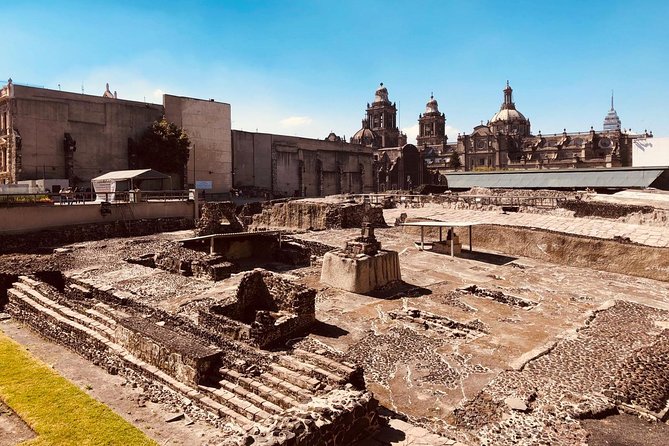
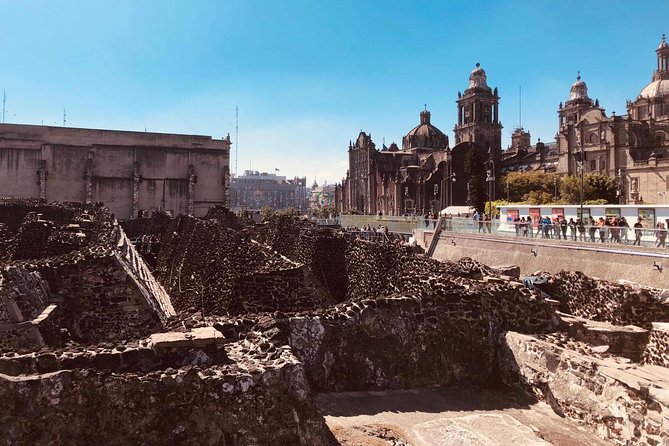
The walk begins near the Zócalo Central Hotel on Avenida 5 de Mayo, then turns toward Museo del Templo Mayor. From an exterior viewing point, you look across the excavated remains of the ceremonial center of Mexico-Tenochtitlan.
Your guide explains how the temple complex functioned as the sacred center of Aztec power and why the city mattered so much before the Spanish conquest. The emphasis is on the city’s planning, political importance, and religious role, not just on a pile of old stones. That opening gives the rest of the walk a useful foundation.
Allow about 20 minutes here. The important limitation is easy to miss: this tour does not include admission to the Templo Mayor Museum. You see the archaeological site from outside, but you will need a separate visit if you want the museum’s objects and indoor displays.
I consider this stop valuable even without museum entry because it sets up the larger story. Still, if Aztec archaeology is your main reason for visiting Mexico City, you may want to add the museum on another day.
The Zócalo and the National Palace from outside
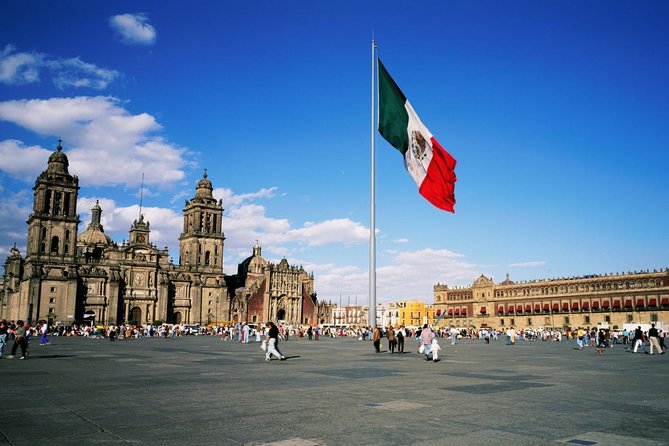
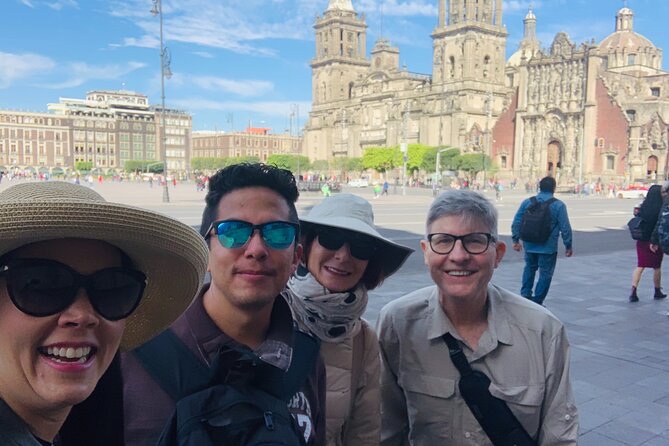
The Plaza de la Constitución, usually called the Zócalo, is the city’s great public room. The walk across the square introduces its role in colonial government, independence, national ceremonies, demonstrations, and everyday city life.
From here, you get a broad view of the National Palace. The building occupies the site associated with Moctezuma’s palace and has served as a center of political power for centuries. The guide explains that long story while keeping the focus on what you can actually see from the square.
You do not enter the National Palace. The tour description is clear on this point, and it matters because the interior is known for its murals. If you specifically want Diego Rivera’s National Palace murals, ask about arranging a separate visit or confirm what is possible before booking.
The Zócalo can also be affected by public events, demonstrations, barriers, or altered access. One particularly difficult outing was cut short during a major political march, when crowds and barricades made several sites hard to reach. The company offered a later date or partial refund in that case, but the incident is a useful reminder that central Mexico City can change quickly.
Metropolitan Cathedral and centuries of church art
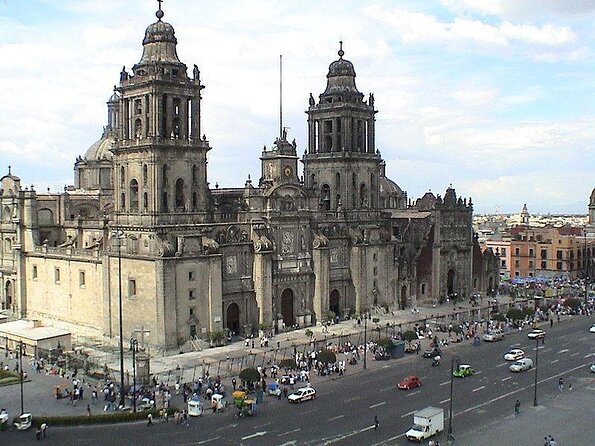
The Metropolitan Cathedral is one of the route’s strongest stops. Its exterior combines Gothic, Herrerian, Mexican Baroque, and Neoclassical elements, so the building reads like a record of changing tastes and long construction periods.
Inside, you see chapels, altars, and decorative details tied to the history of the Catholic Church in Mexico. A guide adds meaning to details you might otherwise pass without noticing. Depending on timing and access, the group may also see the sacristy, sometimes called the Mexican Sistine Chapel, or get a closer look at the large church organ.
The planned visit lasts about 20 minutes, though the exact experience depends on what is open. Religious services and access rules can change the route. This is one reason a private guide is useful: you can make the most of the available spaces rather than expecting a fixed indoor program.
More Old Town and Historic Centre Walks in Mexico
- Historic Center Food Tour in Mexico City
★ 5.0 · 1,263 reviews - Mexico City Historical Centre Food Tour with 7 Authentic Tastings
★ 5.0 · 723 reviews - Mérida: Montejo Boulevard and Historic Center bike tour
★ 4.7 · 43 reviews
Madero Street, where the walk becomes a city lesson
Madero Street is a pedestrian avenue lined with historic churches and colonial buildings. The tour spends about an hour here, making it the longest portion of the route.
This is where the guide’s local perspective can turn a pleasant stroll into a useful lesson. You hear stories about the buildings, changes in the city, and details that are easy to miss when you are simply walking toward Bellas Artes. The private format also lets you pause for photographs or a short rest.
A complimentary coffee or tea break is included. That may sound minor, but it helps on a four-hour walk. The route can cover close to 10,000 steps, according to one detailed account, so a seated pause gives you time to recover and ask questions.
Madero Street can also be the place to adjust the itinerary. Guides have stopped for food or drinks, suggested coffee spots with a view, and changed the route around demonstrations or closed buildings. The tour does not require souvenir-shop stops, which keeps the focus on the city itself.
Iturbide Palace and La Profesa
The former Iturbide Palace receives a short exterior stop of about 10 minutes. The facade is a fine example of Mexican Baroque, and the guide explains both the architectural details and the role of Agustín de Iturbide, who became Mexico’s first emperor.
This is not a full palace visit. Think of it as a focused explanation while you look at the building from the street. If you enjoy architecture, that short pause adds useful detail to the larger colonial story.
The Church of San Felipe Neri, known as La Profesa, follows. Its Baroque altarpiece and collection of sacred art give you another look at the religious side of the Historic Center. Again, the stop is brief, around 10 minutes, so you should not expect a long gallery visit or an extended study of every artwork.
The value here comes from comparison. After the Metropolitan Cathedral, you can see how another important church handles scale, decoration, and religious imagery.
Casa de los Azulejos and San Francisco
Casa de los Azulejos, or the House of Tiles, is one of the route’s most photogenic buildings. Its tiled exterior makes it easy to recognize, but the guide also points out the history, interior decoration, murals, and architectural features.
You have a chance to appreciate the interior, though the planned stop is only about 10 minutes. Keep your expectations practical: this is an introduction, not a long museum visit.
Across the street, the route pauses at the former convent and church of San Francisco. The Chapel of Aranzazú and preserved sections of the original complex offer a glimpse of how much religious architecture once occupied this part of the city.
These brief stops work well for people who want a broad introduction. If you prefer to study one building in detail, you may find the schedule a little quick. Tell your guide early if Casa de los Azulejos or colonial religious architecture is a priority.
Plaza Tolsá and the Postal Palace courtyard
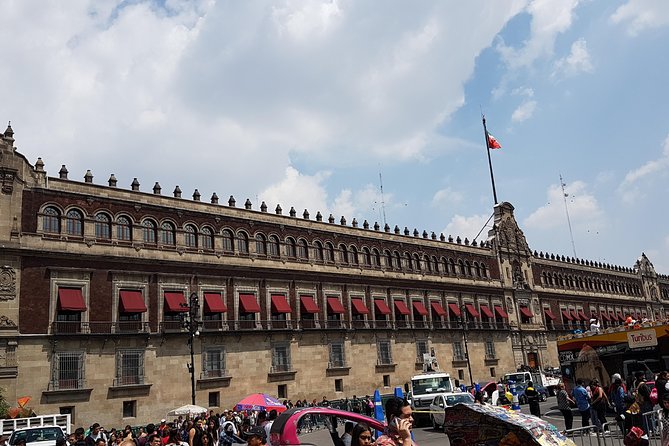
Before the final museum visit, the route pauses at Manuel Tolsá Square and looks toward the exterior of the Mining Palace. This is a short strategic stop, about 10 minutes, giving you another architectural landmark before the grand finale.
The Postal Palace is more than a quick exterior photograph. Admission includes the interior courtyard, where stained glass and ornate decoration create one of the walk’s most rewarding short visits. The stop lasts around 10 minutes, so the guide keeps it focused.
I like this part of the route because it broadens the picture of Mexico City. The city is not only Aztec ruins, cathedrals, and mural galleries. Civic and commercial buildings also tell the story of national ambition and changing design.
Palacio de Bellas Artes and the murals upstairs
The tour ends at Palacio de Bellas Artes, and this is where the included admission carries real value. You enter the lobby, see the grand interior decoration, and then go to the second and third floors for major works of Mexican mural art.
The murals by Diego Rivera, David Alfaro Siqueiros, Rufino Tamayo, and other artists give the tour its strongest visual finish. A good guide helps you read the political ideas, historical references, and symbols rather than treating the paintings as large colorful backdrops.
The visit is scheduled for about 50 minutes. That is enough time for a useful introduction, though art fans may want to return independently if they prefer to study each work at length.
Several guides have earned especially warm praise for this portion. Alicia Herrera has been singled out for her explanations of Rivera’s work. Hilary has also led groups through mural sites with close attention to the details. Julio, Isaias, and Silvia have been praised for connecting art to Mexican history, politics, and daily life.
One useful point: the tour ends at Bellas Artes on Avenida Juárez. If you want to keep exploring, you are already positioned near one of the city’s main cultural areas. Some people have continued the conversation over coffee afterward, but that is not part of the formal inclusions.
How the guides shape the experience
The company assigns different guides, so the personality of your walk can vary. The strongest pattern is a guide who adapts rather than delivering a fixed speech.
Alicia has been appreciated for her warmth and detailed mural explanations. Silvia has used maps, drawings, photographs, and other visual aids to make complicated history easier to follow. Hilary has kept children aged 11 and 14 interested while also handling an energetic schedule.
Hector has adjusted tours around birthdays, late arrivals, extra stops, and personal interests. Alejo has been praised for giving first-time visitors a broad historical framework. Fabio has been especially strong on pre-Spanish culture, while Isaias has connected history, architecture, food, and local life.
You should tell the company or guide what matters most to you. Say if you care about Aztec history, Baroque architecture, mural art, family pacing, food, or practical recommendations. The private format gives the guide room to respond.
Timing, walking demands, and practical value
The tour lasts about four hours and begins at Zócalo Central Hotel, Avenida 5 de Mayo 61. It ends at Palacio de Bellas Artes on Avenida Juárez. Private transportation is not included, but the route stays in the central area and is near public transportation.
Most people can take part, but this is still an active walk. Expect long periods on your feet, city pavement, public squares, and a route that may approach four miles. The guides have adjusted the pace for shade, rests, children, late starts, and mobility concerns, but tell your guide early if you need a shorter route.
The tour is offered in English and includes a private certified bilingual guide. Lunch and other beverages are not included. Group discounts may be available, so the per-person cost can make more sense for a small private party than for a solo booking.
Free cancellation is available up to 24 hours before the start time. The experience requires good weather, and poor weather can lead to a new date or a full refund. Confirmation is sent within 48 hours, subject to availability.
Who should book this walk?
I would choose this tour if you have only half a day in the Historic Center and want the major sights placed in historical order. It is also a strong first-day option because the guide can suggest places to visit, eat, and explore afterward.
Art lovers should pay special attention to the Bellas Artes visit. Families may appreciate the private pacing and the guides’ ability to keep younger participants involved. Couples and solo visitors who like asking questions will get more from this than from a large group tour.
I would hesitate if you mainly want museum interiors, especially the Templo Mayor Museum or National Palace. Those are not included. I would also think twice if $156 per person feels high for a walking tour and you are comfortable reading about the buildings on your own.
Should you book it?
Book this private walk if you want a guided framework for Mexico City, not just a string of photo stops. The route covers the city’s most important central sights, the guide can adjust the experience to your interests, and admission to Bellas Artes adds genuine value.
Before booking, accept two limits: the National Palace remains an exterior view, and Templo Mayor is seen from the archaeological site without museum admission. If those limits work for you, this is a well-planned introduction with strong guides, a sensible route, and enough flexibility to feel personal rather than scripted.
FAQ
How long does the private walking tour last?
The tour lasts approximately four hours.
Where does the tour begin and end?
It begins at Zócalo Central Hotel, Av. 5 de Mayo 61, in the Historic Center. It ends at Palacio de Bellas Artes on Avenida Juárez.
Is admission to the Templo Mayor Museum included?
No. The tour focuses on the exterior archaeological site, and admission to the Templo Mayor Museum is not included.
Can I enter the National Palace?
No. The tour provides a panoramic view of the National Palace from the Zócalo, but the interior is not visited.
Is Palacio de Bellas Artes included?
Yes. Admission includes the lobby and the second and third floors, where you can see important murals by artists including Diego Rivera, David Alfaro Siqueiros, and Rufino Tamayo.
What does the tour price include?
The $156 per-person price includes a private certified bilingual guide, admission to Palacio de Bellas Artes, entry to the Postal Palace courtyard, and a complimentary coffee or tea break. Private transportation, lunch, and other beverages are not included.
More Private History Tours in Mexico
- Private Tour Mexico City – Best Rated
★ 5.0 · 220 reviews - Coba Private Tour – Ancient Ruins & Refreshing Cenote Swim
★ 5.0 · 85 reviews - Private Historic City Tour + Street Food of Oaxaca – Best Rated
★ 5.0 · 53 reviews - Private Tour in Chichen Itza Official History Guide
★ 5.0 · 36 reviews
Just added around Mexico
- Private Tour in Chichen Itza Official History Guide★ 5.0 · 36 reviews
- 5 Days Mayan Heritage History Tour★ 4.5 · 31 reviews
- Calakmul Ancient Maya City Tour From Xpujil★ 4.5 · 38 reviews
- Calakmul Ancient Maya City Tour – From Campeche★ 4.5 · 24 reviews
- La Paz Tour, Historical City, Beach, Colonial and Beautiful scenery on the way!★ 4.5 · 26 reviews
- Cultural & Ecology, Nature & History of the hidden towns of Southern Baja!★ 4.5 · 38 reviews
- Guided historical tours at the Mayan cities!★ 5.0 · 21 reviews
- Ciudad de Mexico: Historia y vida moderna en la capital★ 5.0 · 21 reviews
Old Town & Historic Centre Walks, compared.
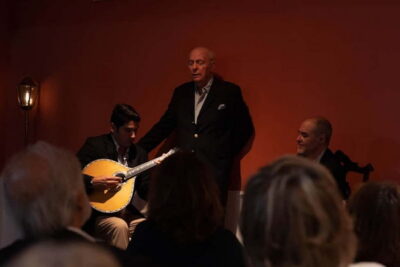
Live Fado Show with Port Wine in Historic Center
Read our review →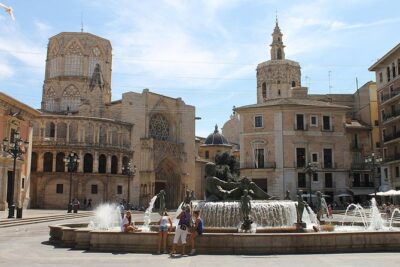
Valencia Old Town Tour with Wine & Tapas in 11th Century Historic Monument
Read our review →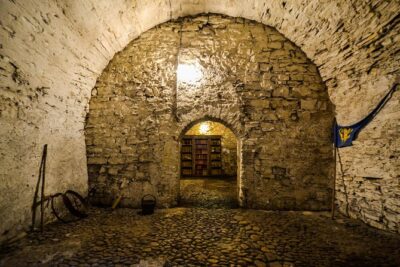
Prague Old Town, Medieval Underground and Dungeon Historical Tour
Read our review →
Historic Center and Getsemaní Shared Walking Tour
Read our review →
Old Town Walking Tour History and Tales in Edinburgh
Read our review →
Philadelphia Old City Historic Walking Tour with 10+ Top Sites
Read our review →