
Review · MARRAKECH
Historical And Cultural Experience in Marrakech City
Marrakech rewards a curious wanderer. This three-hour private walking tour takes you from Tinsmiths Square through the Medina to Jemaa el-Fna, linking royal buildings, Jewish heritage, sacred sites, markets, and everyday city life. I especially like the clear historical route and the chance to ask a local guide questions as you go. I also like that the tour can be adjusted to suit your schedule.
The main drawback is cost. At $60 per person, admission fees, drinks, and transportation are extra, so the value depends on how much you want personal guidance rather than simply finding each sight yourself. The route is walkable, and one unhappy customer felt a tour was unnecessary because of that.
Key points to know before booking
- Private attention: Only your own group takes part, so you can ask questions and request a different pace.
- Four major stops: The route covers Bahia Palace, the Mellah, the Saadian Tombs, and Koutoubia Mosque.
- A useful first-day tour: It ends at Jemaa el-Fna and can help you get your bearings early in a Marrakech stay.
- Strong guide praise: Noura, Ismael, and Mohamed are named in particularly positive feedback for their history, language skills, warmth, and practical advice.
- Extra costs apply: Palace and tomb admission fees are not included, and neither are drinks or pickup and drop-off.
- Flexible format: The experience lasts about three hours and may be tailored to your schedule.
A practical first look at Marrakech
Marrakech can feel confusing at first. The Medina is a maze of lanes, markets, courtyards, mosques, workshops, and residential corners. A guide gives the route a shape, helping you understand what you are seeing instead of treating the old city as a series of disconnected photo stops.
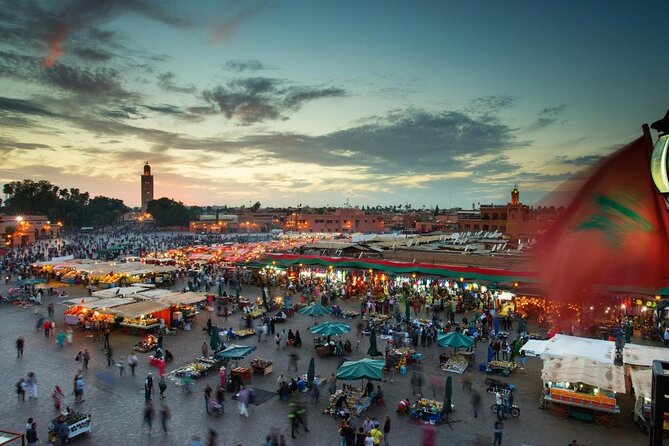
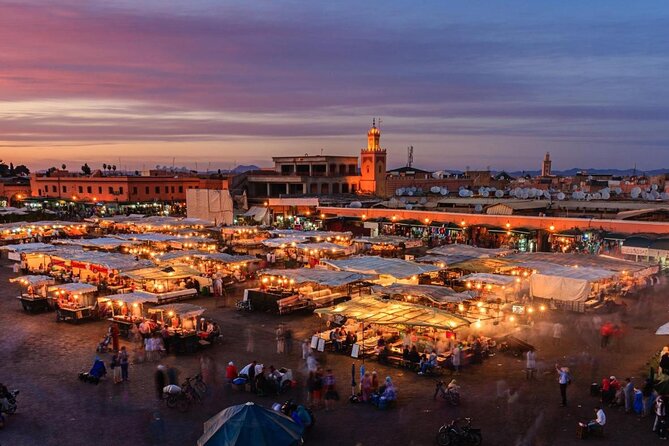
This experience begins at Place des Ferblantiers, also called Tinsmiths Square. That is a useful starting point because it puts you near the southern part of the Medina and close to several major historic sites. You finish at Jamaâ El-Fna, the city’s famous central square, where you can continue exploring on your own.
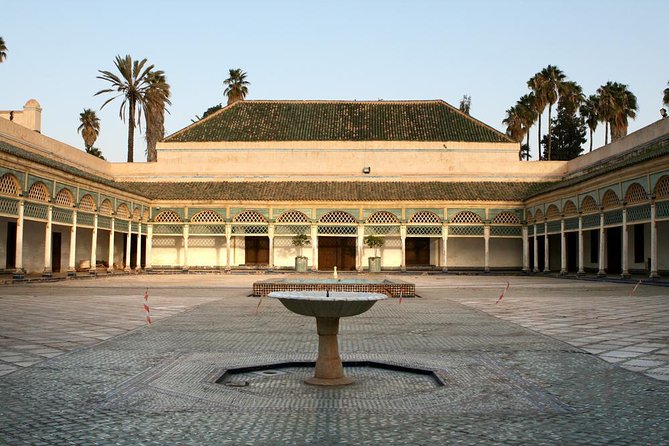
I like the way the route moves through several sides of Marrakech. Bahia Palace introduces court life and decorative architecture. The Mellah adds Jewish history and market culture. The Saadian Tombs explain royal burial traditions. Koutoubia Mosque provides a final architectural landmark and a clear point of reference in the city.
The tour is private, which matters more here than it might in an open-air museum. Narrow streets can make a large group awkward, while a small party can pause, move on, or ask for clarification without holding up a crowd. You are also more likely to shape the conversation around your interests.
More Local Culture and Traditions Tours in Morocco
- Marrakech Historical and Cultural Tour – Half Day City Tour
★ 4.5 · 1,180 reviews - Half Day Guided Tour in Marrakech History & Culture
★ 5.0 · 93 reviews - Private Cultural Tour in Marrakech City
★ 5.0 · 77 reviews
Bahia Palace and the art of royal living
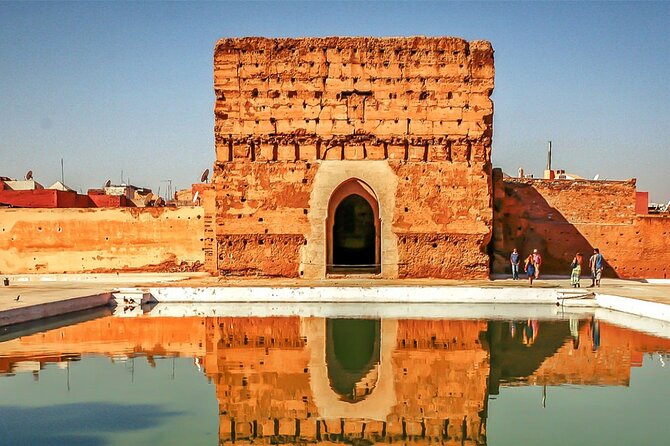
The first stop is Bahia Palace, with about an hour allocated to it. The palace began in the 1860s under Si Musa, grand vizier to Sultan Muhammad ibn Abd al-Rahman. His son, Si Ba Ahmed ibn Musa, expanded it between 1894 and 1900 while serving as grand vizier to Sultan Moulay Abdelaziz.
That timeline gives your guide plenty to explain. Bahia Palace is not simply a pretty building. It reflects the power and domestic life of Morocco’s ruling elite during the late 19th century. Rooms, courtyards, tilework, painted ceilings, and carved surfaces work together to show how architecture could express rank and authority.
An hour is a sensible amount of time. You can look carefully without letting the palace take over the whole outing. I would pay attention to the transitions between open courtyards and enclosed rooms, since they help you understand how the palace was organized.
The admission ticket is not part of the $60 price. That is important when you calculate the day’s budget. The tour gives you the guide and the interpretation, but you pay entrance charges separately.
A guide is especially useful at Bahia Palace because the decoration can otherwise become a blur of color and pattern. Ask about the building’s two main periods of construction and how Si Musa’s original work was expanded by Si Ba Ahmed. Those details turn a quick visit into a clearer story.
The Mellah, from synagogue to spice market
The Mellah receives about an hour, making it one of the most substantial parts of the route. This former Jewish quarter offers a different view of Marrakech from the royal palace and major monuments.
The narrow lanes once served as home to the city’s Jewish population. Two important places are the Lazama Synagogue and the Miaara Jewish cemetery. The synagogue has a tiled courtyard and displays connected with Jewish life. The cemetery offers a quieter setting and a chance to think about the community’s long place in Marrakech.
This section is valuable because it widens your understanding of the city. Marrakech is not only palaces, mosques, and souks. Its story also includes communities with different religious traditions, commercial roles, and neighborhood identities.
The Mellah Market and Bab Mellah Spice Souk add a more practical side. You can see meat and produce markets, then learn about herbs used as remedies and spices used in Moroccan cooking. The emphasis is not just on buying something. It is on understanding why particular ingredients matter in local food and household life.
One piece of advice is worth keeping in mind. Shopping may be part of the conversation because handicrafts and spices are central to the city’s tourist economy, but you should be clear about your own interest. One negative account felt the experience focused too much on vendors. The operator rejected the suggestion of pressure to buy and explained that the guide discusses handicrafts because they are a major part of work in tourist cities.
I would treat the market portion as optional in spirit. Ask questions, compare quality, and buy only if you want to. A private format should make it easier to say that you would rather spend more time on the quarter’s history or architecture.
The Saadian Tombs and a royal burial ground
The Saadian Tombs are scheduled for about 30 minutes. They are located south of the Kasbah Mosque, inside the royal kasbah, and served as a royal necropolis.
The short visit works well after the longer Mellah stop. The tombs provide a compact lesson in dynastic memory and royal ceremony. Their location also helps you understand how Marrakech’s important religious and political sites relate to one another within the southern Medina.
Admission is not included, so you will need to pay separately. The tour price covers the guide, not entrance tickets.
Thirty minutes is enough for an introduction, but this is one stop where the pace may feel brisk if you want to examine every detail. If burial architecture, royal succession, or the Saadian period interests you, tell your guide early. Since the activity is private, you have a better chance of keeping the discussion focused on those subjects.
I appreciate this stop because it adds a serious note to the route. Bahia Palace shows power in daily life and public design. The Saadian Tombs show how rulers wished to be remembered after death.
More Local Culture and Traditions Tours in Marrakech:
- Enchanting Half-Day Journey of Marrakech into History & Culture.
★ 4.5 · 72 reviews - private VIP half journey of Marrakesh : History & Culture.
★ 4.5 · 64 reviews - Luxury VIP Half-Day of Marrakech into History & Culture.
★ 4.0 · 35 reviews - Marrakech: Half-Day Historical and Cultural Tour.
★ 5.0 · 30 reviews
Koutoubia Mosque and Marrakech’s best reference point
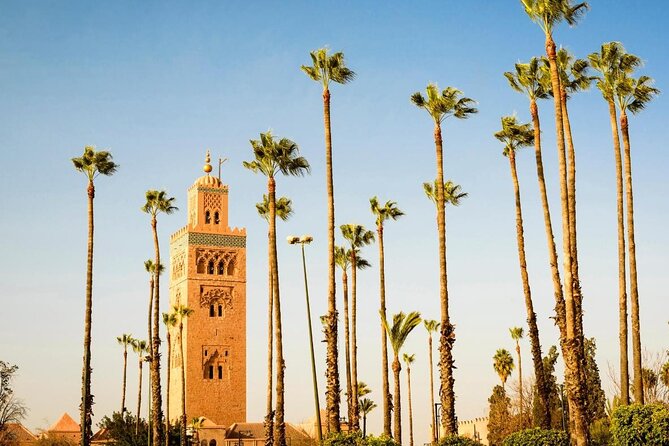
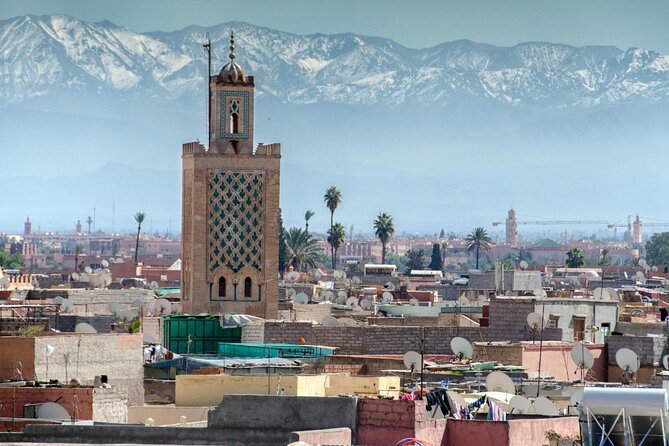
The final scheduled stop is Koutoubia Mosque, with about 30 minutes allotted. It is the largest mosque in Marrakech and sits in the southwest part of the Medina.
The mosque is an important visual anchor. Even when the Medina’s lanes become confusing, Koutoubia helps you understand your position. Its location near the old city also makes it a practical point from which to continue exploring after the tour.
The visit is listed as free, though the tour does not promise entry inside. As with many active places of worship, the experience centers on the exterior and the surrounding setting. Your guide can explain the mosque’s place in Marrakech’s religious and civic life while pointing out its architectural presence.
I would save a few questions for this final stop. Ask how Koutoubia fits into the layout of the Medina, what makes it important to Marrakech, and how its setting relates to Jemaa el-Fna. These questions help connect the whole walk rather than leaving the mosque as one last photograph.
The tour ends at Jamaâ El-Fna. That is a strong finish because you can stay in the square, continue into nearby market lanes, or use the location as a base for your next activity.
What the guides add to the experience
The strongest praise is directed at the guides rather than at the buildings alone. Noura is described as attentive to personal interests and helpful with practical suggestions. After the tour, she provided recommendations for restaurants, spas, and places in the souk where you could look for better-quality crafts.
That kind of advice can be worth a great deal on a first day. Marrakech offers many choices, and a local guide can help you decide how to spend the rest of your time. Still, recommendations are personal, so you should ask why a place is suitable for your budget and interests.
Ismael, described as one of Noura’s co-workers, received similar praise for his command of Moroccan history, architecture, and culture. His English, Arabic, and French were also highlighted, along with his warmth and skill as a photographer.
Mohamed is another named guide connected with strong feedback, especially for explaining Marrakech’s history, culture, and main places of interest in Spanish. If language matters to you, confirm the guide’s language when booking rather than assuming the same person will lead every departure.
The important point is that the guide can make or break this experience. The monuments are fixed, but the explanation, pacing, and practical help depend on the person assigned to your group.
Is $60 a fair price?
The price is $60 per person. For a private three-hour tour, that can be fair if you want local explanation, flexible pacing, and help orienting yourself in the Medina. It is less attractive if you only want to walk past the sights and take photographs.
Remember that entrance fees are separate. Bahia Palace and the Saadian Tombs are specifically listed with admission not included. Drinks are also extra, and there is no pickup or drop-off.
The tour does not appear to provide regular transportation as part of the basic experience. The route begins at Tinsmiths Square and ends at Jemaa el-Fna, so plan to reach the starting point yourself. A past complaint involved a driving option and a short tuk-tuk ride, while the operator stated that a car and driver are used for a driving tour and that tuk-tuks are not part of its normal arrangement. If transport is important, clarify exactly what you are booking.
The best value comes when you take the tour near the beginning of your stay. You can use the guide’s advice for later shopping, meals, spas, and sightseeing. Taking it on your final day reduces that benefit.
Who will enjoy this Marrakech walk?
I would recommend it to first-time visitors who want context before exploring alone. It also suits couples, families, and small groups who prefer a private conversation over a large organized outing.
It is a good choice if you enjoy architecture, local history, religious buildings, market culture, and practical city advice. The range of stops means you are not spending three hours on only one subject.
You may want to skip it if you are comfortable navigating the Medina independently and have already researched all four locations. Every stop is walkable, and the tour does not include transportation or entrance tickets. In that case, the $60 could be better spent on admission, food, or another paid activity.
The route involves walking through narrow city streets. The supplied information says most people can participate, but it does not provide a detailed accessibility statement. If you have specific mobility needs, ask the provider before booking.
Timing, meeting point, and cancellation
The experience lasts about three hours. It begins at Place des Ferblantiers, Tinsmiths Square, Marrakech 40000, and ends at Jemaa el-Fna, Marrakech 40000.
Confirmation is provided when you book. Because this is a private activity, only your group takes part. Group discounts are available, and a mobile ticket makes it easy to keep the booking on your phone.
You can cancel for a full refund if you do so at least 24 hours before the local start time. Cancellations or changes made within 24 hours are not accepted for a refund.
Should you book this tour?
Book it if you want a well-shaped introduction to southern Marrakech, especially on your first day. The combination of Bahia Palace, the Mellah, Saadian Tombs, and Koutoubia Mosque gives you more than a standard market stroll, and the private format lets you ask direct questions.
I would book with two conditions in mind: budget separately for admission fees, and confirm the guide’s language and transport arrangements if those matter to you. I would also tell the guide whether you want history, architecture, shopping advice, or food recommendations.
Skip it if your main goal is independent wandering and you do not need explanations. But if a good guide is assigned, the value lies in seeing familiar monuments with a clearer sense of how Marrakech’s royal, religious, commercial, and community life fit together.
FAQ
How long does the Marrakech experience last?
It lasts approximately three hours.
Is this a private tour?
Yes. Only your own group participates in the activity.
Where does the tour start?
It starts at Tinsmiths Square, also called Place des Ferblantiers, in Marrakech.
Where does the tour end?
It ends at Jemaa el-Fna, also spelled Jamaâ El-Fna, in Marrakech.
Are entrance fees included?
No. Entrance fees are not included in the $60 price. Drinks are also not included.
Is pickup and drop-off provided?
No. Pickup and drop-off are not included.
Can I cancel for a full refund?
Yes. You can receive a full refund if you cancel at least 24 hours before the experience starts. Changes or cancellations made less than 24 hours before the start time are not accepted for a refund.
Just added around Marrakech
- Marrakech Jewish Heritage and souks Tour★ 5.0 · 24 reviews
- Marrakech Monuments & Heritage★ 4.5 · 22 reviews
- 1 Day Guided Tour of World Heritage Kasbah Ait Ben Haddou from Marrakech★ 3.5 · 73 reviews
- Luxury VIP Half-Day of Marrakech into History & Culture.★ 4.0 · 35 reviews
- Historical Tour with Local guide in Marrakech★ 5.0 · 26 reviews
- Visit of the Souks and Historical Monuments of Marrakech★ 5.0 · 28 reviews
- Marrakech: Historical Private Tours – Half-Day★ 4.5 · 58 reviews
- Enchanting Half-Day Journey of Marrakech into History & Culture.★ 4.5 · 72 reviews
Local Culture & Traditions Tours, compared.

Amsterdam Food and Cultural Tour with Tastings
Read our review →
Sevilla Food Tour: Tapas, Wine, History & Traditions
Read our review →
Tromsø: Reindeer Camp and Sami Cultural Tour with Lunch
Read our review →
Half Day Dominican Republic Cultural Tour : Small Group
Read our review →
Ultimate Melbourne Walking Tour: History, Laneways & Culture
Read our review →
Tromsø: Sámi Reindeer Sledding and Sami Cultural Tour
Read our review →
Kyoto Gion: 2-Hour Geisha Culture & History Walking Tour
Read our review →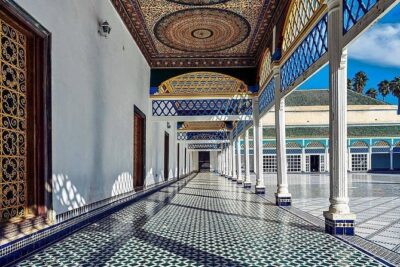
Marrakech Historical and Cultural Tour – Half Day City Tour
Read our review →Browse the lists this tour appears in