
Review · MARRAKECH
Half Day Guided Tour in Marrakech History & Culture
Marrakech reveals itself one alley at a time. This three-hour walk links Koutoubia Mosque, Bahia Palace, and Ben Youssef Madrasa with the souks and Jemaa el-Fnaa, giving you a useful first look at the city’s monuments and daily life. I like the mix of grand architecture and working markets, and I like that local guides such as Ibrahim and Mo have offered practical shopping advice along the way.
The main drawback is pace. Three hours is enough for a strong introduction, but not enough for long visits at every stop, careful shopping, and unhurried photographs. You also pay monument entry fees separately, although the total remains modest at $23.23 plus less than 15 euros for the two paid sites.
This is a good fit if you want a local guide and a compact route through the medina rather than a full-day sightseeing program. The group can reach 20 people, so ask questions early if you want detailed help with architecture, culture, or buying crafts.
Key points at a glance
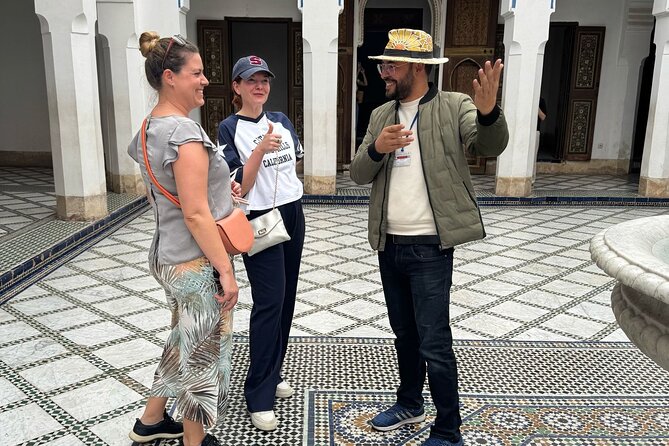
- Three major monuments in one walk: See Koutoubia Mosque, Bahia Palace, and Ben Youssef Madrasa.
- A practical introduction to the souks: Visit areas linked with spices, fabrics, jewelry, carpets, leather, metal, wood, and ceramics.
- Useful shopping guidance: Guides Ibrahim and Mo have helped people understand bargaining and choose places to shop.
- A short but full schedule: The tour lasts about three hours and covers a lot of ground on foot.
- Low starting price: The $23.23 fee includes the guide, while entry to Bahia Palace and Ben Youssef Madrasa costs extra.
- Small enough to be manageable, but not private: The maximum group size is 20 people.
Starting at Argana near Jemaa el-Fnaa
The meeting point is Argana, at J2H6+CPV Jamâa el-Fnna, Number 18, Znikat Rahba, Marrakech 40000. This puts you close to the central square and the old medina, where narrow lanes quickly replace the broad streets of the modern city.
The tour ends back at the same meeting point. That is handy if you are staying nearby or want to continue exploring the square afterward. It also means you do not need to arrange a separate ride from the end of the walk.
Allow a little time to find the exact starting place. The address is detailed, but medina locations can be confusing when several lanes meet. A mobile ticket is provided, and confirmation arrives when you book.
The service is offered with a maximum of 20 people. That is not a private tour, but it is still a reasonable size for a walking route. If you want to ask about Moroccan customs, local crafts, or the history of a particular building, stay near the guide and speak up before the group moves on.
More Local Culture and Traditions Tours in Morocco
- Marrakech Historical and Cultural Tour – Half Day City Tour
★ 4.5 · 1,180 reviews - Private Cultural Tour in Marrakech City
★ 5.0 · 77 reviews - Enchanting Half-Day Journey of Marrakech into History & Culture.
★ 4.5 · 72 reviews
Koutoubia Mosque and the gardens
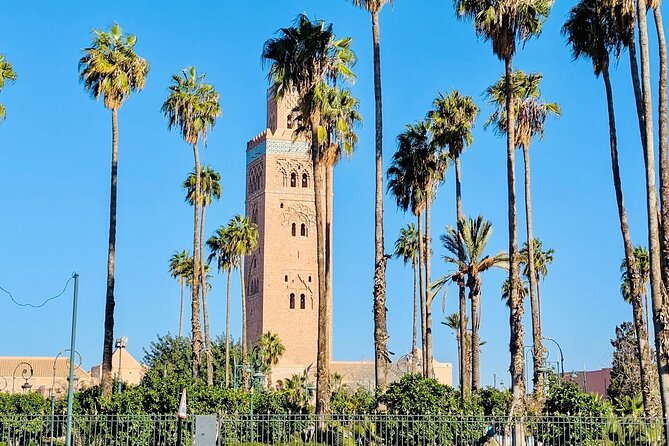
The first stop is Koutoubia Mosque, Marrakech’s most recognizable building. Its 12th-century minaret rises above the medina and helps you get your bearings in a city where the lanes can quickly feel like a maze.
You do not enter the mosque, and the stop has no admission charge. The focus is the exterior, the minaret, and the surrounding gardens. The guide explains the building’s role in Marrakech, its Andalusian design details, and its importance as a reference point for people approaching the city.
The 30-minute visit is a sensible opening. You get the essential story without using too much of the tour’s limited time. The gardens also offer a calmer setting before you head into the crowded lanes and market streets.
This stop suits first-time visitors especially well. Koutoubia is not just another photograph. It helps explain how Marrakech is arranged and gives you a fixed point to remember as you move through the medina.
Bahia Palace, carved wood, and tiled courtyards
Bahia Palace receives about an hour, making it one of the two main architectural visits. Entry is not included, with the fee described as less than 10 euros.
Inside, the route takes you through the entrance, gardens, courtyards, and decorated rooms. The details to watch for include carved wooden ceilings, patterned mosaics, and sculpted decoration. The guide places these features in the setting of the palace and its royal past, which gives the building more meaning than a quick walk through attractive rooms.
I would keep some of your attention on the layout. Courtyards, private rooms, gardens, and passageways show how the palace was organized, while the decoration reveals the skill of Moroccan artisans. The guide’s explanation is most useful here because many of the symbols and building methods are easy to miss on your own.
The tradeoff is that Bahia Palace can take up a large share of a three-hour tour. If you stop often for photographs, the market portion may feel brisk later. Still, this is the place to linger if architecture is your main reason for booking.
Jemaa el-Fnaa, Marrakech’s public stage
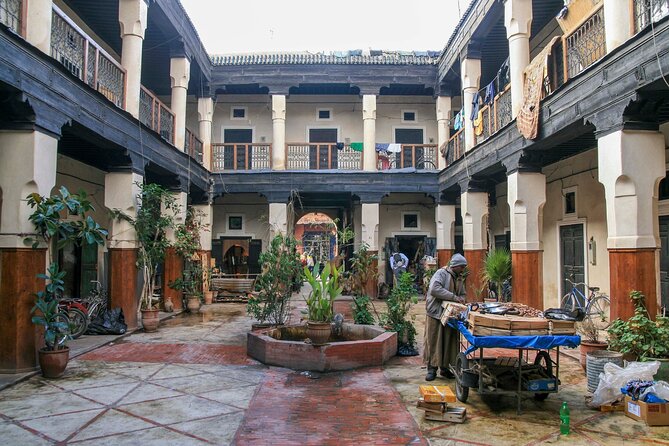
The tour then reaches Jemaa el-Fnaa, the square at the center of old Marrakech. There is no admission fee, and the visit lasts about 30 minutes.
The guide explains how the square functions as a meeting place and how its traditions have changed over time. You may see spice sellers, musicians, street performers, snake charmers, juice stands, restaurants, and small shops. The square is not a museum. Its appeal comes from watching commerce, entertainment, and ordinary city life share the same space.
This is a useful stop for understanding Marrakech beyond its monuments. The palace tells you about power and design. Jemaa el-Fnaa shows you how the city gathers in public.
Thirty minutes gives you an introduction, not a complete evening visit. If you enjoy the square, return later on your own, when the food stalls and performers may create a different mood. Since the tour finishes at its original meeting point, you can easily make that plan.
Use normal care with photographs and close encounters with performers or animals. The supplied information does not set out specific photography rules, so ask your guide before taking pictures of people or activities.
More Local Culture and Traditions Tours in Marrakech:
- private VIP half journey of Marrakesh : History & Culture.
★ 4.5 · 64 reviews - Luxury VIP Half-Day of Marrakech into History & Culture.
★ 4.0 · 35 reviews - Marrakech: Half-Day Historical and Cultural Tour.
★ 5.0 · 30 reviews - Enchanting Half-Day Journey of Marrakech into History & Culture.
★ 5.0 · 23 reviews
Entering the souks by craft and trade
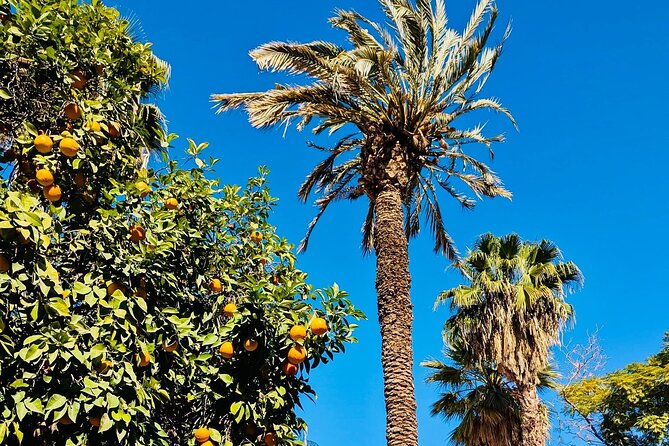
The souk section is the most hands-on part of the experience. Instead of treating the markets as one large shopping zone, the guide points out areas linked with different goods and trades.
You may pass sections associated with:
- Spices
- Fabrics
- Jewelry
- Leather
- Metalwork
- Woodwork
- Ceramics
- Carpets
That organization matters. Once you know that different lanes often serve different trades, the souks become easier to understand. You are not simply walking past shops. You are seeing a system of production, sales, and family craft traditions that has shaped the medina for generations.
The guide can also explain how bargaining works. This is valuable if you want to buy something but do not know how to begin. Ibrahim has been praised for answering individual questions and giving practical advice about shopping in the markets. Mo has also helped people choose places to shop and understand local customs.
Do not feel that you must buy. The useful part of the tour is learning how the market works and how to compare items. If something catches your eye, ask about the material, method, place of production, and price before making a decision.
The lanes can be crowded, and the group may need to keep moving. That is part of the character of the medina, but it means the souk visit is less relaxed than a private shopping appointment. If buying a carpet or larger craft is your goal, you may want to return later with more time.
The Dyers’ Souk and its working colors
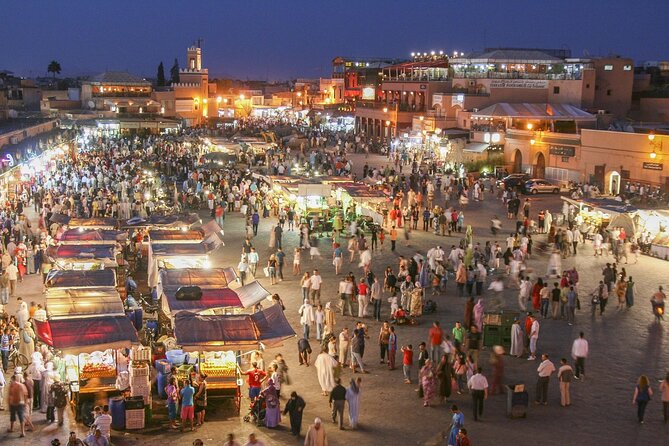
The Dyers’ Souk offers a look at textile work. Artisans dye fabrics in vats using strong natural colors, then hang the cloth to dry. The result is one of the most visual sections of the walk, with fabric appearing in many shades above and around the narrow market lanes.
The guide explains the basic process, from applying pigments to drying the material. That context helps you see the labor behind the finished cloth. It also shows why the souks are not only retail spaces. They are places where goods are made, handled, displayed, and sold.
This stop may be brief because the full tour has several major sites. Still, it adds an important layer to the visit. After seeing palaces decorated with tile and wood, you can watch a living craft that still serves the market today.
Keep your expectations practical. The tour describes an opportunity to observe the process, not a hands-on dyeing workshop. You are there to look, listen, and ask questions.
Carpet lanes and the art of bargaining
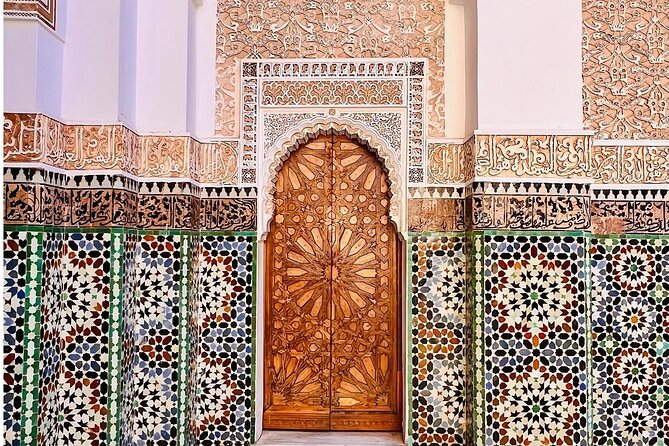
The Marrakech Carpet Souk is aimed at people curious about Berber and Arabic rugs. The guide explains weaving methods, pattern symbols, and the stories connected with different designs.
You may see merchants unroll several pieces for comparison. This can be useful if you want to understand variations in color, pattern, size, and construction. It can also create pressure to buy, especially when a seller brings out more and more rugs. A clear budget and a polite, firm answer will help.
Bargaining is presented as part of the market tradition. The guide can explain how to approach it, but the final purchase remains your decision. I would treat this section as an education first and a shopping opportunity second.
The value here is not limited to buying a rug. Even if you leave empty-handed, you gain a better sense of how Moroccan carpets differ and why patterns matter. If you do plan to buy, use the guide’s advice to slow down and ask questions rather than choosing the first piece shown.
Ben Youssef Madrasa and student life
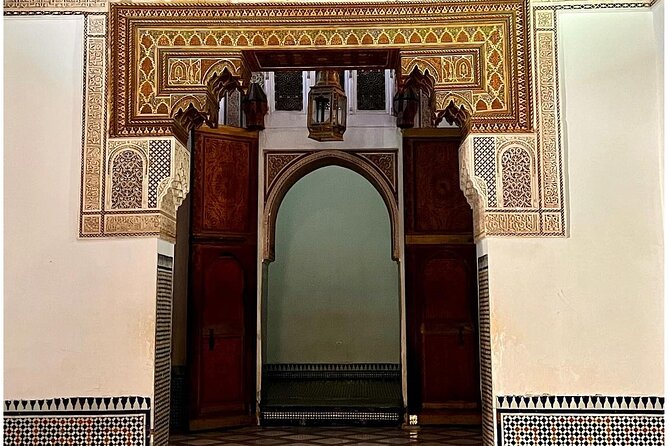
The final major stop is Ben Youssef Madrasa, one of Marrakech’s most important examples of Islamic architecture. Entry is separate and costs less than 5 euros.
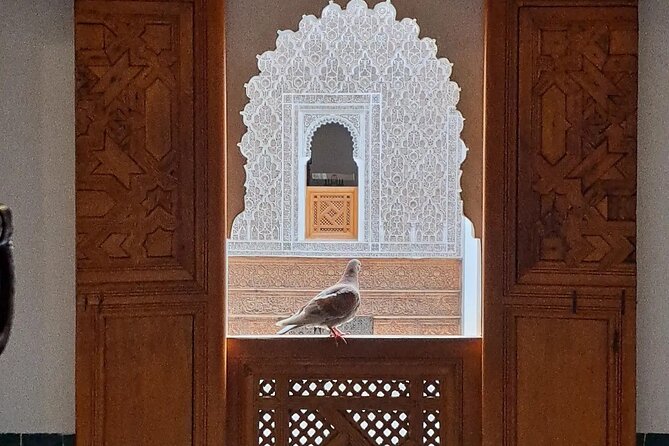
The madrasa was founded in the 14th century and once welcomed students from across North Africa for religious study. The guide explains that educational role while leading you through the courtyard, decorated surfaces, and small student rooms.
Look for the relationship between the open courtyard and the compact cells. The contrast helps you picture the daily setting of the students who lived and studied there. Carved wood, curved forms, and delicate tilework reward a slower look, even if the overall schedule is tight.
This stop receives about an hour, which gives it enough weight in the program. It is also a fitting final monument because it brings together education, religion, craftsmanship, and city life.
As with Bahia Palace, admission is not included. The extra cost is small, but you should have some local currency or a suitable way to pay entrance fees. The exact payment method is not specified, so confirm if needed when you meet the guide.
What the $23.23 price really includes
At $23.23 per person, this is priced as an affordable introduction rather than a private, specialist tour. The fee covers a certified local guide and professional service. It does not cover admission to Bahia Palace or Ben Youssef Madrasa.
Your likely extra cost is under 10 euros for Bahia Palace and under 5 euros for the madrasa. Koutoubia Mosque and Jemaa el-Fnaa do not require admission. Even after adding the two paid sites, the total remains reasonable for a three-hour guided visit.
The strongest value comes from interpretation. You could walk past the monuments and enter the markets on your own, but a guide helps connect the buildings, crafts, and customs. The shopping advice is another practical benefit, especially if this is your first visit to Morocco.
The price is less compelling if you want a private pace, long shopping stops, or extensive historical detail at every site. A maximum group of 20 can limit personal attention, though the guide can still respond to individual questions.
Who will get the most from this walk?
I would recommend this tour to first-time visitors who want an organized introduction to Marrakech’s old city. It brings together the key sights without requiring a full day, and the route includes both famous monuments and working craft areas.
It also suits people who want help with the souks. The guidance on carpets, shopping, and bargaining may save you confusion, even if you do not buy anything.
You may want a different format if you have limited mobility or dislike uneven, crowded market lanes. The tour is on foot through historic streets, though the supplied information says most people can participate and service animals are allowed. The tour is near public transportation, but no detailed accessibility information is provided.
This is also a good choice for people who prefer cultural context over a checklist of photo stops. The guide names associated with the experience, including Ibrahim and Mo, have been praised for answering questions, adapting explanations to interests, and offering useful local advice.
Booking details worth knowing
The experience is usually booked about 14 days ahead, so planning early is sensible during a busy visit. Confirmation arrives at booking, and the mobile ticket makes access to your reservation straightforward.
Free cancellation is available if you cancel at least 24 hours before the start time. Cancellations made less than 24 hours ahead are not refunded, and changes inside that window are not accepted. The cut-off follows Marrakech local time.
The route begins and ends at the Argana meeting point. Since the tour lasts about three hours, it fits well on a morning or afternoon when you also want time for lunch, shopping, or a return visit to Jemaa el-Fnaa.
Should you book this Marrakech tour?
Book it if you want a low-cost, well-rounded first look at the medina, especially with help understanding the souks and local crafts. The combination of Koutoubia, Bahia Palace, Jemaa el-Fnaa, the Dyers’ Souk, the Carpet Souk, and Ben Youssef Madrasa gives you a strong sense of Marrakech in a short time.
Skip it if you want a private guide, a slow shopping day, or long stops at every monument. For most first-time visitors, though, the price is fair, the route is useful, and the local guidance adds real value beyond simply finding the buildings.
FAQ
How long does the Marrakech history and culture tour last?
The tour lasts approximately three hours.
What attractions are included in the route?
The route includes Koutoubia Mosque, Bahia Palace, Jemaa el-Fnaa, the Marrakech souks, the Dyers’ Souk, the Carpet Souk, and Ben Youssef Madrasa.
Are entrance fees included?
No. Entrance to Bahia Palace costs less than 10 euros, and entry to Ben Youssef Madrasa costs less than 5 euros. Koutoubia Mosque and Jemaa el-Fnaa have no admission charge for this tour.
Where does the tour start?
The meeting point is Argana, J2H6+CPV Jamâa el-Fnna, Number 18, Znikat Rahba, Marrakech 40000, Morocco.
Where does the tour end?
The activity ends back at the original meeting point.
How many people can join the tour?
The maximum group size is 20 people.
Is the tour suitable for most people?
The provided information says most people can participate. Service animals are allowed, and the tour is near public transportation.
Can I cancel for a full refund?
Yes. You can receive a full refund if you cancel at least 24 hours before the experience starts. Cancellations or changes made less than 24 hours before the start time are not accepted for a refund.
Just added around Marrakech
- Luxury VIP Half-Day of Marrakech into History & Culture.★ 4.0 · 35 reviews
- Marrakech: Historical Private Tours – Half-Day★ 4.5 · 58 reviews
- Historical Tour with Local guide in Marrakech★ 5.0 · 26 reviews
- Visit of the Souks and Historical Monuments of Marrakech★ 5.0 · 28 reviews
- Enchanting Half-Day Journey of Marrakech into History & Culture.★ 4.5 · 72 reviews
- Half Day Marrakech History Tour including entrances★ 3.5 · 39 reviews
- Enchanting Half-Day Journey of Marrakech into History & Culture.★ 5.0 · 23 reviews
- Private Historical Guided Tour in Marrakech★ 5.0 · 37 reviews
Local Culture & Traditions Tours, compared.

Amsterdam Food and Cultural Tour with Tastings
Read our review →
Sevilla Food Tour: Tapas, Wine, History & Traditions
Read our review →
Tromsø: Reindeer Camp and Sami Cultural Tour with Lunch
Read our review →
Half Day Dominican Republic Cultural Tour : Small Group
Read our review →
Ultimate Melbourne Walking Tour: History, Laneways & Culture
Read our review →
Tromsø: Sámi Reindeer Sledding and Sami Cultural Tour
Read our review →
Kyoto Gion: 2-Hour Geisha Culture & History Walking Tour
Read our review →
Marrakech Historical and Cultural Tour – Half Day City Tour
Read our review →Browse the lists this tour appears in