
Review · LISBON
Private Tour – African History in Lisbon
Lisbon’s past has more than postcard views. This private walking tour connects the city’s African heritage with slavery, immigration, commerce, and daily life, giving you a side of Lisbon that many standard sightseeing walks leave out. I especially like the focus on forgotten voices and the chance to ask questions in a private setting. I also like that the route finishes at Praça do Comércio, close to the river and several central attractions. The main consideration is the guide’s spoken English: most feedback praises Filipa Oliveira’s communication, but one party found her difficult to understand.
The tour costs $93.62 per person and lasts about two to three hours. That is a fair price for a private experience if you are traveling with several people and want a serious conversation about Portugal’s role in the enslavement of Africans. If you are looking only for grand monuments and quick photo stops, this may feel too focused and at times emotionally heavy.
Key points at a glance
- African history in central Lisbon: Follow the connection between slavery, trade, immigration, and the city’s development.
- A private walk with Filipa Oliveira: Your group participates alone, giving you room for questions and personal discussion.
- Six meaningful stops: The route runs from Rossio through Alfama and Mouraria to Praça do Comércio.
- A comfortable city stroll: The walk generally takes two to three hours, with no admission fees listed for the stops.
- Pasteles de nata may be part of the experience: Several accounts describe a café break with custard pastries.
- A serious subject handled with empathy: Expect history presented from the perspective of enslaved people and communities of African descent.
Why this Lisbon walk is different
Lisbon is easy to enjoy at street level. You see tiled façades, steep lanes, old squares, and the Tagus. Yet the city’s prosperity was also tied to the forced movement and enslavement of African people. This tour puts that uncomfortable truth in the center of the conversation.
The experience links history, anthropology, and present-day life. That matters because African heritage in Lisbon is not treated as a sealed-off chapter. The route considers how people of African origin contributed to the city, how their presence shaped neighborhoods and commerce, and how that past still affects Portuguese society.
I like the tour’s central idea: read Lisbon from the viewpoint of people who often have no monument or statue. One person who took the tour specifically appreciated learning about important figures whose contributions have received little public recognition, with Pai Paulino mentioned as a rare exception.
This is not a museum visit with objects behind glass. It is a walking conversation in the places where events unfolded. That makes the subject feel immediate, though it also means the quality of the experience depends heavily on the guide’s ability to explain complex material clearly.
More Private History Tours in Lisbon
- Private Tuk Tuk Tour Through Lisbon’s Historical Streets
★ 5.0 · 734 reviews - Lisbon Highlights – Private Tour with Van and Local Guide
★ 5.0 · 716 reviews - Private Lisbon-Arrábida Wine Tour: 3 Wineries, Coast & Heritage
★ 5.0 · 450 reviews
Meeting Filipa at Rossio
The walk begins at Lisboa Rossio, at Rua 1º de Dezembro 125. This is a practical starting point in central Lisbon, near public transportation and one of the city’s main gathering areas. You do not need to pay admission at the listed stops, so the tour fee goes toward the private guiding rather than entrance tickets.
Filipa Oliveira is the named guide, and the strongest praise centers on her warmth, patience, and passion for the subject. She has worked in tourism for about 20 years, according to her response to one piece of criticism, and describes formal history training and international English experience. Most comments describe her as easy to talk with and willing to give extra time.
That personal approach is a major part of the value. One group arrived a few minutes late after lunch and found Filipa patient about it. Another group appreciated that she walked with them to a wine-tasting activity afterward. These are small details, but they show the kind of flexible service you can expect from a private guide.
Still, English ability deserves an honest note. Most feedback praises Filipa’s English and says she communicated clearly. One group had the opposite experience and felt they had to research the subject themselves. If precise spoken English is essential for your group, contact the provider before booking and make sure the language arrangement suits you.
Rossio and Praça Dom Pedro IV
The opening section introduces African heritage in Lisbon and explains how slavery affected the city and its economy from the 16th century into later periods. You begin with the broad story before moving into specific streets and squares.
At Praça Dom Pedro IV, also called Rossio Square, the guide connects Black Africans and enslaved people with the activities that took place in this part of the city. The square is an excellent setting for that discussion because it has long functioned as a major public and commercial space.
The listed time here is about 15 minutes. That is enough for orientation, not a long lecture. I would pay attention to how Filipa connects ordinary urban activity with larger systems of labor and trade. The point is not simply that Africans were present in Lisbon, but that their forced labor and social presence were part of the city’s functioning.
The square is also a useful reminder that history does not always come with a plaque. You may be looking at a famous Lisbon landmark while hearing about people who worked nearby but left few visible traces.
Alfama, Mouraria, and Castelo
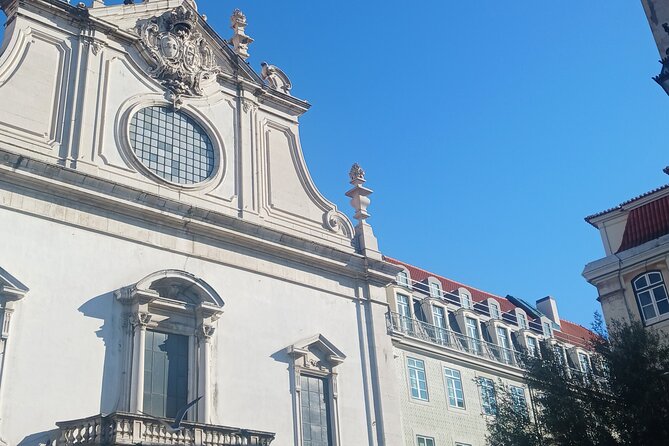
The longest part of the walk takes about an hour through Castelo, Alfama, and Mouraria. This is where the tour moves from general background to neighborhoods, migration, and daily life.
These districts are among Lisbon’s most atmospheric areas, with narrow streets, hills, old buildings, and layered settlement patterns. The tour treats them not only as scenic lanes but as places where immigrants became part of the city and its heritage.
That shift is important. A discussion of slavery can easily become a story about ships, laws, and merchants alone. In these neighborhoods, you get a better sense of people and communities. The guide connects the past to contemporary Lisbon, helping you consider how African influence remains part of the city rather than something confined to an old textbook.
You should wear comfortable shoes. The experience is described as a comfortable walk, but Castelo, Alfama, and Mouraria are hilly historic districts. The route is not presented as an inaccessible ordeal, and most people can participate, but uneven streets and inclines are still worth keeping in mind.
This is also the part where a private tour earns its keep. You can stop to ask how immigration changed a neighborhood, request more detail about a particular period, or discuss how Portugal remembers its past. On a large group walk, those questions may be rushed. Here, the schedule can be more flexible.
More Private History Tours in Portugal
- Lisbon: Private Dark History Walking Tour with Drinks
★ 4.8 · 387 reviews - Lisbon Jewish Heritage and History – Private Tour Van
★ 5.0 · 294 reviews - Lisbon: Private Historic Tour by Eco Tuk Tuk
★ 5.0 · 78 reviews - Lisbon: Private Guided Tour of Historical Center by Tuk Tuk
★ 4.7 · 67 reviews
Chafariz D’El Rei and the water supply
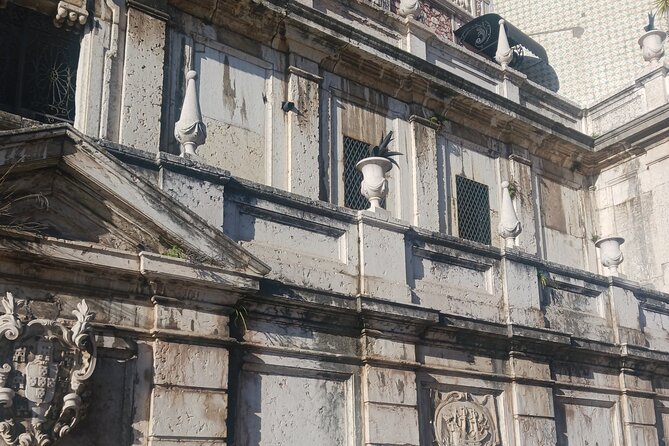
The stop at Chafariz D’El Rei lasts about 10 minutes. This old fountain has a particularly direct connection to the history of slavery: enslaved people had their own tap from which to draw water.
It is a short stop, but the detail is powerful because it brings social hierarchy into an ordinary act. Water collection was part of daily life, and the separate tap shows how public spaces could be organized by status and race.
You should not expect a lengthy monument visit here. The value lies in the explanation and the question it raises: who was allowed to use which parts of the city, and under what conditions? Small details like this can make Lisbon’s social order easier to understand than a broad statement about slavery ever could.
Praça do Comércio and the city’s public face
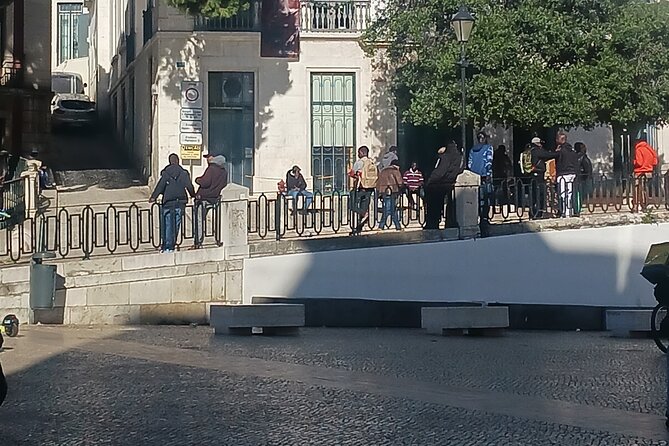
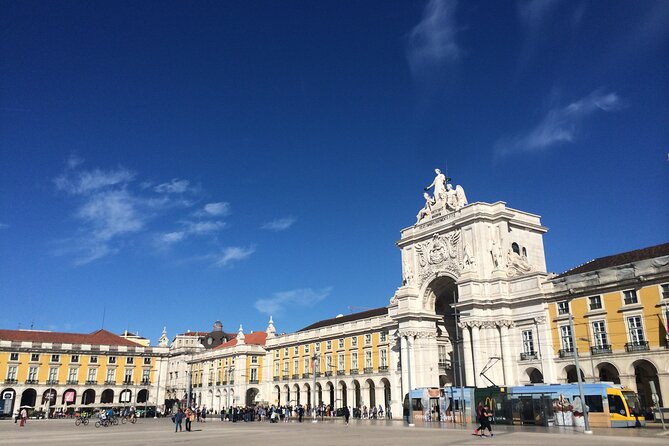
The walk continues to Praça do Comércio, Lisbon’s grand riverside square. The listed time is about 30 minutes, making it one of the longer stops.
This is a fitting place to discuss the city’s public identity and its connection to commerce, government, and the river. The square looks ceremonial today, but the tour asks you to consider the economic activity behind Lisbon’s growth and the people whose labor supported it.
The ending also works well for planning the rest of your day. Praça do Comércio is central, and you can continue exploring on your own after the tour. Several accounts describe the guide spending extra time with the group, so the final timing may have some flexibility, but you should not count on an open-ended extension.
One especially nice touch is the reported coffee stop with pasteles de nata. It is not listed as a formal stop with a fixed duration, so treat it as a possible part of the experience rather than a guaranteed inclusion. When it happens, the pastry break adds a relaxed local moment to a serious subject.
Campo das Cebolas and the waterfront story
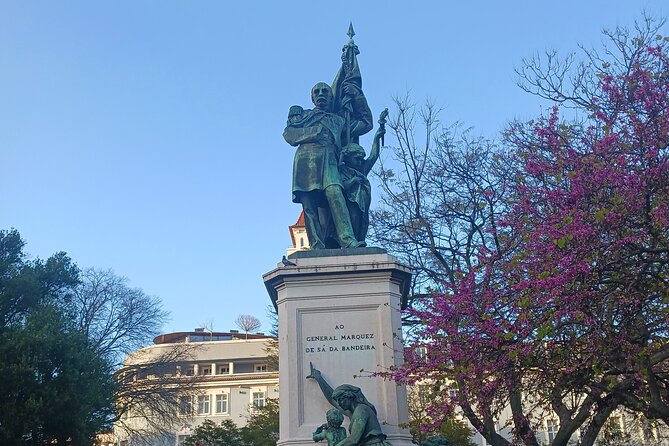
Campo das Cebolas is the final listed stop and takes about 20 minutes. This area was once a place of commerce, and enslaved people arrived here from Portuguese colonies, especially from Africa.
The site has architectural remains and several layers of history. That makes it a useful closing point because the tour can bring together trade, colonial power, forced migration, and the physical development of Lisbon.
The route ends at Praça do Comércio, so Campo das Cebolas may function as the final historical section before you reach the square. Either way, this waterfront setting reinforces the connection between Lisbon and the wider Atlantic world.
I appreciate that the walk does not stop at a general statement that Portugal participated in slavery. It points to locations connected with arrival, commerce, water, neighborhoods, and public life. That makes the subject more concrete and gives you places to revisit later.
The guide’s approach and the sensitive subject
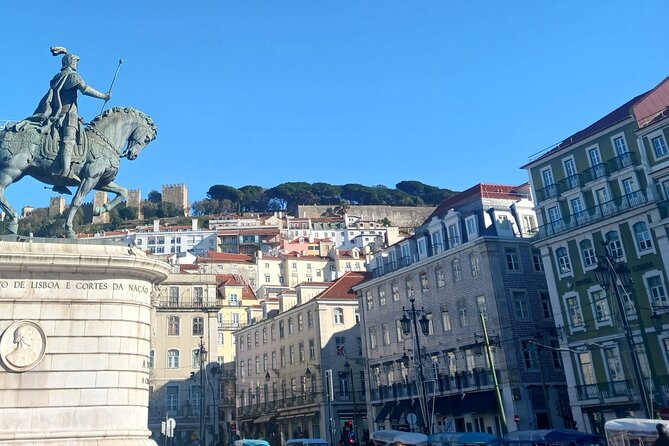
The most praised aspect of this experience is Filipa’s approach. The feedback repeatedly describes her as friendly, passionate, patient, and compassionate. People valued her ability to connect facts with places rather than simply recite dates.
That does not mean the tour is light entertainment. The subject includes enslavement, colonialism, racism, and historical neglect. Filipa’s own descriptions emphasize the need to remember people who have been ignored. You should come ready for a thoughtful discussion, not just sightseeing.
The private format helps here. Your group can ask direct questions without worrying about a large audience. It also allows a more personal exchange about how Portugal remembers its past today.
One criticism questioned why the guide was not of African origin. Filipa responded that historical education should not be limited by the guide’s ethnicity and that the subject must be discussed from more than one side. I would frame this as a matter for you to consider before booking. If you specifically require a guide of African heritage, this experience may not fit that preference. If you want a trained local guide offering a perspective on African history in Lisbon, Filipa’s background and subject focus may suit you well.
Is $93.62 per person good value?
At $93.62 per person, this is not a bargain city stroll. You are paying for a private guide, a focused theme, and the chance to shape the conversation around your own interests.
The value improves if you are traveling as a small private group. The fee buys exclusivity, flexibility, and direct access to Filipa rather than an admission ticket or a collection of separate attractions. The listed stops are free, so the main product is interpretation.
For a couple, the price may feel high compared with a standard group walk. For a family or group of friends, it can be more reasonable, especially if everyone wants the same subject and would otherwise book several separate activities.
The tour also offers value that is hard to measure in entrance fees. You leave with a clearer sense of how Lisbon’s squares, neighborhoods, fountains, and waterfront relate to African history. If that context changes how you see the rest of the city, the experience keeps paying off during your visit.
Practical details before you book
The tour lasts approximately two to three hours and is offered in English. Its listed schedule adds up to about two and a half hours, though the exact pace may vary, particularly because it is private.
Start at Lisboa Rossio, Rua 1º de Dezembro 125, and finish at Praça do Comércio, 1100-148 Lisbon. The end point is useful if you plan to continue sightseeing in the Baixa or riverfront areas.
Mobile tickets are available, and confirmation arrives at booking. Service animals are allowed, public transportation is nearby, and most people can participate. No admission charges are listed for the stops.
Free cancellation is available if you cancel at least 24 hours before the start time. Cancellations or changes made less than 24 hours ahead do not qualify for a refund.
The experience is booked, on average, 46 days ahead. That is a useful sign that you should not leave it until the last minute if the subject matters to your itinerary.
Who should book this tour?
I would choose this tour if you want more than Lisbon’s familiar royal palaces, viewpoints, and tiled streets. It suits history-minded visitors, people interested in African diaspora history, and anyone who wants to understand Portugal’s colonial past in a direct way.
It is also a good pick if you prefer conversation to a fixed script. The private setup lets you ask questions, slow down, and discuss points that matter to your group.
I would hesitate if you want a purely cheerful introduction to Lisbon or if walking through historic hills is difficult for you. I would also clarify the English level in advance if your group has trouble following accented or fast speech.
Should you book the African History in Lisbon tour?
Book it if you want to see Lisbon through the experiences of enslaved Africans, immigrants, and communities whose place in the city has often been underexplained. Filipa Oliveira receives strong praise for her warmth, patience, and commitment, and the private format gives this serious subject the space it deserves.
Skip it if you are looking for a broad first-time tour covering every major sight, or if you need an African-origin guide specifically. For the right audience, this is a thoughtful and valuable walk that adds moral and historical weight to Lisbon’s beautiful streets.
FAQ
Where does the tour begin?
It begins at Lisboa Rossio, at Rua 1º de Dezembro 125, 1249-970 Lisbon, Portugal.
Where does the tour end?
The tour ends at Praça do Comércio, 1100-148 Lisbon, Portugal.
How long does the experience last?
It lasts approximately two to three hours.
Is the tour private?
Yes. Only your group participates in the activity.
What language is offered?
The tour is offered in English.
What does the tour focus on?
It focuses on African heritage and history in Lisbon, including slavery, commerce, immigration, and the role of African communities in the city’s past and present.
Are entrance tickets included or required?
The listed stops have no admission ticket charge. The experience is primarily a guided walking tour through public areas.
What is the cancellation policy?
You can cancel for a full refund if you do so at least 24 hours before the experience begins. Cancellations or changes made less than 24 hours in advance are not accepted for a refund.
Just added around Lisbon
- 2-Hour Private Historic Lisbon Tour by Tuk Tuk★ 5.0 · 31 reviews
- Lisbon: Historical Walking Tour with Jeronimos Monastery★ 4.5 · 71 reviews
- Lisbon Sunset Sailing – Small Group (max 10) Wine & History★ 4.8 · 41 reviews
- Queer Lisbon History Tour: scene/history★ 4.9 · 20 reviews
- Lisbon: Private Historic Tour by Eco Tuk Tuk★ 5.0 · 78 reviews
- Lisbon with Tukxi: Historical Secrets by Tuk-Tuk★ 4.8 · 96 reviews
- Lisbon: Private Guided Tour of Historical Center by Tuk Tuk★ 4.7 · 67 reviews
- Lisbon: Sunset Sailing with Portuguese Wine and History★ 5.0 · 270 reviews
Private History Tours, compared.
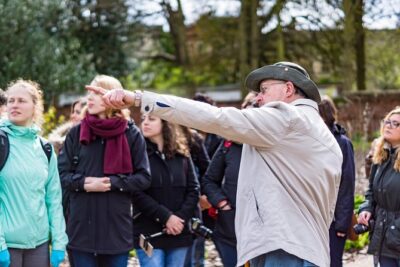

Private Guided Historic Electric Cart Tour of St. Augustine
Read our review →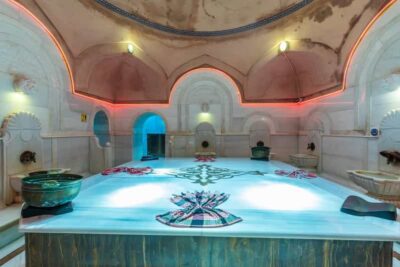
Acemoglu Historical Turkish Bath w/Private Options
Read our review →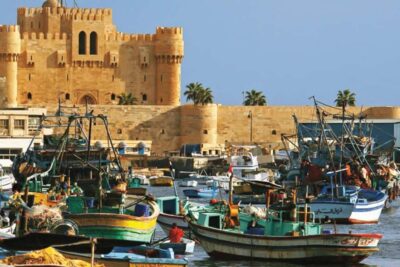
Private Full-Day Tour of Historical Alexandria
Read our review →
Private Tour of the Historic City in a Ford T Car
Read our review →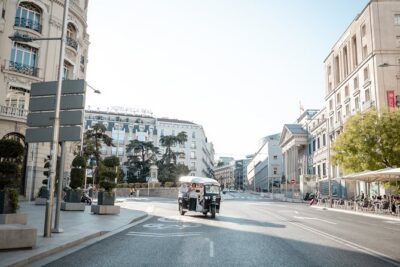
Madrid Historical Tour with Local Guide in Eco Tuk Tuk Private
Read our review →
Private Biblical Tour Ancient Corinth & Isthmus Canal from Athens
Read our review →
Private Kathmandu Sightseeing Tour | UNESCO World Heritage sites
Read our review →Browse the lists this tour appears in