
Review · CHARLESTON
Charleston’s Old South Carriage Historic Horse & Carriage Tour
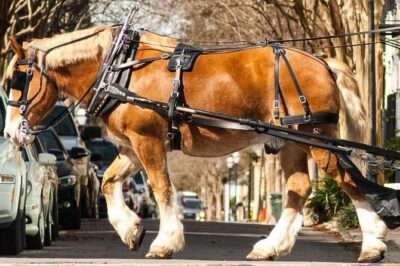
Charleston’s past rolls by at walking speed. This one-hour horse-drawn tour covers about 30 blocks and more than 300 years of city history, giving you an easy first look at grand homes, church steeples, gardens, wrought iron gates, and quiet residential streets. I like the certified local guides, who turn the ride into a moving history lesson, and the chance to see Charleston from a comfortable carriage rather than on foot. I also like meeting the Belgian and Percheron draft horses before boarding.
The main catch is simple: you do not choose the route. Charleston assigns each carriage a zone by lottery at the City gate near the Market. That means you may not pass Rainbow Row, the Battery, or another landmark you had in mind. The ride is still worthwhile, but you should treat it as an introduction to Charleston’s historic core, not a guaranteed checklist of specific sights.
At $50 per person, this is not the cheapest way to move around town. Still, the price includes an hour of narration, a broad view of the historic district, and access to stories you might miss while walking alone. It is especially useful early in your visit, when you want to get your bearings before exploring on foot.
Key points to know before you book
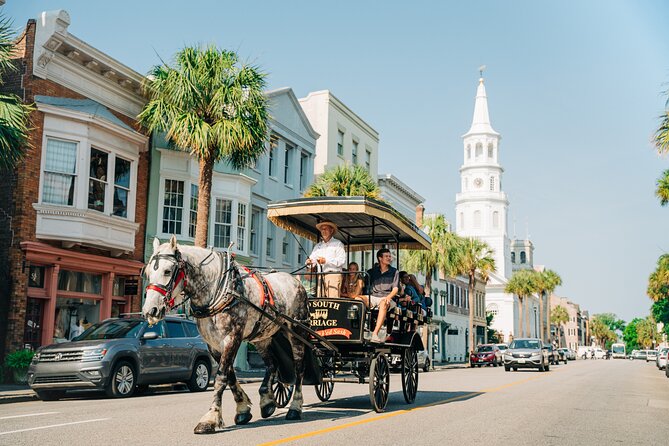
- The route is assigned by lottery: Charleston’s tourism system sends each carriage through one of five zones, so landmarks vary from ride to ride.
- The carriage covers about 2.5 miles: You see roughly 30 blocks without dealing with Charleston’s heat, uneven pavement, or long walking distances.
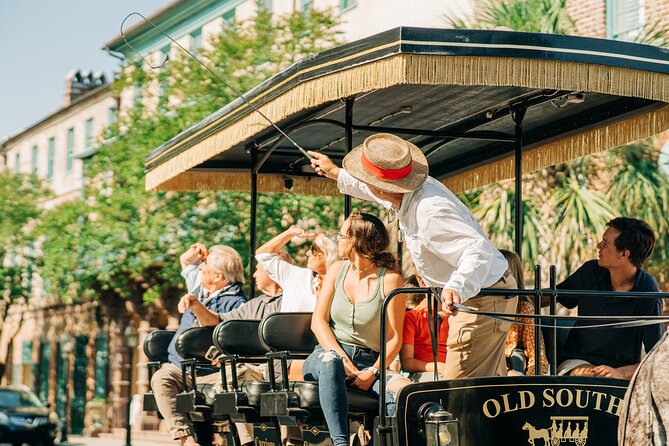
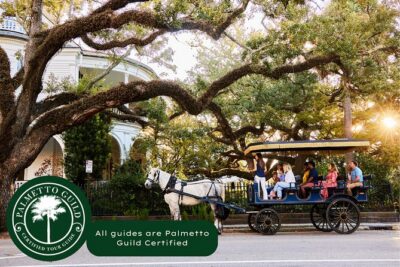
- The guides do the heavy lifting: Guides belong to the Palmetto Guild and must pass a detailed examination on Charleston history.
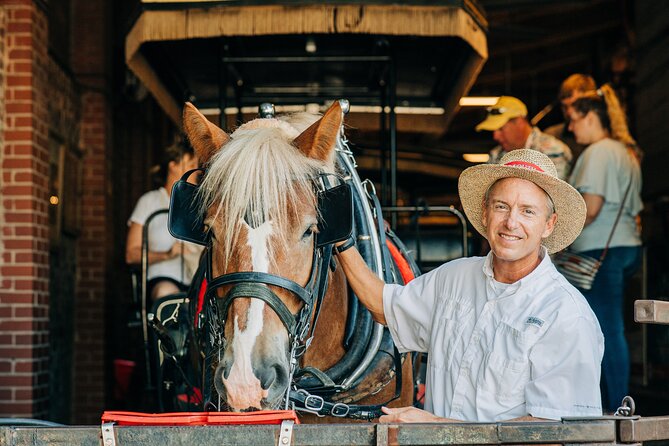
- The horses are part of the experience: Belgian and Percheron draft horses pull the carriage, and you can see them at the stable before or after your ride.
- The group stays fairly small: Carriages hold up to 16 people, with some wagonettes seating up to eight.
- Arrive 15 minutes early: Late arrival can lead to cancellation without a refund, so build in time for parking and check-in.
Starting at 14 Anson Street near the City Market
Your ride begins and ends at Old South Carriage Company, 14 Anson Street, about one block north of the City Market. The stable gives you shelter while you wait, which matters on a hot, rainy, or chilly Charleston day.
After check-in, you can look at the draft horses, use the restroom, buy bottled water, and watch an educational video. This is more than a basic loading area. If you arrive early, you get a few quiet minutes to see the animals and ask questions before the tour begins.
The boarding platform is inclined, making it easier to step into the carriage. The company uses surrey-style carriages that seat up to 16 people and wagonettes that seat up to eight. The exact carriage can vary, but the small maximum keeps the ride from feeling like a large bus tour.
You must check in at least 15 minutes before departure. This rule is worth taking seriously because a late arrival may mean losing your reservation without a refund. If you are driving, several garages and lots sit near the City Market. You can also park at the Visitor’s Center and use the free Downtown Area Shuttle to the Market.
A few more history tours around Charleston worth a look
- Charleston Horse-Drawn Carriage Tour: Explore Historic Charleston
★ 5.0 · 3,561 reviews - Charleston: Historical Downtown Tour by Horse-drawn Carriage
★ 4.8 · 1,009 reviews - Charleston’s Historic Residential Horse and Carriage Tour
★ 4.5 · 668 reviews
The route lottery changes what you see
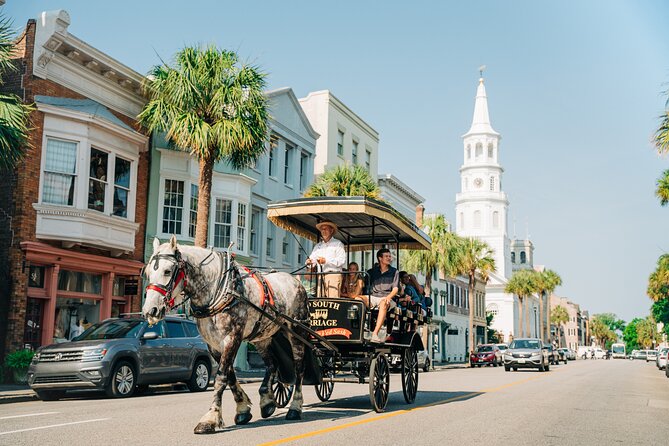
Once you leave the stable, the carriage goes to the City gate near the Market. There, the city assigns the carriage a route zone. The system spreads horse-drawn traffic across Charleston’s historic district, but it also means the company cannot simply follow your preferred itinerary.
The five-zone system is the most important thing to understand before booking. Your carriage may pass through a section filled with churches and mansions, or it may take you through quieter residential streets and areas that receive less attention from visitors. The exact landmarks change, but each route covers about 30 blocks and more than 300 years of history.
This setup has two sides. You lose control over the route, but you gain a broader sense of Charleston beyond the postcard sights. If you have your heart set on Rainbow Row or the Battery, you should not assume you will see either one. You can visit those places separately on foot.
I like the lottery more once I understand its purpose. It keeps all the carriages from crowding the same streets and gives you a chance to see a less obvious part of the historic district. Think of the ride as a guided sampler, not a point-to-point sightseeing service.
Mansions, piazzas, gardens, and ironwork
The scenery is classic Charleston. As the horse moves along, you pass antebellum homes, church steeples, carefully maintained gardens, and custom wrought iron gates. Many homes have piazzas, the city’s distinctive shaded porches, facing the street.
The carriage lets you take in these details at a relaxed pace. From a car, you might notice a grand facade and then lose it in traffic. From the carriage, you have more time to study the ironwork, window shutters, gardens, and architectural proportions while the guide explains what you are seeing.
One featured landmark is the Gov. William Aiken House, the former home of South Carolina Governor William Aiken Jr. The house was added to the National Register of Historic Places in 1977. You stop outside rather than taking an interior tour, so consider this a useful introduction if you plan to return later for a house museum visit.
The route also provides good photo chances. Gardens framed by iron gates are among the most attractive scenes, but keep your camera ready rather than waiting for one guaranteed stop. Since the route changes, the most memorable view on your ride may be an unexpected side street.
History told by people, not just plaques
The guide is the heart of the experience. All historic guides are required to belong to the Palmetto Guild, which means they have passed a major examination on Charleston’s past. That does not make every narration identical, and that is part of the appeal.
Recent rides have featured guides such as Wendy, Carrie, Ro, Carol, and Maddie. Wendy has been praised for her humor and storytelling, while Ro has handled mixed-age groups especially well. Carol has led tours with the horse Bob, and Maddie has teamed with Cooper. These names matter because the tone depends on the person holding the reins and telling the stories.
Expect information about Charleston’s colonial beginnings, its role in the Civil War, former residents, historic buildings, and the city’s many churches. The guides also connect the sights to the people who lived in them. That personal layer is often more memorable than a list of construction dates.
The best guides make room for both adults and children. One family found that the staff explained the city in a way that held a five-year-old’s attention, while another local who had lived in Charleston for more than 30 years still learned new facts. That is a good sign for mixed groups.
A carriage tour cannot give you every detail in one hour. It also is not the right choice if you want a scholarly lecture or a deep look inside individual buildings. Its strength is the combination of short stories, broad context, and changing views outside the carriage.
Same place, a different slice of the past:
- Historic Charleston Guided Sightseeing Walking Tour
★ 5.0 · 6,216 reviews - Charleston Harbor History Day-Time or Sunset Boat Cruise
★ 4.5 · 2,788 reviews - Hidden Alleyways and Historic Sites Small-Group Walking Tour
★ 5.0 · 2,335 reviews - Charleston: Daytime or Sunset Historic Harbor Cruise
★ 4.5 · 1,352 reviews
Meeting the Belgian and Percheron horses
The draft horses are not decoration. Belgian and Percheron horses pull the carriages, the same broad types of working horses once used on American farms in the early 1800s.
Many riders remember the horse as much as the buildings. Named horses such as Jordan, Jesse, Aiken, Arthur, Curtis, Bob, Cooper, Tucker, and Skylar have become part of the experience. Curtis, in particular, has been described as a character, while Aiken enjoyed the attention at the stable.
You can meet the horses before boarding, which is a nice bonus for children and anyone who enjoys animals. Staff explain that some of the Belgian draft horses come from Amish farms after their working years, and that the horses spend time on a farm when they are not pulling carriages. The company also limits how many routes the horses work.
The carriage moves at a slow, steady pace, though one account noted rough starts. If you are sensitive to jolts, ask staff about boarding and seating before departure. The horses are a major part of the charm, but this remains a working animal experience, not a private encounter with a horse.
Comfort, weather, and family details
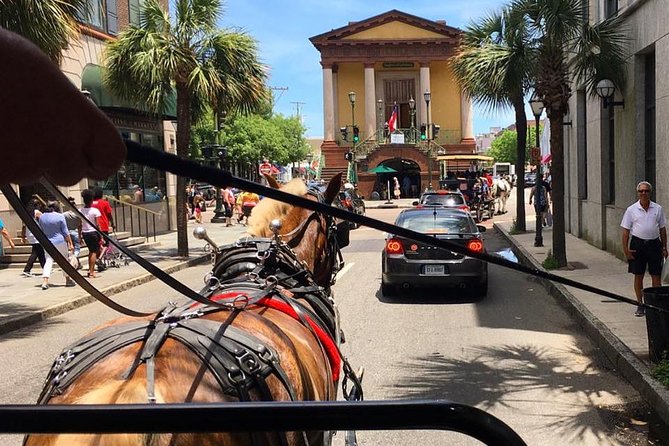
The carriages have roofs, offering shade in sunny weather and some protection from rain. Heavy rain can still leave you wet, and lightweight ponchos are available for purchase at the stable. The company runs in rain but stops for thunderstorms, and extended bad weather can lead to a closure.
Cold weather deserves equal attention. One ride felt chilly enough that blankets would have helped. Dress for the forecast, especially in winter or during a windy spell. Charleston’s weather can change the comfort of an open-sided carriage more than you might expect.
Children age three and under ride free if they sit on a parent or guardian’s lap. If you want a separate seat, you must buy a child ticket. Strollers cannot go on the carriage, but you can leave one at the stable during the ride.
Well-behaved dogs of all sizes are welcome. A small dog can sit on your lap, while a larger dog can sit in the front row. Service animals are also allowed.
Most people can take part, and the boarding ramp helps with access. Still, you should consider the carriage layout, the one-hour seated ride, and the uneven nature of historic streets if anyone in your group has mobility concerns.
Is $50 a fair price?
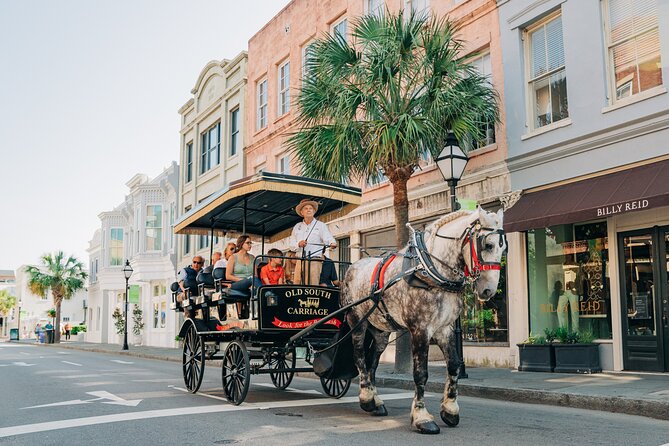
At $50 per person, the tour costs more than simply walking the historic district. You could cover many of the same streets for free, but you would not get the horse-drawn experience, the guide’s narration, or the practical overview of 30 blocks in one hour.
The value improves if you are visiting Charleston for the first time. The ride helps you understand the city’s scale and layout before you spend hours walking between homes, churches, museums, and gardens. It also gives you a list of places to revisit at your own pace.
For families, the horse and carriage may justify the cost on its own. Young children often tire during long city walks, while a carriage offers a calm way to see the historic district. The guide’s stories also add structure, so you are not simply looking at old buildings without knowing why they matter.
For repeat visitors, the price depends on your interest in local history and changing routes. Since the city assigns the zone, a second ride may show you a different part of downtown. If your only goal is to see one specific landmark, spend the $50 on a walking tour or admission elsewhere instead.
Free cancellation is available if you cancel at least 24 hours before departure. Cancellations inside that window are not refunded. If poor weather or an insufficient number of bookings cancels the ride, you can receive a new date or a full refund.
Who should book this Charleston carriage ride?
I would suggest this tour for a first day in Charleston, especially if you want a broad introduction without committing to a long walk. It also suits families, solo visitors, couples, and older adults who prefer a seated outing.
History fans will appreciate the Palmetto Guild guides and the stories tied to former residents, churches, homes, and the Civil War. Animal lovers get the added pleasure of seeing large draft horses up close.
I would be more cautious if you need a fixed route. The tour does not promise every famous Charleston landmark, and the city lottery determines your direction. You should also think twice if the forecast calls for severe heat, cold, or rain, since the roof does not fully seal the carriage.
Book it if you value the overall feel of Charleston more than a strict checklist. Skip it if you want a private ride, a guaranteed view of the Battery, or an interior tour of historic homes.
Should you book Old South Carriage Company?
For most first-time visitors, yes. The combination of a one-hour ride, 30 historic blocks, trained guides, and handsome draft horses gives you a pleasant introduction to Charleston without wearing out your feet.
Just arrive early, dress for the weather, and accept the route lottery. If you do, the tour works best as a first look. Afterward, you can return to the streets and houses that caught your eye, now with a better sense of what you are seeing.
FAQ
Where does the Charleston carriage tour depart from?
The tour departs from Old South Carriage Company at 14 Anson Street, about one block north of the City Market. The ride returns to the same location.
How long does the carriage ride last?
The ride lasts about one hour, generally between 50 and 60 minutes.
How early should I arrive?
You must check in 15 minutes before your scheduled departure. Arriving late may lead to cancellation without a refund.
Can I choose the route?
No. Charleston’s tourism division assigns each carriage a route zone near the City gate by the Market. Routes cover about 30 blocks, but specific landmarks vary.
How many people fit in one carriage?
The carriages hold a maximum of 16 people per departure. Wagonette carriages seat up to eight people.
Are the tours narrated?
Yes. A certified guide narrates the ride. Historic guides are required to belong to the Palmetto Guild and pass an examination on Charleston history.
Are children allowed on the tour?
Yes. Children age three and under ride free if they sit on a parent or guardian’s lap. A separate seat requires a child ticket.
Can I bring a dog or stroller?
Well-behaved dogs of all sizes are welcome. Small dogs may sit on your lap, and larger dogs may sit in the front row. Strollers cannot go on the carriage, but they may be stored at the stable.
What happens if the weather is bad?
The company may operate in rain but does not run during thunderstorms. If poor weather cancels the tour, you will be offered another date or a full refund. Covered carriages provide shade and some rain protection, but heavy rain can still get you wet.
Just added around Charleston
- Charleston’s Historic Pubs, Taverns, and Taprooms Tour★ 4.5 · 33 reviews
- Charleston’s Strong Women of the South History Tour★ 4.5 · 27 reviews
- Small-Group Tour: Charleston Old Walled City Historical Walking Tour★ 4.5 · 283 reviews
- Private Walking Tour of Historic Charleston★ 5.0 · 38 reviews
- Sip History in The Sun Cabana Covered Cocktail Class★ 5.0 · 332 reviews
- Sip History In a Secret Speakeasy Cocktail Class★ 5.0 · 40 reviews
- Private Sunset Sail BYOB Dolphin/History Tours on 43ft Mystique★ 5.0 · 42 reviews
- Private Afternoon Sailing/Dolphin & History Tour on 43ft Mystique★ 5.0 · 32 reviews
Horses, compared.
Charleston Horse-Drawn Carriage Tour: Explore Historic Charleston
Read our review →
Historical Downtown Tour by Horse-drawn Carriage
Read our review →
Charleston’s Historic Residential Horse and Carriage Tour
Read our review →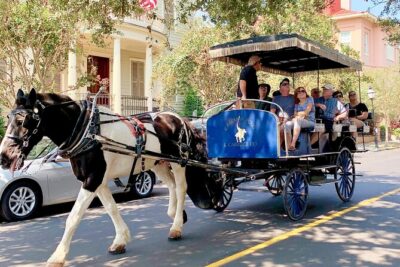
Charleston Horse & Carriage Historic Sightseeing Tour
Read our review →

Nature & Historical Horseback Riding Tours St. Lucia
Read our review →Browse the lists this tour appears in