
Review · CHARLESTON
Charleston Horse-Drawn Carriage Tour: Explore Historic Charleston
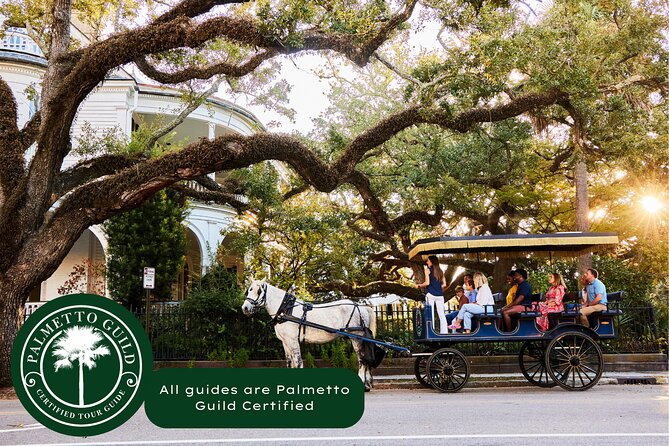
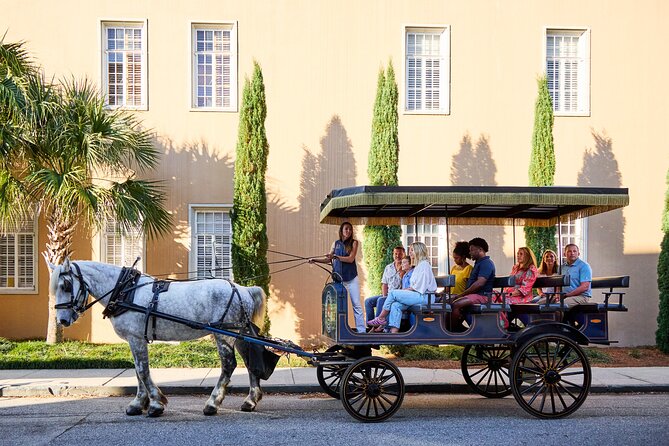
Charleston’s old streets are made for a slow ride. This one-hour horse-drawn carriage tour gives you an easy introduction to the city’s antebellum homes, churches, gardens, and major turning points, all from an open-sided carriage pulled by a well-cared-for horse. I especially like the certified local guides and the chance to cover about 30 blocks without tiring your feet. The main catch is that the city assigns your route by lottery, so you cannot choose which landmarks you see.
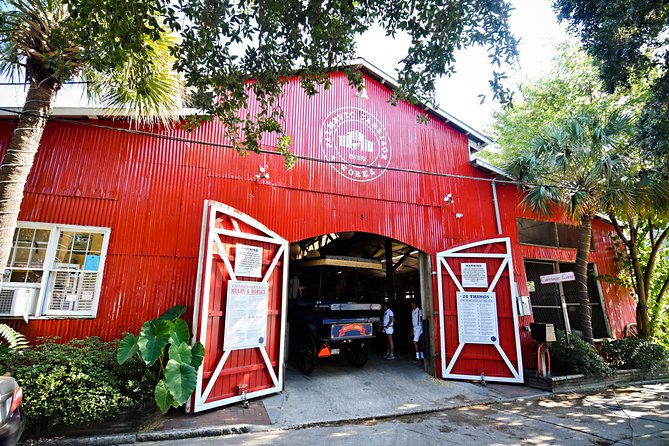
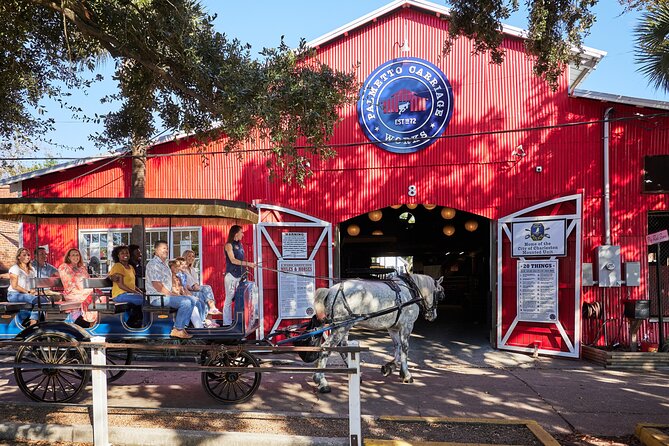
The tour begins at Palmetto Carriage Works, known locally as the Big Red Barn, just off Charleston City Market. I also like the steady schedule of departures, which makes this a practical first activity for a short visit. Still, the ride is shared, with public carriages seating up to 16 people, and the one-hour format means you get an overview rather than a complete tour of Charleston.
Key points to know before you book
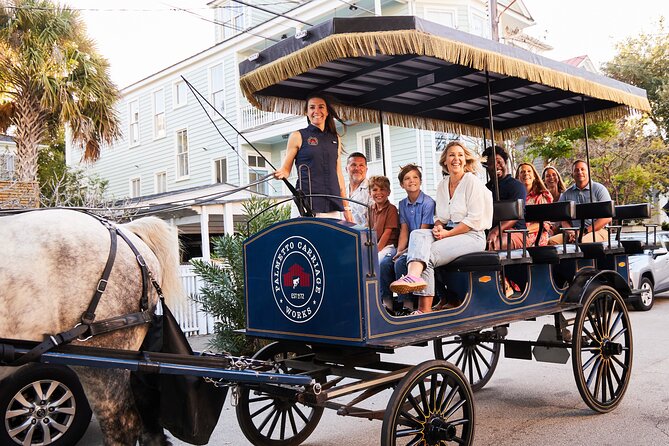
- The route is assigned by the City of Charleston: You may pass grand homes, churches, gardens, or residential streets, but specific sights are not guaranteed.
- Meet at the Big Red Barn: The starting point is 8 Guignard Street, one block from City Market.
- Expect about an hour on the carriage: A 15-minute orientation at the barn comes before the ride.
- Certified guides lead the tour: Guides belong to the Palmetto Guild of Certified Tour Guides and cover Charleston history with humor and local detail.
- The carriage holds up to 16 people: Smaller carriages for four or eight people are also available, but the standard ride is a shared experience.
- Plan for changing weather: The carriages are covered, but rain can still enter from the open sides.
Starting at the Big Red Barn near City Market
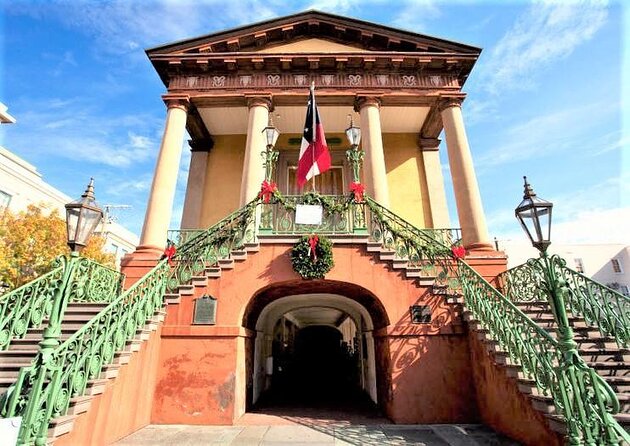
Your tour begins at Palmetto Carriage Works at 8 Guignard Street. The barn is one block from Charleston City Market, so it fits neatly into a morning or afternoon spent exploring the downtown core.
Before you board, allow about 15 minutes for orientation and a look around the barn. This is a useful pause rather than wasted time. You can get comfortable with the setting, meet your certified guide, and see where the horses begin their day. The staff has also allowed riders to pet some of the horses, although that depends on the situation at the barn.
The boarding area has a platform that comes close to carriage height. There is still a small gap to step across, but a ramp leads to the platform, and staff can assist. Walkers, wheelchairs, scooters, and strollers can be left safely at the barn during the ride. Strollers cannot go on the carriage itself.
The large public carriages seat up to 16 people, not counting the driver at the front. That size is worth considering. You may share the ride with a full group, which keeps the price moderate but can make the experience feel less personal. Smaller carriages seating four or eight people are available, and you can purchase an extra seat if you are concerned about space.
A few more history tours around Charleston worth a look
- Charleston’s Old South Carriage Historic Horse & Carriage Tour
★ 5.0 · 10,023 reviews - Charleston: Historical Downtown Tour by Horse-drawn Carriage
★ 4.8 · 1,009 reviews - Charleston’s Historic Residential Horse and Carriage Tour
★ 4.5 · 668 reviews
A slow look at Charleston’s preserved streets
Once the carriage leaves the barn, the pace changes. Charleston is much easier to read at horse speed than from a passing car. You have time to notice ironwork, piazzas, church steeples, shutters, gardens, and the mix of grand houses with ordinary homes.
The route covers about 30 blocks of the historic district. Charleston’s preserved center is large, and this ride gives you a useful first map of it. You are not stopping at each landmark, and this is not a walking tour with interior visits. Instead, you sit back while the guide explains what you are seeing and points out details that are easy to miss from street level.
The open-sided carriage is particularly good for photographs. You get a clear view in both directions, though the carriage’s movement and group seating mean you may need to be quick with your camera. The covers provide shade in bright weather and some shelter in rain, but the sides remain open.
The scenery can shift from formal streets with large houses to quieter residential blocks. That variety is part of the route system, though it also creates the tour’s main limitation. A ride assigned to one zone may show more churches and public buildings, while another may focus on gardens and residential architecture. You cannot request a particular section.
The city lottery and why your route matters
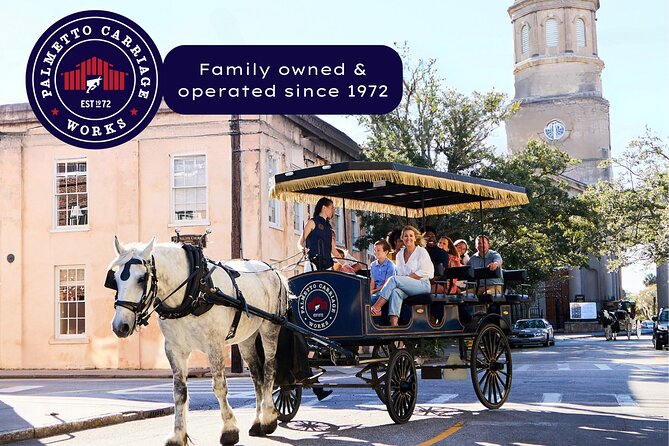
Charleston requires carriage companies to use a city-mandated lottery to assign routes. The historic district is divided into five zones, and the carriage receives one route rather than wandering wherever the driver wishes.
This system helps spread carriage traffic through the district and keeps one area from receiving every tour. For you, it means the experience changes from ride to ride. You might pass St. Philip’s Church and the U.S. Custom House, or you might spend more time among homes, gardens, and side streets.
The practical lesson is simple: do not book this tour to see one guaranteed building. Book it to get a narrated look at Charleston’s historic center. If a particular church, house, or museum is at the top of your list, plan a separate walking route.
The route lottery also explains why one person may describe a carriage ride as full of landmarks while another recalls more residential streets. Neither experience needs to be misleading. The assigned zone shapes what you see.
Stories that connect pirates, war, and daily life
The guide does more than name buildings. The subject range includes pirate raids, plantation life, Revolutionary War battles, the Civil War, and Reconstruction. That gives you a basic timeline for understanding Charleston, a city founded in 1670 and shaped by conflict, trade, slavery, war, and rebuilding.
The best guides add humor and keep the ride moving. Names praised in customer feedback include Jim, Luke, Jenny, Jason Looney, Brianna, Bill, and Mike C. The individual style will vary, but the common thread is a presentation that aims to be entertaining as well as factual. Guides are required to pass an extensive test administered by the City of Charleston and attend recertification classes every three years.
That certification matters because a carriage ride can easily become a string of pretty buildings with no clear context. A strong guide helps you understand why Charleston’s architecture looks the way it does and how the city’s past still appears in its streets.
You may also hear about the horses’ food, care, and working routine. For some riders, this adds a welcome look at the animals that make the tour possible. If you are mainly interested in architecture, it may feel like time taken from the city stories. The balance depends on your guide and your expectations.
Same place, a different slice of the past:
- Historic Charleston Guided Sightseeing Walking Tour
★ 5.0 · 6,216 reviews - Charleston Harbor History Day-Time or Sunset Boat Cruise
★ 4.5 · 2,788 reviews - Hidden Alleyways and Historic Sites Small-Group Walking Tour
★ 5.0 · 2,335 reviews - Charleston: Daytime or Sunset Historic Harbor Cruise
★ 4.5 · 1,352 reviews
St. Philip’s Church and the City Market area
One possible sight along the route is St. Philip’s Church on Church Street, just beyond City Market. It is identified as the oldest congregation in the United States south of Virginia, making it an important stop in Charleston’s religious and civic story.
You may not stop there, and the route does not promise an interior visit. Still, seeing the church from the carriage helps you place it within the older downtown grid. This is one reason I recommend taking the carriage ride early in your visit, then returning on foot to places that catch your interest.
City Market is also useful before or after the tour. The Big Red Barn is close enough that you can combine the ride with shopping, lunch, or a walk through the surrounding streets. If you have only one day in Charleston, an early carriage departure can give you an orientation before you start exploring on foot.
The U.S. Custom House and Charleston’s unfinished plans
Another possible landmark is Charleston’s U.S. Custom House. Construction began in 1852, but work stopped when South Carolina’s possible secession from the Union threatened the project. The building was completed in 1879, after the Civil War.
That detail captures Charleston’s complicated past in a single building. Political crisis interrupted a major federal project, and the finished structure reflects the city’s difficult transition through war and Reconstruction. Your guide may point it out as the carriage passes, but remember that the route lottery means it is not guaranteed.
The carriage is best at giving you this kind of broad context. You see how public buildings, churches, grand residences, and gardens fit together. You do not get the same close inspection as you would on foot, but you also avoid covering the district one block at a time in the heat.
The horses are part of the experience
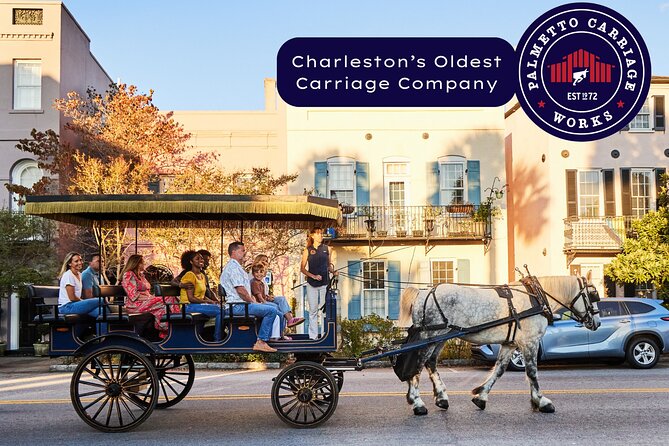
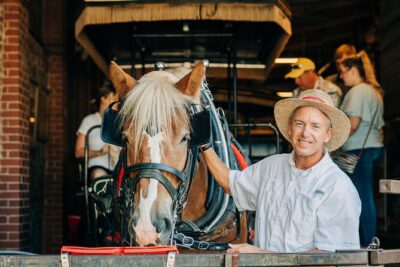
The horses are not just transportation. They are a visible part of the tour, and the company places strong emphasis on their care. Customer feedback repeatedly praises the calm handling of the animals and the bond between drivers and horses.
Several horses are mentioned by name, including Admiral, Duke, Donald, Marley, Howard, Teddy, and Charlie. One family appreciated being seated near the front so a parent with mobility issues could board more easily. Another early morning ride was nearly private, with a quieter atmosphere and more space.
You should not expect a horseback ride. You sit in a carriage while the horse walks through the historic district at a measured pace. That makes the activity suitable for families, couples, older visitors, and anyone who wants to see Charleston without a long walking route.
The animal-care discussion may be especially important to you if ethical treatment is part of your booking decision. The company describes its horse care as a central responsibility, and the feedback includes repeated praise for the staff’s treatment of the animals. At the same time, you should choose carefully if you are uncomfortable with any working-animal attraction.
Timing, weather, and comfort
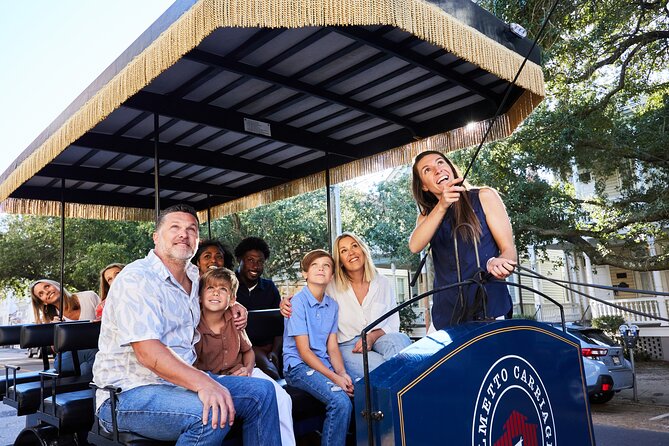
The tour runs in all weather conditions unless conditions become dangerous. The carriages are covered, which helps with sun and light rain, but the sides are open. If the forecast calls for rain, bring a rain jacket or poncho. Umbrellas are not allowed on the carriage.
Clear, cool weather is likely to be the most comfortable for both passengers and horses. Hot, humid weather can make a covered carriage feel less pleasant, while rain can reduce the pleasure of open-air views. An early departure is a smart choice for several reasons: it can be cooler, traffic may be lighter, and the ride may feel less crowded.
The experience is offered in English. Service animals can be accommodated with advance notice, and dogs may be allowed with advance notice as well. Most people can participate, but mention mobility needs when booking so the staff can prepare the boarding process.
The tour returns to the Big Red Barn, making it easy to continue your day from the same central area. You do not need to arrange a separate ride back to your hotel or another attraction.
Is $49.95 a fair price?
At $49.95 per person, this is not the cheapest way to see Charleston. You can walk the historic district for free, and a self-guided stroll lets you choose exactly which streets to visit.
The price pays for more than the horse and carriage. You receive a certified guide, a planned route through roughly 30 blocks, a seat while someone else handles navigation, and a spoken explanation of the city’s major eras. For first-time visitors, that can be good value, especially if heat, mobility, or limited time makes a long walking tour less appealing.
The value is weaker if you expect guaranteed landmarks, private attention, or entry into historic buildings. This is a shared overview. You are paying for atmosphere and orientation, not a deep architectural inspection or a series of museum visits.
A family may also find the format easier than keeping young children engaged on a long walking tour. Couples get a relaxed hour, and solo visitors can use it to decide which neighborhoods deserve a closer look later.
Who should book this Charleston ride?
I would recommend it to first-time visitors, families, couples, older adults, and anyone spending only a day in Charleston. It is also a sensible choice if you want historical context before exploring on foot.
It suits you particularly well if you enjoy stories, old buildings, and a relaxed pace. The horses, open carriage, and guide-led narration give the ride a character that a standard bus tour does not have.
Think twice if you need a fixed sightseeing plan. The route is not yours to choose, and a full carriage can limit personal space. You may also find the ride too brief if you want detailed information about individual buildings.
The tour has received a 4.8 rating from 3,561 reviews, with 95 percent of customers recommending it. That strong record fits the experience’s main strengths: friendly staff, engaging guides, attractive scenery, and an easy way to cover ground.
Final booking advice
Book this tour if you want a pleasant introduction to Charleston rather than a checklist of guaranteed sights. Choose an early departure when possible, dress for the weather, and keep your expectations flexible about the route.
I would pair the carriage ride with a later walking tour. Let the guide show you the city’s shape, note the churches and houses that interest you, then return on foot for a closer look. With that plan, the ride offers solid value and a memorable first hour in Charleston.
The cancellation policy is friendly: cancel at least 24 hours before the start time for a full refund. If dangerous weather cancels the tour, you can receive a new date or a full refund.
FAQ
Where does the horse-drawn carriage tour begin?
The tour begins and ends at Palmetto Carriage Works, also called the Big Red Barn, at 8 Guignard Street in Charleston. It is one block from City Market.
How long does the tour last?
The carriage ride lasts approximately one hour. A 15-minute orientation and barn visit take place before departure.
Can I choose which Charleston landmarks I see?
No. The City of Charleston assigns carriage routes through a lottery system. The tour may pass churches, gardens, historic homes, or other landmarks, but particular sights are not guaranteed.
How many people can ride in one carriage?
The large public carriages seat up to 16 people, not including the driver. Smaller carriages seating four or eight people are also available.
Are the carriages covered?
Yes. The covers provide shade and some protection from rain, but the carriage sides are open. Heavy rain can still reach you, and umbrellas are not permitted.
Is the tour accessible to people with mobility concerns?
The Big Red Barn has a ramp leading to a boarding platform that is nearly level with the carriages. There is a small gap to step over, and staff can assist. Walkers, wheelchairs, scooters, and strollers can be stored at the barn, but strollers cannot go on the carriage.
What happens if I need to cancel?
You receive a full refund if you cancel at least 24 hours before the tour’s start time. Cancellations or changes made within 24 hours are not refunded. If dangerous weather causes the company to cancel, you can choose another date or receive a full refund.
Just added around Charleston
- Charleston’s Historic Pubs, Taverns, and Taprooms Tour★ 4.5 · 33 reviews
- Charleston’s Strong Women of the South History Tour★ 4.5 · 27 reviews
- Small-Group Tour: Charleston Old Walled City Historical Walking Tour★ 4.5 · 283 reviews
- Sip History In a Secret Speakeasy Cocktail Class★ 5.0 · 40 reviews
- Private Walking Tour of Historic Charleston★ 5.0 · 38 reviews
- Sip History in The Sun Cabana Covered Cocktail Class★ 5.0 · 332 reviews
- Private Afternoon Sailing/Dolphin & History Tour on 43ft Mystique★ 5.0 · 32 reviews
- Private Sunset Sail BYOB Dolphin/History Tours on 43ft Mystique★ 5.0 · 42 reviews
Horses, compared.
Charleston’s Old South Carriage Historic Horse & Carriage Tour
Read our review →
Historical Downtown Tour by Horse-drawn Carriage
Read our review →
Charleston’s Historic Residential Horse and Carriage Tour
Read our review →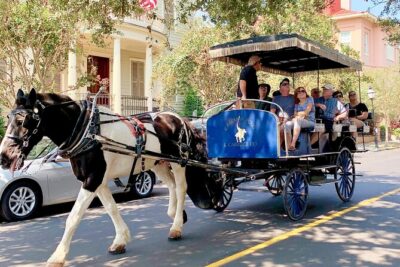
Charleston Horse & Carriage Historic Sightseeing Tour
Read our review →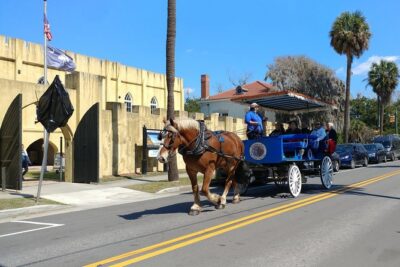
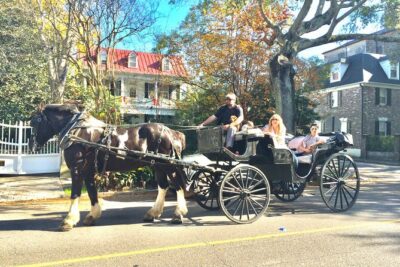

Nature & Historical Horseback Riding Tours St. Lucia
Read our review →Browse the lists this tour appears in