
Review · CENTRAL THAILAND
Full-Day Historical Park and Countryside Tour in Sukhothai
Sukhothai makes more sense from a bicycle. This seven-hour ride links quiet canals, rice paddies, village life, and the old royal city, giving you far more than a quick temple circuit. I especially like the slow ride through local communities and the guide’s explanations of farming, Buddhism, and architecture. The homemade-style lunch prepared with local participation is another fine touch. The main consideration is the length: seven hours on a bike, starting at 8:00 in the morning, may feel demanding in hot or wet weather.
The route mixes easy countryside riding with major temple stops, so you get both everyday Thailand and the famous ruins. Guide Mem receives particular praise for making the morning informative and for helping create a shared lunch with local dishes. With a maximum of 12 people, the group should remain small enough for questions and a personal feel, though the many scheduled stops leave limited time to linger at each one.
What makes this Sukhothai cycling day worthwhile
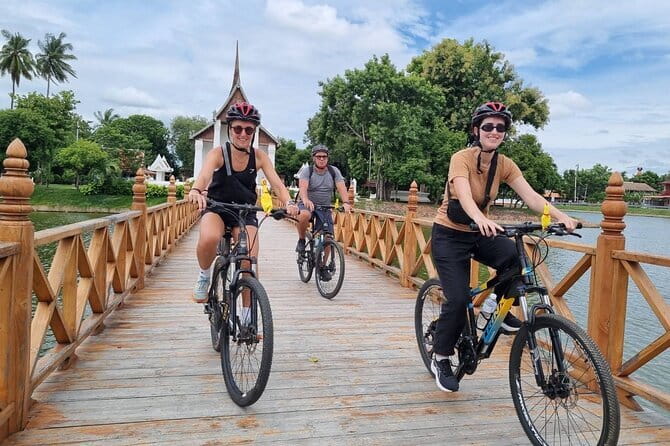
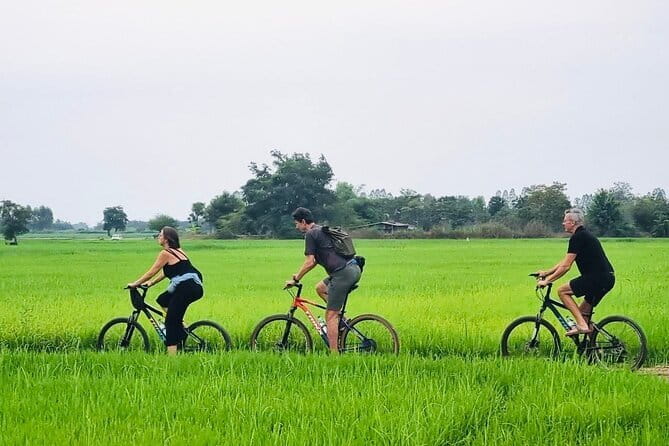
- Canals before temples: Ride beside small waterways used for farming, bathing, laundry, and fishing.
- Village life in motion: Pass communities, markets, rice fields, and local agricultural activity before reaching the ancient capital.
- Eight historical stops: See Wat Chetuphon, Saritphong Dam, Wat Mangkon, Wat Pa Mamuang, Wat Sri Chum, Wat Mahathat, and Wat Sri Sawai, with Sukhothai Historical Park as the main focus.
- A useful mix of sights: The route includes a giant Buddha, a Khmer-style temple, a Sri Lankan-style chedi, an old water system, and major royal monuments.
- Practical inclusions: A 24-gear mountain bike, front suspension, helmet, insurance, lunch, bottled water, soft drink, snack, entrance fees, and hotel transfers are included.
- Small-group setting: The tour accepts no more than 12 people, a sensible size for a guided bike ride and temple visits.
Why the countryside ride matters
Many Sukhothai visits begin and end inside the historical park. This tour takes a different route. The ancient capital remains the main attraction, but you first see the working countryside that gave the city food and water.
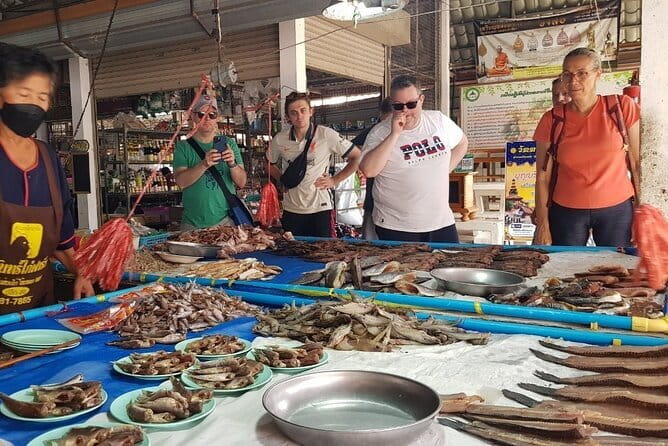
The canals are not just pretty lines through the fields. They support ordinary tasks, including farming, bathing, laundry, and fishing for dinner. That detail gives the ride a useful sense of place. You are not simply pedaling past scenery. You are seeing how water still fits into daily life.
The route passes small communities, rice paddies, a market, and agricultural activity. You may hear local greetings as you ride through. The pace is designed to leave room for the guide to explain local industry, handcrafts, farming, and village routines.
That is the strongest part of the experience for me. Temples can tell you about Sukhothai’s rulers and beliefs, but the canals and fields explain how people lived around the city. The ride also uses traffic-free roads, which should make the countryside portion calmer than a route along main roads.
The tour starts at 8:00 and runs until about 15:00. Morning is a sensible time for the longer cycling section, but you should still expect heat. Wear practical clothing, bring sun protection, and be ready for a full day outdoors.
More Full-Day Tours in Thailand:
- UNESCO’s Ayutthaya Historical Park: Full-Day Tour from Bangkok
★ 4.5 · 1,559 reviews - Historical City of Ayutthaya – Unesco Full Day Tour From Bangkok
★ 5.0 · 847 reviews - Full Day Cycling tour to Sukhothai Historical Park
★ 5.0 · 163 reviews
Starting with an English-speaking guide and a small group
The tour includes an experienced English-speaking cycling guide. Guide Mem is specifically praised for making the morning portion engaging and for offering useful, original explanations. That matters here because the countryside is easy to pass without understanding what you are seeing.
A good guide can point out the purpose of a canal, explain the meaning of a temple layout, and connect Buddhist images with Sukhothai’s past. The itinerary includes many short stops, so clear explanations help you get value from each one without needing a long lecture.
The group limit is 12 people. That is small enough for the guide to manage a mixed group on a bike route and answer questions at the temples. It is not a private tour, so your pace will still be shared with others.
The supplied bike is a mountain bike with 24 gears and front suspension. A geared bike is useful when the route changes between paved or compact roads and more rural surfaces. You also receive a helmet and insurance. The data does not specify bike sizes or whether electric bikes are available, so ask in advance if those points matter to you.
The four-hour route through Sukhothai Historical Park
The main historical park section lasts about four hours and includes admission. That is a substantial block of time, but it is spread across several temple compounds rather than spent at one site.
Sukhothai was the capital of an early Thai kingdom, and its ruins are known for a mix of religious and architectural forms. The guide’s role is particularly useful here because the tour does not treat every ruin as just another photo stop. You get explanations of architecture, history, and Buddhism as you move around the park.
The route includes important monuments in different parts of the former city. Some are grand and central. Others sit among trees or rice fields and feel quieter. The variety keeps the day from becoming a repetition of towers and brick walls.
Wat Chetuphon and the southern countryside
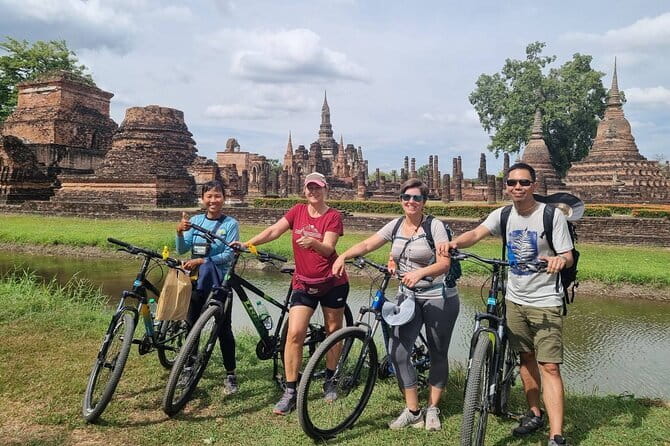
Wat Chetuphon is described as the largest temple complex in the southern part of the historical park. It sits in the countryside, surrounded by rice paddies, which gives the visit a strong connection to the ride that comes before it.
The temple has remains of Buddha statues in different positions. Those images offer a useful introduction to Buddhist art and symbolism, especially when the guide explains what you are looking at.
The stop is part of the larger four-hour historical park visit, while the detailed schedule also lists about 15 minutes at Wat Chetuphon. That suggests you should expect a focused visit rather than a long independent exploration. If you want time to study every fragment or take many photographs, the schedule may feel brisk.
A few more history tours around Thailand worth a look
- From Bangkok: Ayutthaya Historical Park Guided Day Trip
★ 4.6 · 3,020 reviews - From Bangkok: Historical Day Tour to River Kwai
★ 4.6 · 868 reviews - Chiang Mai: Historic Temples and City Guided Walking Tour
★ 4.7 · 650 reviews - Private Excursion to Floating Market and Ayutthaya World Heritage
★ 5.0 · 515 reviews
Saritphong Dam and Sukhothai’s water system
Saritphong Dam adds an important practical piece to the story. Dating from the Sukhothai era, it supplied water to the city and nearby rice fields.
The stop lasts about 20 minutes, giving you time to enjoy the view and take pictures. Mountains surround the dam, so this is one of the more open scenic pauses on the route.
I like this stop because it keeps the tour from presenting Sukhothai as only a religious center. A city needs water, food, and farming systems. The dam helps connect the grand temples with the work that supported urban life.
Do not expect a long technical visit. The stated plan is short, with time for views and photos. The value comes from seeing the water system in context, not from an extended engineering presentation.
Wat Mangkon and Wat Pa Mamuang

Wat Mangkon is a temple complex with a Sri Lankan-style chedi. Parts of it have been overtaken by strangler fig trees, making it a strong picture stop. The visit lasts about 15 minutes.
That brief stop gives you a different architectural detail from the larger central monuments. The chedi’s form and the trees growing through the site show how the ruins have changed over time.
Wat Pa Mamuang is another short stop, also about 15 minutes. This small temple complex sits in a mango forest. The name Mamuang means mango in Thai, and the guide explains the site as you walk around.
These two stops are compact, but they add character. Wat Mangkon offers an attractive ruin and chedi. Wat Pa Mamuang provides a smaller, more enclosed setting. If you prefer quiet places to famous landmarks, you may value these stops as much as the major temples.
Wat Sri Chum and the giant Buddha
Wat Sri Chum is one of the day’s visual highlights. In the north of the historical park, it contains a monthop, or Buddha house, with a gigantic Buddha statue in the subduing Mara position.
The enclosed setting makes the statue especially impressive. The scale is easier to appreciate when you stand below it, looking through the opening of the structure. The guide leads you through the complex and explains what you are seeing.
The planned stop lasts about 20 minutes. That should allow time for the main view, photographs, and a short explanation. It may not be enough for a slow, detailed study of the surrounding complex, so keep your expectations realistic.
For many people, Wat Sri Chum will be the most memorable single image of the day. It also provides a clear example of how Sukhothai’s religious art uses scale and posture to express meaning.
Wat Mahathat, the center of the old capital
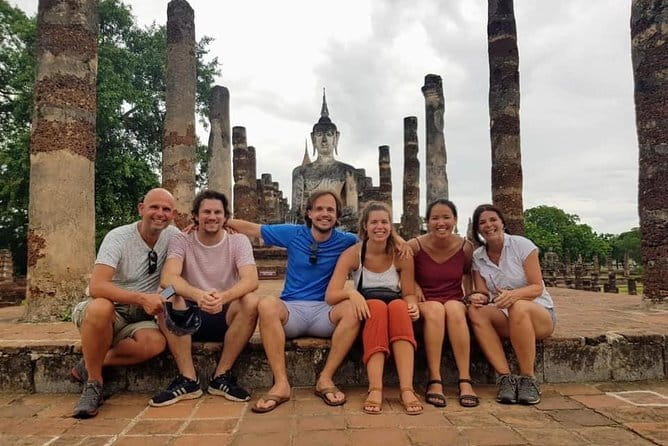
Wat Mahathat is the most famous and impressive temple complex in Sukhothai’s ancient capital. Its name means Temple of the Great Relics, and its central position reflects its importance.
The site brings together several architectural styles. You can see different forms in one large complex, with monuments spread through the heart of the old city. The guide’s explanation helps you read the site rather than simply photograph its best-known structures.
The schedule allows about 30 minutes here, the longest individual temple stop listed. That is appropriate, since Wat Mahathat has more to see than the smaller compounds.
Still, half an hour is not an unlimited visit. You will get an overview of the main areas, but you may want to return independently if you have extra time in Sukhothai. This is one reason the tour works best as a first look at the park, paired with a separate visit if you want a slower archaeological experience.
Wat Sri Sawai and the Khmer connection
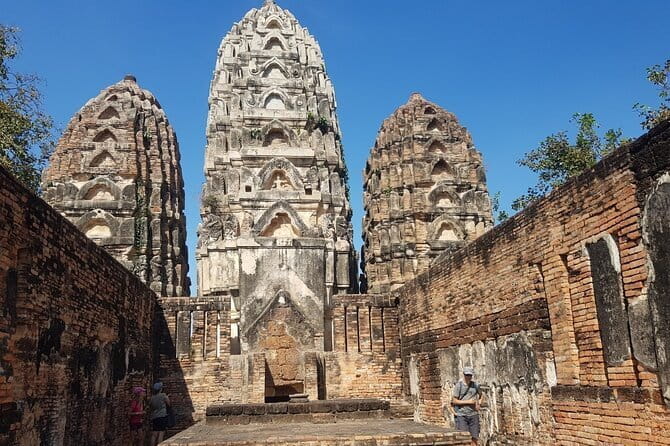
Wat Sri Sawai brings a different style to the route. It is a Khmer-style temple with a prayer hall and three prangs, or towers, surrounded by a brick wall and moat.
The stop lasts about 20 minutes. The three towers make the site easy to recognize, while the wall and moat give it a distinct layout from the more typically Sukhothai-looking monuments.
This stop is useful because it shows that the old capital was connected to wider artistic and political traditions. The guide can explain the Khmer features and help you notice the differences in tower shape and overall design.
As with the other short stops, you should plan to see the key structures rather than inspect every detail. The pace is designed to cover a lot of ground in one day.
Lunch, equipment, and what the price covers
At $51.92 per person, the tour offers good value if you want a guided introduction to both the countryside and the historical park. The price includes entrance fees, hotel transfers, the guide, bike, helmet, insurance, lunch, bottled water, a soft drink, and a snack.
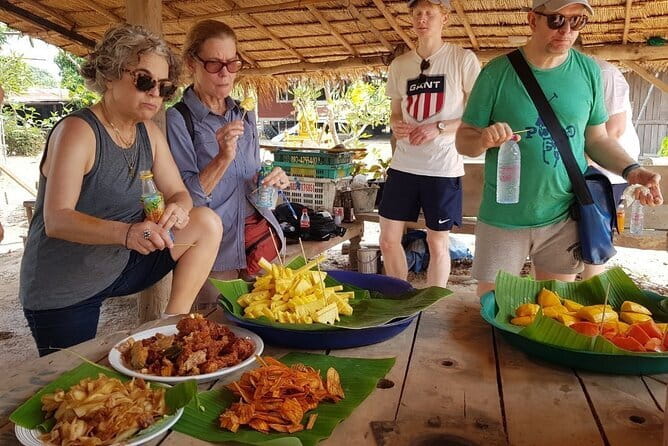
The lunch is a notable part of the experience. It is described as being prepared by the guide with local participation, and the meal can involve the group. That creates a more personal shared moment than a standard restaurant stop. One review specifically praises the delicious dishes and the chance to take part.
The exact menu is not provided, so do not book expecting a particular dish. Alcoholic beverages are not included.
Hotel pickup and drop-off are included within 15 kilometers of the starting point. Extra charges apply beyond that area. Transfers to Sukhothai Heritage Hotel cost 1,200 Thai baht for a van and driver. Pickup or drop-off at Phitsanulok railway station or airport costs 1,500 baht, while Sukhothai Airport costs 1,200 baht.
Those fees can change the real cost for people staying outside the standard pickup zone. Check your hotel address before booking.
Who should book this bike tour?
I would recommend this tour to you if you want context, exercise, and major temples in one day. It suits people who like seeing how a destination works, not just checking famous ruins off a list.
It is also a good match if you prefer small groups and guided visits. The maximum of 12 people keeps the experience more manageable than a large coach tour.
You should think twice if you want a slow, private temple visit, dislike cycling in heat, or have only a short amount of energy for outdoor activity. The route lasts about seven hours and includes many stops, so it is not a quick sightseeing loop.
Most people can participate, and the tour is near public transportation. The booking confirmation is provided at the time of booking. Since the activity requires good weather, poor conditions can lead to a new date or a full refund.
Free cancellation is available until 24 hours before the start time. Inside that window, the payment is not refunded and changes are not accepted.
Should you book the Sukhothai cycling tour?
Book it if you want Sukhothai explained through both its temples and its working countryside. The canal ride, village stops, water system, local lunch, and guide Mem’s commentary give the day more depth than a standard historical park visit.
The strongest reasons to choose it are the traffic-free rural route, the range of temple styles, and the practical all-in price. Just allow for heat, a full seven-hour schedule, and short visits at some sites. For a first day in Sukhothai, this is a smart choice. If you already know the park well and want long, quiet time at each ruin, a shorter private visit may suit you better.
FAQ
What time does the tour start?
The tour starts at 8:00 am and lasts about seven hours, finishing around 3:00 pm.
How many people can join the tour?
The maximum group size is 12 people.
Is hotel pickup included?
Hotel transfers are included for pickup or drop-off within 15 kilometers of the starting point. Additional charges apply for some locations outside that area.
What type of bicycle is provided?
You receive a mountain bike with 24 gears and front suspension. A helmet and insurance are also included.
Are entrance fees included?
Yes. Admission fees for the listed sites are included in the tour price.
Is lunch included?
Yes. Lunch, bottled water, a soft drink, and a snack are included. Alcoholic drinks are not included.
Which major temples are visited?
The route includes Wat Chetuphon, Wat Mangkon, Wat Pa Mamuang, Wat Sri Chum, Wat Mahathat, and Wat Sri Sawai. It also visits Saritphong Dam and Sukhothai Historical Park.
What happens if the weather is poor?
Because the experience requires good weather, it may be canceled. You will be offered a different date or a full refund.
Just added around Thailand
- Full Day Sukhothai Historical Park Tour★ 5.0 · 96 reviews
- Full Day Cycling tour to Sukhothai Historical Park★ 5.0 · 163 reviews
- River Kwai Day Tour from Bangkok: History, Scenic Views & Culture★ 4.5 · 36 reviews
- Bangkok Heritage Highlights: Grand Palace & Three Temples Tour★ 4.5 · 52 reviews
- Private Tour to Ayutthaya, World Heritage Site with Boat Tour★ 5.0 · 39 reviews
- Private Tour to Ayutthaya, World Heritage Site with Boat Tour★ 5.0 · 55 reviews
- Private tour to Ayutthaya and Boat Tour Heritage Site★ 5.0 · 28 reviews
- Private Guided Day Tour to Erawan Museum & Ancient City★ 4.5 · 25 reviews
Thailand History Tours, compared.
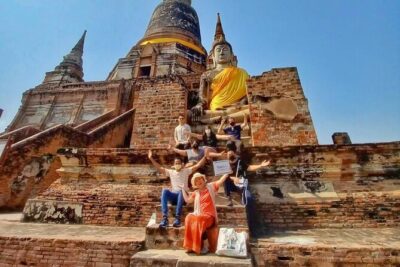
UNESCO’s Ayutthaya Historical Park: Full-Day Tour from Bangkok
Read our review →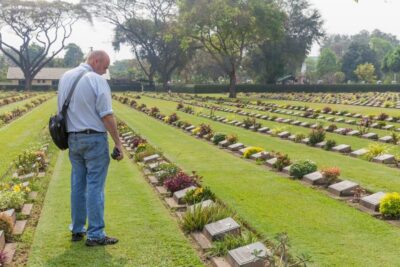
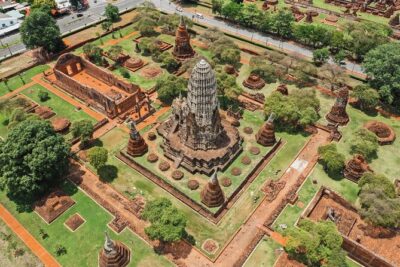
Historical City of Ayutthaya – Unesco Full Day Tour From Bangkok
Read our review →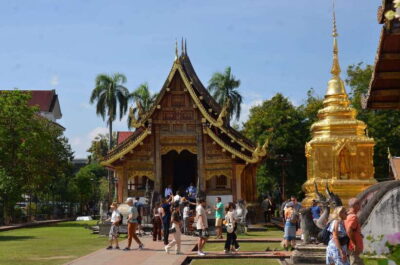
Chiang Mai: Historic Temples and City Guided Walking Tour
Read our review →
Bangkok City Highlights Tour: Grand Palace & Three Iconic Temples
Read our review →
Private Excursion to Floating Market and Ayutthaya World Heritage
Read our review →
Browse the lists this tour appears in