Review · CEBU
BEST OF CEBU: Cebu City Heritage with Uphill Tour | Joiners
Cebu’s past and hilltop views fit into one busy morning. This 4 to 5-hour outing links the city’s key heritage sights with the Taoist Temple, Sirao Flower Garden, and Temple of Leah, giving you a useful first look at Cebu’s old center and mountain roads. I like the mix of serious history and cheerful photo stops, and I like having an air-conditioned vehicle, bottled water, and a guide included for $63.50. The main drawback is time: traffic can stretch the schedule, and some stops may feel rushed.
I especially appreciate the guides’ personal touch. Rix is described as funny, flexible, and clear with historical details, while Tyler is noted for his wit and easy explanations. The father-and-son driving and guiding team also earned praise for careful driving. Still, you should know that the Temple of Leah and Sirao Garden are highly staged attractions, and the Taoist Temple may occasionally be closed.
Key things to know before booking
- Nine major stops in about four to five hours: You cover Cebu’s old town, central landmarks, hillside temples, flower gardens, and a grand modern monument in one compact outing.
- A useful first-day orientation: The route gives you context for Cebu City before you decide where to return for more time.
- The uphill section offers city views: The ride toward the mountain sites gives you a break from the streets below and opens views toward Cebu and surrounding hills.
- Guides are a major strength: Rix, Tyler, Olivier, and other guides are praised for humor, conversation, historical explanations, and flexibility.
- Traffic affects the pace: Cebu roads can be slow, so the advertised timing is approximate rather than fixed.
- Dress modestly for the church visit: Proper dress is required, and you may not be allowed inside Basilica Minore del Santo Niño without it.
Why this route works for a first look at Cebu
This is not a slow museum tour. It is a fast-moving city sampler that combines Spanish-era sites, Chinese influence, Catholic landmarks, public buildings, gardens, and newer attractions. I see the appeal: instead of spending half a day arranging separate rides, you can see many parts of Cebu from one air-conditioned vehicle.
The route also makes a useful geographical jump. The first stops sit around Cebu’s historic core, while the later stops climb into the hills. You get old stone walls and ancestral furniture first, then cooler uphill roads and broad views. That contrast helps you understand Cebu as more than a city of churches and shopping areas.
The pace is the tradeoff. Several visits are scheduled for only 20 to 30 minutes, with 45 minutes at the Taoist Temple. That is enough to look around, hear the main story, and take photographs. It is not enough for a long museum visit or an unhurried religious experience.
Group size is limited to a maximum of 10 people. That matters here because small groups can get in and out of the compact sites faster than a large coach party. Pickup is offered, though the supplied details do not specify exact pickup areas or times, so confirm those points when booking.
A few more history tours around the world worth a look
- History and Hauntings of Salem Guided Walking Tour
★ 5.0 · 14,564 reviews - Colosseum: Underground and Ancient Rome Tour
★ 4.7 · 12,691 reviews - Lisbon: History, Stories and Lifestyle Walking Tour
★ 4.8 · 10,902 reviews
Cebu Heritage Monument: the city’s story in stone
The Cebu Heritage Monument is a good opening stop because it gives you a visual introduction to the city’s past. Sculptures depict major events and figures connected with Cebu, and the work was designed by artist Eduardo Castrillo.
You have about 30 minutes here, with no separate admission charge. I would listen carefully to the guide rather than simply walk around taking pictures. The monument is designed as a historical tableau, so the explanation helps connect the people and events shown in the sculpture.
This is also one of the places where a good guide makes a real difference. Rix, in particular, is praised for correcting misunderstandings and explaining Cebu’s past in a way that is easy to follow. If you arrive with only a general idea of Magellan, Spanish rule, and the early Catholic period, this stop can give you a useful framework.
Yap-Sandiego Ancestral House: a look inside old Cebu
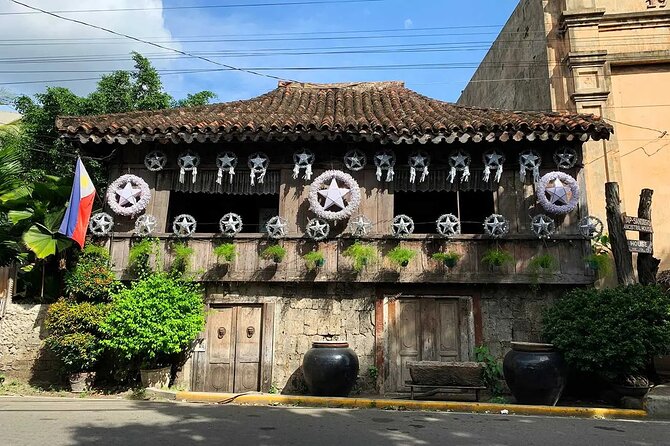
The Yap-Sandiego Ancestral House is one of the tour’s more personal stops. Built in the 17th century, it is among the oldest preserved houses in the Philippines and shows Spanish and Chinese influences in its design and contents.
You get around 30 minutes, and admission is included. The house provides a sharper sense of how domestic life differed from the grand churches and forts elsewhere on the route. Look for the old furnishings and the details of the building itself rather than expecting a large formal museum.
I like this stop because it adds texture to the city’s past. The monument tells a public story. The ancestral house gives you a more intimate one. Its short visit means you will not have time to study every object, but the stop is still worthwhile, especially if you enjoy architecture and old homes.
Fort San Pedro and Magellan’s Cross
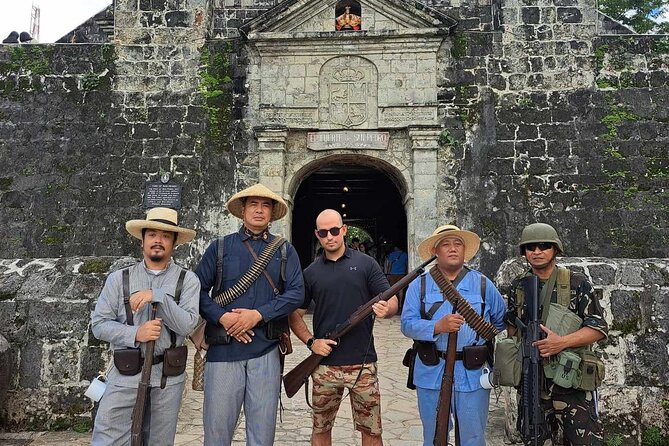
Fort San Pedro is a compact triangular military structure built in 1738 during the Spanish colonial period. It is described as the oldest and smallest fort in the Philippines, with stone walls and defensive features that help explain Cebu’s strategic importance.
The scheduled visit lasts 30 minutes, and admission is included. Do not expect a giant fortress. Its value is in the surviving shape, the walls, and the chance to picture how this small stronghold protected the port area. The compact size suits the tour’s brisk rhythm.
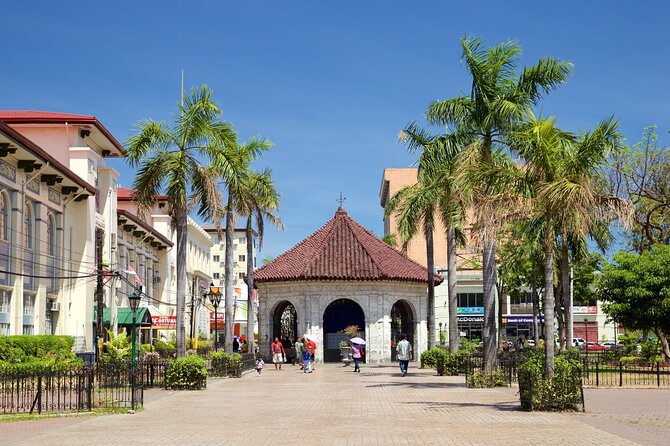
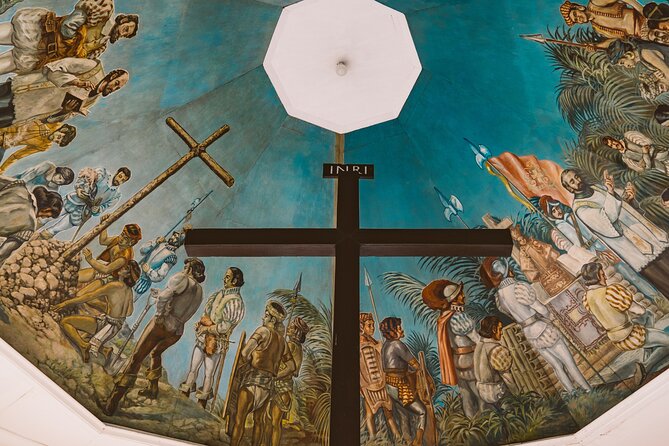
Magellan’s Cross receives about 20 minutes, with no separate admission charge. The cross is linked to Ferdinand Magellan’s arrival in 1521 and the introduction of Christianity to the Philippines. It is housed in a protective chapel, where the original cross is said to be encased.
This is a short stop, but it carries heavy religious and historical meaning. I would treat it as more than a quick photo opportunity. Your guide can help explain why the site matters to Cebu and why it remains part of the city’s identity.
Same place, a different slice of the past:
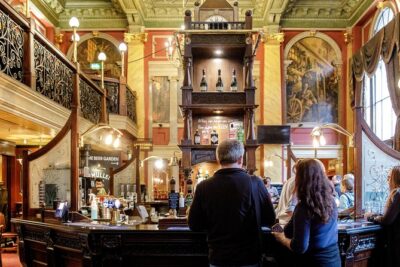
- London Small Group Tour of Historical Pubs
★ 5.0 · 10,422 reviews - Prague: Oldtown, Medieval Underground & Dungeon History Tour
★ 4.3 · 10,277 reviews - Charleston’s Old South Carriage Historic Horse & Carriage Tour
★ 5.0 · 10,023 reviews - Edinburgh: Edinburgh Castle Guided History Tour with Tickets
★ 4.8 · 9,933 reviews
Basilica Minore del Santo Niño: plan your clothing
The Basilica Minore del Santo Niño de Cebu was established in 1565 and is recognized as the oldest Roman Catholic church in the Philippines. It houses the Santo Niño de Cebu statue and combines Spanish colonial design with deep local devotion.
The schedule allows about 30 minutes, and admission is listed as free. The important practical note is the dress code. You are specifically warned to dress properly, or you may not be allowed inside the church. Wear clothing that covers your shoulders and knees if you want the best chance of entering without a problem.
This is also a place where the schedule may feel tight. The basilica is not simply another sightseeing stop. It is an active place of worship, so you need to be respectful, quiet, and ready to follow any restrictions in place that day.
Fuente Osmeña and Cebu Capitol
Fuente Osmeña is a public landmark centered on a historic fountain and named for President Sergio Osmeña. It is used for community events and celebrations, so it gives you a brief look at ordinary civic Cebu rather than only formal attractions.
The stop is listed in the route, but no exact visit length is provided. It may function partly as a drive-by or quick orientation point, depending on traffic and the guide’s timing.
The Cebu Capitol Building is another civic landmark. Inaugurated in 1938, it has a neoclassical design with large columns and a dome, and it houses the provincial government. The building is best understood from outside, since the tour information does not indicate an interior visit.
Together, these landmarks add balance. You are not only seeing old churches and tourist attractions. You are also seeing the public face of Cebu’s government and city life.
Taoist Temple: one of the strongest stops
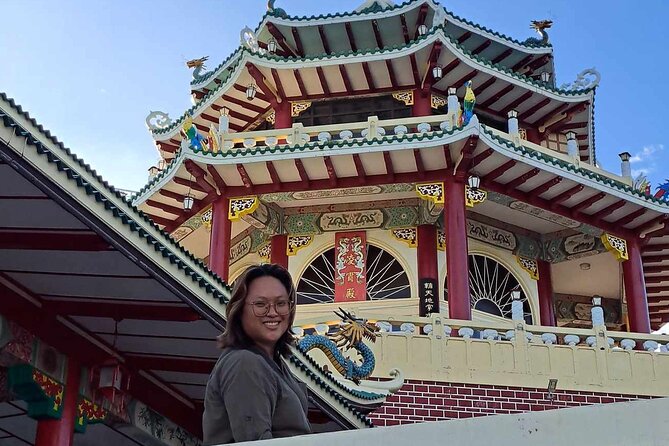
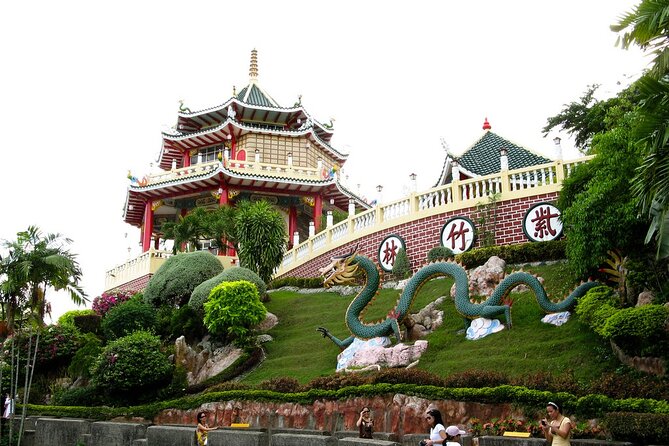
The Cebu Taoist Temple sits on a hillside and dates from 1972. Its Chinese architectural style, gardens, replica Great Wall, and views toward the city give the uphill section a clear change of mood.
You have about 45 minutes here, the longest scheduled stop. That extra time makes sense. The temple has several visual details to notice, and the setting rewards a slower walk than the city-center stops.
I would rank this among the tour’s best stops. One person specifically found it very impressive, and the combination of architecture, quiet spaces, and elevated views gives you something different from the Spanish-era sites. It is also a good place to understand Cebu’s Chinese cultural influence.
There is one important uncertainty. One visit found the Taoist Temple closed to the public, despite it being part of the planned route. Closures can happen, so do not book this tour solely for guaranteed temple access. If it is open, you should have time to enjoy it. If not, the guide may need to adjust the stop.
Sirao Flower Garden: colorful, cheerful, and very staged
Sirao Flower Garden is known as Little Amsterdam and sits in the mountainous area of Sirao. Its celosia and other flowers, along with decorative features such as an Amsterdam-style windmill, make it a popular place for photographs.
The visit lasts about 30 minutes, and admission is included. You will have enough time for a walk and pictures, but not for a long garden visit. This is a photo stop first and a botanic experience second.
I would set your expectations correctly. The garden can feel touristy, and one assessment found some displays dated. If you enjoy bright colors, playful installations, and quick photographs, you will probably have fun. If you prefer quiet, carefully designed botanical gardens, this may be the least convincing stop.
The mountain setting helps. After the traffic and stone buildings of central Cebu, the uphill air and views provide a welcome change. Even if the decorations are not your style, the ride up gives the day some variety.
Temple of Leah: grand, modern, and not for everyone
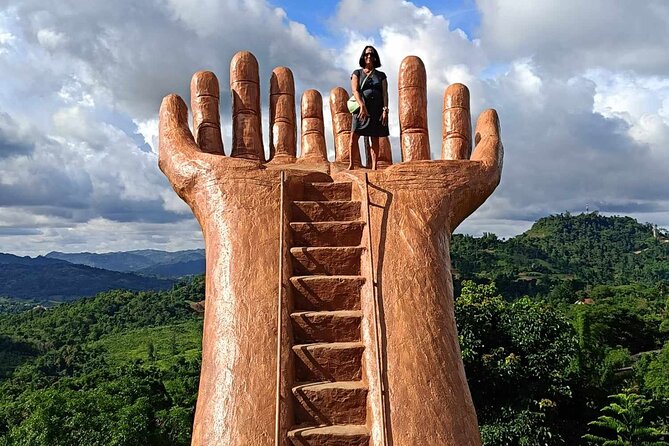
The Temple of Leah was built in 2012 as a tribute to love and devotion. Its design draws on ancient Roman architecture, with large sculptures, ornate halls, and displays connected to the woman it honors.
You get about 30 minutes here, and admission is included. The structure is dramatic and makes a strong photograph, especially if you enjoy oversized columns, statues, and sweeping views. It is not an ancient temple, however. It is a modern memorial built in a classical style.
That distinction matters. One person felt the site could have been skipped, while others enjoyed its unusual appearance and the fact that it is unlike the older Cebu attractions. I would put it in the category of you will know quickly if it is your kind of place. Fans of grand architecture will enjoy the scale. People looking for authentic old Cebu may find it too theatrical.
Guides, drivers, and the value of the vehicle
The strongest praise goes to the people running the day. Rix is described as friendly, funny, flexible, and skilled at explaining Cebu’s past. Tyler is praised for being witty and well informed, while Olivier is remembered as talkative, cheerful, and even a good singer. These details suggest a tour that can feel conversational rather than scripted.
The driver matters just as much. Cebu traffic can be difficult, and careful navigation is a real benefit when you are trying to reach several sites in one morning. A father-and-son team received particular praise for safe driving and a memorable experience.
The air-conditioned vehicle is more than a simple inclusion. The route moves between hot city streets and uphill attractions, with time spent getting from one stop to another. You can rest in the vehicle during the longer uphill drive, which several people found useful.
Bottled water, entrance fees, a professional guide, taxes, and a Cebu souvenir are included. Food is not listed, and anything else not specifically mentioned is excluded. At $63.50 per person, I see fair value if you want many stops and a guide. It is less compelling if you plan to visit only one or two sites at your own pace.
Timing, traffic, and the right expectations
The advertised duration is approximately four to five hours, not a firm finish time. Heavy traffic can cause delays, especially when the route links the central city with the hills. Construction and repairs have also affected some parts of Cebu, so the exact rhythm may change.
I would avoid scheduling an important flight, ferry, or tightly timed appointment immediately afterward. The experience is designed as a broad overview, not a precision-timed transfer.
The short stop lengths also require cooperation. You may need to leave a site just as you are getting comfortable. That is the price of seeing so much in one outing. If you want detailed church visits, long photography sessions, or extended time at the gardens, choose fewer places and arrange them separately.
Who should book this Cebu tour?
I would recommend it most strongly to first-time visitors, solo visitors who want company and context, and anyone with only one free morning. It is also a good fit if you like switching between old buildings, religious landmarks, city views, gardens, and unusual modern attractions.
The tour is less suited to you if you dislike quick visits or staged photo attractions. The Sirao garden and Temple of Leah may feel overly commercial, and the overall route leaves little room for wandering.
The small maximum group of 10 is helpful, and the free cancellation policy gives you a full refund if you cancel at least 24 hours before the start time. Cancellations within 24 hours are not refunded, and changes in that period are not accepted.
Should you book it?
Book this tour if you want a practical Cebu orientation with strong guides, safe driving, and a wide range of sights. The Taoist Temple and the old city sites are the best reasons to go, while the uphill stops add views and visual variety.
Skip it if you want a slow, deeply focused cultural visit or if you already know Cebu’s central landmarks. For most first visits, though, $63.50 is a reasonable price for transport, admissions, water, guide service, and a tightly packed introduction to both city and hill country. Just dress properly for the basilica, allow extra time for traffic, and treat Sirao and Temple of Leah as cheerful photo stops rather than timeless monuments.
FAQ
How long does the Cebu city and uphill tour last?
The tour lasts approximately four to five hours. Traffic can cause delays, so the timing is not guaranteed to be exact.
How much does the tour cost?
The listed price is $63.50 per person.
What attractions are included?
The route includes the Cebu Heritage Monument, Yap-Sandiego Ancestral House, Fort San Pedro, Magellan’s Cross, Basilica Minore del Santo Niño, Fuente Osmeña, the Taoist Temple, Cebu Capitol, Sirao Flower Garden, and Temple of Leah.
Is hotel pickup available?
Pickup is offered. The provided details do not specify the exact pickup areas or times, so confirm those details when booking.
Are entrance fees included?
Entrance fees and taxes are included. The listed inclusions also cover an air-conditioned vehicle, bottled water, professional guide assistance, and a Cebu souvenir.
Do I need to follow a dress code?
Yes. Proper dress is required for the Basilica Minore del Santo Niño. You may not be allowed inside the church if your clothing does not meet the dress requirements.
Can the Taoist Temple be closed?
Yes. It was closed during one reported visit, even though it is part of the planned route. Access is therefore not guaranteed on every departure.
How many people can join the tour?
The maximum group size is 10 people.
What is the cancellation policy?
You can cancel for a full refund up to 24 hours before the experience start time. Cancellations or changes made less than 24 hours before the start time are not accepted for a refund.
Just added around the world
- Chania: Hiking through History and Hidden Gems at Katholiko Bay★ 4.0 · 19 reviews
- Heritage Pass★ 5.0 · 154 reviews
- Full Day Sukhothai Historical Park Tour★ 5.0 · 96 reviews
- Private Danang City and Hoi An Ancient Town from Cruise Port★ 5.0 · 18 reviews
- Full-Day Historical Park and Countryside Tour in Sukhothai★ 5.0 · 27 reviews
- The Original Cebu City Historical and Food Walking Tour★ 4.5 · 81 reviews
- Full Day Cycling tour to Sukhothai Historical Park★ 5.0 · 163 reviews
- 6-Day Private Morocco Cultural Tour From Casablanca To Marrakech★ 5.0 · 24 reviews
Tours, compared.
History and Hauntings of Salem Guided Walking Tour
Read our review →
Colosseum: Underground and Ancient Rome Tour
Read our review →
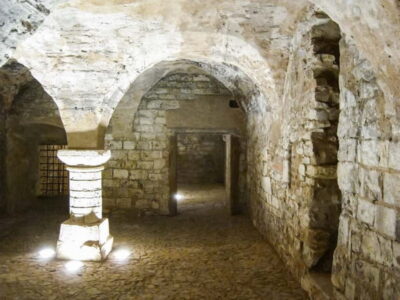
Oldtown, Medieval Underground & Dungeon History Tour
Read our review →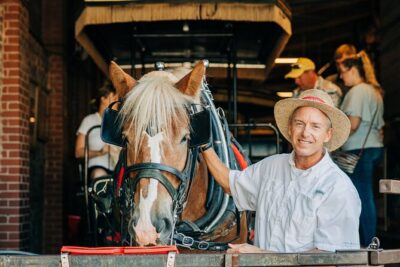
Charleston’s Old South Carriage Historic Horse & Carriage Tour
Read our review →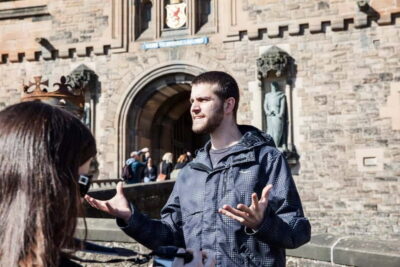
Edinburgh Castle Guided History Tour with Tickets
Read our review →