
Review · BEIJING
Beijing Culture: Tea Ceremony, Heritage Instrument & Calligraphy
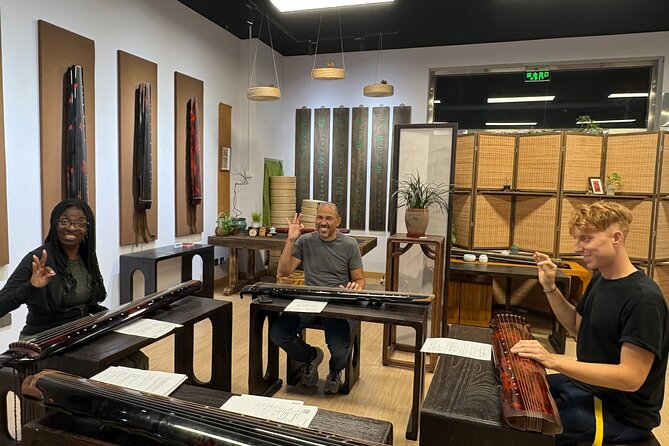
Slow down in Beijing. This 2.5-hour workshop trades crowded sights for a quiet cultural setting where you can brew tea, write Chinese characters, and play a melody on the Guqin, China’s ancient seven-string instrument. I like the small maximum group of eight, which gives the teachers time to correct your brush grip and guide your fingers on the strings. I also like the mix of watching, listening, and doing. You are not simply sitting through a performance.
The main consideration is the price: $78.60 per person is a fair but not cheap charge for a short activity. You also need to reach the venue at 813 Creative Park in Chaoyang on your own, and the setting may feel too slow for anyone looking for a lively stage show or a packed sightseeing schedule.
Key points to know before booking
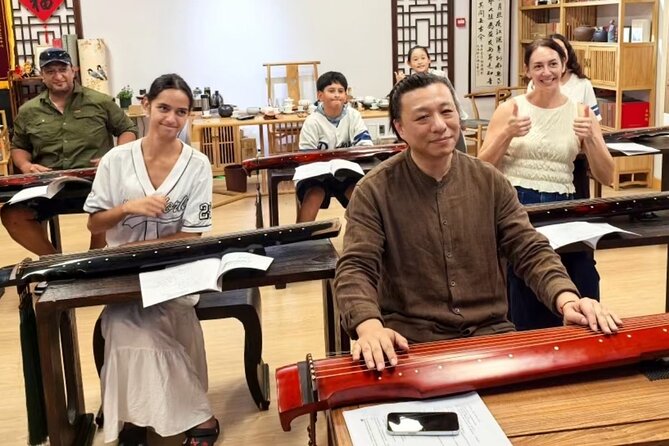
- You play a complete Guqin melody, with direct help from a heritage musician.
- Tea is brewed and tasted, not just served as a decorative welcome drink.
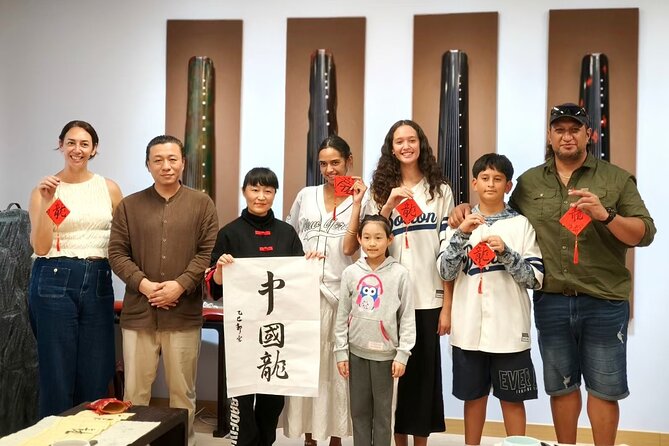
- Calligraphy becomes personal, with guidance on writing a Chinese name and taking the finished work home.
- The group is limited to eight people, making the instruction more personal than a large cultural performance.
- A bilingual guide with a master’s degree in History and Sociology explains the ideas behind the rituals and objects.
- Traditional clothing is available for the ritual and photographs, adding a visual element without turning the activity into a stage production.
Why this quiet Beijing workshop works
Beijing can be noisy, crowded, and relentlessly scheduled. You may spend the morning moving through a palace complex, waiting in lines, and trying to absorb centuries of history before lunch. This experience gives you a different kind of contact with China. It asks you to slow your hands, listen carefully, and accept that a brushstroke or tea pour takes time.
The venue is a private heritage space inside 813 Creative Park. It is air-conditioned and closed to the general public, which matters in a city where calm can be hard to find. The setting is designed around the work of the artists rather than around a large audience or constant foot traffic.
I would not treat this as a substitute for Beijing’s major historic sights. It does something else. The Forbidden City shows you architecture and imperial power. This workshop shows you small acts of practice: how tea is handled, how a character is formed, and how a traditional instrument responds to a careful touch.
The experience is guided in English, so you are not left to guess why a movement or object matters. The guide has a background in Chinese philosophy and history, according to the supplied details, and a master’s degree in History and Sociology. That academic context should help connect the activities to wider ideas without making the session feel like a lecture.
More Local Culture and Traditions Tours in China:
- Shenzhen History , Culture & Scenic + (Drone Delivery) tour
★ 5.0 · 26 reviews - Amsterdam Food and Cultural Tour with Tastings
★ 5.0 · 4,315 reviews - Sevilla Food Tour: Tapas, Wine, History & Traditions
★ 5.0 · 3,468 reviews
The tea ceremony starts with attention
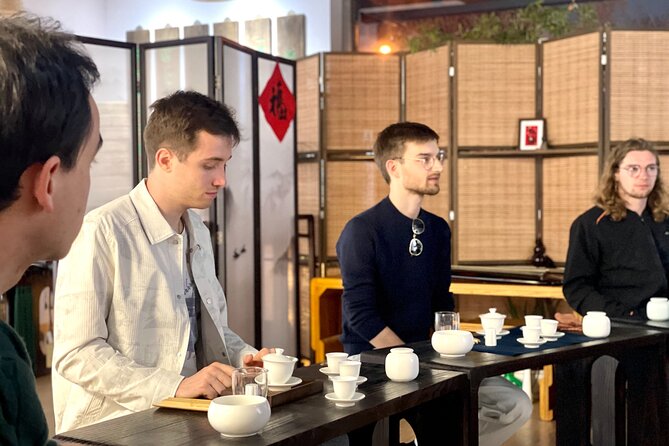
Tea is the right opening for this kind of afternoon. It settles the pace before you move on to calligraphy and music. The ceremony is led by a certified, national-level tea master, and you get to brew and taste the tea yourself rather than simply watch someone else pour it.
The value here is not the amount of tea. It is the method. The tea ceremony gives you a reason to notice temperature, timing, pouring, and presentation. Even if you know nothing about Chinese tea, the activity is approachable. One direct account describes the tea as delicious and the process as slow and purposeful, while another compares it to meditation.
Tea snacks are included, but this is not a meal. If you arrive hungry, eat beforehand. The supplied information specifically excludes meals beyond the provided snacks, so you should plan this as a cultural workshop with refreshments, not as a food tour.
I especially like the way tea sets up the rest of the session. It gives you a gentle introduction to the idea that cultural traditions are often carried through repeated physical actions. You are not memorizing a list of dates. You are learning why small movements can matter.
The Guqin session turns listening into participation
The Guqin is the dramatic heart of the experience. It is one of China’s most respected classical instruments, with a tradition reaching back more than a thousand years. You first hear a live performance by a national-level heritage artist, then receive hands-on instruction.
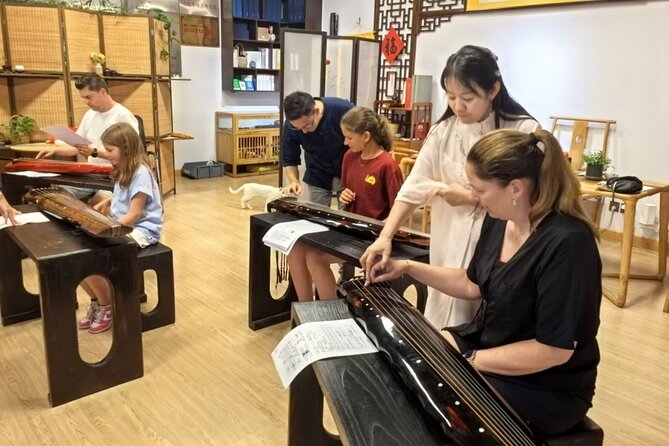
The important promise is that you learn a full melody, not just pluck one string for a photograph. Do not expect to leave as a concert musician. In a short workshop, the goal is to understand the instrument’s feel and produce a complete, simple piece with guidance.
That direct help makes a difference. Your fingers may be shown where to go, and the teacher can adjust your movements as you play. One account describes the sensation of having the master guide the player’s fingers, creating an unexpectedly emotional moment. Another points to the contrast between looking at artifacts in a museum and actually feeling the strings of an old instrument.
The Guqin is quiet and refined. It does not offer the instant volume or drama of a large stage performance. That is part of its appeal, but it also means you need to enjoy concentration. If you want fast entertainment, the session may feel restrained. If you like music that rewards patience, it could be the most memorable part of the afternoon.
I would also keep your expectations practical. The supplied details promise a full melody lesson, but they do not state how advanced the piece is or how much individual playing time each person receives. With a maximum of eight people, the setting should be more personal than a group demonstration, but the exact amount of practice can vary.
Calligraphy gives you something to take home
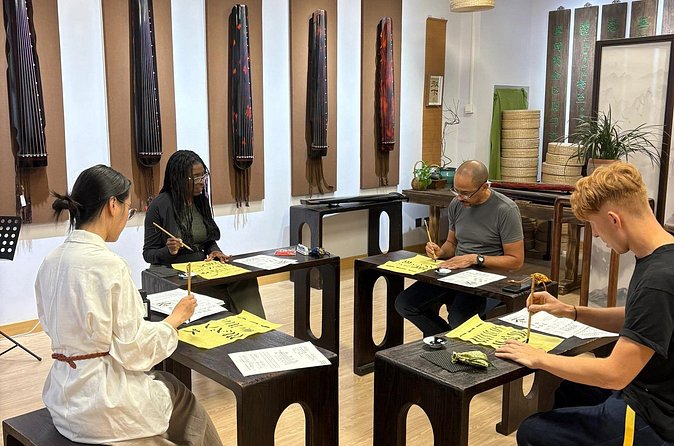
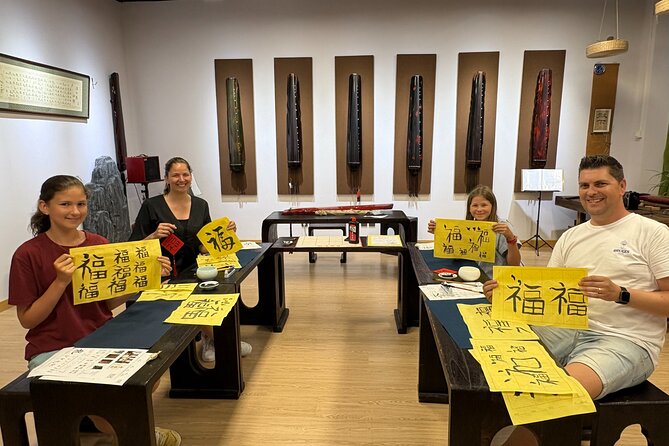
The calligraphy section is the most useful souvenir opportunity. You work with an expert instructor to write real Chinese characters and learn something about their ancient roots. One especially appealing detail is the chance to write your Chinese name and take the finished paper home.
That turns a familiar travel activity into something personal. Many visitors buy calligraphy in markets without knowing what the characters mean. Here, you receive guidance and context before putting brush to paper. You may still produce an uneven line, of course. That is part of the fun. Chinese calligraphy looks simple until you try to control the brush.
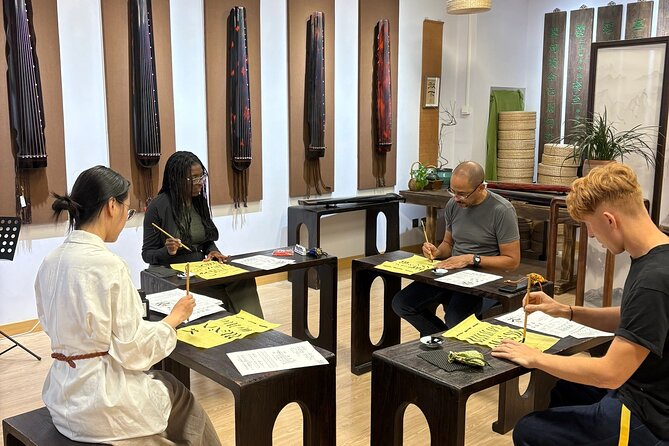
This is also where the small group matters. A teacher has a better chance of helping you with posture, brush pressure, and the order of strokes when there are only a few people in the room. The workshop is not described as a formal language lesson, so do not expect to read Chinese fluently afterward. You should expect a hands-on introduction to writing and meaning.
Traditional clothing is available for the ritual and photographs. It adds a visual layer to the calligraphy session and may make the final picture more distinctive. Still, the clothing is an optional enhancement to the cultural setting, not the main reason to book. The strongest part is the chance to understand and create something rather than pose beside a prop.
A few more history tours around China worth a look
- Beijing: Badaling Ancient Great Wall of China Day Trips
★ 4.8 · 208 reviews - Beijing Historical Tour II including Summer Palace, Lama Temple & Panda Garden
★ 4.0 · 187 reviews - Beijing Historical Tour I – Forbidden City, Tiananmen Square & Temple of Heaven
★ 4.0 · 120 reviews - BusDa-Ancient Great Wall &Badaling Great Wall Full-day Bus Tour
★ 5.0 · 56 reviews
A small group changes the feel
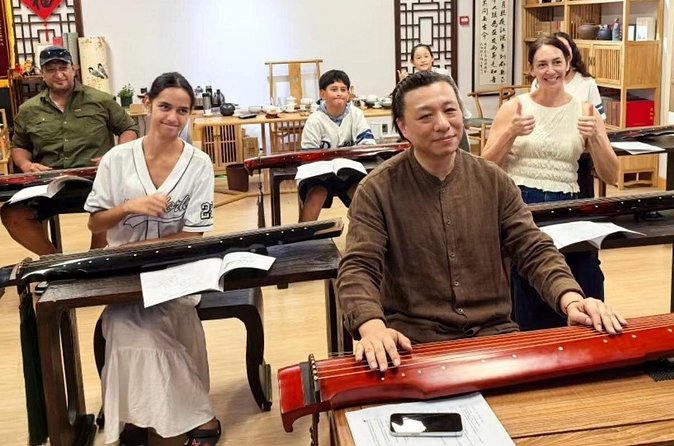
The maximum group size is eight people. That number is worth noting because it shapes the entire afternoon. A large class would make the Guqin practice harder to manage and would turn calligraphy into a demonstration. A small group allows more room for questions and correction.
The atmosphere is described as peaceful, private, and carefully arranged. Several accounts focus on the calm of the room, especially the combination of warm tea and live Guqin music. One person who had lived in China for three years considered it among the most authentic cultural activities they had experienced there. That is a strong endorsement of the setting, though authenticity is difficult to measure and depends on what you want from the day.
The experience is also suitable for beginners. You do not need prior knowledge of tea, music, or Chinese writing. The instruction is designed to make the traditions understandable, and the English-speaking guide helps bridge the cultural gap.
I would be more cautious if you are traveling with very young children who need constant movement. The information says most people can participate, but it does not provide a specific minimum age or children’s program. The quiet pace and careful handling of instruments and tea may suit older children better than restless toddlers.
What the $78.60 price really covers
At $78.60 per person, this is not a bargain activity in the usual Beijing sense. You can see major sights for less, and a simple tea stop costs far less. The price makes more sense when you consider what is bundled into the session: a tea ceremony and tasting, live Guqin music, personal instrument instruction, calligraphy guidance, traditional clothing rental, tea snacks, and an English-speaking cultural guide.
The national-level artists are another part of the value. You are paying for access to skilled practitioners in a small private setting, not just admission to a performance hall. That does not guarantee that every minute will feel equally significant, but it gives the experience a level of personal attention that a standard show cannot offer.
I would book it if you have already seen several major Beijing sights and want a quieter change of pace. It is also a good choice if you value learning a skill, meeting cultural practitioners, and taking home your own calligraphy. The price is harder to justify if you only want a quick photo opportunity or a general introduction to Chinese culture.
The activity is usually booked about 51 days ahead. That suggests you should not leave it until the last moment if it is important to your schedule, particularly because the group is small and confirmation depends on availability.
Getting to 813 Creative Park
The meeting point is 813 Creative Park, listed at VGP3+CCX in Chaoyang, Beijing, postal code 100124. Transportation to and from the venue is not included, so you need to arrange your own route and allow time to find the exact meeting point.
The venue is near public transportation, which helps, but the details supplied do not identify a particular station, bus route, or pickup service. Check the confirmed booking information carefully before setting out. A private venue inside a creative park may not be as obvious as a major museum entrance.
The activity ends back at the same meeting point. That makes it easier to plan the next stop, but you should not assume that a return transfer is provided. Build your onward transport into your schedule.
The experience is mobile-ticketed, and confirmation is sent within 48 hours of booking when space is available. Keep the ticket accessible on your phone. You should also arrive ready for a calm, hands-on session rather than treating this as a quick stop between distant attractions.
The drawbacks worth considering
The strongest weakness is the limited amount of practical detail about the precise running order and individual lesson time. You know the three core activities, but not the exact minutes assigned to each. If you want a tightly timed workshop, ask for the detailed schedule after confirmation.
The venue is described as peaceful and air-conditioned, but the experience also has a weather condition in its cancellation terms. If poor weather causes cancellation, you are offered another date or a full refund. Since the activity takes place indoors, that policy may feel surprising, so keep some flexibility in your itinerary.
The activity also requires a minimum number of participants. If that minimum is not met, the provider offers a different date or experience, or a full refund. This is worth remembering if you are planning the workshop on the last day of a short Beijing visit.
Finally, this is not a meal, a concert, or a full historical tour. It is a focused cultural lesson. The best results come when you arrive willing to listen and participate. The quiet style that makes the workshop special may feel too subdued if you want spectacle.
Who should book this experience?
I would recommend it to you if you enjoy small-group activities, traditional arts, and learning by doing. It fits couples, solo visitors, families with older children, and anyone who wants a thoughtful break from Beijing’s large monuments.
It is particularly well suited to people who have little background in Chinese culture. You can arrive knowing nothing about Guqin music or calligraphy and still take part. The English guidance and simple structure make the session accessible without reducing everything to a photo opportunity.
It may be less suitable if you dislike slow ceremonies, have mobility or scheduling concerns that require specific arrangements, or want a broad tour of Beijing’s history. The available information says service animals are allowed and most people can participate, but it does not provide detailed accessibility specifications. Contact the provider if you need more exact information.
Free cancellation is available up to 24 hours before the local start time. Changes or cancellations inside that window are not refunded, so protect yourself by checking the weather, meeting point, and transport plan early.
Should you book it?
Book this workshop if you want to touch Chinese culture instead of only looking at it. The strongest parts are the personal Guqin lesson, the chance to write and keep your own calligraphy, and the calm tea ceremony led by a high-level tea master.
At $78.60, it is a considered purchase, not an automatic add-on. I think it earns its price through the small group, expert instruction, private setting, and three-part format. Just plan your own transport, allow enough time to reach 813 Creative Park, and accept that the rewards come from patience rather than spectacle.
FAQ
How long does the Beijing culture experience last?
The activity lasts approximately 2 hours and 30 minutes.
What activities are included?
The experience includes a traditional tea ceremony and tasting, a live Guqin performance, a hands-on Guqin lesson, Chinese calligraphy instruction, traditional outfit rental, tea snacks, and bilingual guidance.
Where does the experience begin and end?
It begins and ends at 813 Creative Park in Chaoyang, Beijing, at the listed location VGP3+CCX, postal code 100124.
Is transportation included?
No. Transportation to and from the venue is not included, although the meeting point is near public transportation.
How many people can join the activity?
The activity has a maximum of eight participants.
Do I need previous experience in tea, Guqin music, or calligraphy?
No previous experience is stated as necessary. The activity is designed as guided, hands-on instruction for people who want to learn about these traditions.
Is the activity guided in English?
Yes. A bilingual guide provides the English guidance, with a background in Chinese philosophy and history and a master’s degree in History and Sociology.
Are meals included?
Meals are not included. Tea snacks are provided, but you should arrange any other food yourself.
What is the cancellation policy?
You can cancel up to 24 hours before the local start time for a full refund. Cancellations or changes made less than 24 hours before the start are not refunded or accepted. If the provider cancels because of poor weather or insufficient participation, you are offered another date or experience, or a full refund.
Just added around China
- Dazu Ancient Rock Carvings Private Tour Extension★ 5.0 · 24 reviews
- Leshan Giant Buddha and Huanglongxi Ancient Town Day Trip★ 4.5 · 45 reviews
- BusDa-Ancient Great Wall &Badaling Great Wall Full-day Bus Tour★ 5.0 · 56 reviews
- 2-Hour Beijing Private Forbidden City Tour: History & Highlights★ 5.0 · 28 reviews
- 3-Day All-Inclusive Beijing Private Tour: Top Sights+Peking Duck★ 5.0 · 28 reviews
- 2-Hour “Ancient & Modern” Beijing Sidecar Tour (Day /Night)★ 5.0 · 36 reviews
- Shenzhen History , Culture & Scenic + (Drone Delivery) tour★ 5.0 · 26 reviews
- Hong Kong Heritage – Past to Present★ 4.6 · 22 reviews
Local Culture & Traditions Tours, compared.

Amsterdam Food and Cultural Tour with Tastings
Read our review →
Sevilla Food Tour: Tapas, Wine, History & Traditions
Read our review →
Tromsø: Reindeer Camp and Sami Cultural Tour with Lunch
Read our review →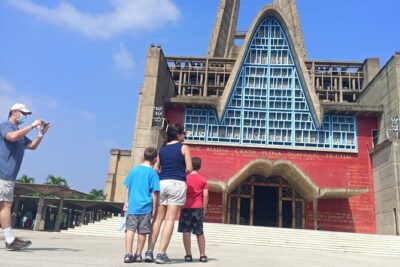
Half Day Dominican Republic Cultural Tour : Small Group
Read our review →
Ultimate Melbourne Walking Tour: History, Laneways & Culture
Read our review →
Tromsø: Sámi Reindeer Sledding and Sami Cultural Tour
Read our review →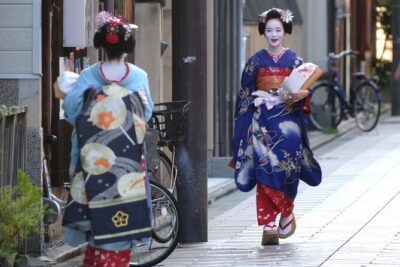
Kyoto Gion: 2-Hour Geisha Culture & History Walking Tour
Read our review →
Marrakech Historical and Cultural Tour – Half Day City Tour
Read our review →Browse the lists this tour appears in