
Review · SOUTH OF FRANCE
Toulouse Food & History Tour with a Chef (in English)
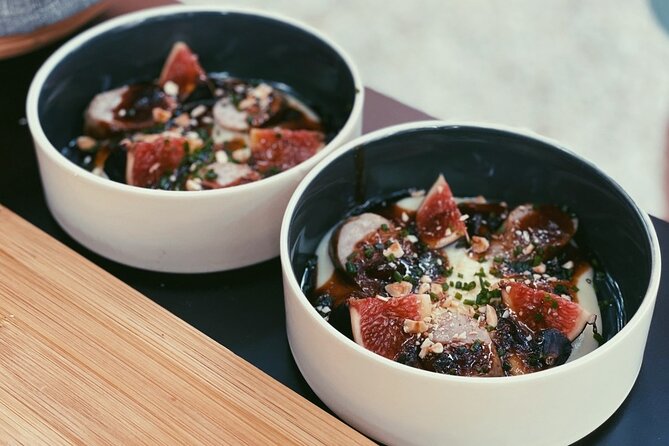
Food can make a city’s past easier to remember. This four-hour Toulouse walk pairs historic sights with regional cooking by trained chef Alejandro, also called Alex, who prepares some dishes from a bicycle cart. I especially like the way each tasting connects to a place and story, and I like the generous portions of local food, including Porc Noir de Bigorre charcuterie, Toulouse sausage, cheese, wine, and old-fashioned pastries. The main drawback is that the experience is outdoors, weather-dependent, and not designed for children under 12 or people with mobility impairments.
This is not simply a march from one snack shop to another. You move through central Toulouse while Alex explains architecture, politics, religion, aviation, and food. In cooler or windy weather, fewer dishes may be cooked on the cart, so the exact format can change, but the tastings continue through specialist shops, markets, and prepared samples.
Key points at a glance
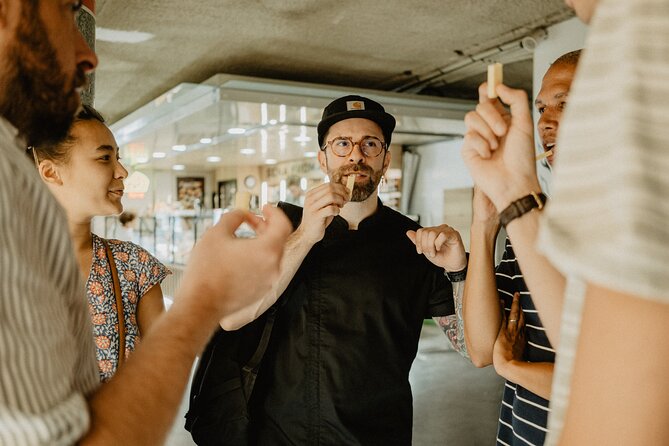
- Chef-led cooking on the move: Alejandro prepares selected regional dishes from his bike cart rather than relying only on ready-made food.
- Seven historic stops: The route links Hôtel d’Assézat, the Garonne, the Jacobins, Place du Capitole, Place Saint-Georges, Victor Hugo Market, and Saint-Sernin.
- Food with a reason behind it: Each tasting connects to a Toulouse story, from a devastating city fire to the rise of Airbus.
- A serious cheese stop: Victor Hugo Market includes artisanal and local cheeses paired with wine.
- A filling four hours: The food is generous enough to function as a substantial part of your day, not just a few tiny bites.
- Best for adults who enjoy walking: The tour suits food lovers, history fans, and first-time visitors who can stay on their feet outdoors.
Why this Toulouse tour feels different
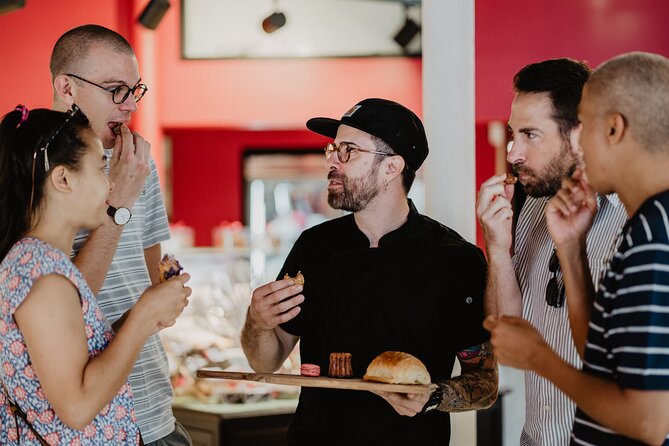
Many city food walks take you to a bakery, a market stall, and a restaurant, with a guide adding facts between bites. This experience reverses the balance. The city’s stories shape the food stops, and the food helps you remember the stories.
That approach works well in Toulouse. The city has several historical layers, and the route moves from Renaissance wealth to religious conflict, political drama, aviation, and modern market life. Alex uses local dishes as shorthand for those changes. A sweet pastry is not just dessert. A sausage is not just lunch. Each one is tied to a place, a period, or a local custom.
I also like the personal touch of having a trained chef as your guide. Alex is not presented as a historian who happens to know where to buy snacks. He talks about food, prepares some of it, explains ingredients, and gives restaurant advice along the way. That makes this a useful first activity in Toulouse, since you can use his recommendations for the rest of your stay.
The route is in English, and the tone appears friendly rather than formal. Alex has been praised for making the experience engaging, funny, and easy to follow. You should still expect a walking tour, not a seated cooking class. The cooking is part of the route, and the city remains the main setting.
More Food Tours in France:
- Toulouse Food & History Tour with a Chef (in English)
★ 5.0 · 503 reviews - Avignon: Historic District Guided Food & Wine Walking Tour
★ 4.8 · 84 reviews - Amsterdam Food and Cultural Tour with Tastings
★ 5.0 · 4,315 reviews
Starting at Hôtel d’Assézat and the Bemberg Foundation
The meeting point is in front of Hôtel d’Assézat, home of the Georges Bemberg Foundation. This is a strong place to begin because the building itself introduces Toulouse’s prosperous Renaissance period.
Alex explains how wealthy families in the sixteenth century made enough money to build grand private mansions. You get the architectural setting before the first tasting, which gives the opening snack a clear connection to the city’s merchant past.
The listed visit is scheduled for about 30 minutes. You should not expect a full museum visit or an extended tour of every room inside the Bemberg Foundation. The focus is the building, its owners, and the story of Toulouse’s private mansions.
The food here is one of the city’s best-known baked goods. The exact item can vary with shop hours and season, but this first stop sets the pattern: a historic site, a compact story, and something local to eat. Arrive ready to walk and hungry enough to appreciate the food, since the portions later in the tour are described as generous.
Quai de la Daurade and the fire that changed Toulouse
From the old mansion district, the route reaches Quai de la Daurade beside the Garonne River. This is one of the prettiest pauses on the walk, but it is also a serious history stop.
Alex explains the great fire that destroyed about 85 percent of Toulouse in the fifteenth century. The disaster changed the city’s architecture, and the discussion helps you understand why some buildings use different materials and styles than you might expect in an old French city.
The river views give you a natural break from the tighter streets of the center. You also receive a sweet item from the city’s oldest pâtisserie. The contrast is part of the fun: a destructive event in Toulouse’s past paired with a small, polished pastry in the present.
The route remains outdoors, so this is one place where weather matters. A windy day can make it harder to linger by the river, and the experience does not operate in rainy conditions. Bring an umbrella as a precaution, but do not assume the tour will run if rain is forecast. The operator may reschedule or cancel with a full refund.
The Jacobins and the older religious Toulouse
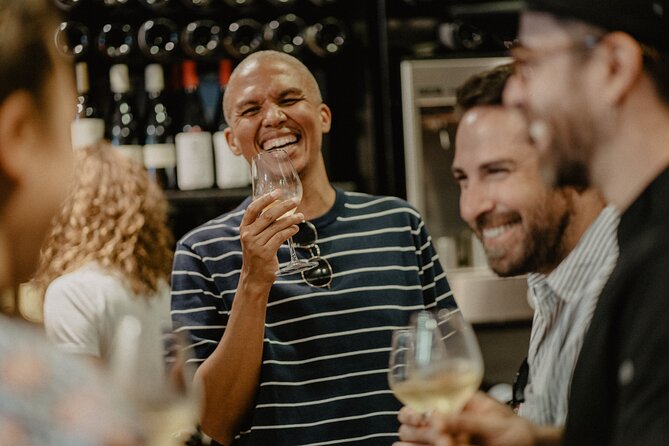
The itinerary includes the Church of the Jacobins, while the detailed stop list also refers to the Tour de Serta, the oldest timber-frame house in Toulouse, built in 1533 for Capitoul Pierre de Serta. The exact order can change with opening hours, the day of the week, and the season.
The Jacobins stop adds a religious and architectural layer to the walk. It also keeps the route from becoming only a parade of food shops. You are given time to look at an important Toulouse landmark while Alex connects the site to the city’s earlier religious life.
The timber-frame house offers a different kind of historical evidence. Instead of grand stone construction, you see an older domestic building tied to a named civic official. That contrast helps explain how Toulouse looked beyond its wealthy mansions and major churches.
Food is included during the scheduled stops, but the exact dish is not fixed in every location. That flexibility is useful for a small food business working around shop hours, though it means you should not book this expecting a rigid menu with every item guaranteed in advance.
A few more history tours around France worth a look
- Paris: Louvre Museum Entry with History of Mona Lisa
★ 3.9 · 2,823 reviews - Paris: Dark History and Ghostly Guided Walking Tour
★ 4.7 · 1,000 reviews - Vieux Lyon Cultural & Historical Walking Guided Tour (English)
★ 5.0 · 942 reviews - Bordeaux: Historic Center & Chartrons District Bike Tour
★ 4.8 · 709 reviews
Place du Capitole and Toulouse’s aerospace story
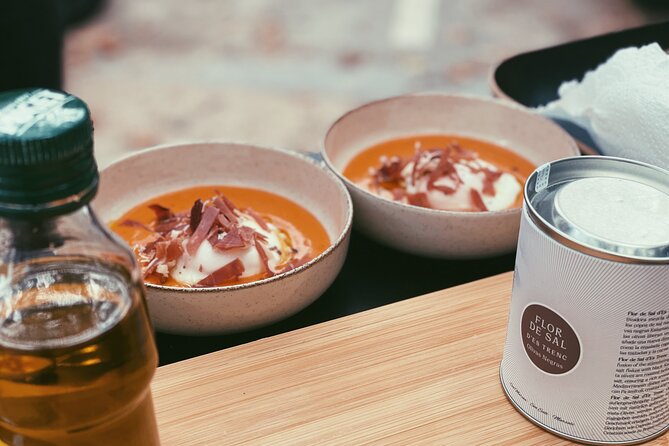
Place du Capitole is the city’s grand civic center and one of the most recognizable sights on the route. Here the subject shifts from medieval and Renaissance Toulouse to aviation.
Alex explains how Toulouse became a major European aerospace center and the headquarters of Airbus. This is a valuable addition because many visitors see Toulouse as an old southern French city and miss its modern industrial identity.
The tasting at this stop is a local charcuterie product. It is made with Porc Noir de Bigorre AOP, a protected regional pork associated with the southwest. You get a taste of the area’s food culture in a form that travels well and does not require a full restaurant stop.
This is also where the tour’s broad range becomes clear. In one morning or afternoon, you move from old private wealth to religious history, city government, and aerospace. The food keeps the changes from feeling like a standard monument lecture.
Place Saint-Georges and the true Toulouse sausage

Place Saint-Georges brings in a political story involving a wrongful execution in the eighteenth century. Alex explains how this event affected the country’s political future after the Revolution.
The subject is heavier than the pastries and charcuterie, but that mix is typical of the tour. Toulouse’s past is not treated as a list of cheerful anecdotes. You hear about disaster, injustice, religion, wealth, and industry, with food used to make each story more tangible.
The tasting here centers on la véritable saucisse de Toulouse, the local sausage that gives the city one of its best-known food symbols. This is likely to be one of the more filling portions, especially when combined with the charcuterie and other samples.
One practical point: the tour includes food at several stops, but it does not promise a long sit-down restaurant meal. One participant specifically wished for a restaurant stop with time to rest. If you want a leisurely lunch with a table, a drink, and a slower pace, plan that separately after the tour.
Victor Hugo Market, cheese, wine, and a changing city
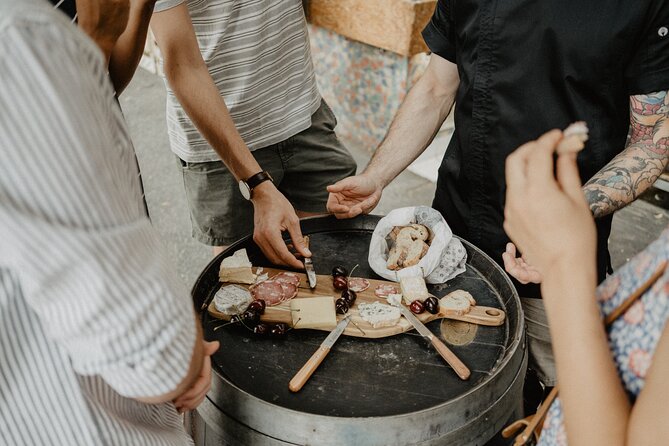
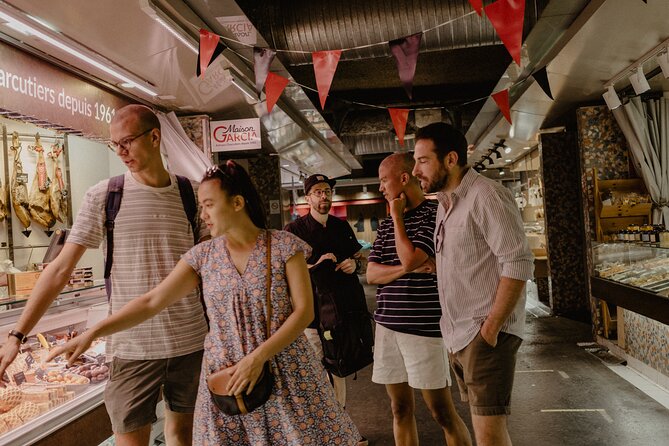
The Victor Hugo Market is the longest stop, at about one hour. It is also the best place to understand how Toulouse’s food culture works today.
Alex traces the site’s past from a medieval rampart to an art nouveau market and later to a concrete brutalist car park. That sequence makes the location more than a place to buy cheese. It shows how the city keeps rebuilding familiar public spaces for new needs.
Here you taste cheese and wine together, with an emphasis on artisanal and hyperlocal products. This is particularly useful if French cheese feels confusing. You can ask questions about style, texture, and pairing while tasting rather than trying to decode a large cheese counter on your own.
The market stop is also a natural point for the tour’s strongest food lesson. French food is not one uniform tradition. Local products vary by region, and southwest France has its own pork, sausage, dairy, pastry, and wine habits. Alex helps put those foods in their proper place.
You should expect a public market rather than a private dining room. It may be busier than the quieter historic squares, and the pace can depend on vendors and opening hours. Still, the hour gives you more breathing room than the shorter stops and helps keep the tour from feeling rushed.
Saint-Sernin and the ancient pastry finale
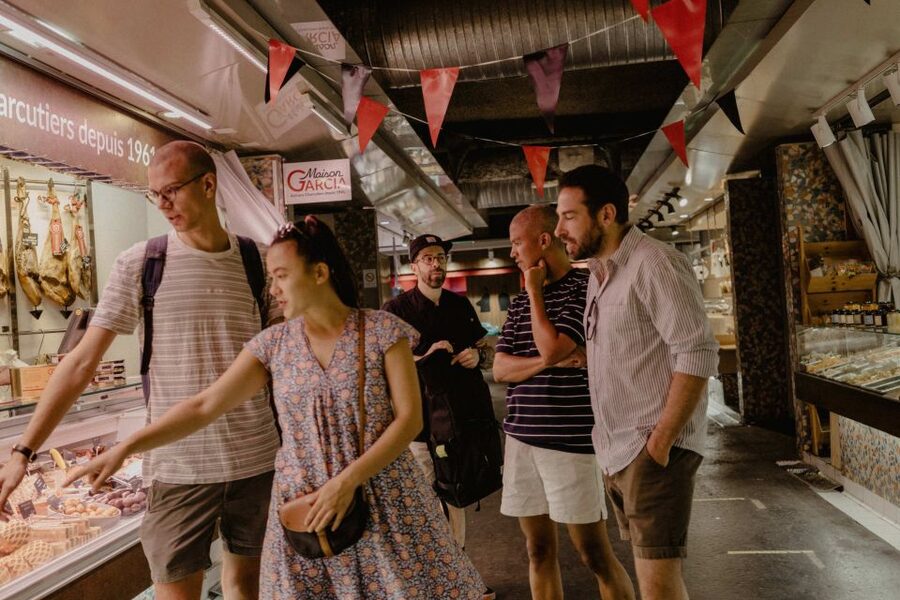
The tour ends at the Basilica of Saint-Sernin, one of Toulouse’s major religious monuments. Alex tells the story of the city’s first Christian, who opposed the Roman Empire. The stop brings the route back to the ancient world and the early Christian period.
The final food is the city’s most famous dessert, described as a cake with a recipe more than 2,000 years old. The claim gives the ending a memorable sense of age, and the sweet finish works well after the savory sausage, charcuterie, cheese, and wine.
Saint-Sernin is also a practical endpoint. You finish in a central part of Toulouse rather than returning to the starting mansion. That gives you a useful base for continuing on foot, visiting nearby sights, or finding a separate meal if you still have room.
The full experience is advertised at four hours, while the outdoor journey is also described as roughly three and a half hours. Allow four hours in your schedule. The stops are usually planned in approximately 30-minute blocks, with Victor Hugo Market receiving about an hour.
What the food is really like
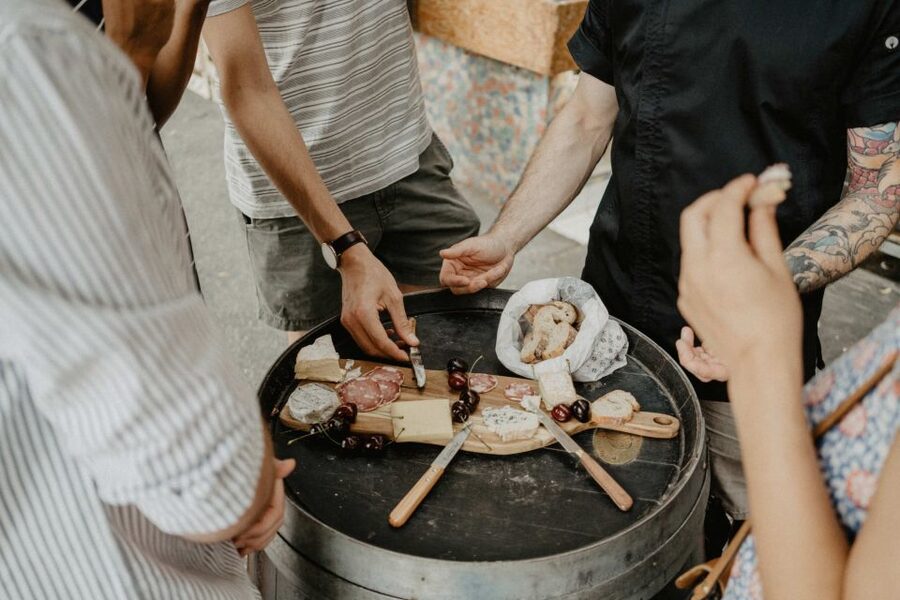
The appeal is not just the number of samples. It is the combination of prepared food, specialist-shop products, and dishes made by Alex.
In warmer months, he may cook more from the bicycle cart. In a windy or low-season period, he may cook only one dish and use restaurant or shop-prepared items for the rest. That is worth knowing if the live cooking is your main reason for booking.
The food is described as filling rather than decorative. Expect a progression that may include:
- A famous Toulouse baked good
- A sweet from the city’s oldest pâtisserie
- Porc Noir de Bigorre charcuterie
- A dish based on Toulouse sausage
- Local cheese with wine
- The ancient Toulouse cake
Exact samples can change with season and opening hours. The important promise is that you receive food and drink throughout the route, with regional recipes and products tied to the places you visit.
Is $129 a fair price?
At $129 per person, this is not a cheap snack walk. The value depends on what you want from a city tour.
You are paying for four hours, an English-speaking guide, food and drink samples, chef-led preparation, and a history tour covering much of central Toulouse. You are also getting a food education that would be difficult to assemble on your own, especially the cheese and wine pairing and the explanation of regional pork products.
I think the price is reasonable for visitors who would otherwise book both a history walk and a separate food experience. It is less attractive if you mainly want a large sit-down meal or a low-cost introduction to the city.
The generous portions help. Several people found the food substantial enough that they were not simply nibbling between monuments. Still, budget for another meal later if you have an early tour or a long evening ahead. The tour offers tastings, not a guaranteed restaurant lunch.
Who should book this experience?
I would choose this tour if you are visiting Toulouse for the first time and want your orientation to include food. It is also a good fit for people who like architecture and political stories but do not want a dry lecture.
Food-focused visitors should appreciate the attention to local ingredients, especially Porc Noir de Bigorre, Toulouse sausage, artisanal cheese, and traditional pastries. Chefs and serious home cooks may get extra value from Alex’s explanations and preparation style.
The experience suits adults and older teenagers, but children under 12 cannot join. It also requires walking through the historic center and standing outdoors at several stops, so it is not suitable for people with mobility impairments.
Solo visitors should note the minimum of two participants. If no other booking joins the date, the operator may contact you about moving to another day. That is a useful policy to understand before you build a tightly timed itinerary.
Wear comfortable clothes and shoes. Check the weather closely, and keep your schedule flexible if rain is possible. The tour does not operate in rainy conditions, and the route has no indoor alternative described.
Should you book the Toulouse Food and History Tour?
Book it if you want Toulouse explained through both its buildings and its table. Alex’s strongest contribution is the link between the two. The food gives the history a local flavor, while the stories keep the tasting stops from becoming a simple list of snacks.
I would book it near the beginning of a Toulouse visit so you can use the restaurant tips, market knowledge, and neighborhood orientation afterward. I would skip it only if you dislike walking, need a fully seated meal, or want a fixed menu with guaranteed live cooking at every stop.
For most adult food and culture enthusiasts, the combination is worth the $129 price. You get a serious introduction to Toulouse, plenty to eat, and a guide who treats the city’s food as part of its history rather than an afterthought.
FAQ
How long is the Toulouse Food and History Tour?
The experience lasts about four hours. The outdoor journey is also described as approximately three and a half hours, so you should reserve four hours in your schedule.
What language is the tour conducted in?
The live tour guide speaks English.
Where does the tour start?
It starts in front of Hôtel d’Assézat, which is also associated with the Georges Bemberg Foundation.
Where does the tour finish?
The tour finishes at the Basilica of Saint-Sernin in Toulouse.
What food and drink are included?
Food and drink samples are included. Samples may include Toulouse baked goods, pastries, Porc Noir de Bigorre charcuterie, Toulouse sausage, local cheese, wine, and the city’s ancient cake. The exact selection can change with season, shop hours, and the day of the week.
Does the chef cook during the tour?
Chef Alejandro cooks selected dishes from his bicycle cart. The amount of cooking can vary with the season and weather. In windy or low-season conditions, some food may instead come from restaurants or specialist shops.
What should I bring?
Wear comfortable clothes and bring an umbrella and a passport or ID card.
Can children or people with mobility impairments join?
Children under 12 and people with mobility impairments are not suitable for this experience.
Just added around France
- History and Van Gogh in Provence from AIX-EN-PROVENCE★ 4.5 · 24 reviews
- Gourmet & Cultural Tour Aix En Provence English / Espanol★ 5.0 · 88 reviews
- The historic district of Montmartre★ 4.9 · 66 reviews
- Strasbourg: Historic Center Walking Tour★ 4.7 · 88 reviews
- Small Group Guided Tour of the Secret History of Rouen★ 5.0 · 24 reviews
- Rouen: Historic Guided Tour of the Old Town★ 5.0 · 41 reviews
- Paris: Fashion History Walking Tour in the Heart of Paris★ 4.9 · 22 reviews
- Paris: Khéops VR Experience – Explore Ancient Egypt★ 4.9 · 39 reviews
France History Tours, compared.
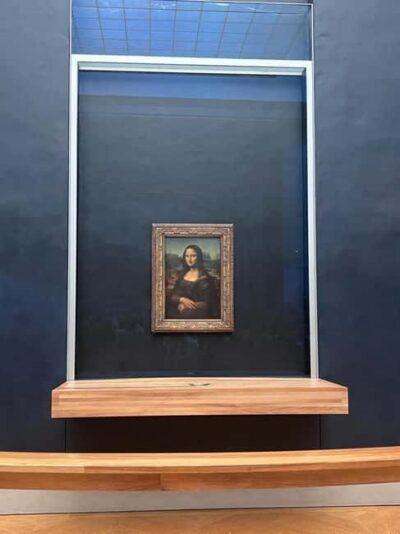
Louvre Museum Entry with History of Mona Lisa
Read our review →

Vieux Lyon Cultural & Historical Walking Guided Tour (English)
Read our review →
Bordeaux: Historic Center & Chartrons District Bike Tour
Read our review →
From Strasbourg: Best Of Alsace Historical Day Trip
Read our review →
Toulouse Food & History Tour with a Chef (in English)
Read our review →
Notre Dame Cathedral: Exterior Guided Tour & Unscheduled Access
Read our review →
Browse the lists this tour appears in