
Review · FIFE
St Andrews: Town, Golf, and Old Course History Tour
Golf’s birthplace has plenty beyond golf. This 105-minute walk links St Andrews’ university, cathedral ruins, royal stories, and Old Course in one tidy route. I like the way it joins the town’s past to the game’s development, and I especially like the final photo stop on the Swilcan Bridge. The tour costs $27 per person, which is fair for a live guide and a focused introduction to several major sights.
The main caution is the pace and walking. You cover much of St Andrews on foot, and one recent visitor found it hard to keep up when the guide walked quickly and spoke fast. You also need fluent English, comfortable shoes, and weatherproof clothing. This is not a good fit for wheelchair users, people with mobility limits, or anyone bringing a stroller, scooter, golf clubs, or large luggage.
Key points before you book
- A golf tour with a wider story: You learn how golf developed in St Andrews, but also hear about the university, royal connections, religious history, and town life.
- The cathedral graveyard matters: The grounds contain the graves of golfing figures including Old and Young Tom Morris, Allan Robertson, and Jamie Anderson.
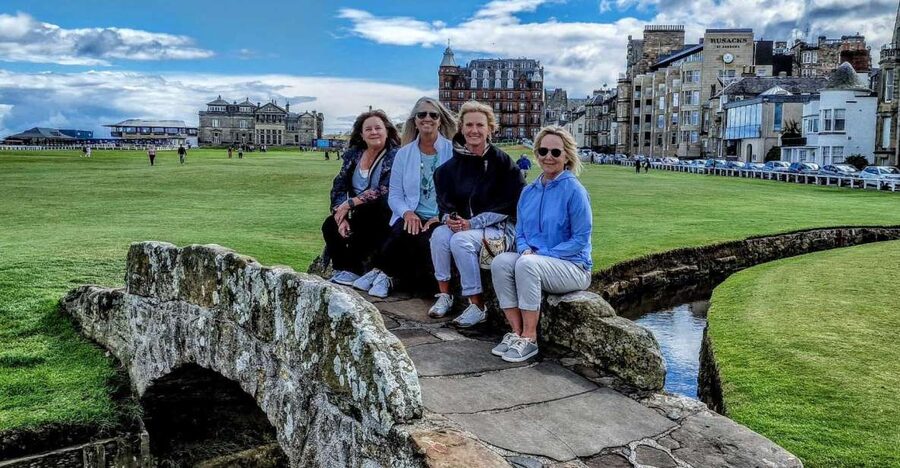
- The Old Course finish is the prize: You walk near the 1st tee, 18th green, and first fairway, then finish with photos on Swilcan Bridge when tournament activity allows.
- Guides bring local depth: Richard is praised for clear explanations, humor, personal stories, and local knowledge. Jim has also led tours.
- You must arrive early: The meeting point is outside T-Squared Social on North Street, and the tour will not wait, even for a short delay.
- Non-golfers can enjoy it: The town, university, cathedral, and royal stories keep the tour useful even if you do not know a birdie from a bogey.
Starting at T-Squared Social on North Street
Meet your guide outside the main entrance of T-Squared Social at 117 North Street. Arrive early. This is not a casual drop-in walk, and missing the start can mean losing your place entirely.
The opening stop brings in modern St Andrews. You hear about the bar and restaurant linked with Tiger Woods and Justin Timberlake, along with a little about the Dunhill Championship. This gives the tour a useful starting point: St Andrews is not only an old university town or a golf museum. It is still tied to major names, sporting events, and international business.
The guide then sets out the basic idea behind the tour. Golf matters, but the town explains golf, and golf has helped shape the town. That connection is the thread running through the next hour and three quarters.
A few more history tours around the UK worth a look
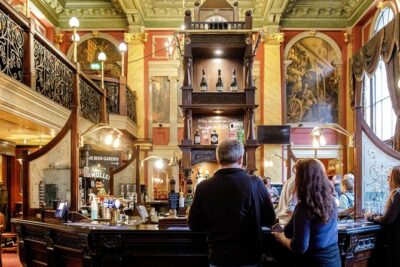
- London Small Group Tour of Historical Pubs
★ 5.0 · 10,422 reviews - Edinburgh: Edinburgh Castle Guided History Tour with Tickets
★ 4.8 · 9,933 reviews - A History of Terror – Belfast City Centre Walking Tour
★ 5.0 · 2,883 reviews
St Salvator’s College and the university story
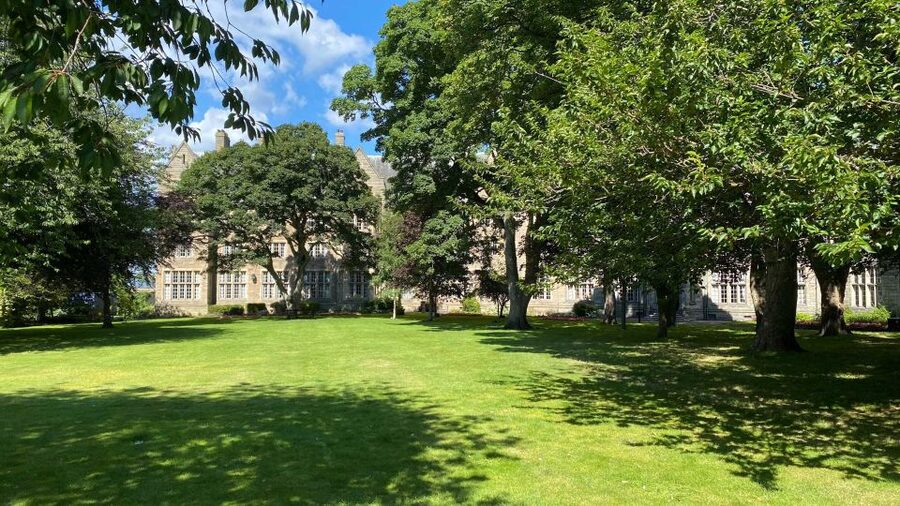
The walk continues toward St Salvator’s College, part of Scotland’s oldest university. The quadrangle and St Salvator’s Chapel bring a quieter, academic side of St Andrews into view.
This portion works well for people who came for the town rather than the sport. You hear about William and Kate, who met while students in St Andrews, and about the period when the television series The Crown came to town. These details add a modern layer to the university buildings, which might otherwise seem like attractive but distant old stone.
One strength of a walking guide here is context. You are not simply shown a college courtyard and told its name. The guide connects the buildings with the people who studied there, the town’s public image, and the way university life affects St Andrews today.
The route also includes a look inside one of the town’s less obvious sights. The exact stop can vary with access and timing, so do not expect an extended indoor visit. Still, that small change of scene helps break up the outdoor walking.
Cathedral ruins and the golfers in the graveyard

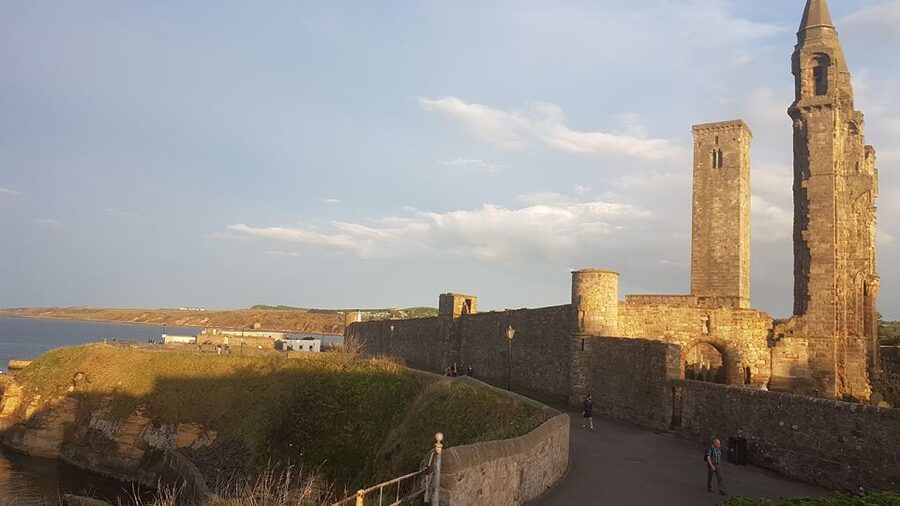
St Andrews Cathedral was once one of Scotland’s most important religious centers. Today, its broken walls and open grounds show the scale of a place that once held major religious power.
The cathedral grounds are also central to the golf story. Around 124 noted golfers are buried here, including several names that matter greatly to the game:
- Old Tom Morris
- Young Tom Morris
- Allan Robertson
- Jamie Anderson
The guide explains why these people are important rather than treating the graves as a list of names. Old and Young Tom Morris, in particular, connect the development of golf with the practical world of club making, course work, competition, and professional play.
Allow yourself a little patience here. The tour schedule is fixed, so this is not a long cemetery visit, and one person wished for more time among the graves. If you have a strong interest in golf’s early figures, you may want to return later and explore the grounds at your own speed.
The cathedral is also a useful reminder that St Andrews was important long before modern championship golf. The ruins show the town’s religious authority, while the graves show how the same ground later became part of golf’s local memory.
Passing St Andrews Castle and the Bishop’s Palace
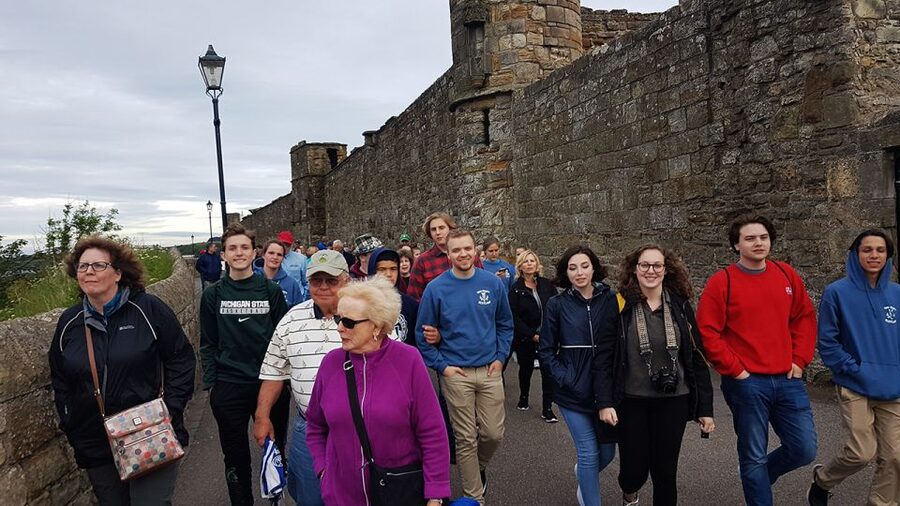
The route takes you past St Andrews Castle, with time for photographs and views along the way. You do not receive a full castle tour, so keep your expectations clear. This is an exterior sighting within a longer walking route, not a dedicated visit inside the castle.
You also see the remains of the Bishop’s Palace. Its ruined walls point to the wealth and power once held by Catholic church leaders in Scotland. That makes this section more than a quick photo stop. It places St Andrews in the national story of religion, politics, and changing power.
The walk between the cathedral area and the coast-facing part of town gives the tour some visual variety. You move from grave markers and medieval ruins to university buildings and Victorian architecture. The guide keeps bringing the conversation back to golf, but not so often that the rest of St Andrews becomes background scenery.
Same place, a different slice of the past:
- Edinburgh: Whisky Tasting with History and Storytelling
★ 4.9 · 2,451 reviews - Edinburgh: Old Town History and Tales Walking Tour
★ 4.8 · 2,361 reviews - Old Town Walking Tour History and Tales in Edinburgh
★ 5.0 · 2,168 reviews - Soho Music & Historic Pubs Tour
★ 5.0 · 1,993 reviews
The Scores, Victorian buildings, and royal student life
Along the Scores, you pass beautiful Victorian university buildings, the Principal’s House, and the residence where Prince William and Kate spent their first year as students.
This is one of the tour’s better sections for first-time visitors. You get attractive architecture, royal connections, and a sense of how compact St Andrews is. The town is easy to understand once you see the university, cathedral, castle, and golf links as parts of one walk rather than separate attractions.
The royal stories are presented as part of the town’s current identity, not as the whole reason to visit. That balance matters. You hear where William and Kate met and about the attention brought by The Crown, but the tour still spends most of its time explaining St Andrews itself and the history of golf.
Traffic and street noise can sometimes make the guide harder to hear. One visitor specifically wished the group had stopped more often because passing vehicles drowned out parts of the talk. Stay close, and do not hesitate to move nearer when the guide pauses.
Walking onto the Old Course
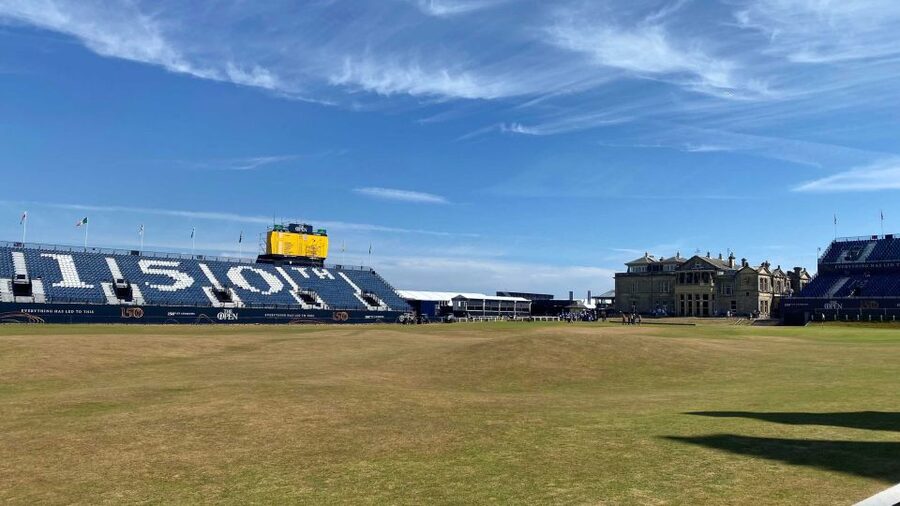
The final stretch heads toward the Old Course, the part most golfers will be waiting for. You hear how the Open Championship developed and how St Andrews became known as the Home of Golf.
The guide explains several details that are easy to miss when you simply look at the course. You learn about the odd features of links golf, why the course has 18 holes, and how the Old Course’s layout developed over time. The tour also points out the notable buildings around the links and recalls memorable moments from golf history.
You walk by the 18th green, the 1st tee, and the first fairway. Depending on conditions and golf activity, this can feel much more immediate than viewing the course from a distant path. You are close to the places seen during major tournaments, but you are not taking part in a formal playing lesson or a full inside-the-clubhouse visit.
An important safety point: the route goes by and across the 1st and 18th fairway. You do this at your own risk, and you must watch for golf balls when play is underway. Keep the group together and follow the guide’s instructions.
For golfers, the value here is obvious. You get the setting, the stories, and the physical relationship between the tee, fairway, green, and surrounding buildings. For non-golfers, the guide’s explanations help answer a basic question: why does this particular stretch of ground matter so much?
Finishing at Swilcan Bridge
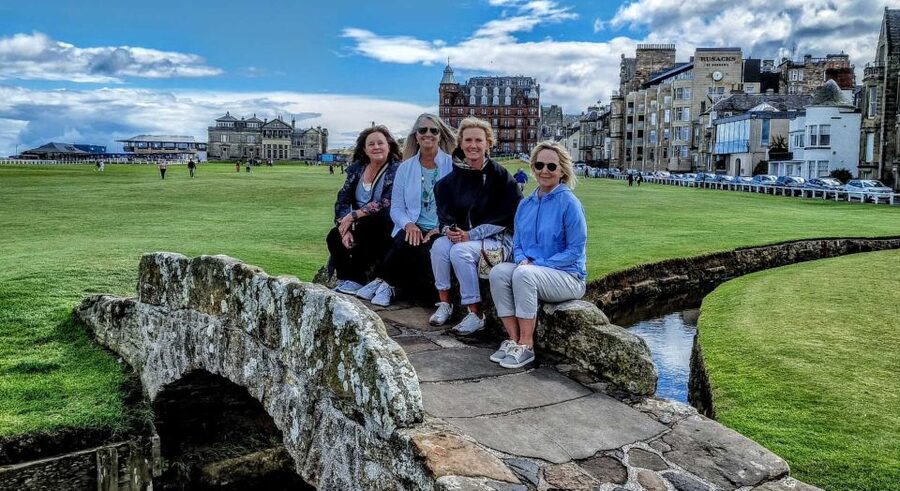
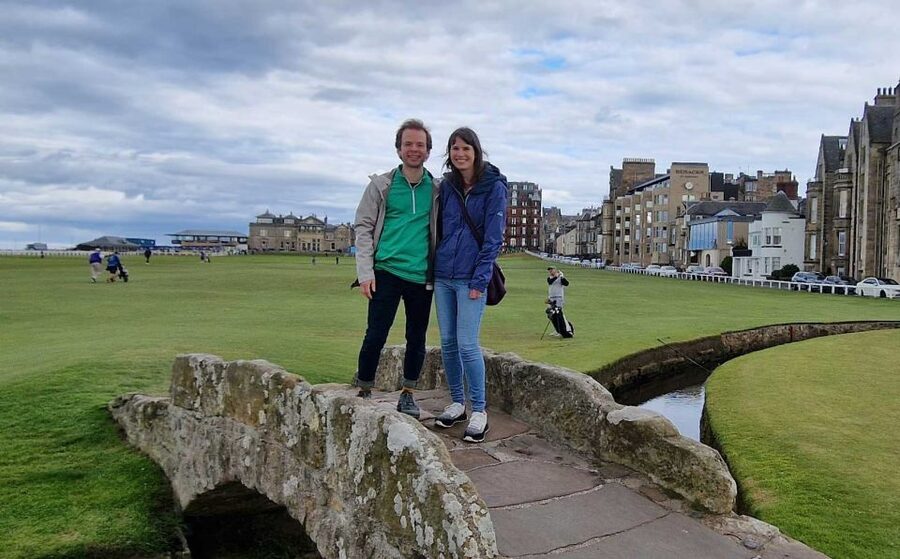
The tour ends at the Swilcan Bridge, the small stone bridge that has become one of golf’s best-known photo locations. You can have your picture taken there, except on tournament days when access or conditions may prevent it.
This is a simple finish, but it works. After hearing about the course’s development, you reach one of its most recognizable points and leave with a clear visual memory. Several outings have included a guide taking family or couple photographs, so ask the guide for help rather than relying only on a quick phone snapshot.
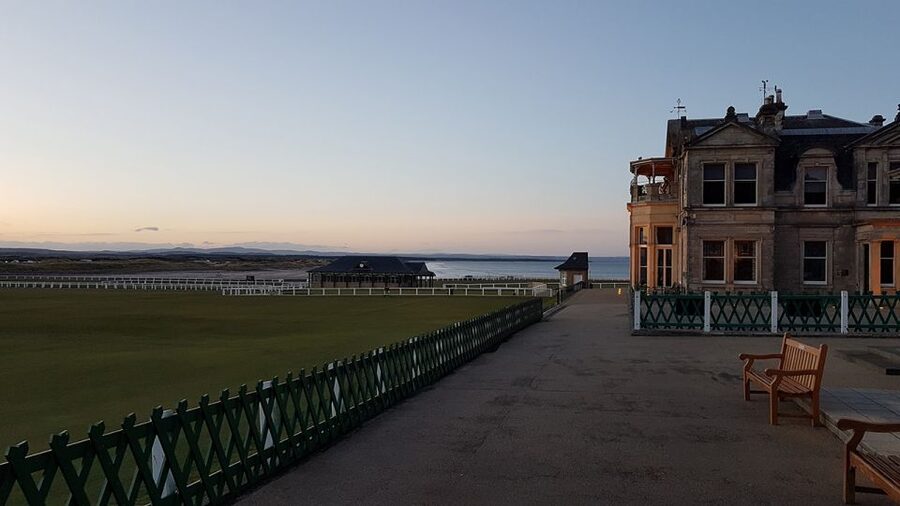
From the bridge, you can continue to the Jigger Inn or Old Course Hotel. Those stops are not included in the tour, but they offer a natural place to rest, look back toward the course, and enjoy the setting. One useful local tip is to consider the upstairs bar at the Old Course Hotel for views over the links.
How good is the guide?
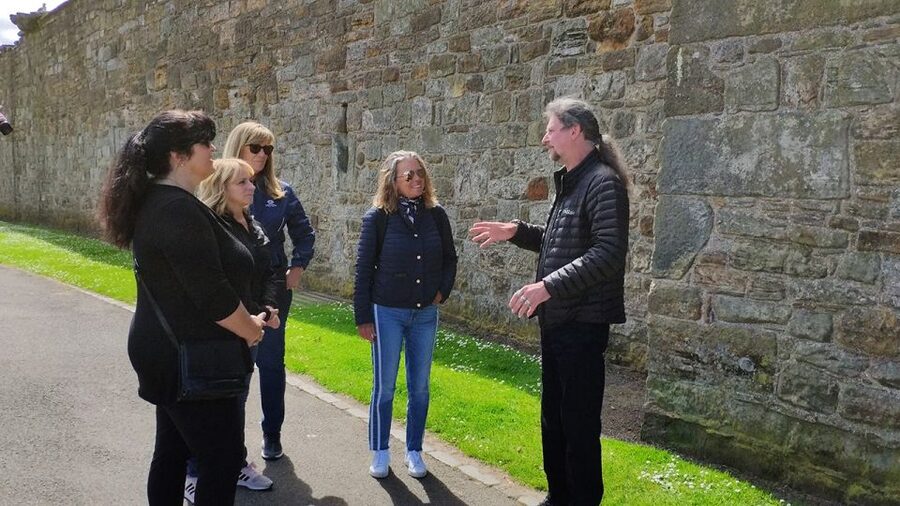
The guide makes a large difference here because the tour covers many subjects in a short time. Richard receives especially strong praise for his humor, clear voice, local experience, and ability to answer questions. He has also shared stories connected with playing and caddying around St Andrews, which gives the golf sections a personal touch.
Jim has also been praised for offering a large amount of golf and town history in an engaging way. Since the guide may vary, you should expect the tone to differ slightly from one departure to another.
The best guides adjust the depth to the group. If everyone wants golf detail, you can get more about course development and famous moments. If some people are less interested in the sport, the university, cathedral, royal, and local stories keep the walk moving.
There is one practical tradeoff. A large group can make it harder to hear, especially near traffic. One recent group had 13 people and found the pace and delivery difficult at times. Stay near the guide, and treat pauses as your chance to catch up and listen.
Value at $27 per person
At $27, this is a good-value orientation tour if you want several St Andrews highlights in one outing. You receive a 105-minute guided walk rather than just a short photo stop at the Old Course. The fee covers a professional historian guide and the golf-focused town route.
The value is strongest for first-time visitors. In less than two hours, you see or pass the university, chapel, cathedral, cemetery, castle area, Bishop’s Palace, Victorian university buildings, and Old Course. You also get explanations that help you understand how these places fit together.
The price is less compelling if you want extended time inside each attraction. You do not receive a full castle visit, a cathedral interior tour, or a formal Old Course playing experience. You are buying a guided introduction, not a collection of admission tickets.
I would book it near the start of your stay. It gives you useful bearings and points out places you may want to revisit, including the cathedral grounds, Old Course Hotel, or Jigger Inn.
Who should take this walk?
I recommend it for:
- Golf fans who want the story behind the Home of Golf
- Couples or families wanting a shared photo at Swilcan Bridge
- Non-golfers who enjoy university towns, ruins, royal stories, and local history
- First-time visitors who want a clear introduction before exploring alone
- People comfortable walking outdoors for about two hours
I would skip it if you have serious mobility limits, use a wheelchair, need a walking frame, or are bringing a stroller or mobility scooter. The tour is also unsuitable for children under two, unaccompanied minors, and anyone who cannot follow an English-language explanation.
Children under 16 must be accompanied by an adult. Children under five are free, but the walk is not suitable for children under two.
Practical advice for a smoother outing
Wear comfortable shoes. The route covers a lot of ground, and St Andrews weather can change quickly, so bring clothing suited to the forecast.
Do not bring luggage, golf clubs, baby carriages, scooters, or similar items, because there is no storage during the tour. Assistance dogs are allowed, but pets are not.
Arrive early at T-Squared Social. If you are late, even by a minute, you may not be admitted, and there is no promise of a later departure that day. You can cancel up to 24 hours before the start for a full refund, and you can reserve now while paying later, which helps if your Scotland plans are still shifting.
The tour runs in English, and fluent English is essential. Speaking slowly or translating during the walk is not considered workable, so choose another format if you need regular language support.
Should you book the St Andrews golf history tour?
Book it if you want the Old Course with a proper sense of place. The tour does not merely point at famous golf locations. It ties the course to the university, cathedral, religious power, royal connections, and the people who helped shape the game.
I especially recommend it for mixed groups, where one person loves golf and another does not. The golf takes up a large share of the walk, but the town and university material give non-golfers plenty to enjoy.
Skip it if you need a slow, accessible route or want long visits inside individual attractions. For most able walkers, $27 buys a useful, entertaining introduction, and the Swilcan Bridge photo gives the outing a fitting final touch.
FAQ
How long does the St Andrews tour last?
The scheduled duration is 105 minutes.
Where does the tour begin?
Meet your guide outside the main entrance of T-Squared Social at 117 North Street, St Andrews, KY16 9AD.
Where does the tour finish?
The tour finishes at the Swilcan Bridge on the Old Course.
Is the Swilcan Bridge photo included?
You can have your photo taken at the bridge, except on tournament days.
Is this tour only for golfers?
No. The tour includes golf history but also covers the university, St Salvator’s College and Chapel, cathedral ruins, the Bishop’s Palace, the castle area, royal connections, and town history.
Is the tour offered in languages other than English?
No. The live guide speaks English, and participants need a fluent command of English.
Can children join the tour?
Children under 16 must be accompanied by an adult. Children under five are free, but the tour is not suitable for children under two.
Can I bring luggage, a stroller, or golf clubs?
No. There is no luggage storage for luggage, baby carriages, scooters, golf clubs, or similar items during the tour.
Is the tour suitable for people with mobility impairments?
No. The tour is not suitable for wheelchair users or people with mobility impairments, walking frames, crutches, or mobility scooters.
Just added around the UK
- Glasgow: The Magnificent and Mysterious History of Glasgow★ 4.9 · 302 reviews
- Chatham: The Historic Dockyard Chatham Annual Ticket★ 4.6 · 66 reviews
- St Andrews: 90-Minute Historical Walking Tour★ 4.8 · 23 reviews
- St Andrews: Golf Origins and Old Course History Tour★ 4.7 · 322 reviews
- Shadows of York: Ghost Walk and Horrible History.★ 4.8 · 333 reviews
- Oban: Historical Tour with Seafood Lunch Option★ 4.8 · 23 reviews
- Newcastle: History and Highlights Guided Walking Tour★ 5.0 · 18 reviews
- London: Self-Guided History City Tour with an App★ 4.3 · 21 reviews
UK History Tours, compared.
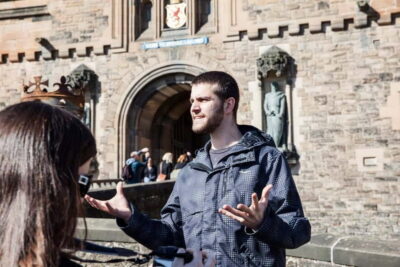
Edinburgh Castle Guided History Tour with Tickets
Read our review →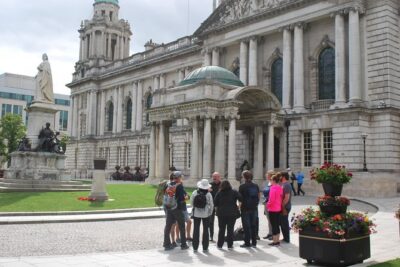
A History of Terror – Belfast City Centre Walking Tour
Read our review →
Old Town Walking Tour History and Tales in Edinburgh
Read our review →

Browse the lists this tour appears in