
Review · CUNDINAMARCA
Shared Tour of Bogota’s Historic Downtown (La Candelaria)
Bogotá’s past is written on every corner. This $13 walking tour packs La Candelaria’s major stories into about 150 minutes, from the city’s founding and Bolivar Square to El Bogotazo, chicha, street art, and the legacy of Simón Bolívar. I especially like the focus on both famous landmarks and everyday Colombian culture, including the Concordia market and the narrow El Embudo alleyway.
I also like the guides’ strong record for clear storytelling. Juliana, Lorenzo, Leo, Santiago, Byron, Lucho, Sergio, Juan, and others have earned praise for explaining history in a friendly, easy-to-follow way. The main drawback is physical: you may walk around 7 kilometers, including uphill sections at Bogotá’s high altitude, and groups can be large. One recent group had 36 people.
Key points to know before you go
- Bolivar Square brings Bogotá’s story into one view: See the cathedral, government buildings, the Palace of Justice, and other major structures while learning how the capital developed.
- El Bogotazo gives the tour its political weight: The 1948 riot is explained through the assassination of Jorge Eliécer Gaitán and the changes that followed.
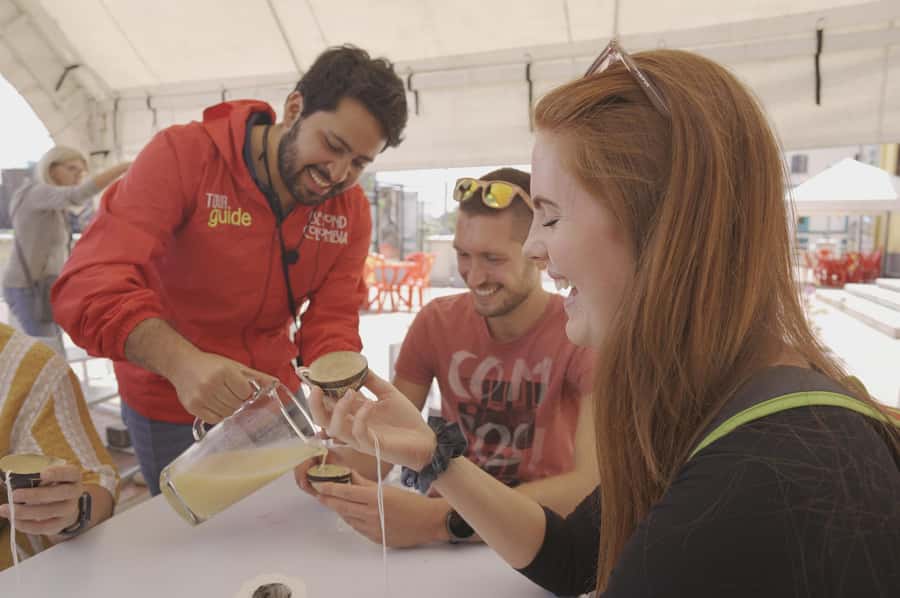
- Chicha connects the past with the present: You may taste this ancestral corn drink at or near the Concordia market when it is available.
- Seven kilometers is a serious walk: Comfortable shoes, water, sunscreen, and rain protection are not optional extras in Bogotá.
- Street art is treated as history, not decoration: El Embudo alleyway offers a look at local graffiti, technique, social protest, and identity.
- The guides are the biggest strength: The experience depends on who leads your group, but the available feedback repeatedly praises names such as Juliana, Lorenzo, Leo, Santiago, and Byron.
Starting beside the Museo del Oro
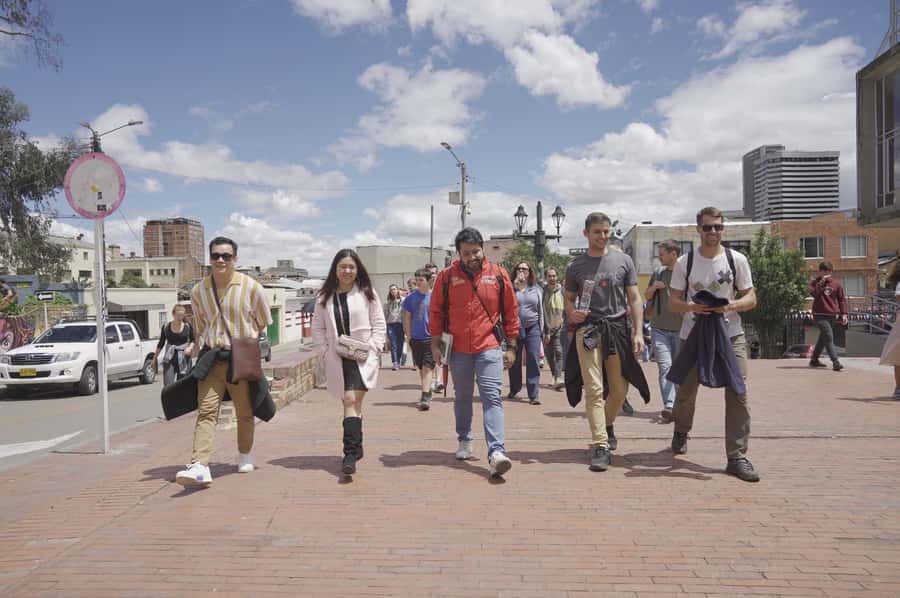
The meeting point is in front of the Museo del Oro, marked by Beyond Colombia’s red umbrellas. This is a sensible place to begin because you are close to the historic center and can reach La Candelaria on foot without arranging a taxi or private transfer.
You do not need to enter the museum for this tour. The important thing is to find the red umbrellas and arrive ready to walk. Since the group is shared, you will be touring with other English or Spanish speakers rather than with a private guide.
The price is listed at $13 per person, which is strong value if you want an introduction to Bogotá’s central sights and stories. You are not paying for museum admission, meals, transport, or a private guide. Instead, you are paying for a local guide, a planned route, explanations at the main stops, and practical recommendations for the rest of your visit.
The company also gives participants a wristband with possible discounts at recommended partner businesses. That may be useful for lunch, coffee, souvenirs, or other local purchases, though the value depends on which partners you choose.
More Old Town and Historic Centre Walks in Colombia:
- Cartagena: Historic Center and Getsemaní Shared Walking Tour
★ 4.9 · 2,716 reviews - Cali: Walking tour of the historic center
★ 4.9 · 18 reviews - Madrid Essential: Historic Center, Plaza Mayor & Royal Palace
★ 5.0 · 6,416 reviews
Walking into La Candelaria and Bogotá’s beginnings
The first part of the route places La Candelaria inside the larger story of Bogotá. You move through the period when the Spanish arrived and began building a new colonial city, then connect that past with Bogotá’s role as Colombia’s capital.
This is useful early in your stay because it gives names and meaning to streets you may otherwise see as a pleasant mix of old buildings, cafés, churches, plazas, and painted walls. The tour is not just a march between photo stops. It aims to explain how institutions, neighborhoods, food, religion, politics, and public space developed together.
You will also hear about the myth of El Dorado. That story is central to the way Colombia was imagined by outsiders, and it helps explain why the country’s early colonial story became tangled with ambition, conquest, and gold.
Do not expect a quiet museum-style lesson. The route is outdoors, the group keeps moving, and the guide must speak clearly in public spaces. Guides such as Lorenzo and Santiago have been praised for making the material entertaining while still covering a large amount of information.
Bolivar Square and the buildings around it
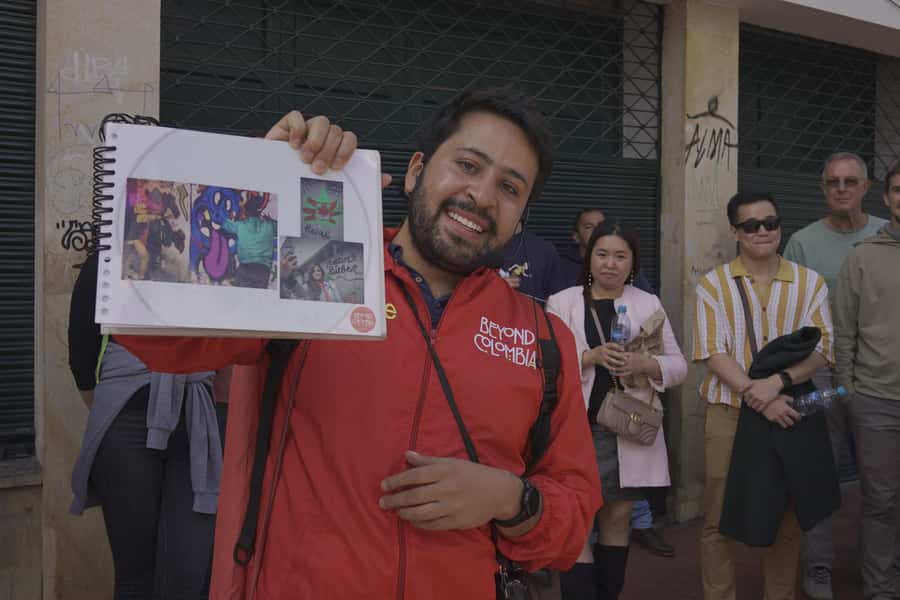
Bolivar Square is the tour’s major civic stop. This broad plaza gathers several important buildings and gives you a chance to understand Bogotá as a seat of power, not just an old neighborhood.
The guide explains the background of the square and the buildings around it, including the cathedral and government institutions. The Palace of Justice is also tied to the route, along with the siege that became one of the defining political events in modern Colombian history.
This is where the tour’s promise of balanced treatment matters. Colombian history includes conquest, political violence, social division, and national heroes whose legacies are still debated. The tour says it aims to present accurate, objective information without taking sides. Juan was specifically praised for portraying the history in an unbiased way, while other guides were appreciated for answering questions directly.
You should listen for the connections between architecture and power. A government building is not simply an attractive façade. Its location and use tell you who controlled the country, how authority was displayed, and why this square remains important.
The square can also be a challenging place for a large group. If 30 or more people join, stay close enough to hear the guide and keep track of the red wristbands or group meeting points. A good guide can manage the crowd, but you may not get an intimate conversation at every stop.
El Bogotazo and the city’s turning point
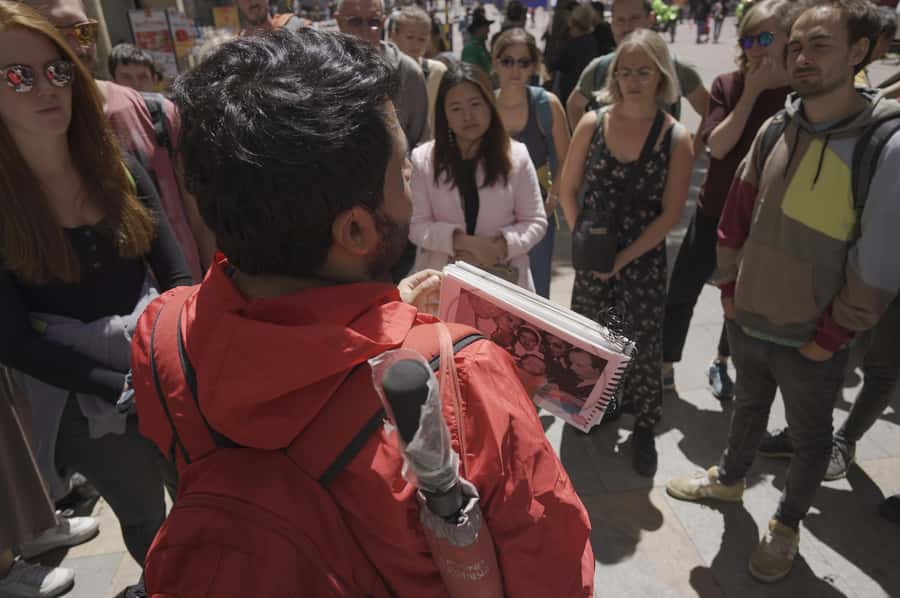
The discussion of El Bogotazo is one of the most important parts of the walk. The 1948 riot followed the assassination of political leader Jorge Eliécer Gaitán and had a lasting effect on Bogotá and Colombia.
This subject gives the rest of the tour more weight. You are not looking at old streets as frozen scenery. You are learning how violence, grief, political conflict, and public anger changed the city.
The tour presents El Bogotazo as a controversial and complicated event rather than a simple story with one easy explanation. That approach is valuable for visitors who want more than a list of dates. It also helps you understand why Bogotá’s historic center contains so many layers: colonial buildings, republican institutions, political memorials, newer businesses, and public art that comments on present-day life.
A guide’s storytelling makes a big difference here. Ellen described Juliana’s explanations as clear and warm, while Jason credited Santiago with connecting Bogotá’s story to Colombia and the wider Latin American setting. Those are exactly the qualities you want at a stop involving difficult political history: clarity, patience, and room for questions.
A few more history tours around Colombia worth a look
- Shared Tour Cali’s Historical Downtown
★ 4.8 · 143 reviews - Historical Shared Tour Salsa, Graffiti & Resistance in Cali
★ 5.0 · 107 reviews - Medellin Historic Walking Tour
★ 4.9 · 86 reviews - From Medellín: Private Pablo Escobar History Tour
★ 4.9 · 84 reviews
Chicha at the Concordia market
The stop connected with chicha gives the tour a more personal and local feel. Chicha is an ancestral drink made from corn, and the tour presents it as both a beverage and part of Colombia’s cultural heritage.
When available, you receive a tasting. This is not a full meal or a drinks tour, so keep expectations modest. The tasting is meant to help you connect an old tradition with the living city around you.
The Concordia market and nearby food areas also give the route a useful change of pace. You get a look at the everyday side of La Candelaria, with local food and small businesses rather than only formal plazas and national institutions.
One point of caution comes from the physical demands of the route. A participant found the uphill walk tiring and felt the chicha stop came after a long climb, without enough chances to buy water or drinks. Carry your own water rather than waiting for the itinerary to provide a refreshment break. The tour includes chicha when available, but other drinks and food are your responsibility.
Taste can also be personal. You might enjoy chicha’s traditional character, or you might decide it is not your preferred drink. Either way, the value is in learning why it matters, not in expecting a polished cocktail.
Chorro de Quevedo and the city’s founding story
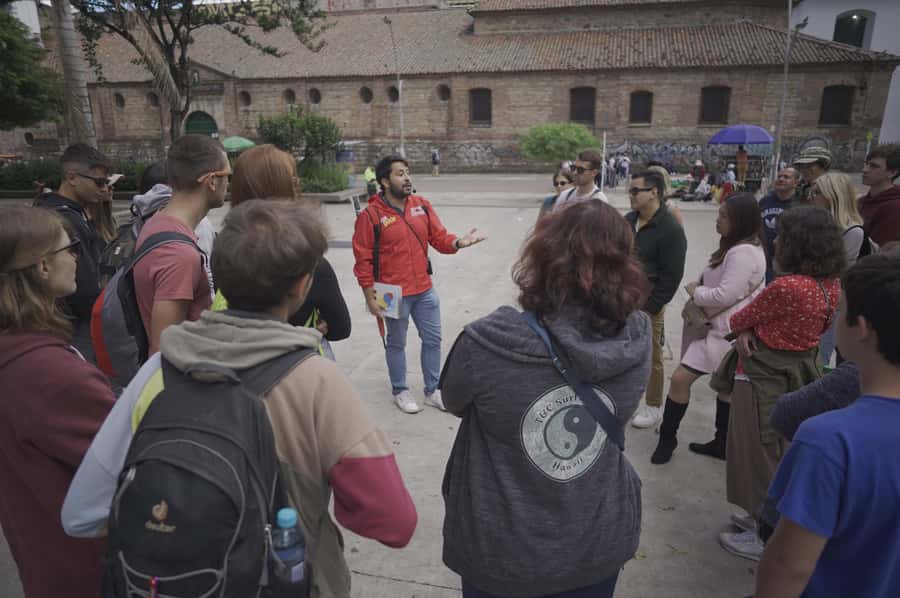
Chorro de Quevedo is included as the foundation square associated with Bogotá’s early development. It is a compact, atmospheric place that helps the guide return to the beginning of the city after discussing later political events.
This stop is useful because it links the city’s origin story to the streets of present-day La Candelaria. The route does not treat the square as an isolated monument. Instead, it places the location among food alleys, colorful walls, old buildings, student life, and small local businesses.
You may find this part of the walk especially helpful if you are trying to get your bearings in the historic center. The guide points out places you can return to after the tour, including spots for coffee, lunch, souvenirs, and other local purchases.
The phrase don’t give papaya is practical advice in Bogotá. Keep your belongings close in crowded areas and avoid displaying valuables. This is not a reason to avoid La Candelaria, but it is a reason to pay attention while walking.
Graffiti in El Embudo alleyway
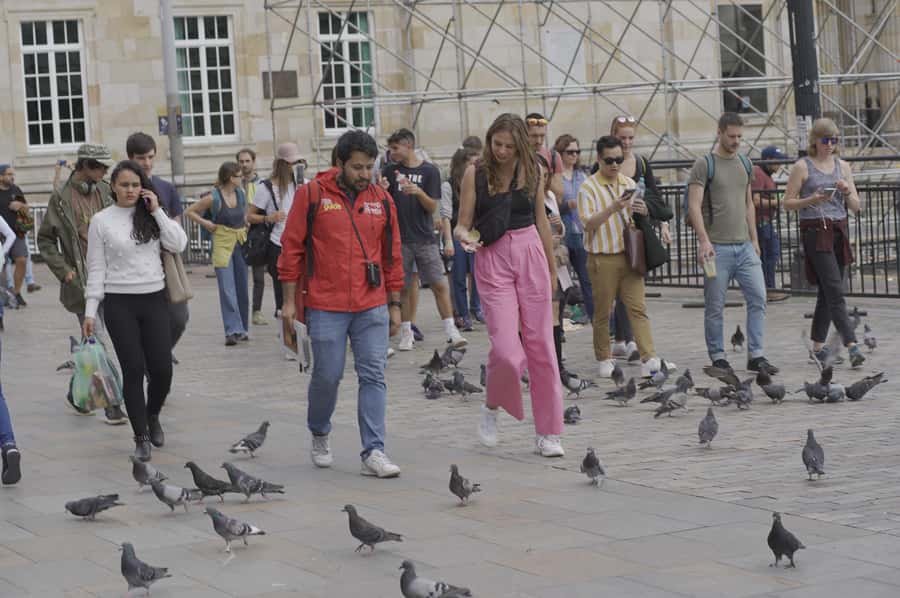
Street art is not treated as a quick photo opportunity here. In El Embudo alleyway, the guide discusses local graffiti and murals, including their techniques, social messages, influence, and connection with resistance.
This is one of the tour’s most appealing contrasts. You may begin with colonial history and formal civic buildings, then enter a narrow lane where artists use walls to comment on politics, identity, inequality, and daily life.
The alleyway is also a reminder that La Candelaria is still a living neighborhood. Its story did not stop when the colonial period ended. New generations continue to mark the area and argue about Colombia through public art.
Bring a camera, but do not use flash photography. The walls are worth studying rather than rushing past. If the group is large, wait for a clear view and listen for the guide’s explanation before taking pictures. The meaning behind a mural is often more interesting than the image alone.
Botero, the False Door, and other cultural stops
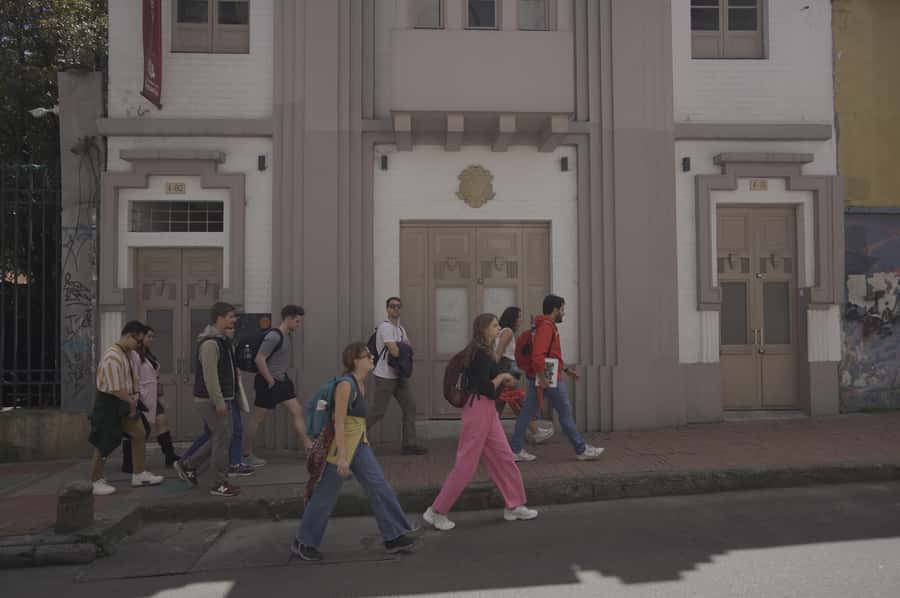
The route also includes Botero’s Museum and a cultural square, along with the False Door and an informal emerald market. These stops broaden the tour beyond the standard colonial route.
Fernando Botero is one of Colombia’s best-known artists, and learning about his life and work gives you useful context before visiting museums on your own. The tour may help you decide if you want to return for a longer museum visit, but entrance tickets are not included.
The informal emerald market introduces another distinctive part of Colombian commerce. Emeralds are strongly linked with the country, yet an informal market can be a place where you should observe carefully rather than feel pressured to buy. The tour does not include souvenirs, and you should make purchases only if you are comfortable with the seller, price, and quality.
The False Door adds another local detail to the route. Stops like this make the walk feel less like a checklist of grand monuments. You get small stories and neighborhood references that help the old center feel more understandable.
Pace, distance, weather, and group size
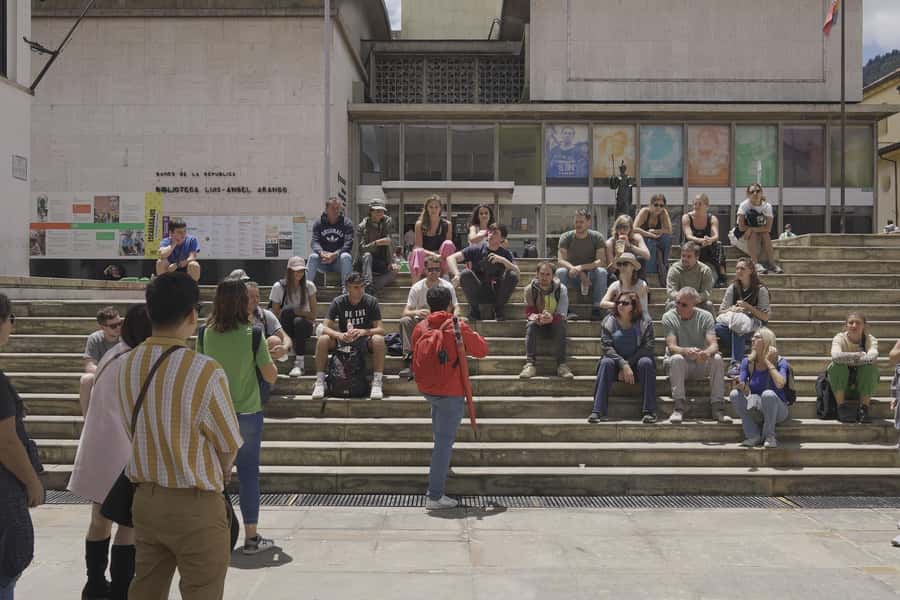
The advertised duration is 150 minutes, while the tour description also describes it as approximately three hours. Plan for roughly two and a half to three hours, depending on the group, weather, questions, and walking pace.
The total distance is about 7 kilometers. That is a lot for a history walk, especially because some sections are uphill and Bogotá sits at roughly 8,600 feet. If you are sensitive to altitude, take the pace seriously and carry water.
Wear comfortable shoes, light practical clothing, sunscreen, and a hat. Bogotá’s weather can change quickly, so pack a rainproof coat or umbrella. One group completed the walk in rain, and the guide managed the conditions well, but you will be happier with your own protection.
The tour is not suitable for wheelchair users or people with mobility impairments. It is also not a good choice if you want a short, mostly stationary introduction.
Large groups are the main logistical weakness. A group of 36 can make it harder to hear, cross streets together, or ask personal questions. On the other hand, large groups can suit solo visitors who want to meet people while exploring.
Which guide and language should you expect?
The tour runs in English and Spanish, with a live guide. You may be led by different members of the Beyond Colombia team, so the exact style will vary.
The strongest pattern in the available feedback is praise for the guides’ clarity, warmth, and command of Colombian history. Lorenzo was credited with making a long walk pass quickly. Leo received praise for history, architecture, and Botero. Juliana was appreciated for clear stories and practical suggestions for the rest of a Bogotá visit. Byron handled a rainy, large group well, and Juan was praised for balanced explanations.
That variety is worth noting. You are not booking one named private expert, so you should not expect the same personality each time. You are booking a shared experience with a company that has operated local tours since 2013 and has received several international and TripAdvisor recognitions.
Is $13 good value?
For $13, this is a strong orientation to central Bogotá. You receive a guide for about two and a half to three hours, a planned route through essential parts of La Candelaria, a possible chicha tasting, and suggestions for eating and shopping afterward.
The value is highest if you are visiting Bogotá for the first time and want context before exploring alone. A private tour would offer more control and a smaller group, but it would also cost more. Here, the low price makes it easier to accept the occasional crowd or a less personal stop.
The price does not cover food, drinks, museum tickets, souvenirs, or transportation to the meeting point. You should budget for water and perhaps a snack. The wristband discounts may add value, but treat them as a bonus rather than a reason to book.
Free cancellation up to 24 hours before the tour and the option to reserve now and pay later make the booking flexible. If you change your plans, notify the company so the reserved guide is not left waiting.
Who should book this Bogotá walk?
I would choose this tour if you want a clear first look at La Candelaria, enjoy walking, and prefer local stories to a quick photo stop. It suits solo visitors, couples, and curious first-time visitors who want practical suggestions for the rest of their time in Bogotá.
It is also a good fit if you want to understand difficult subjects such as El Bogotazo, the Palace of Justice siege, colonial power, and the political meaning of graffiti. The tour does not hide behind only cheerful sightseeing.
I would hesitate if you dislike long walks, struggle with hills or altitude, need wheelchair access, or want a private guide. You should also consider another option if you need frequent scheduled stops for water and rest.
FAQ
Where does the tour meet?
The meeting point is in front of the Museo del Oro. Look for the Beyond Colombia guides with red umbrellas.
How long does the tour last?
The stated duration is 150 minutes, or about two and a half hours. The tour description also says approximately three hours, so allow some flexibility.
How far will I walk?
You will walk about 7 kilometers, with some uphill sections and stops to hear the guide.
Is the tour offered in English?
Yes. Live guides are available in English and Spanish.
Is chicha included?
A chicha tasting is included when available. Other food and drinks are not included.
Are museum entrance tickets included?
No. Tickets and entrances are not included, and the tour does not add sudden extra entrance charges during the route.
Is the tour suitable for wheelchair users?
No. The experience is not suitable for wheelchair users or people with mobility impairments.
Can I cancel the booking?
Yes. You can cancel up to 24 hours in advance for a full refund. You can also reserve now and pay later.
Should you book it?
Book this tour if you want a low-cost, story-filled introduction to Bogotá and can manage a long walk at high altitude. The strongest reasons are the range of subjects, the local focus on chicha and graffiti, and the guides’ record for making serious history understandable.
Bring water, rain protection, sunscreen, and good shoes. Stay near the guide in crowded areas, and remember that the route is more demanding than the modest price suggests. If you accept the distance and the possibility of a large group, Beyond Colombia’s La Candelaria walk is a useful first or second-day choice in Bogotá.
Just added around Colombia
- Medellín: Flower Farm & Silletero History Tour★ 4.3 · 23 reviews
- Santa Marta A Historical & Street food Experience★ 4.7 · 41 reviews
- Medellin Historic Walking Tour★ 4.9 · 86 reviews
- Mangroves, cultural fishing, black heritage town and lunch★ 4.5 · 29 reviews
- 7-hour City Tour of Historic Bogotá with Monserrate★ 4.7 · 47 reviews
- From Medellín: Private Pablo Escobar History Tour★ 4.9 · 84 reviews
- From bogota: Salt Cathedral tour a Cultural Heritage Tour★ 4.5 · 23 reviews
- Cali: Walking tour of the historic center★ 4.9 · 18 reviews
Old Town & Historic Centre Walks, compared.
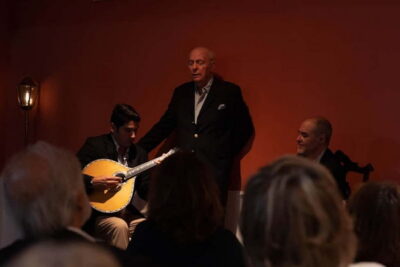
Live Fado Show with Port Wine in Historic Center
Read our review →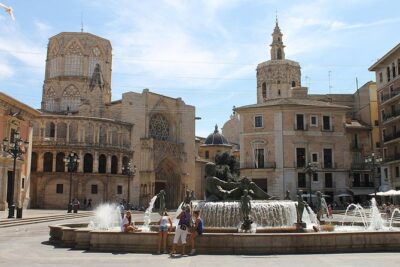
Valencia Old Town Tour with Wine & Tapas in 11th Century Historic Monument
Read our review →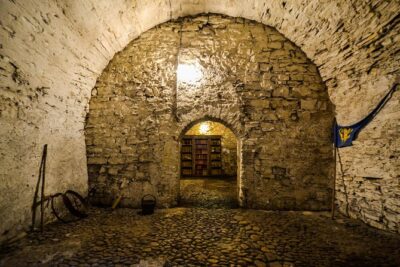
Prague Old Town, Medieval Underground and Dungeon Historical Tour
Read our review →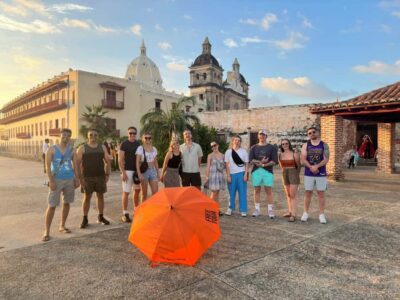
Historic Center and Getsemaní Shared Walking Tour
Read our review →
Old Town Walking Tour History and Tales in Edinburgh
Read our review →
Philadelphia Old City Historic Walking Tour with 10+ Top Sites
Read our review →
Saadian Tombs & Bahia Palace, Medina Guided Tour
Read our review →Browse the lists this tour appears in