Review · LAZIO
Rome: Ancient Baths of Caracalla Ticket & Audio Guide
Rome’s great bathhouse rewards a little imagination. I like the freedom to explore the 17 audio-guide points at your own pace, and I love seeing how the hypocaust heating system turned a huge public complex into a working leisure center. The preserved mosaics, swimming pool, gymnasium, and massage rooms give the ruins real shape.
The main catch is the phone-based audio guide. You need your own charged smartphone and headphones, and the route may be hard to follow. At about $20 per person, this is not the cheapest way to see ruins, especially since the basic entry price has been reported as lower on site. Still, the added explanation can make a major difference here.
Key points to know before you go
- The baths were a public leisure center: This was not just a place to wash. Romans came for exercise, swimming, massages, and social life.
- The hypocaust is the star piece of engineering: Fires heated air beneath raised floors, warming the bathing rooms above.
- You follow 17 audio points: The commentary is available in English, Spanish, French, German, and Italian.
- Your phone does the work: Bring headphones, charge your phone fully, and scan the QR code before arriving.
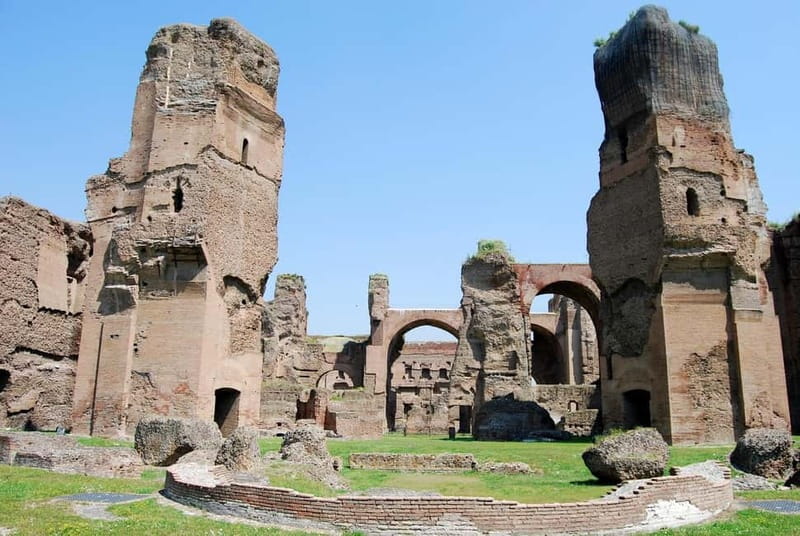
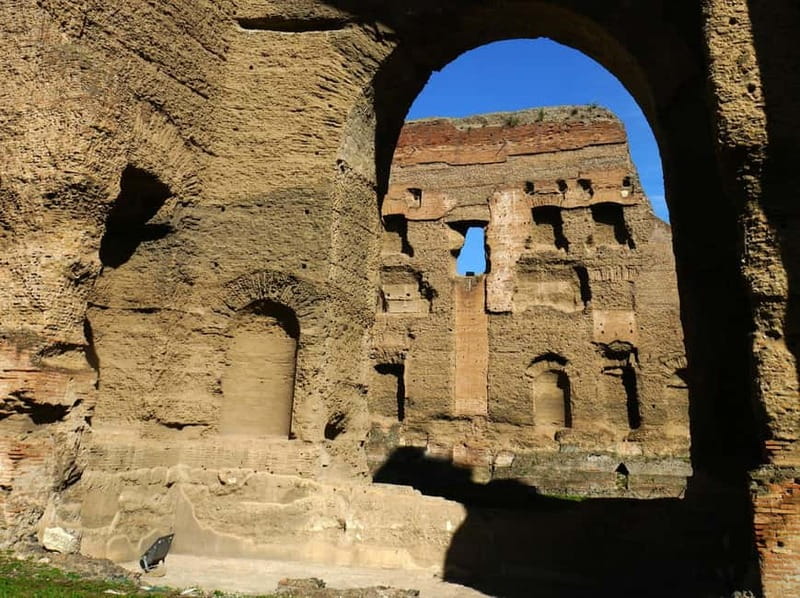
- The ruins need imagination: Large sections are preserved as walls, floors, and foundations rather than restored rooms.
- Winter access can vary: Restoration work may close parts of the complex, so the full route is not guaranteed at every visit.
Why the Baths of Caracalla deserve two hours
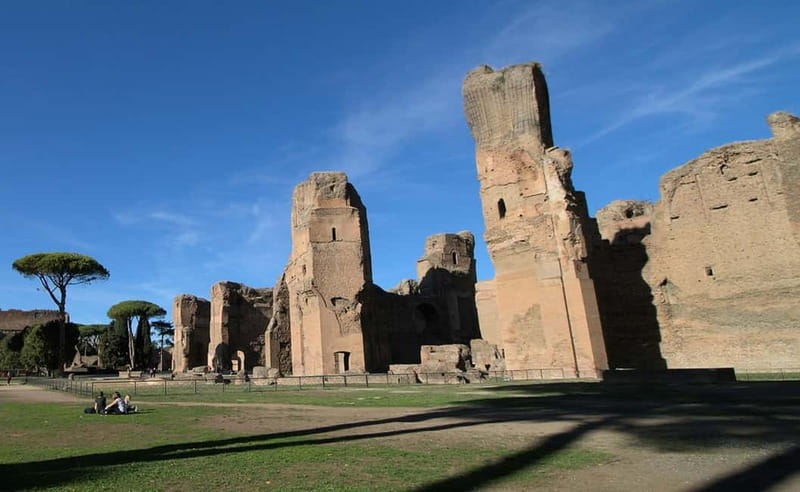
The Baths of Caracalla are easy to overlook beside Rome’s headline sights. That would be a mistake. The site gives you a clear look at how Roman engineering, public life, art, and political power came together in one enormous complex.
Construction began under Emperor Septimius Severus and continued under his son Caracalla. The baths opened to the public nearly 2,000 years ago. They were built for ordinary city life as much as imperial display, with spaces for bathing, exercise, massage, and conversation.
I find the scale especially useful for understanding ancient Rome. Standing among the surviving walls, you can see that this was not a small bathing house. It was a major public center with several functions under one roof, or rather, under a series of soaring vaulted roofs that have mostly disappeared.
Plan on about two hours. That gives you time to listen to the audio stops, look at the mosaics, and pause at the major rooms without rushing. You can move faster if you mainly want photographs, but the site makes more sense when you give the explanations time to connect the ruins.
More Ancient History Tours in Italy
- Colosseum: Underground and Ancient Rome Tour
★ 4.7 · 12,691 reviews - Colosseum & Ancient Rome with Arena Floor Option I Max 6 People
★ 5.0 · 3,306 reviews - Rome: Colosseum, Ancient Rome Tour or AudioGuided Tour
★ 4.4 · 2,879 reviews
Entering at Viale delle Terme di Caracalla
You go directly to the main entrance at Viale delle Terme di Caracalla, 00153 Rome. There is no transport included, no guide waiting to lead you in, and no group meeting point to find once you reach the address.
Have your downloaded ticket ready to show. The experience uses an e-ticket, which is sent through WhatsApp within 24 hours of your travel date. That timing matters, so do not leave the ticket check until the last minute.
The entrance process is simple in theory, but the digital setup needs preparation. Scan the QR code on your voucher to download the audio guide before arrival. Bring your own headphones because a headset and mobile device are not supplied.
I would download everything while you still have a good internet connection. Charge your phone fully, then keep the screen brightness at a practical level. Two hours of audio, navigation, and photographs can use more battery than you expect.
The site is wheelchair accessible, although restoration work or closed areas can affect exactly what you are able to reach. The information provided does not promise access to every section at all times, so it is sensible to check current conditions if full access is important to you.
Following the 17 audio-guide stops
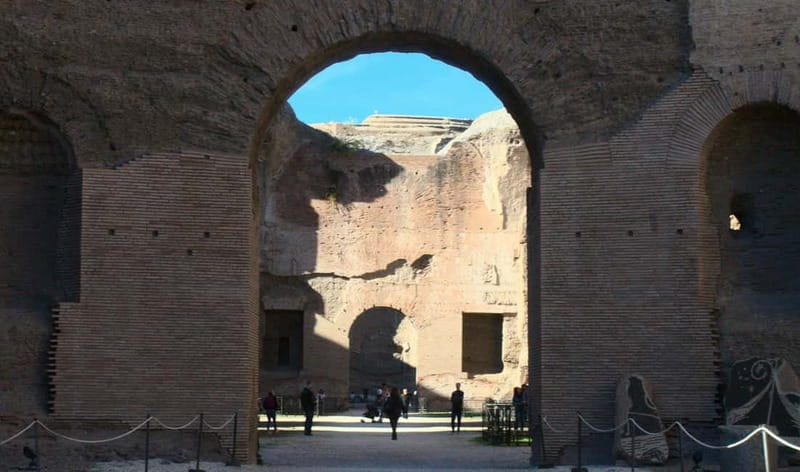
The audio guide gives you 17 points of interest, which is a helpful amount for a self-guided visit. You get more context than a few signs, but you are not tied to a long, fixed tour with a guide and a group.
The commentary covers the purpose of the complex, its construction, and the way Romans used it. The guide is available in English, Spanish, French, German, and Italian. That language choice is useful, especially because the ruins require explanation. Without some context, a broken wall can remain just a broken wall.
The main weakness is wayfinding. The audio route can be difficult to match to the buildings, and parts of the app may not feel fully updated. One French-language visit also found no useful explanation in French, while another visitor had trouble getting the audio to work at all. Those problems may be technical or temporary, but you should be ready to pause, retrace a few steps, or continue without perfect audio.
There is also a Rome landmarks audio guide included. That sounds useful for planning other sightseeing, but the central value here is the Baths of Caracalla commentary. I would treat the extra Rome content as a bonus rather than the reason to buy this ticket.
The swimming pool and grand public rooms
The swimming pool is one of the 17 featured points and helps you picture the baths as a place of public activity rather than a quiet ruin. The complex was designed for movement and social time, with people passing between hot, warm, and cold areas, exercising, and meeting others.
The remains of the gymnasium show that bathing was connected to physical fitness. Massage rooms add another piece to the picture. The baths were not simply a place where Romans cleaned themselves. They were a leisure center woven into everyday urban life.
You will need to supply some of the missing details with your imagination. The walls and foundations remain impressive, but many original roofs, statues, and interior fittings are gone. That can frustrate you if you want restored rooms or a polished museum presentation.
For me, the audio is most valuable at this point. It explains what each space did, helping you mentally reconstruct the complex without pretending the ruins are more complete than they are.
More Ancient History Tours in Rome
- Colosseum Underground & Ancient Rome Guided Tour
★ 4.5 · 2,590 reviews - Pantheon Elite Guided Tour – Rome’s Iconic Ancient Temple
★ 5.0 · 1,447 reviews - Ancient Rome: Colosseum Underground Group Tour
★ 4.5 · 1,059 reviews - Colosseum Express Guided Tour and Ancient Rome Admission Included
★ 4.0 · 1,008 reviews
Mosaics, marble, and surviving artwork
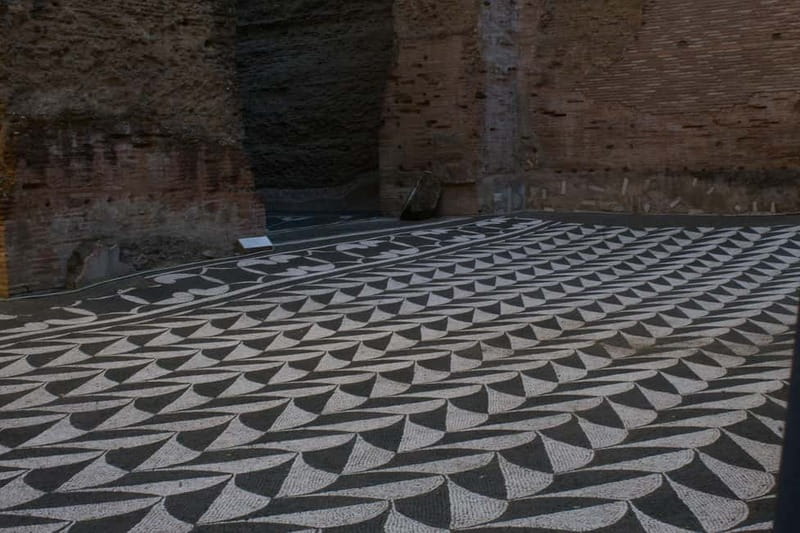
Bring your camera for the mosaics. The preserved marble floors are among the most rewarding details on the visit, particularly after you have seen the sheer size of the surrounding walls.
The mosaics also remind you that the baths were not a plain utility building. Decorative floors and artwork gave the public complex a sense of luxury. That contrast is part of the appeal: a huge working facility could also be richly decorated.
Look down as often as you look up. The towering walls naturally grab your attention, but the floor patterns provide some of the clearest surviving evidence of the original interior. The audio guide helps explain how these details fitted into the larger design.
Photography is a strong reason to visit, though you should not expect every famous feature to be intact. You are photographing fragments, surfaces, and scale. The best pictures may come from combining the mosaics with the massive brick walls around them.
How Roman heating worked
The hypocaust is the technical highlight. Ancient Roman builders heated some rooms by sending hot air beneath raised floors. Fires in service areas produced the heat, which traveled through the underfloor spaces and helped warm the rooms above.
This system required planning, labor, fuel, and constant maintenance. It also shows why the baths were such a major public project. Heating an enormous complex was not a small household task. The system reveals practical Roman engineering at work beneath the decorative floors.
The audio explanation is important here because the mechanism is not always obvious from what survives. You may see structural remains without immediately understanding their purpose. Once you learn that hot air moved below the raised floors, the building becomes easier to read.
This is one of the best reasons to choose the audio option instead of buying entry alone. A bare ruin gives you the remains. The commentary explains the system that made the building function.
What the ruins can and cannot show you
The Baths of Caracalla are impressive, but they are not a restored theme park version of ancient Rome. You will see walls, floor sections, mosaics, foundations, and open spaces. Much of the original decorative program has disappeared.
That is both the strength and the limitation. The exposed structure gives you an honest sense of age and scale. At the same time, you must imagine the crowds, water, steam, painted surfaces, statues, and complete roofs that once filled the complex.
Stone from the baths was eventually reused in the construction of St. Peter’s Basilica. This detail adds another layer to the visit. The site did not simply decline and vanish. Its materials continued to shape later Rome, while the city around it changed.
Restoration can also alter your visit. Some areas may be closed during repair work, particularly in winter. If a section is unavailable, do not assume you missed it through poor navigation. The accessible route can change.
Is the $20 price good value?
The listed price is about $20 per person. That includes admission, the Baths of Caracalla audio guide, applicable taxes and fees, and a Rome landmarks audio guide.
The value depends on what you want. If you only want to enter the site and take a quick look, the price may feel high because entry has been reported as about €8 per person when purchased separately. The audio component has also been priced around €6 per person in some cases, and one audio guide may be enough for two people if you are willing to share headphones.
The package becomes more reasonable if you value advance booking, a ready-made audio route, and commentary in your preferred language. The Baths are not an easy place to understand from the ruins alone. Good explanation adds real value here.
There is no live guide, transport, headset, or mobile device included. You are paying for the ticket and digital commentary, not a guided group experience. Make that distinction before booking.
If the audio guide fails or is hard to navigate, the value drops quickly. Download the app or guide early, test the sound, and carry your voucher. Those small steps can prevent a cheap technical problem from becoming the main memory of the visit.
Dress, shoes, and practical comfort
Wear comfortable shoes. The complex covers a large area, and you will spend much of the two hours walking and stopping on historic surfaces.
Flip-flops and sandals are not allowed, and the stated dress code also excludes shorts and sleeveless shirts. Choose practical clothing that meets those rules before you arrive. It is frustrating to reach the entrance and discover that your outfit does not qualify.
Headphones are essential for the audio guide. Bring your own rather than assuming they will be provided. A charged smartphone is also required, so charge it overnight and download the audio content before reaching the entrance.
The experience is wheelchair accessible, but the precise route may be affected by restoration or renovation. If you need full access to every area, confirm the current conditions before you go.
Who will enjoy this experience most?
I would recommend this for independent visitors who like moving at their own pace and want more explanation than a standard entrance ticket provides. It suits people interested in Roman engineering, public life, architecture, mosaics, and the practical side of ancient history.
It is also a good choice if you do not want to commit to a live group tour. You can pause the commentary, spend longer at the swimming pool, or move quickly through a room that interests you less.
Families with older children may find the hypocaust especially useful because it gives the ruins a clear technical story. The site can be harder for younger children who need constant visual activity, since many areas are open ruins rather than fully reconstructed rooms.
I would be cautious if you expect a polished audio app with perfect signs and a fully restored complex. The route can be confusing, some parts may be closed, and technical problems are possible. Visitors who prefer direct historical interpretation may get more from a live guide, though this experience does not include one.
Should you book the Baths of Caracalla ticket?
Book it if you want a flexible two-hour visit and you are willing to prepare your phone before arrival. The mosaics, enormous public rooms, swimming pool, and hypocaust explanation make this one of Rome’s best places to understand how ancient public life actually worked.
Think twice if your main goal is the lowest possible admission price or if you dislike app-based tours. You may pay less by buying entry separately, and the ruins will ask you to use your imagination.
My practical choice would be to book the package for the audio explanation, but only after downloading the guide, packing headphones, and checking the dress code. Go with realistic expectations, and the Baths of Caracalla can give you a memorable look at Roman life beyond the usual monuments.
FAQ
Where is the entrance to the Baths of Caracalla?
The main entrance is at Viale delle Terme di Caracalla, 00153 Rome. You can go directly to the entrance with your downloaded ticket ready to show.
How long does the experience last?
The stated duration is two hours. You can explore the ruins at your own pace during that time.
Is a live guide included?
No. This experience includes an audio guide, not a live guided tour.
Which languages are available for the audio guide?
The audio commentary is available in English, Spanish, French, German, and Italian.
Do I need to bring headphones?
Yes. Headphones are not included, so bring your own.
Do I need a smartphone?
Yes. You need a charged smartphone to use the audio guide. Scan the QR code on your voucher to download it before arrival.
Is transportation included?
No. Transportation is not included. You make your own way to the entrance.
Is the site wheelchair accessible?
Yes, the experience is listed as wheelchair accessible. Restoration work may affect access to some areas at particular times.
Can I cancel for a refund?
Yes. You can cancel up to 24 hours in advance for a full refund.
More Self-Guided History Audio Tours in Rome
- Taormina: Ancient Theater Skip-the-Line Ticket & Audio Guide
★ 4.5 · 2,412 reviews - Athens: Ancient Agora E-Ticket and Audio Tour
★ 3.9 · 413 reviews - Katakolo Port: Transfer to Ancient Olympia and VR Audio Tour
★ 4.1 · 403 reviews - Budapest Paddle Steamer Danube Cruise with Tokaj & Audio Guide
★ 4.5 · 338 reviews
More Ancient Rome and Colosseum Tours in Rome
- Rome: Colosseum with Arena, Roman Forum and Palatine Guided Tour
★ 4.0 · 5,598 reviews - Colosseum with Arena, Roman Forum and Palatine Hill Guided Tour
★ 4.5 · 3,526 reviews - Rome: Colosseum Arena, Roman Forum & Palatine Hill Tour
★ 4.5 · 1,874 reviews - Colosseum, Roman Forum & Palatine Hill Guided Tour
★ 4.5 · 1,568 reviews
Just added around Rome
- Rome: Colosseum and Ancient Rome Guided Walking Tour★ 4.5 · 95 reviews
- Secrets of Rome: Historical True Crime Small Group Tour★ 4.9 · 85 reviews
- Rome: Private Colosseum Experience and Ancient Ruins Tour★ 4.6 · 25 reviews
- Rome Secrets: Dark History & Tasty Bites Tour★ 5.0 · 37 reviews
- Rome: Guided Tour of Colosseum and Ancient Rome★ 4.9 · 74 reviews
- Rome: Rome at Night Evening Historical Walking Tour★ 4.9 · 24 reviews
- Rome: Colosseum with Access to Arena Floor and Ancient Rome★ 4.2 · 320 reviews
- Rome: Food Tour of the Historic Center with Rooftop Spritz★ 4.7 · 43 reviews
Ancient Rome & Colosseum Tours, compared.
Colosseum: Underground and Ancient Rome Tour
Read our review →
Colosseum with Arena, Roman Forum and Palatine Guided Tour
Read our review →
Colosseum with Arena, Roman Forum and Palatine Hill Guided Tour
Read our review →
Colosseum & Ancient Rome with Arena Floor Option I Max 6 People
Read our review →
Colosseum, Ancient Rome Tour or AudioGuided Tour
Read our review →
Colosseum Underground & Ancient Rome Guided Tour
Read our review →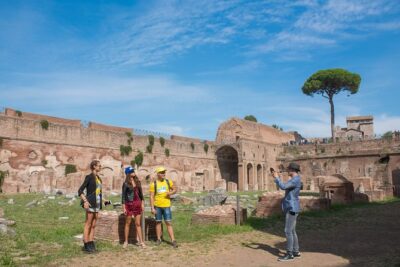
Colosseum Arena, Roman Forum & Palatine Hill Tour
Read our review →