

Review · SOUTH EAST ENGLAND
London: Self-Guided History City Tour with an App
London reveals its layers on foot. This three-hour self-guided route links Roman remains, medieval churches, royal intrigue, Shakespeare, food, and modern skyscrapers for only $9. I like the way it connects famous sights with easy-to-miss places, and I like the freedom to pause, replay, or skip sections as you please.
The biggest catch is the app. You need to download it and the tour over Wi-Fi before setting out, and one user reported a bug that stopped the tour halfway through. The audio also has a computer-made quality in at least one language, so you should see this as a useful walking companion, not a replacement for a live guide.
For the best value, I would use this route early in your London stay. It gives you a strong map of central London, covers a lot of ground, and leaves you free to return later to the places that deserve more time.
Key points to know before you go

- Sky Garden begins the route with city views, but entry to the garden is not included and must be arranged separately.
- More than 30 audio stops cover major sights such as the Tower of London, Tower Bridge, Borough Market, Shakespeare’s Globe, Tate Modern, and St. Paul’s Cathedral.
- Roman London appears in several forms, from the Monument area’s old street pattern to Roman bath houses and sections of the London Wall.
- The route mixes free outdoor sights with paid attractions, so you can follow the story without entering every building.
- Audio plays automatically as you walk, with options to stop, replay, and rewind in English, Spanish, German, French, Chinese, or Italian.
- A charged phone and water are essential, since this is a three-hour walk with no in-person guide.
Starting above London at Sky Garden

The route opens at Sky Garden, one of London’s most striking modern viewpoints. Its high position gives you broad views across the city, while indoor greenery softens the glass-and-steel setting.
There is an important practical point here: the Sky Garden entry ticket is not included. The tour begins at this location, but your access to the garden needs to be secured separately. If you cannot enter, you can still use the audio route, but you will miss the opening viewpoint that gives the walk its best sense of place.
The introduction also points to the building’s transformation from an earlier form into its current architectural design. That is a useful way to begin the tour because London’s story is not only about old stone. The city keeps rebuilding itself, often putting modern structures directly beside Roman, medieval, and early modern remains.
I would check your Sky Garden arrangements before booking the audio tour. The route is flexible, but the viewpoint is not something you should treat as guaranteed access.
More Self-Guided History Audio Tours in London:
- Taormina: Ancient Theater Skip-the-Line Ticket & Audio Guide
★ 4.5 · 2,412 reviews - Athens: Ancient Agora E-Ticket and Audio Tour
★ 3.9 · 413 reviews - Katakolo Port: Transfer to Ancient Olympia and VR Audio Tour
★ 4.1 · 403 reviews
The Great Fire and London’s Roman foundations
From Sky Garden, the route moves back into older London at the Monument to the Great Fire. The column recalls the huge fire of 1666, which destroyed much of the city. Even from the outside, it gives the following streets a stronger meaning: you are walking through an area that was rebuilt after one of London’s great disasters.
The nearby Church of Saint Magnus-the-Martyr adds another layer. It survived the fire, making it a useful contrast to the Monument. I like this pairing because the audio does not treat the Great Fire as a single dramatic event. It helps you notice how different buildings experienced it in different ways.
The Roman Bath Houses offer an even earlier chapter. These remains point to the daily life of Roman Londoners, who used public baths not only for washing but also for social contact. You should not expect a vast archaeological complex here. The value comes from seeing how much older the city is than the buildings most visitors first notice.
This section works best if you pay attention to the route itself. London’s streets can feel crowded and modern, yet a church, fragment of wall, or archaeological remnant can shift the date by hundreds or thousands of years.
Quiet ruins at St. Dunstan in the East
St. Dunstan in the East Church Garden is one of the gentler stops on the route. The remains of the church sit within a garden, creating a quiet break from the surrounding city.
The location is especially useful in a self-guided walk. A live guide may need to keep moving with a group, but the app lets you pause and take in the space. You can replay the explanation, look around, or simply enjoy a few minutes without rushing.
I would not expect a long visit here. The stop is about atmosphere and contrast. London can move quickly around you, while the church ruins create a place for stillness. It also shows how damaged buildings can gain a new purpose instead of being cleared away.
All Hallows, the Tower, and stories of punishment
The next section takes you toward All Hallows by the Tower, a church with roots reaching back to AD 675. That date gives the area a much longer timeline than the Tower of London alone suggests.
The Tower itself is one of London’s most famous sights, but this walk focuses on the surrounding story and setting rather than including admission. The audio introduces the Tower’s secrets and its role in the city’s past. You will hear about the nearby Site of Execution, where people accused of treason met their fate.
This is one of the route’s strongest sections for historical drama. It also has a practical limitation: entry fees are not included anywhere on the route. If you want to tour the Tower of London itself, you will need a separate ticket and extra time beyond the three-hour walk.
The Sundial at Tower Hill provides a quieter marker of time. It fits the route’s larger theme, which keeps moving from Roman London to royal power, punishment, war, trade, and modern city life.
More Guided Tours in London:
- Royal Historic Pubs Walking Guided Tour in London
★ 5.0 · 803 reviews - London: Westminster Abbey Tour with a Royal Heritage Guide
★ 4.7 · 614 reviews - London: Hot Tub Boat Guided Historical Docklands Cruise
★ 4.6 · 62 reviews - London: 2-Hour Guided Tour of the British Museum and History
★ 4.3 · 22 reviews
Roman walls and the crossing at Tower Bridge
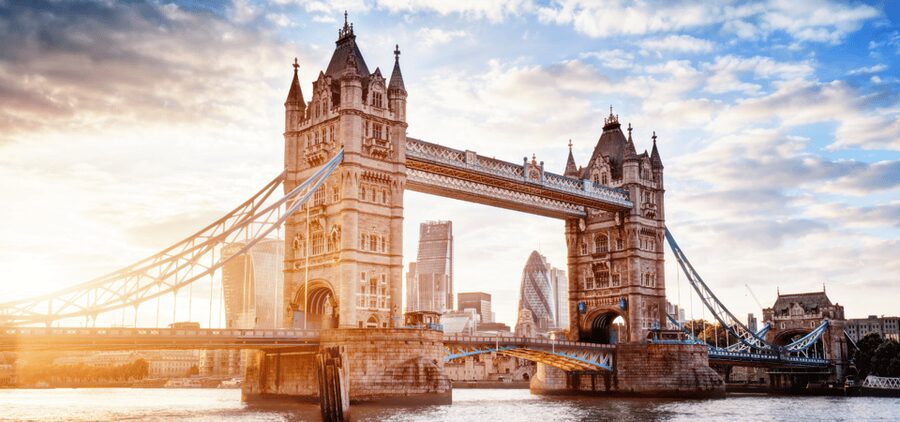
The remains of the London Wall offer another look at Roman London. These fragments can be easy to miss when you are walking between major sights, which is exactly where the app’s directions are useful.
A live guide is not present to point out the turn or answer questions, so you should keep your phone charged and follow the route carefully. The supplied directions cover both major attractions and less obvious stops, but you still need to pay attention to the screen and audio cues.
Tower Bridge brings a dramatic change in scale. Its towers and raised roadway are among London’s most recognizable views, and the route uses the crossing to shift from the north side of the river toward the South Bank.
The bridge is not simply a photo stop. It also shows how London solved a practical problem: connecting busy parts of the city while allowing ships to pass. The audio tour gives you a reason to look at the structure rather than merely walk across it.
Queens Walk, HMS Belfast, and The Shard
On the South Bank, Queens Walk provides a riverside stretch with views back toward the City of London. The route then passes HMS Belfast, the Second World War warship that now functions as a museum.
You can see the ship from outside as part of the walking route, but admission is not included. If naval history interests you, you may want to return with more time. If not, the audio still gives the vessel a useful place in the wider story of London’s river, trade, and military past.
The Shard adds the route’s tallest modern landmark. Its height changes your sense of the city once again, following the low ruins and old churches earlier in the walk. The tour points out the panoramic possibilities, though any paid observation deck admission is separate.
This contrast is one of the best reasons to choose the route. You are not following a single period of history. You are seeing London as a city that keeps adding new layers without completely erasing the old ones.
Crossing London Bridge to Borough Market
Crossing London Bridge leads to Borough Market, where the historic route becomes more sensory. This is the place to think about food, trade, and the daily movement of people through the city.
The market is a good stop for a break, particularly during a three-hour walk. You can pause the audio, find something to eat, and resume when ready. The experience does not include food, so budget separately if you want to sample the market’s offerings.
I like this part because it prevents the tour from becoming a parade of monuments. London’s past is also found in what people buy, cook, carry, and sell. Borough Market connects the river crossings and old commercial district to present-day city life.
Timing may affect how lively the market feels, but no opening schedule is provided with the tour. Plan to check the market separately if food is a major reason for choosing this route.
Shakespeare’s Globe and the original theatre site

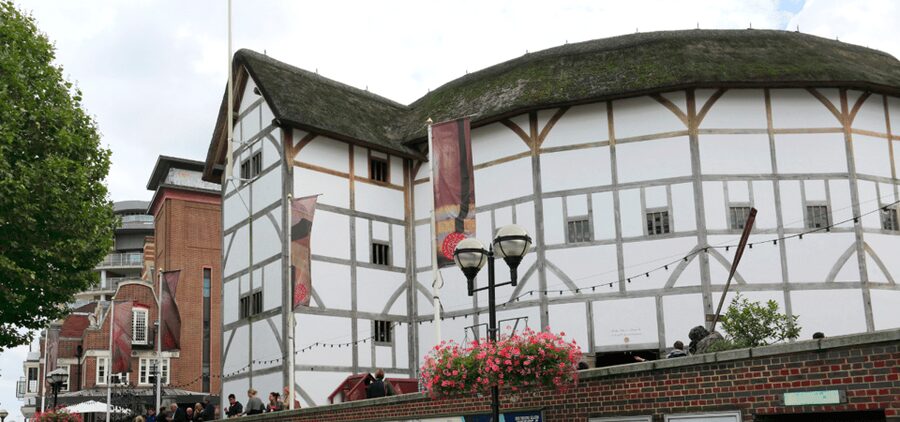
The walk continues to the original site of the Globe Theatre, where Shakespeare’s plays once drew audiences. It then reaches Shakespeare’s Globe, the modern reconstruction and theatre dedicated to his work.
These are two different stops with different meanings. The original site links you to the location of the historic theatre, while the rebuilt Globe offers a physical sense of Shakespearean performance. The tour does not include theatre admission, so you should see the stops as an introduction rather than a complete theatre visit.
This is a good example of how the audio route handles famous names. Instead of giving you only a biography of Shakespeare, it connects the writer to the South Bank, the river, public entertainment, and the buildings associated with his plays.
Cardinals Wharf follows, adding another historical point along the river. The exact amount of time you spend at each stop is up to you, which helps if you have already visited the Globe or want to linger there.
Tate Modern and the Millennium Bridge
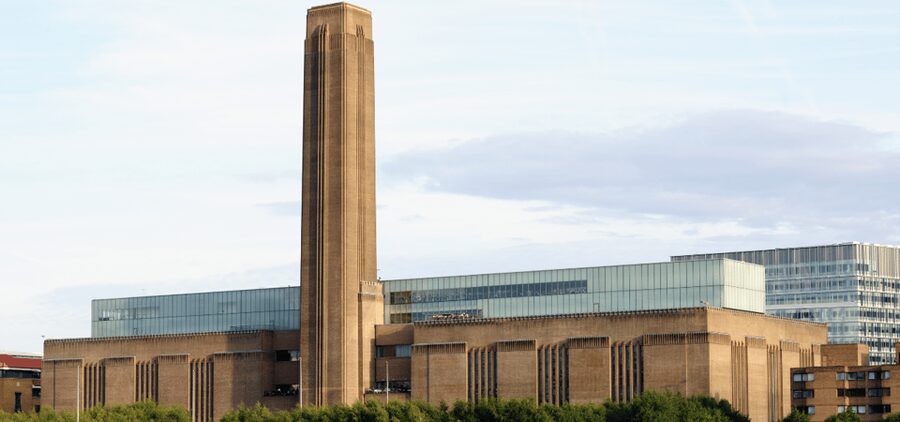
Tate Modern brings the route into modern art. Like the Globe and HMS Belfast, it is included as part of the walking story, but museum entry is not included.
If you want to visit the galleries, allow more time than the three-hour route itself. The audio tour can point you toward the museum, but it cannot give you a full museum experience in a quick pass.
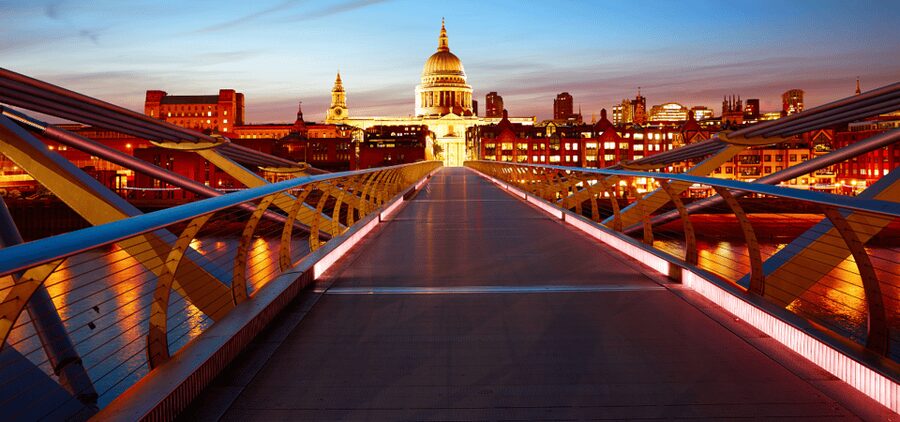
The Millennium Bridge is the final major crossing before St. Paul’s Cathedral. It gives you a clear view along the river and creates a strong visual link between Tate Modern and St. Paul’s.
The bridge also provides a satisfying ending to the route. You have moved past ruins, churches, ships, markets, theatres, and museums, then crossed the river toward one of London’s best-known churches.
Ending at St. Paul’s Cathedral
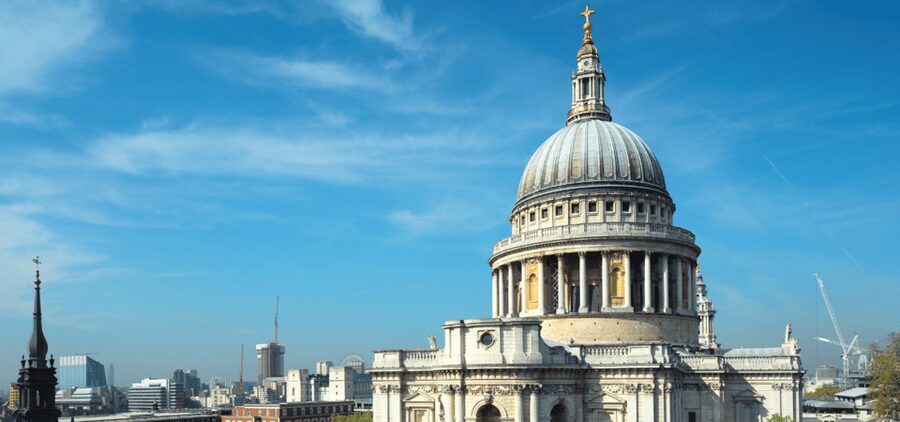
St. Paul’s Cathedral closes the walk with Christopher Wren’s famous dome and one of the city’s most recognizable silhouettes. The cathedral is both a religious building and a major work of architecture, and its position at the end makes sense after the route’s long account of fire and rebuilding.
Admission is not included, so you should plan a separate visit if you want to go inside. The audio route can explain the cathedral’s place in London, but it does not replace time in the nave, chapels, galleries, or dome areas.
As a final stop, St. Paul’s brings several parts of the walk together. The Great Fire changed the city, modern bridges connect its districts, and the cathedral shows how rebuilding can create something lasting and grand.
How the app works on the street
The tour runs through the Trippy Tour Guide app. You need to install the app and download the tour using Wi-Fi before you begin. Do not leave this step until you are standing at Sky Garden with a weak signal and a nearly empty phone battery.
The stories play automatically as you move along the route. You can stop, replay, or rewind them, which is useful if traffic noise interrupts a section or if you want to hear a historical detail again.
The audio is available in six languages:
- English
- Spanish
- German
- French
- Chinese
- Italian
One piece of feedback praised the tour as an excellent guide and recommended it highly, while another user found the voice too much like computer-generated speech. I would set expectations accordingly. The content may help you notice more, but the delivery might not feel as natural as a person speaking beside you.
A separate report described an app bug that prevented the walk from being completed. That is the main risk of choosing this format. Download everything in advance, keep the phone charged, and consider carrying a backup map or the route details on another device.
Is $9 good value for three hours?
At $9, this is an inexpensive way to organize a long walk through central London. The price is especially fair if you mainly want outdoor sights, historical context, and directions between locations.
The value drops if you expect entrance tickets, personal attention, or detailed answers to questions. The Tower of London, Sky Garden, HMS Belfast, The Shard, Shakespeare’s Globe, Tate Modern, and St. Paul’s Cathedral may all require separate arrangements or admission.
I would think of the tour as a low-cost framework. It helps you connect places that you might otherwise visit separately, while leaving the choice of paid attractions to you.
The three-hour duration also needs careful interpretation. That is the stated tour length, but stops, photographs, food at Borough Market, and interior visits will add time. The route covers a lot, so wear comfortable shoes and bring water.
Who will enjoy this London walk?
I think this tour suits you if:
- You are visiting London for the first time and want a clear introduction to the central river district.
- You like history but prefer walking through real streets to sitting in a museum all day.
- You want to control the pace and avoid joining a fixed group.
- You need audio in English, Spanish, German, French, Chinese, or Italian.
- You want to choose your own paid attractions instead of buying a larger sightseeing package.
- You are comfortable using an app and solving small technical problems if needed.
It may be less suitable if you want a live guide, a slow visit inside each landmark, or reliable support when something goes wrong with the app.
The strongest praise focuses on the quality of the guidance and the way the route introduces London. The clearest warning concerns the technology. That balance tells you what you are buying: a flexible audio walk with good coverage, not a fully guided day out.
Should you book this self-guided London tour?
Book it if you want an affordable route that ties together the Monument, Roman remains, Tower Bridge, Borough Market, Shakespeare’s Globe, Tate Modern, and St. Paul’s Cathedral. I especially recommend it for the first or second day of a London visit, when a broad orientation can help you decide where to return.
Skip it if you need included admissions, a human guide, or a polished audio voice. Before starting, download the tour over Wi-Fi, charge your phone, arrange Sky Garden entry separately, and leave extra time for food and indoor sights.
For $9, the route offers plenty of historical context and useful direction. Its success depends on your preparation and your comfort with an app.
FAQ
Is this a guided tour with a person?
No. It is a self-guided walking tour accessed through the Trippy Tour Guide app, with no in-person guide.
How long does the London history tour take?
The stated duration is three hours. Visiting paid attractions, stopping for food at Borough Market, or spending extra time at viewpoints will make your outing longer.
Is entry to Sky Garden included?
No. Sky Garden entry is not included, so you need to arrange access separately.
Which languages are available?
The audio guide is available in English, Spanish, German, French, Chinese, and Italian.
What do I need to bring?
Bring a charged smartphone, the downloaded app and tour, and water. You must download the app and tour using Wi-Fi before beginning.
Can I pause or replay the audio?
Yes. The stories play automatically along the route, and you can stop, replay, or rewind the audio whenever you wish.
Just added around London
- London: Witches and History Bankside Walking Tour★ 4.8 · 223 reviews
- London: Hot Tub Boat Guided Historical Docklands Cruise★ 4.6 · 62 reviews
- London: Historic Pubs, British Ales & Classic Dishes★ 4.9 · 36 reviews
- London: Brutalist Architecture & History Walking Tour★ 4.8 · 42 reviews
- London: Historic London Pub Walking Tour★ 4.8 · 94 reviews
- London: Jack the Ripper Tour with Historic Pub Stops★ 4.8 · 360 reviews
- London: 2-Hour Historic Pub Tour★ 4.9 · 133 reviews
- London: 2-Hour Guided Tour of the British Museum and History★ 4.3 · 22 reviews
Self-Guided History Audio Tours, compared.

Taormina: Ancient Theater Skip-the-Line Ticket & Audio Guide
Read our review →
Katakolo Port: Transfer to Ancient Olympia and VR Audio Tour
Read our review →
Budapest Paddle Steamer Danube Cruise with Tokaj & Audio Guide
Read our review →
Hagia Sophia History Museum Entry with Audio Guide
Read our review →
Ancient Agora Self-Guided Tour with 3D & Audio (No Ticket)
Read our review →
Ancient Corinth Self-Guided Tour with 3D & Audio (No Ticket)
Read our review →Browse the lists this tour appears in