
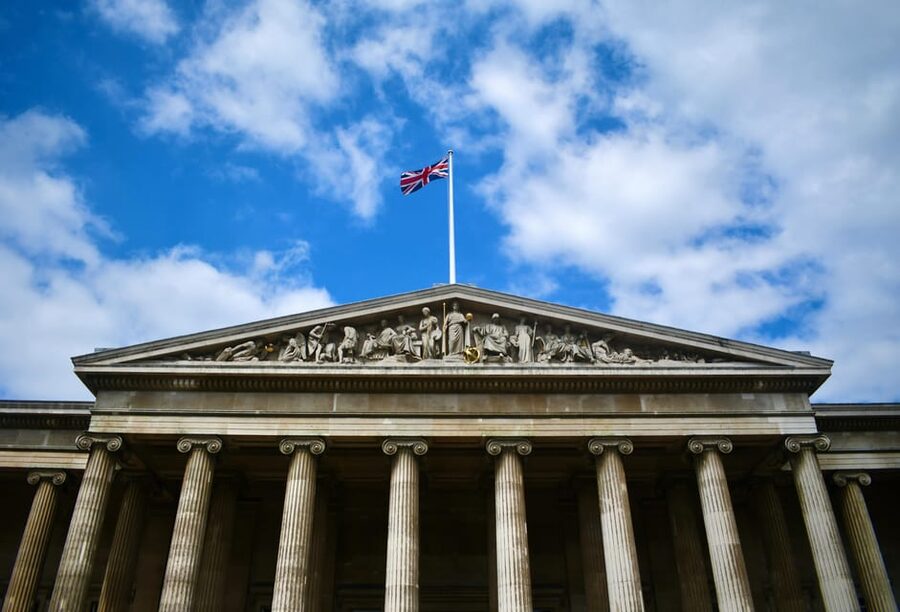
Review · SOUTH EAST ENGLAND
London: 2-Hour Guided Tour of the British Museum and History
Museums reward a good route. This two-hour British Museum tour gives you a guided path through some of the museum’s biggest treasures, from Egyptian pharaohs and the Rosetta Stone to Parthenon sculptures, Roman art, Sutton Hoo, and a Moai from Easter Island. I especially like the compact two-hour format and the chance to hear the objects explained by a live guide rather than simply walking past them. The main concern is crowd noise, which can make a guide difficult to hear.
The $37 price is fair if you want a quick introduction before exploring alone. I also like the choice of English, French, or Italian tours, plus the flexible cancellation and pay-later options. Still, the experience depends heavily on your guide’s pacing, language clarity, and ability to gather the group around busy displays.
Key things to know before booking
- The route crosses several major cultures: Egypt, Greece, Rome, Anglo-Saxon England, and Easter Island all appear within two hours.
- The Rosetta Stone is a key stop: Ask your guide which display you are seeing, since the museum area may include a reproduction or related presentation.
- Daniel and Filomena have earned strong praise: Daniel was noted for managing crowds and time well, while Filomena was praised for lively stories and family appeal.
- Crowds can affect the experience: One poor experience involved a guide who could not be heard in a packed gallery and did not provide headphones.
- The tour works best as an introduction: You will see major highlights, then return on your own for galleries that deserve more time.
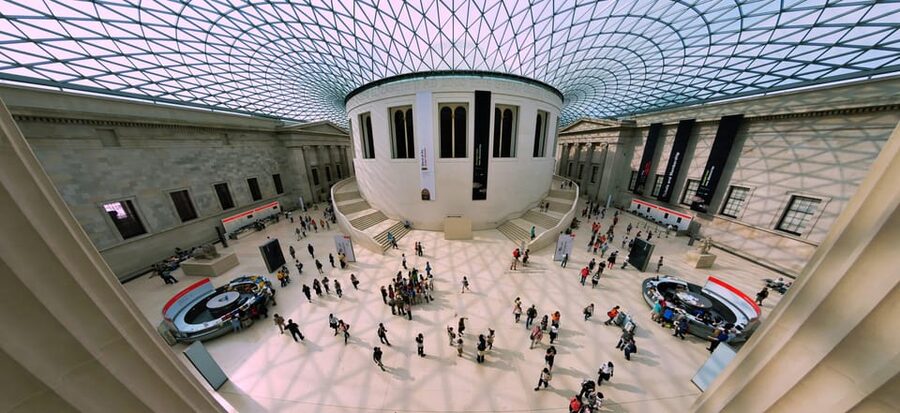
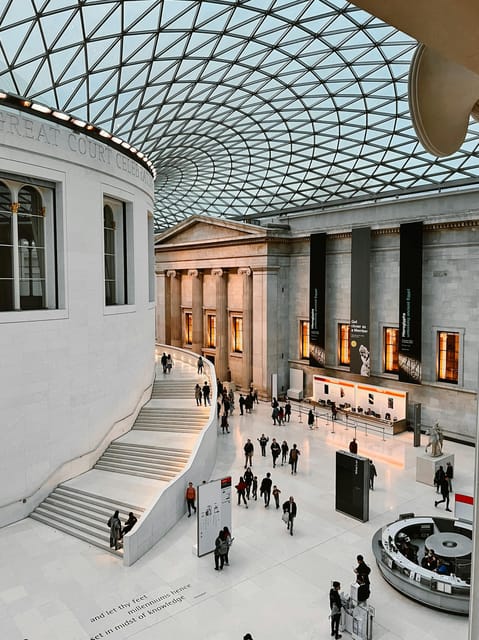
- The meeting point is inside the museum: After security, look for your guide on the stairs near the pillars and the museum portals.
Why a two-hour British Museum tour makes sense
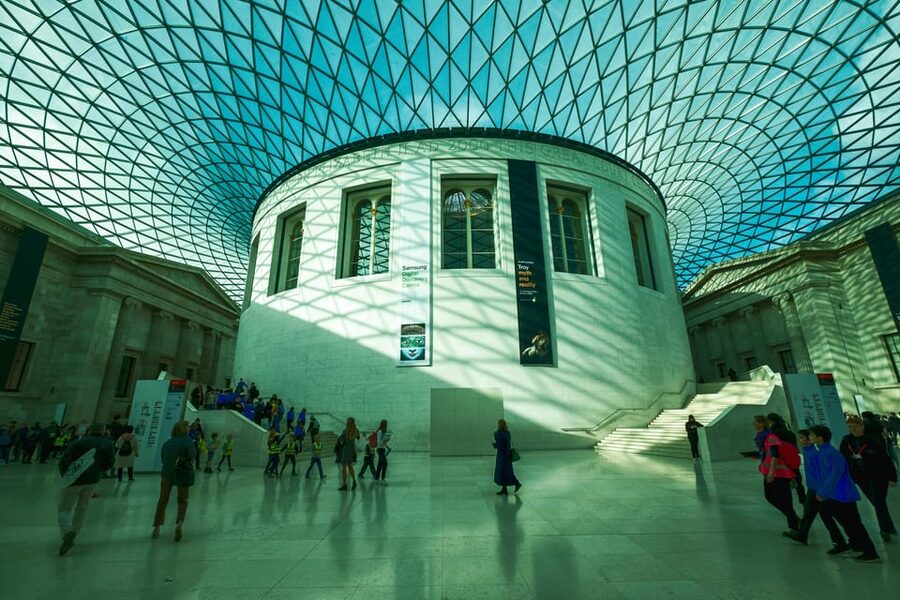
The British Museum is free to enter as a public museum, but free admission does not make it easy to understand. The building holds objects from across human history, and the sheer number of galleries can leave you wandering without a clear sense of what matters.
That is the value of this tour. You pay $37 for a route, explanations, and help deciding where to look. In two hours, you get a broad introduction instead of spending your first visit reading every label and still missing the major pieces.
I would not treat this as a complete visit. The museum is far too large for that. Think of the tour as a well-marked starting point, especially if you have limited time in London or want a historical framework before returning on your own.
The guide leads in English, French, or Italian. Guide quality can vary, but the strongest reports point to Daniel’s smooth handling of the museum and Filomena’s lively storytelling. That kind of personal delivery matters here because many objects are famous for reasons that are not obvious from a few lines on a wall.
More Museum and Gallery History Tours in London:
- Paris: Louvre Museum Entry with History of Mona Lisa
★ 3.9 · 2,823 reviews - Venice’s Best: Basilica, Doge’s Palace, Gondola & History Gallery
★ 4.5 · 2,478 reviews - Guided African American History Tour with Reserved Museum Entry
★ 4.5 · 1,180 reviews
Meeting your guide inside the museum
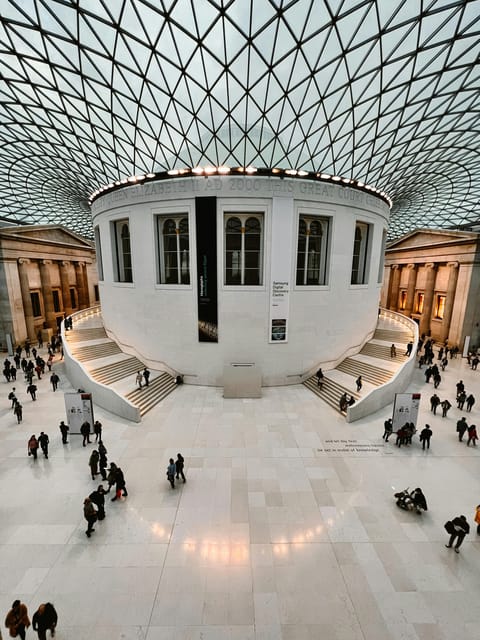
The meeting instructions matter. You do not meet outside the gates. First pass through security, then go to the stairs near the pillars and the British Museum portals. Your guide should be waiting there.
Entry tickets are sent by WhatsApp one to two hours before the tour. If you do not use WhatsApp, you can request the tickets by email. Since the activity information both lists entry as included and separately says entry tickets will be provided, check that you have received the ticket before arriving at the meeting point.
Arrive with enough time for security. The tour itself lasts two hours, and a late arrival can cut into the one thing you cannot replace: time with the guide. Wear comfortable shoes, since the route moves through several galleries and you may want to continue alone afterward.
The museum is wheelchair accessible. If you need specific assistance, it is sensible to confirm the route and meeting instructions before the day of your visit.
Ancient Egypt and the Rosetta Stone
The tour begins with ancient Egypt, a smart choice for a first look at the museum. Egyptian objects are instantly striking, but the guide can add the details that make them more than impressive stone, painted surfaces, and royal portraits.
You can expect to see relics connected with pharaohs and Egyptian religious life. The central stop is the Rosetta Stone, famous because its inscriptions helped scholars decipher Egyptian hieroglyphics. Its importance is not only artistic. It changed how modern people could read and understand ancient Egyptian writing.
This is also the point where I would ask a direct question: Are we looking at the original stone or a reproduction? One poor experience focused for more than half an hour on an object the participant believed was not the original Rosetta Stone. The exact display can matter greatly to you, especially if this is the museum object you came to see.
The practical lesson is simple. A good guide should explain what you are looking at, why it matters, and how long the group will spend there. If the gallery is crowded, stay close and ask for clarification rather than assuming you have missed the key point.
Ancient Greece and the Parthenon sculptures
The route then moves to Greece, with attention on the sculptures taken from the Parthenon. These marble works are among the British Museum’s most famous objects, and they also sit at the center of a continuing dispute over ownership and return to Greece.
A guide can help you look beyond the familiar name. Notice the scale, the surviving detail, and the way the sculptures once formed part of a larger architectural setting. In the museum, you see important pieces separated from their original building, so context makes a major difference.
The tour also refers to Greek philosophy and inscriptions. That broadens the visit beyond sculpture. Ancient Greece influenced political thought, art, writing, and ideas about public life, and the guide can connect those themes as you move through the gallery.
This portion may feel rushed if you want time to study every figure. Two hours requires choices. You will likely get the main story and the most recognized works, but not a slow examination of each fragment. If Greek art is your main interest, plan to return after the guided route.
The Parthenon material also gives you a chance to ask about the ownership controversy. The tour description highlights the sculptures, but it does not promise a long discussion of the dispute, so raise the subject if it matters to you.
More Two-Hour Tours in London:
- London: 2-Hour Historic Pub Tour
★ 4.9 · 133 reviews - 2-Hour Gettysburg Battlefield Guided History Bus Tour with a National Park Guide
★ 4.5 · 2,201 reviews - Kyoto Gion: 2-Hour Geisha Culture & History Walking Tour
★ 5.0 · 1,186 reviews - 2 Hour LoDo Historic Walking Tour in Denver
★ 5.0 · 1,106 reviews
Rome, mosaics, and statues of gods
The Roman section shifts the mood from Greek ideals to an empire known for government, roads, engineering, military power, and grand public works. Here you can expect mosaics, statues of gods and heroes, and objects connected with Roman life.
Mosaics reward close viewing. From a distance they can look like patterned floors or decorative panels. Up close, the small pieces create figures, scenes, and repeated designs. A guide can help you notice how Roman artists used tiny colored pieces to create a larger image.
The statues also show how Romans borrowed and adapted Greek artistic ideas. That connection gives the route a useful rhythm: Greece presents the artistic and philosophical foundation, while Rome shows how later rulers used art, architecture, and public imagery across a large empire.
This section is valuable for first-time visitors because it links objects rather than treating each one as an isolated prize. You are not only ticking off famous names. You are seeing how cultures influenced one another.
Do not expect an exhaustive Roman history lesson. The stop is one part of a fast route, and the exact objects may depend on the guide and gallery conditions. The best outcome is a clear first picture of Roman art and power, followed by a longer return visit if the subject catches your interest.
Sutton Hoo and early English life
Sutton Hoo brings the story closer to England. The Anglo-Saxon treasures offer clues about burial customs, craftsmanship, status, and contact between different parts of Europe during early English history.
This stop can be especially useful if you are visiting London and want something tied directly to Britain. The objects are not simply old metalwork. They help you picture a society that left limited written evidence, where burial goods and skilled decoration can reveal social rank and cultural links.
A guide can make the display easier to read by explaining what the objects suggest about the people who made and used them. The tour presents Sutton Hoo as a glimpse into early English life, which gives the wider museum route a local anchor after Egypt, Greece, and Rome.
You may find this section less immediately famous than the Rosetta Stone or Parthenon sculptures, but that is part of its appeal. It adds variety and prevents the tour from becoming a parade of only the museum’s best-known objects.
Hoa Hakananai’a, a Moai from Easter Island
One of the route’s more unusual stops is Hoa Hakananai’a, a Moai from Easter Island. The monumental stone figure carries a strong spiritual presence, and its inclusion reminds you that the museum’s story extends well beyond Europe and the Mediterranean.
The Moai is valuable here because it changes the scale of the tour. You move from written inscriptions and carved marble to a culture whose sculpture communicates power and belief in a different visual language. The guide can help place the figure within the traditions of Rapa Nui, rather than presenting it as an exotic object with no setting.
As with the Parthenon sculptures, questions of removal and ownership may come to mind. The supplied details do not promise a full discussion of those issues, so ask if the subject is important to you.
This stop also shows why a guide can be useful at a large museum. You might walk past a major object without knowing its name or significance. A planned route makes it more likely that you will notice pieces outside the standard Egypt, Greece, and Rome sequence.
How the guide affects your two hours
The strongest part of the experience can be the guide’s ability to make a huge museum manageable. Daniel was praised for giving an informative, free-flowing tour while navigating crowds and covering a large number of exhibits within two hours. That is exactly the skill this format needs.
Filomena was praised for interesting anecdotes and an evident passion for history. Her style was also considered suitable for families with school-age children. If you are booking with children, that kind of storytelling may help hold their attention better than a quiet, label-by-label visit.
The weak point is sound. The British Museum can be crowded, and a guide without a microphone or headphones may be hard to follow. A thick accent can also create a problem for some listeners, though the guide’s accent alone should not be treated as a measure of teaching quality. What matters is whether you can understand the explanation in a noisy room.
At the start, position yourself close enough to hear. If the group spreads out, ask the guide to repeat key points. You can also ask how the route will be paced, especially if the Rosetta Stone or Parthenon sculptures are your priorities.
The tour listing does not promise audio equipment, so do not assume headphones are included. This is the most important practical weakness to consider before you pay.
Is $37 good value?
At $37 per person, the tour is reasonably priced for a live, two-hour introduction in central London. You are paying for entry arrangements, a planned route, and interpretation across several major parts of the museum.
The value is strongest for three types of visitors:
- You have only a short time in London.
- You feel overwhelmed by the British Museum’s size.
- You want a guide to point out major pieces before exploring alone.
The value is weaker if you enjoy setting your own pace or already know the museum well. You may prefer to enter independently and spend an hour on one collection rather than move through several civilizations.
The included entry information should be checked carefully before the day of your visit, since the activity details are inconsistent about whether the ticket is included or separately supplied. In practice, the instructions say tickets are sent before the tour, so confirm delivery rather than buying another ticket unnecessarily.
Free cancellation up to 24 hours before the start gives you some protection, and reserving now while paying later can help if your London schedule is still changing. Those policies add flexibility, but they do not solve the main issue: the quality of your two-hour experience depends on clear guiding and crowd control.
Who should book this British Museum experience?
I would recommend it to first-time visitors who want a guided introduction rather than a full academic tour. Families with school-age children may also like the storytelling approach associated with Filomena, while history-minded adults can use the route as a map for a later independent visit.
It suits English, French, and Italian speakers, provided you select the right language when booking. The experience also works well for people who want to see Egypt, Greece, Rome, Sutton Hoo, and Easter Island in one sitting.
I would hesitate if your top priority is a quiet, detailed study of one collection. I would also think twice if you have difficulty hearing in crowded rooms and the operator cannot confirm audio support.
Should you book it?
Book this tour if you want a focused first look at the British Museum and value stories, context, and a ready-made route. At $37, it can save you time and help you understand why the museum’s major objects matter.
Skip it if you prefer total freedom, need long periods at individual displays, or are uncomfortable with the possibility of crowd noise and variable guide delivery. If you do book, arrive early, confirm your ticket, stay near the guide, and ask which Rosetta Stone display you will see. Then keep time afterward to revisit the objects that caught your attention.
FAQ
How long does the British Museum tour last?
The guided tour lasts two hours.
What languages are available?
The tour is available with a live guide in English, French, or Italian.
Is entry to the British Museum included?
The activity information says the experience includes an entry ticket, and the meeting instructions say tickets are sent one to two hours before the tour. Confirm ticket delivery before arriving because the details also list entry separately.
Where do I meet the guide?
After passing through security, meet on the stairs near the pillars and the British Museum portals. The meeting point is inside the museum, not outside the gates.
Which objects are included on the route?
The route includes Egyptian artifacts and the Rosetta Stone, Parthenon sculptures, Roman mosaics and statues, Sutton Hoo treasures, Hoa Hakananai’a, and other objects from around the world.
Is the museum wheelchair accessible?
Yes. The museum is wheelchair accessible.
Can I cancel the booking?
Yes. You can cancel up to 24 hours in advance for a full refund. The activity also offers reserve now and pay later booking.
Just added around London
- London: Self-Guided History City Tour with an App★ 4.3 · 21 reviews
- London: Witches and History Bankside Walking Tour★ 4.8 · 223 reviews
- London: Hot Tub Boat Guided Historical Docklands Cruise★ 4.6 · 62 reviews
- London: Historic Pubs, British Ales & Classic Dishes★ 4.9 · 36 reviews
- London: Brutalist Architecture & History Walking Tour★ 4.8 · 42 reviews
- London: Historic London Pub Walking Tour★ 4.8 · 94 reviews
- London: Jack the Ripper Tour with Historic Pub Stops★ 4.8 · 360 reviews
- London: 2-Hour Historic Pub Tour★ 4.9 · 133 reviews
Museum & Gallery History Tours, compared.
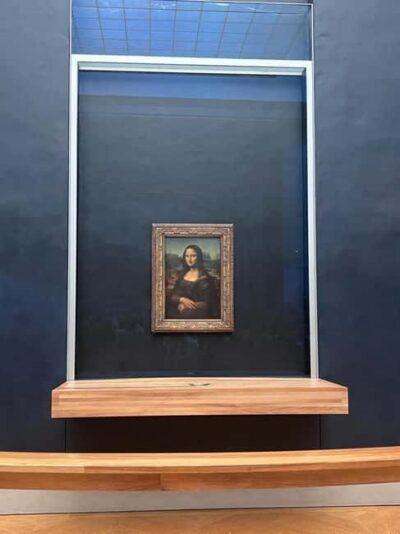
Louvre Museum Entry with History of Mona Lisa
Read our review →
Venice’s Best: Basilica, Doge’s Palace, Gondola & History Gallery
Read our review →
Guided African American History Tour with Reserved Museum Entry
Read our review →
POLIN Museum of the History of Polish Jews Ticket
Read our review →
Bell Tower & St Mark’s Square History Gallery Ticket
Read our review →
Field Museum of Natural History Ticket or VIP Tour
Read our review →
Madrid in a Day Tour:Royal Palace, Historic Center & Prado Museum
Read our review →
Basilica, Doge’s Palace, History Gallery & Bell Tower Option
Read our review →Browse the lists this tour appears in