
Review · LAZIO
Historical and Spiritual Jorney in Papal Basilicas
Rome’s grandest churches fit into one morning. This small-group tour of Rome’s papal basilicas links St. Paul Outside the Walls, San Giovanni in Laterano, Santa Maria Maggiore, and St. Peter’s Basilica, with a guide who can discuss art, church history, Roman culture, or theology according to your interests. I especially like the group size, limited to two to six people, and the guide’s flexible approach. A possible drawback is that the day includes several transfers and no line-skipping, so a long wait at St. Peter’s can stretch the four-hour schedule.
I also like that the route includes Scala Santa and the Vatican Grottoes, rather than treating the basilicas as quick photo stops. Mykhailo Hevko receives especially strong praise for his clear answers, enthusiasm, and command of Roman history. You should still wear proper church clothing, bring water or snacks, and confirm the ending point before booking because the supplied details give two different descriptions of where the tour finishes.
Six reasons this basilica tour is worth considering
- A rare four-basilica route: See all four of Rome’s major papal basilicas in one carefully packed day.
- A genuinely small group: With only two to six participants, you can ask questions without shouting across a crowd.
- More than art commentary: The guide can connect architecture and masterpieces with religious, cultural, and philosophical ideas.
- Scala Santa is included: This nearby sanctuary adds a devotional stop that many standard sightseeing routes leave out.
- Michelangelo, Bernini, and Giotto: The churches provide a strong sampler of major Italian art in working religious spaces.
- St. Peter’s is not a skip-the-line visit: You wait with the public, and the timing can change.
What this four-hour Rome experience is really about
Rome has no shortage of famous churches, but these four basilicas matter for different reasons. Together, they show the changing face of Roman Christianity, from the memory of St. Paul to the pope’s cathedral, an ancient Marian church, and the great basilica at the Vatican.
I like the way this experience treats the churches as more than grand interiors. You can ask about theology, cultural meaning, architecture, or the city’s difficult past. That matters because a short visit to a basilica can otherwise become a hunt for famous paintings with little sense of why the building matters.
The tour costs $90.63 per person. That is not the cheapest way to see churches in Rome, especially since entry to these basilicas is not generally the main expense. The value comes from the guide, the route planning, the included bus tickets, and the chance to cover four widely separated sites without working out every connection yourself.
The small group is important here. With two to six people, the guide can adjust the pace and answer questions. If you want a polished lecture delivered to a large audience, this is not the format. If you want to stop and ask why a church is important, or how a particular artwork fits into its setting, the format makes more sense.
A few more history tours around Rome worth a look
- Colosseum: Underground and Ancient Rome Tour
★ 4.7 · 12,691 reviews - Rome: Colosseum with Arena, Roman Forum and Palatine Guided Tour
★ 4.0 · 5,598 reviews - Colosseum with Arena, Roman Forum and Palatine Hill Guided Tour
★ 4.5 · 3,526 reviews
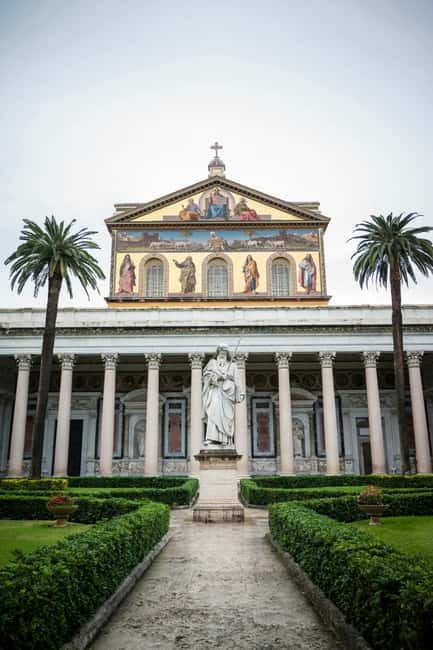
Starting at St. Paul Outside the Walls
The meeting point is on Via Ostiense, 333, near the exit of Basilica San Paolo station on Metro B. After leaving the station, turn left and go to the corner of the street. A 9:00 start is listed, so I would arrive a little early rather than trying to find the guide at the last second.
St. Paul Outside the Walls is a strong first stop. Its name tells you something about its position: it lies beyond the ancient city walls and is linked to the burial place of St. Paul. The church offers a quieter beginning than the Vatican, with a calmer and more reflective atmosphere.
The guide can explain the basilica’s turbulent past, which gives this stop more substance than a simple look at its columns and mosaics. You can expect a guided visit, with attention to its historical, religious, and cultural role.
This is also where the tour’s broad approach becomes clear. You are not limited to one subject. Ask about the church’s history, the meaning of its decoration, or the tradition connected with St. Paul. The guide’s ability to respond to questions is one of the strongest parts of the experience. Several comments about Mykhailo Hevko point to his quick answers, enthusiasm, and unusually strong command of Roman history.
Some nearby areas require a separate ticket. The cloister of the Benedictine abbey, for example, is not part of the standard visit. You can discuss adding such places, but the tour will then take longer and cost extra.
The 30-minute ride to San Giovanni in Laterano
The route continues by bus, with the journey listed at about 30 minutes. Bus tickets between the churches are included, which is a useful practical benefit. Rome’s major basilicas are not clustered around one single square, so arranging the connections independently can consume a fair amount of your morning.
The ride is also a reminder that this is a packed tour. You are covering a lot of ground, not lingering for an hour at each church. If you enjoy seeing how the city connects its major districts, the transfers add useful context. If you dislike changing locations, the pace may feel brisk.
San Giovanni in Laterano, Rome’s cathedral
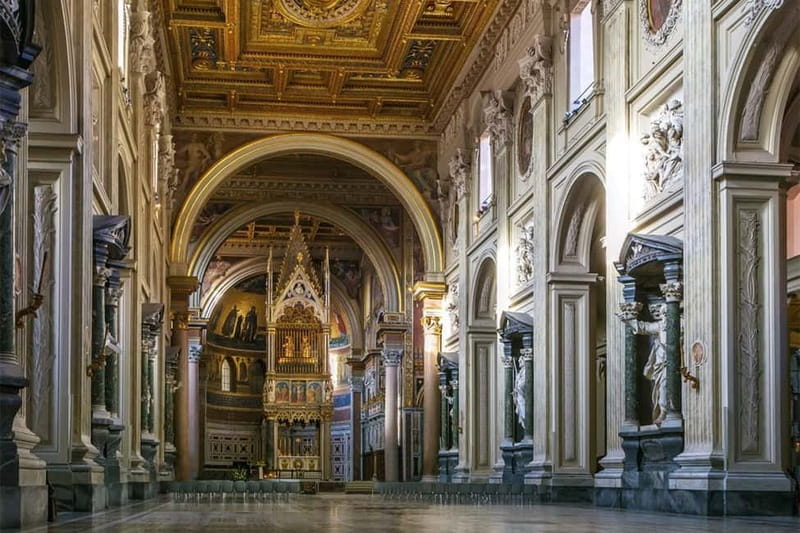
San Giovanni in Laterano is the de jure cathedral of Rome and the official cathedral church of the Roman Catholic Church. That distinction makes it one of the most important stops, even for people who know St. Peter’s better.
The guided visit is listed at about 30 minutes. That is enough for an introduction to the church’s role, major features, and religious importance, but not enough for a slow inspection of every detail. You will benefit most if you arrive with one or two questions ready.
The nearby Scala Santa, or Holy Stairs, is included. This is a particularly worthwhile addition for anyone making a Jubilee pilgrimage or interested in devotional traditions. It gives the stop a more personal and spiritual character than a standard architectural tour.
The Lateran Baptistery is also included as an optional visit. Ask the guide how it fits into the morning’s timing. The information provided says it is included, but the tour can run longer if you add places or take breaks.
Same place, a different slice of the past:
- Colosseum & Ancient Rome with Arena Floor Option I Max 6 People
★ 5.0 · 3,306 reviews - Rome: Colosseum, Ancient Rome Tour or AudioGuided Tour
★ 4.4 · 2,879 reviews - Colosseum Underground & Ancient Rome Guided Tour
★ 4.5 · 2,590 reviews - Rome: Colosseum Arena, Roman Forum & Palatine Hill Tour
★ 4.5 · 1,874 reviews
Walking Via Merulana to Santa Maria Maggiore
From San Giovanni in Laterano, you walk for about 20 minutes along Via Merulana to Santa Maria Maggiore. Comfortable shoes are not a minor suggestion here. You have walking at the meeting point, between sites, and through large church interiors, with more walking likely at St. Peter’s.
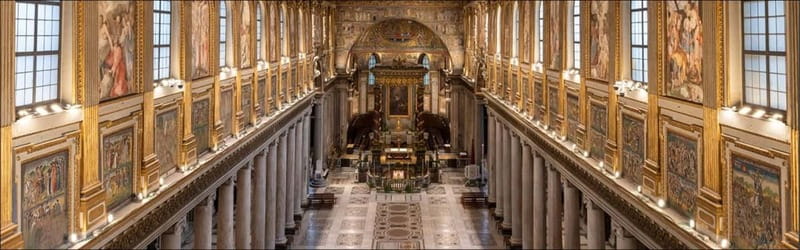
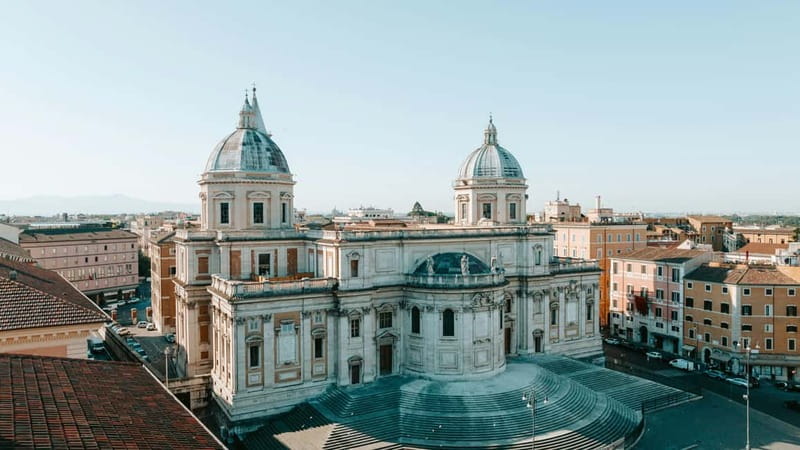
Santa Maria Maggiore is one of Rome’s oldest and largest Marian churches. Its importance is both religious and cultural, and the guide can explain the stories connected with its role as a church dedicated to Mary.
This part of the route gives the morning a welcome change of pace. Instead of stepping straight onto another bus, you move through the city on foot and see the relationship between two major basilicas. The walk is not described as difficult, but anyone with mobility concerns should consider the total amount of standing and walking across the day.
Nearby areas such as the Loggia of Blessings may require a separate payment and are not included in the standard visit. The same rule applies to museums and archaeological areas beside the basilicas. If you want to add them, agree on the plan and extra cost with the guide before entering.
A possible food break before the Vatican
The schedule allows for lunch or snacks before the final visit. Food is not included, so bring something small if you prefer not to lose time searching for a meal.
This is a sensible point for a break. By now, you will have visited three important churches and made a bus ride and a city walk. A short pause can help, but it can also push the tour beyond four hours. The stated duration is four to five hours, and it may run longer if you stop to eat, add extra sites, or encounter a long line at St. Peter’s.
Reaching St. Peter’s Square by metro
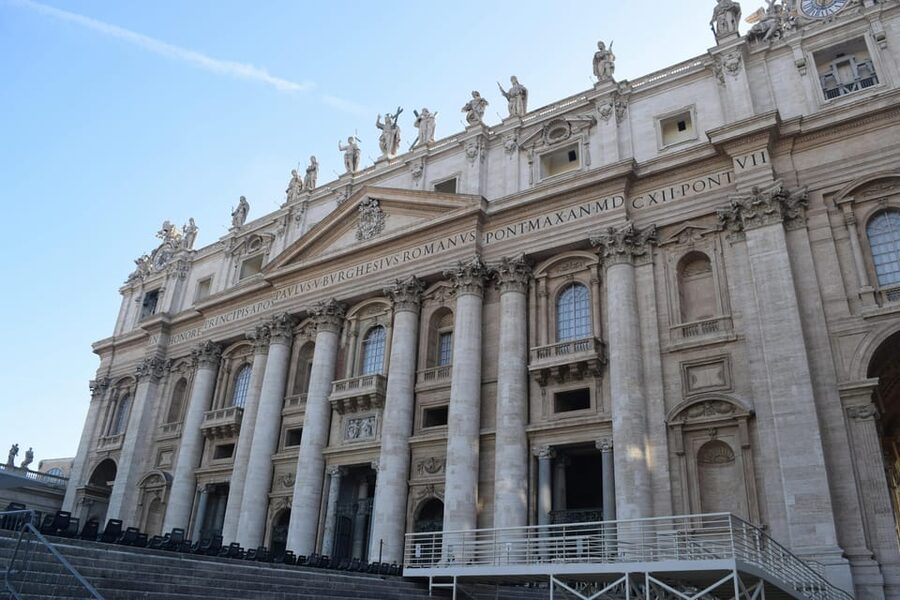
The route then uses the subway, with about 20 minutes listed for the transfer. The destination is St. Peter’s Square, where the guide begins the Vatican portion of the experience.
The square itself is worth treating as a proper stop rather than merely a path to the basilica. The guided visit lasts about 30 minutes, giving you time to understand the setting before entering St. Peter’s. Ask about the design, the square’s role in public ceremonies, and how the basilica functions as the center of Vatican pilgrimage.
The practical warning is important: this tour does not provide skip-the-line entry. You wait in the public line for St. Peter’s Basilica, and that wait is included in the listed duration. On a busy day, the line can make the tour longer than planned.
This is the least predictable part of the morning. The provider does not promise a faster entrance, so do not book a tight afternoon appointment immediately afterward. Leave room in your schedule.
St. Peter’s Basilica and the Vatican Grottoes
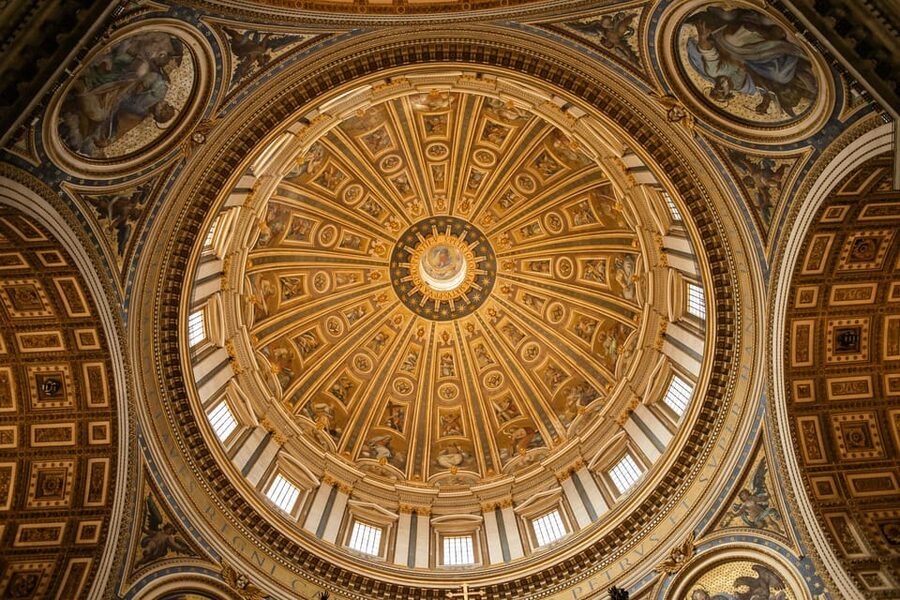
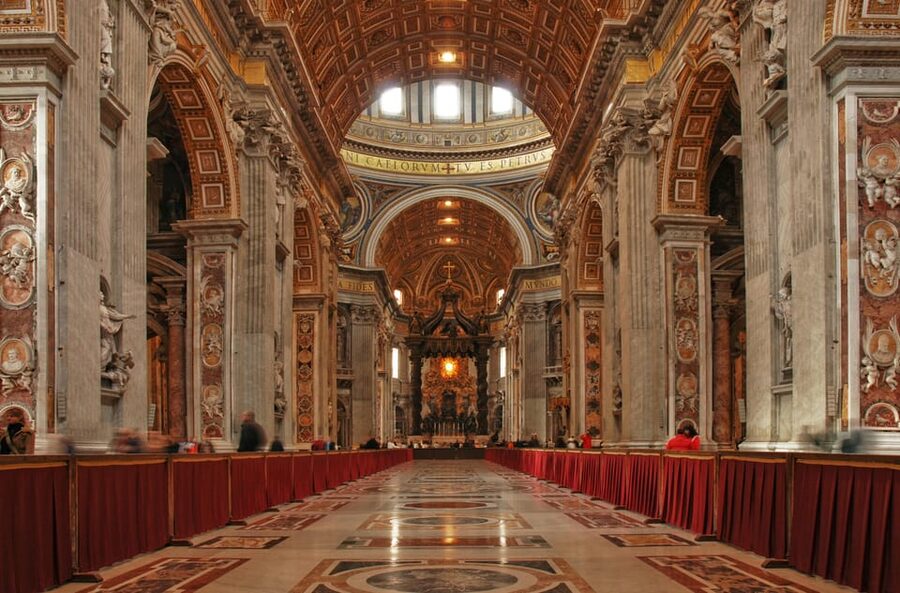
The final visit includes the Vatican Grottoes, where papal tombs are located, and St. Peter’s Basilica itself. The grotto visit is listed at about 20 minutes, followed by about 40 minutes inside the basilica.
The order and exact timing may vary, especially if the line is long. The important point is that you are not simply being dropped at the square. The guide accompanies you through the Vatican section and explains the religious and artistic meaning of what you see.
Inside St. Peter’s, you can expect major works associated with Michelangelo and Bernini, along with the scale and ceremony that make the basilica so memorable. The guide can place the art in a wider setting, which helps you see why the building matters beyond its fame.
The Vatican Museums and Sistine Chapel are not included. That is a useful boundary to understand. This is a basilica tour, not a full Vatican Museums visit, and you should make a separate plan if the Sistine Chapel is a priority.
The Vatican Grottoes add a different mood. The basilica above is grand and public; the grottoes are tied to papal burials and remembrance. For a Jubilee pilgrimage, this may be one of the most meaningful parts of the day. For a purely art-focused visit, it offers useful context but may feel more devotional than visual.
What the guide adds to the day
The guide is Mykhailo Hevko, and the strongest praise focuses on his prompt answers, enthusiasm, and broad command of Roman history. That matters on a route with four separate churches because each building has its own vocabulary and purpose.
You can ask for historical information, cultural background, theological explanation, or philosophical context. The experience is not limited to a fixed speech, although the short schedule means you should tell the guide early what interests you most.
The languages offered are English, Italian, and Ukrainian. The group is limited to six people, and the activity is wheelchair accessible. Clothing rules apply inside the churches: shoulders and knees should be covered, and short skirts and sleeveless shirts are not allowed.
Comfortable clothing and shoes are essential. Weapons, sharp objects, glass items, alcohol, drugs, and explosive substances are not allowed, and pets are not permitted except for assistance dogs.
What is included and what costs extra
Included are the guided visits to the main basilicas, Scala Santa, bus tickets between churches, and the optional Lateran Baptistery. The details describe the route as including three Pontifical Basilicas, but the actual stops also include St. Peter’s Basilica, making four major basilicas in total. I would confirm exactly what is covered when you reserve.
You pay separately for food and drinks. You also pay separately for museums, archaeological areas, and adjacent attractions that require tickets. The Vatican Museums and Sistine Chapel are not included, and there is no skip-the-line entry for St. Peter’s or the other churches.
At $90.63, I see the price as reasonable for a private-feeling small-group route with transportation and a guide who can respond to questions. It is less attractive if you plan to spend only a few minutes in each church or if you are happy to arrange public transport and read about the sites yourself.
There is free cancellation up to 24 hours before the activity, and you can reserve now and pay later. The meeting information also needs clarification: one section says the activity ends at Santa Maria Maggiore, while another says it ends back at the meeting point. Ask about this before booking so you know where to plan your next stop.
Who should book this basilica tour?
I would recommend it to a first-time Rome visitor who wants a serious introduction to the city’s main Catholic churches without joining a large group. It also suits a religious pilgrim, especially during a Jubilee, because Scala Santa and the Vatican Grottoes give the route a devotional purpose.
It is a good choice for an art lover who wants to see works connected with Michelangelo, Bernini, and Giotto in their church settings. The guide’s wide subject range is useful if you want more than dates and names.
I would hesitate if you need a slow, relaxed day. Four basilicas, a bus ride, a walking connection, a metro ride, and a possible St. Peter’s queue create a full morning. I would also avoid placing an important timed booking directly afterward.
FAQ
How long does the basilica tour last?
The planned duration is about four hours, though the details also give a four-to-five-hour range. It can take longer if the line at St. Peter’s is long, you add extra sites, or you stop for food.
What time does the tour start?
The main schedule lists a 9:00 start. You should check the available date and start time when booking.
Where is the meeting point?
Meet on Via Ostiense, 333, near the exit of Basilica San Paolo Metro B station. After leaving the station, turn left and go to the corner of the street.
Which churches are visited?
The route includes St. Paul Outside the Walls, San Giovanni in Laterano, Santa Maria Maggiore, and St. Peter’s Basilica.
Is Scala Santa included?
Yes. The Sanctuary of Scala Santa is included, and the Lateran Baptistery is available as an optional included visit.
Are Vatican Museums and the Sistine Chapel included?
No. The Vatican Museums and Sistine Chapel are not part of this activity.
Does the tour skip the line at St. Peter’s Basilica?
No. Skip-the-line entry is not included. You wait in the regular line, and the waiting time can make the tour longer.
What languages does the guide speak?
Guiding is available in English, Italian, and Ukrainian.
What should I wear and bring?
Wear clothing that covers your shoulders and knees, along with comfortable shoes. Snacks are recommended, and food and drinks are not included.
Should you book it?
Book this tour if you want four major basilicas explained in a small group, with room for questions and a guide who can move between art, history, culture, and faith. The route offers strong value for a visitor who wants structure and personal guidance rather than a crowded sightseeing circuit.
Skip it if you want the Vatican Museums, the Sistine Chapel, guaranteed fast entry, or a leisurely pace. Before paying, confirm the final meeting point and decide how much waiting and walking you can manage. If those details suit your day, this is a thoughtful way to see Rome’s great churches in one concentrated morning.
Just added around Rome
- Day drinking in Rome – Scandalous Roman History★ 4.8 · 31 reviews
- Rome: Colosseum Arena and Ancient Rome Guided Tour★ 4.8 · 23 reviews
- Rome: Colosseum and Ancient Rome Access with Optional Arena★ 4.5 · 198 reviews
- Ancient Rome Half-Day Segway Tour★ 4.8 · 25 reviews
- Ancient Rome: Archeological area Largo Argentina★ 3.9 · 49 reviews
- VIP Colosseum Underground and Ancient Rome Small Group Tour★ 4.5 · 332 reviews
- Colosseum Forum Ancient Rome Small Group Tour for Kids Families★ 5.0 · 198 reviews
- Colosseum & Ancient Rome Semi-Private Tour★ 5.0 · 208 reviews
Rome History Tours, compared.
Colosseum: Underground and Ancient Rome Tour
Read our review →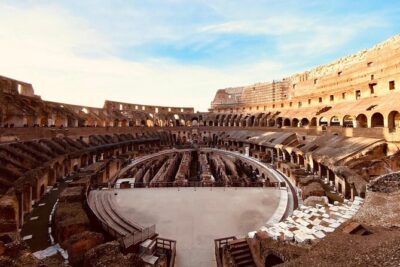
Colosseum with Arena, Roman Forum and Palatine Guided Tour
Read our review →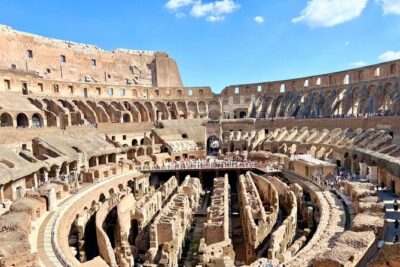
Colosseum with Arena, Roman Forum and Palatine Hill Guided Tour
Read our review →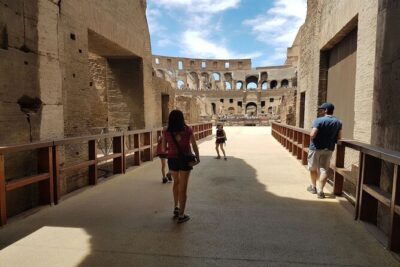
Colosseum & Ancient Rome with Arena Floor Option I Max 6 People
Read our review →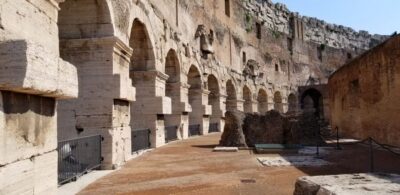
Colosseum, Ancient Rome Tour or AudioGuided Tour
Read our review →
Colosseum Underground & Ancient Rome Guided Tour
Read our review →
Colosseum Arena, Roman Forum & Palatine Hill Tour
Read our review →
Colosseum, Roman Forum & Palatine Hill Guided Tour
Read our review →Browse the lists this tour appears in