
Review · LUXOR
3-Day Luxor Aswan and Abu Simbel Historical Sites Private Tour
Ancient Egypt in three tightly packed days. This private tour links Luxor, Aswan, and Abu Simbel with an Egyptologist, first-class train travel, hotel transfers, and the boat ride to Philae Temple. I like the freedom of traveling with only your own party, and I like that the company handles the awkward pieces, especially train tickets and local transport. The main catch is that entrance fees, meals, drinks, and accommodation are extra, so the advertised price is not the final cost.
The route covers some of Egypt’s greatest sights, from the tombs of the Valley of the Kings to the colossal statues at Abu Simbel. I also like the room for personal pacing at several stops. Still, this is a serious sightseeing schedule, with long drives, early starts, and little spare time for rest.
Key details that shape the experience
- Three major destinations in three days: Luxor’s temples and tombs, Aswan’s monuments, and Abu Simbel all fit into one compact route.
- Private touring: Only your party takes part, making it easier to ask questions, adjust the pace, and request help with practical details.
- First-class rail included: The train between Luxor and Aswan is arranged for you, removing one of the trip’s more tiresome tasks.
- Philae requires a boat: A motorboat ride to the island temple is included, adding a memorable water crossing to the sightseeing.
- Guide support matters: Guides named Khaled and Khalid receive especially warm praise, while Mohamed is often singled out for careful trip coordination.
- Entrance fees are separate: Budget for the sites, food, drinks, tips, and any requested accommodation before booking.
Is three days enough for Luxor, Aswan, and Abu Simbel?
Yes, but only if you accept a brisk pace. This is not a slow archaeological holiday where you spend half a day sketching one column. It is a smart route for seeing the major monuments when your time in southern Egypt is limited.
The private format helps. You are not waiting for a large group to finish shopping, photograph every doorway, or return to the vehicle. You can ask the guide to spend more time on the tombs, move quickly through a familiar section, or pause when a detail catches your eye.
The tradeoff is physical and mental fatigue. Day one brings several major sites in Luxor. Day two covers Aswan’s main attractions. Day three is devoted to Abu Simbel, with roughly eight hours allocated to the visit and transport. You should have a moderate level of fitness and be comfortable walking in exposed areas.
The published price is $251.29 per person. That is a fair starting point for a private, multi-city arrangement with transport, a guide, first-class rail, parking, fuel, taxes, and the Philae boat ride included. It is not an all-inclusive price. Entrance tickets to every monument, meals, drinks, tips, personal spending, and accommodation are not included. Ask for the full expected total before you commit.
More Private History Tours in Egypt:
- From Cairo: Private Full-Day Tour of Historical Alexandria
★ 4.1 · 1,155 reviews - 4Hours Private Pyramid with lunch&camel ride through Ancient Giza
★ 5.0 · 35 reviews - Full-Day Private Tour: Historic Alexandria From Cairo
★ 4.5 · 20 reviews
Day one: tombs and temples across Luxor
The first day moves through Luxor’s West Bank and East Bank. The order makes sense geographically, although the exact pickup time and sequence should be confirmed in advance.
Valley of the Kings: choose your tombs wisely
The Valley of the Kings is the emotional anchor of the West Bank. These dry hills held the royal tombs of Thebes, and the painted chambers offer a far more intimate experience than the huge temples outside.
The guide gives you an introduction at the visitor center and explains what to notice inside. Guides cannot enter the tombs with you, so this briefing is useful. Pay attention to the ceiling scenes, protective deities, funerary texts, and the way the paintings continue into the burial chambers.
The standard admission does not include every tomb. The tomb of Tutankhamun costs extra, payable directly, so decide before arriving if that famous name matters to you. The room is important because of the discovery and the objects found there, but other tombs can offer more extensive decoration. This is a good place to ask your Egyptologist for a recommendation rather than simply choosing the most famous option.
The planned stop lasts about 90 minutes. That sounds generous, but the time can pass quickly if you visit several tombs. Wear practical shoes, carry water, and remember that the route includes walking in the sun and entering underground chambers.
Temple of Hatshepsut: a striking royal statement
Hatshepsut’s temple rises against the cliffs in broad terraces. Its clean lines make a sharp contrast with the crowded decoration of many older Egyptian monuments.
Your guide explains how Hatshepsut presented herself as a male ruler to strengthen her claim to the throne. The story is not just a tale about a woman in power. It also reveals how Egyptian kingship was presented through images, titles, clothing, and divine approval.
You get about an hour here, including free time to walk through the courtyards and inspect the reliefs. I would use the guided explanation first, then take a few quiet minutes to look back toward the cliffs and understand why the site was chosen. Some surfaces were damaged in later periods, so do not expect every relief to be intact.
A few more history tours around Egypt worth a look
- Cairo: 3-Day Siwa Oasis Tour, Safari, Camp & Historical Site
★ 4.9 · 80 reviews - 3-Day Yellow Mountains, Hongcun Village and Tunxi Ancient Street Private Tour
★ 5.0 · 75 reviews - 3-Day Ancient Greek Archaeological Sites Tour from Athens
★ 4.5 · 52 reviews - Beijing: All-Inclusive 3-Day Private Tour of Must-See Sights
★ 5.0 · 35 reviews
Colossi of Memnon: a quick stop with a big view
The two seated statues of Amenhotep III are all that remain of a much larger funerary complex. The stop is only about 20 minutes, but it gives you a chance to see the scale of royal sculpture without paying an extra admission charge.
This is mainly a photo and orientation stop. Your guide can explain what once stood behind the figures, while you look across the open West Bank. Do not expect an extended visit. The value here is visual: two huge stone figures beside the road, with the remains of ancient Luxor stretching around them.
Karnak Temple: allow time for the columns
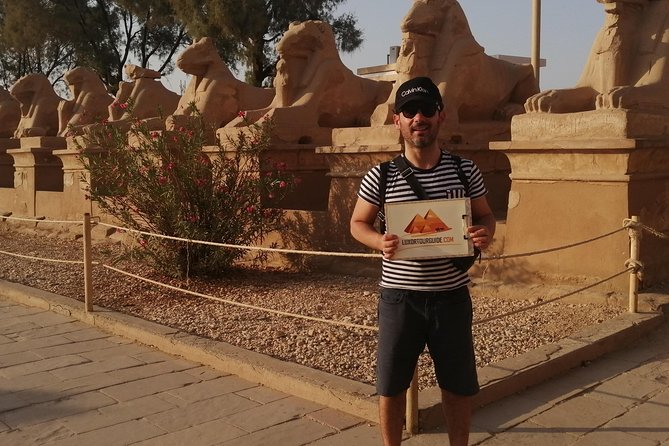
Karnak is so large that a rushed visit can leave you with only a blur of pylons and statues. The route includes the Avenue of Sphinxes, the Great Court, the Great Hypostyle Hall, and the sacred lake.
The Hypostyle Hall is the showstopper. Its 134 columns rise like a stone forest, many still carrying carved scenes and inscriptions. Your guide can help you understand that Karnak was not built in one burst. Pharaoh after pharaoh added to the complex, leaving layers of religious and political history across more than 3,000 years.
The supplied schedule lists two minutes for this stop, which is almost certainly a timing error given the size of Karnak and the description of the visit. Confirm the actual time when you book. You need a proper visit here, not a roadside glance.
After the guided walk, free time lets you explore at your own pace. If you care about inscriptions or architecture, tell your guide before entering so the visit does not become a quick march from one landmark to the next.
Luxor Temple: Egypt by evening light
Luxor Temple is more compact than Karnak and easier to take in. The entrance once connected to Karnak by a two-kilometer Avenue of Sphinxes, and part of that avenue still frames the approach.
Ramses II appears prominently here, while later rulers added their own marks. Alexander the Great also linked himself to the temple’s story. Your guide can point out the hieroglyphs and explain how the monument changed over time.
One of the original pair of obelisks remains at Luxor. Its partner now stands in Paris at the Place de la Concorde, a detail that makes the history of European collecting very visible. The one-hour visit should give you time for the main court, columns, statues, and inscriptions, though you may want longer if you enjoy close study.
First-class rail from Luxor to Aswan
The train connection is one of the tour’s most useful inclusions. Buying rail tickets in Egypt can take patience, especially when you are also trying to arrange transfers and keep a tight sightseeing schedule. First-class seating should make the journey more comfortable, though the exact departure time and travel duration are not supplied.
This is also the point where you should clarify the overnight plan. Accommodation is available by request rather than included in the base price. Ask where you sleep after the Luxor day, how the train fits the schedule, and where the Aswan pickup takes place.
The private arrangement can be adjusted around your wider Egyptian trip. One account describes starting from Aswan airport, showing that the company may coordinate different arrival points. Do not assume that airport pickup, hotel nights, or a return to your original hotel are included without written confirmation.
Day two: Philae, granite, and the High Dam
Aswan has a calmer feel than Luxor, and its sights explain both ancient engineering and modern Egypt. The day visits Philae Temple, the Unfinished Obelisk, and the High Dam.
Philae Temple: an island setting worth the boat ride
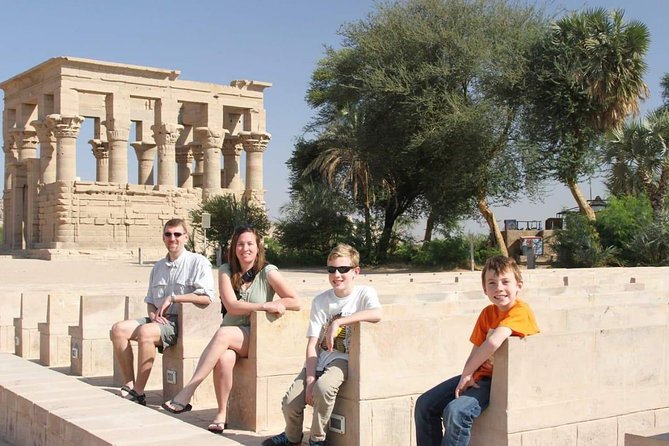
Philae is reached by a short motorboat ride, and that crossing is part of the experience. The temple was moved about 500 meters from its original location when the High Dam caused the Nile waters to rise. Its current island setting was arranged to resemble the old site.
The temple is dedicated to Isis, and its reliefs connect to the stories of Isis and Osiris. Your guide leads the walking visit, then gives you time to explore alone. That balance works well here. Listen first for the story and layout, then wander through the sanctuaries and courts without having to keep up with a group.
The scheduled visit lasts two hours. The boat ride adds a clear sense of arrival, but the water crossing also means you should keep your belongings secure and follow local instructions at the dock. The boat journey is included, while the temple admission is not.
The Unfinished Obelisk: a lesson in ancient stonework
In Aswan’s granite quarries, the Unfinished Obelisk still lies where workers abandoned it after discovering a crack. The site makes the carving process easier to understand because the stone remains attached to the quarry floor.
Your guide explains how red granite was used for temples and colossal statues, and why a flaw could ruin a project of this scale. The stop lasts about an hour. It is less polished than a finished temple, but that is exactly its value. You see the work before transport, raising, and decoration turned it into a symbol of royal power.
Aswan High Dam: modern engineering beside Lake Nasser
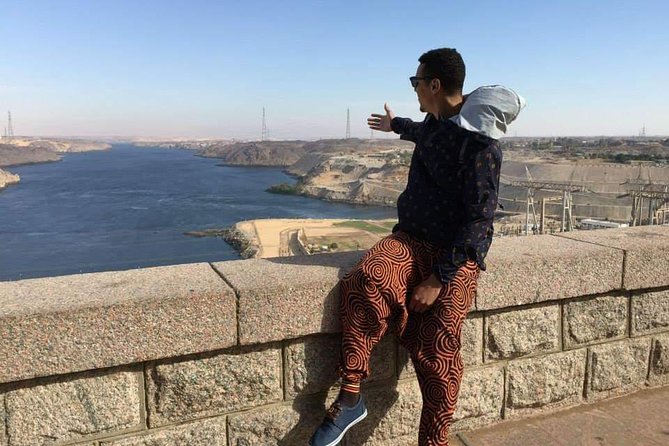
The High Dam shifts the focus from pharaohs to twentieth-century Egypt. Construction took ten years, from 1960 to 1970, and created Lake Nasser, described in the tour material as the second-largest artificial lake in the world.
You also cross by the Friendship emblem. The stop helps connect the ancient monuments with the modern engineering project that changed the Nile and forced the relocation of Philae. Plan for one hour, though the experience is more about scale and explanation than detailed sightseeing.
Day three: the long road to Abu Simbel
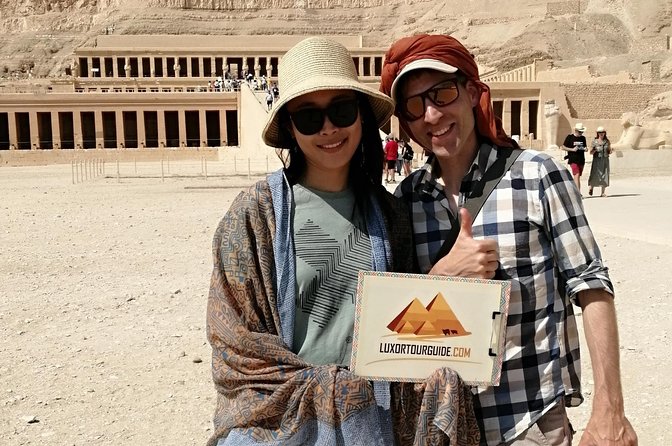
Abu Simbel is the grand finale, and the day is built around it. The vehicle journey from Aswan takes much of the day, with about eight hours assigned to the excursion. That figure includes the road time and site visit, so expect a long outing rather than a short add-on.
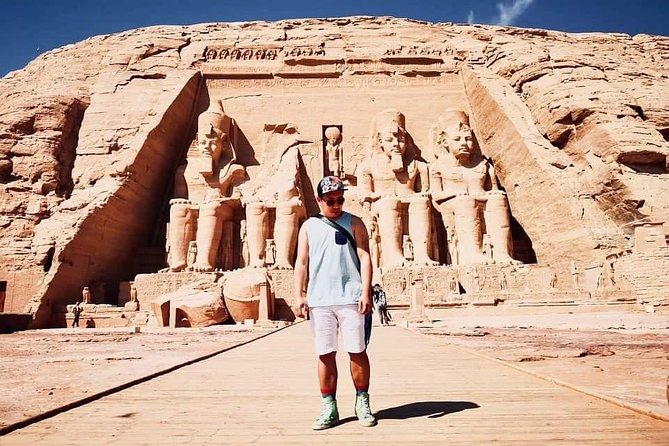
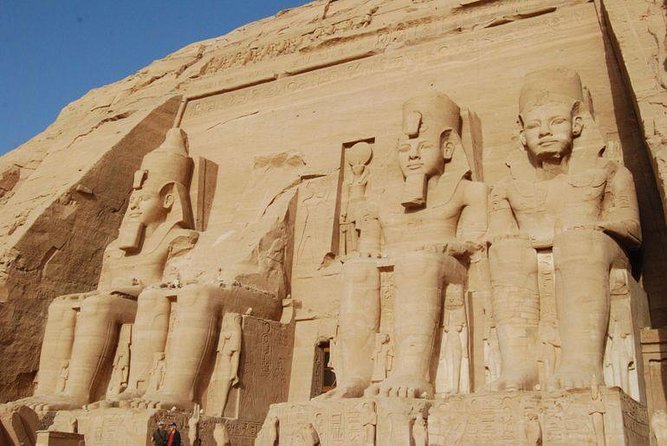
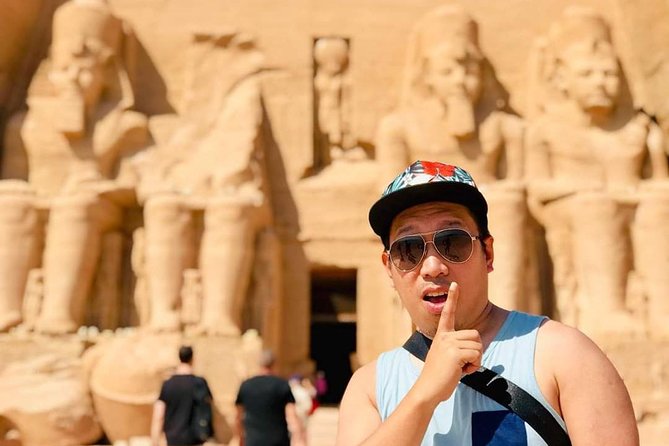
The Great Temple of Ramses II is fronted by four enormous seated figures cut into the rock. The smaller Temple of Hathor sits nearby, and both temples were moved to higher ground in a major international relocation project before Lake Nasser covered their original setting.
Your Egyptologist explains the discovery of the temples in 1813 and the relocation work before you reach the entrances. Guides cannot enter the two temples, so the interior visit is self-guided. Photos and illustrations help explain what you are seeing, but you should understand this limitation before booking. The guide can prepare you well, yet you will not receive a live explanation beside every wall scene.
This is the day when comfort matters most. You will spend many hours in a vehicle and walk across an exposed site. Bring water, protect yourself from the sun, and keep your expectations realistic. The reward is one of Egypt’s most dramatic monuments, but the road time is the price of reaching it.
What the private format adds
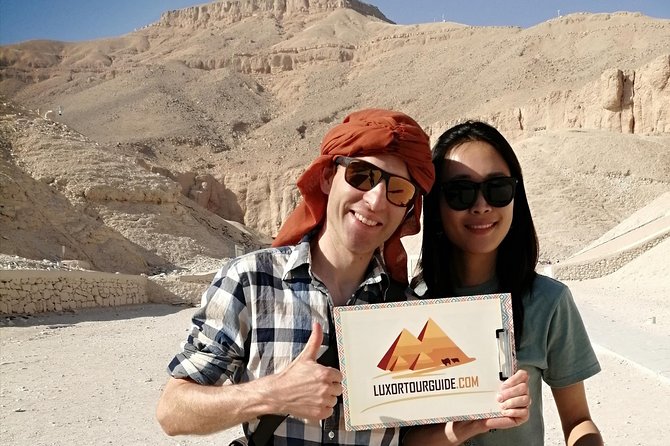
The most valuable feature may be control. You are not sharing the vehicle or guide with strangers, and that gives you room to ask for more explanation or less time at a particular stop.
The guide’s role is also more important than the vehicle. Past praise repeatedly centers on Khaled, described as warm, funny, helpful, and clear in his explanations. Khalid is also named positively in several accounts. Mohamed is praised for staying in contact and suggesting practical arrangements around individual needs. Since guide assignment can vary, ask who will lead your dates.
A private tour does not remove every inconvenience. Egypt’s monuments are large, admission desks can take time, and the Abu Simbel drive remains long. What it does is reduce the number of decisions you must make alone.
What is included, and what you must budget
Included services are:
- Qualified Egyptologist guide
- Hotel pickup and drop-off
- Air-conditioned vehicle
- First-class train seating between Luxor and Aswan
- Boat journey to Philae Temple
- Driver, parking, fuel surcharge, service charges, and taxes
Not included are entrance tickets, food, drinks, personal expenses, laundry, gratuities, and accommodation unless requested separately. Tutankhamun’s tomb also requires an additional direct payment.
Tips are recommended, so keep some cash available. The exact entrance total depends on which tombs and sites you enter, making it wise to ask for a current estimate before departure.
Free cancellation is available when you cancel at least 24 hours before the local start time. Changes or cancellations inside that window are not accepted for a refund.
Who should book this three-day route?
I would choose this for someone with limited time who wants the main southern Egypt sights without piecing together trains, cars, boats, and guides. It also suits couples, families, and small groups who value privacy and want to ask many questions.
It is less suitable if you prefer slow mornings, long meals, or several hours at each monument. An Egyptology enthusiast may want extra time at the Valley of the Kings, Karnak, or individual tombs, so ask if the schedule can be adjusted.
Should you book the Luxor, Aswan, and Abu Simbel tour?
Book it if your priority is coverage and convenience. For $251.29 per person before entrance tickets, food, tips, and accommodation, you receive a private guide, arranged transport, first-class rail, and the Philae boat crossing. That is strong value for a three-day route with this much ground covered.
Before paying, confirm the starting city, hotel arrangements, train times, actual Karnak visit length, entrance costs, and assigned guide. If you can handle long days and a major Abu Simbel drive, this is an efficient way to see southern Egypt’s essential monuments while keeping the planning burden low.
FAQ
How long is the tour?
The tour lasts approximately three days.
Is this a private tour?
Yes. Only your party participates in the activity.
Is hotel pickup included?
Yes. Hotel pickup and drop-off are included.
Are train tickets included?
Yes. First-class train seating between Luxor and Aswan is included.
Is the Philae boat ride included?
Yes. The boat journey to Philae Temple is included.
Are entrance fees included?
No. Admission fees to the sites are not included in the stated price.
Is accommodation included?
No. Accommodation is available by request but is not included in the base package.
Is food included?
No. Food and drinks are not included unless specifically stated.
Can I visit Tutankhamun’s tomb?
Yes, but an additional fee is payable directly if you choose to enter.
Can the tour be canceled for a full refund?
Yes, if you cancel at least 24 hours before the local start time. Cancellations made less than 24 hours before the start time are not refunded.
Just added around Egypt
- Explore the history and treasures of Luxor on a full-day tour★ 5.0 · 21 reviews
- Valley of the Kings & Hatchepsut temple and Back into Egypt’s ancient history★ 5.0 · 18 reviews
- Full-Day Private Tour: Historic Alexandria From Cairo★ 4.5 · 20 reviews
- Cairo Half Day Tours visit Islamic Cairo & ancient mosques★ 5.0 · 51 reviews
- Discover The Historical Mosques In Cairo★ 5.0 · 21 reviews
- Full-Day Tour of Giza, Saqqara & Memphis –Ancient Egypt Discovery★ 5.0 · 41 reviews
- 4Hours Private Pyramid with lunch&camel ride through Ancient Giza★ 5.0 · 35 reviews
- Best Two-Day Guided Tours to the Ancient Cairo ,Giza Pyramids , Sakkara and More★ 5.0 · 31 reviews
Private History Tours, compared.


Private Guided Historic Electric Cart Tour of St. Augustine
Read our review →
Acemoglu Historical Turkish Bath w/Private Options
Read our review →
Private Full-Day Tour of Historical Alexandria
Read our review →
Private Tour of the Historic City in a Ford T Car
Read our review →
Madrid Historical Tour with Local Guide in Eco Tuk Tuk Private
Read our review →
Private Biblical Tour Ancient Corinth & Isthmus Canal from Athens
Read our review →
Private Kathmandu Sightseeing Tour | UNESCO World Heritage sites
Read our review →Browse the lists this tour appears in