
Review · MALTA
Palazzo Falson Historic House Museum entrance ticket
Old Mdina keeps a private side. Palazzo Falson gives you a close look at medieval domestic life, then surrounds you with the art and objects collected by Captain Olof Frederick Gollcher. I especially like the 17 rooms packed with 45 collections and the chance to finish with coffee on the upper terrace, where Mdina opens out below you.
The $15 ticket is good value if you enjoy historic houses, paintings, books and decorative objects more than a quick photo stop. The main drawback is simple: there is a lot to take in, and visitors who prefer a short, sharply focused attraction may find the collection dense. Children under six are not admitted.
Key points to know before you go
- One of Mdina’s oldest buildings: The palace is the second-oldest building still standing inside the walled city.
- A collection built by one remarkable owner: Captain Olof Frederick Gollcher filled the house with art, books, furniture, silver, jewellery and historical objects.
- More than 3,500 objects: Forty-five separate collections are spread through 17 rooms, so this is far more than a simple period house.
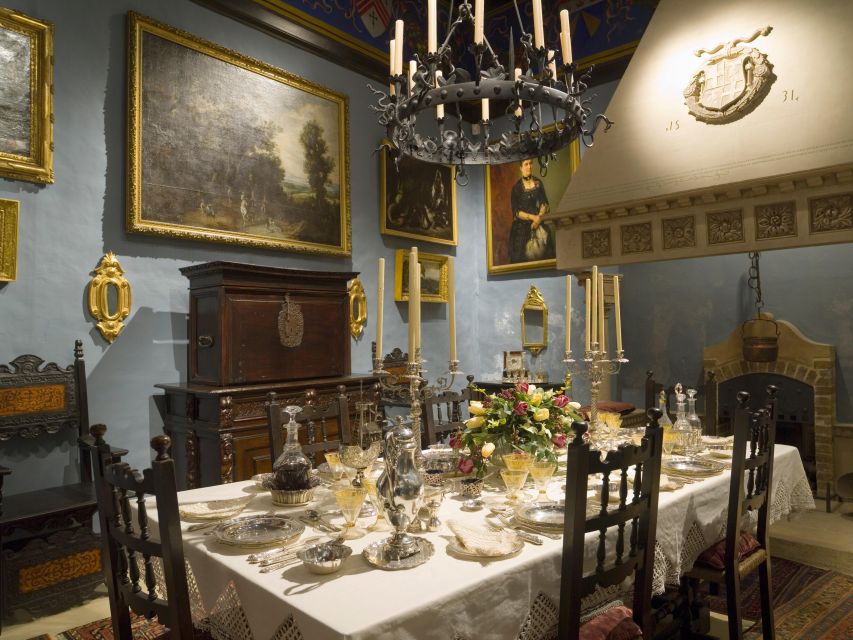
- Important paintings: Works attributed to Mattia Preti, Jusepe de Ribera, Jakob-Ferdinand Voet, Charles Beale and Juriaen van Streeck add real artistic weight.
- A library with over 4,500 books: Manuscripts and printed volumes give the visit a strong literary side.
- A useful final stop: The terrace cafeteria offers views across Mdina and beyond, making coffee a pleasant way to end your visit.
Entering Mdina’s second-oldest surviving building
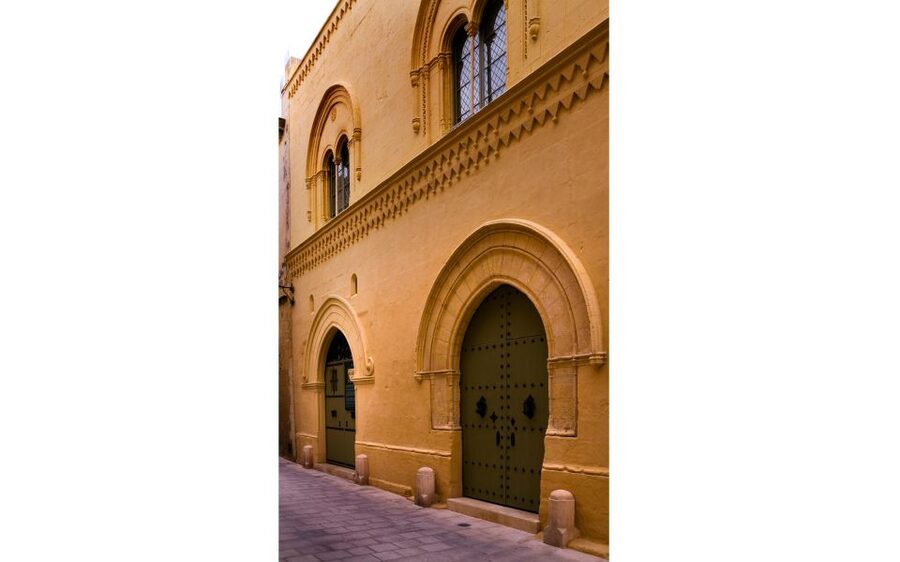
Palazzo Falson sits within Mdina, the former capital of Malta. The walled city is compact and atmospheric, but its narrow streets can make it easy to see Mdina only as a collection of stone lanes, grand facades and church interiors. Palazzo Falson gives those stones a domestic setting.
The origins of the building reach back to the early 13th century. It was fashioned as a two-storey medieval palace, with Sicilian influence in its design, for a Maltese noble family. That matters because you are not simply viewing a later replica or a museum built to resemble a medieval home. The building itself carries the long story.
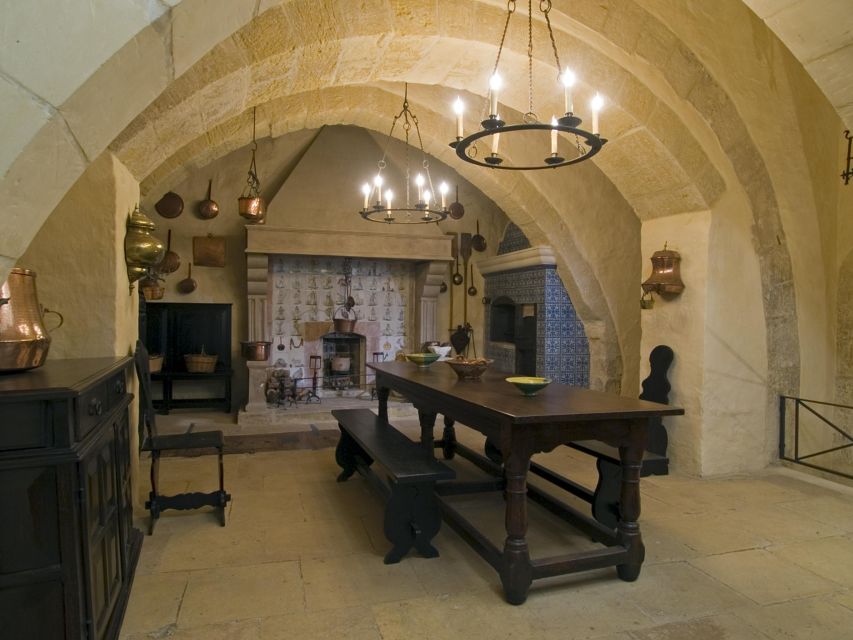
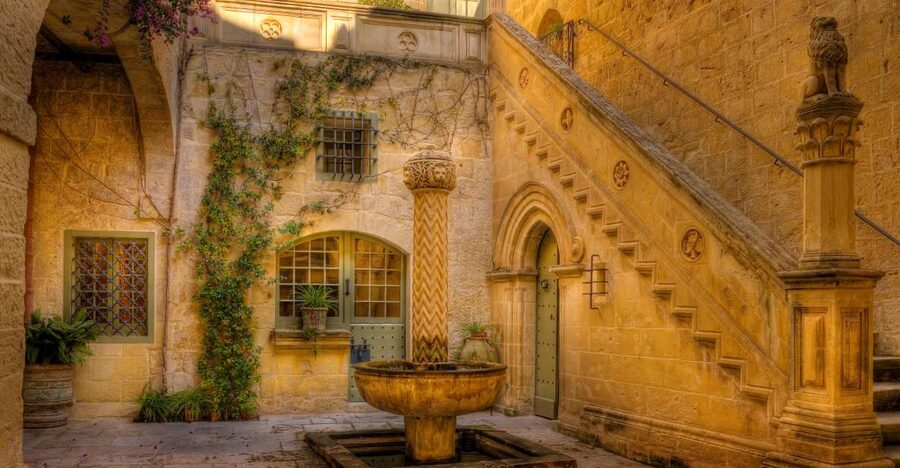
The layout is easy to picture. Rooms wrap around an internal courtyard, while the upper piano nobile, meaning the principal or noble floor, contains the original living quarters. The rooms at the rear of the courtyard form the oldest section of the palace.
I find this arrangement more useful than a row of unrelated galleries. As you move through the house, you can connect the objects with the rooms that held them. Furniture feels less abstract when you see it inside a residence, and books or armour make more sense when they are part of a home rather than isolated display cases.
The palace has also carried several names. It was once known as Palazzo Cumbo-Navarra, Casa dei Castelletti and the Norman House. Those names reflect different chapters in the building’s story, while Palazzo Falson is tied to a later owner and family connection.
More Museum and Gallery History Tours in the world:
- Paris: Louvre Museum Entry with History of Mona Lisa
★ 3.9 · 2,823 reviews - Venice’s Best: Basilica, Doge’s Palace, Gondola & History Gallery
★ 4.5 · 2,478 reviews - Guided African American History Tour with Reserved Museum Entry
★ 4.5 · 1,180 reviews
The Falson connection and a visit from the Knights
In the early 16th century, the property passed to Michele Falson, who served as vice admiral and head of Mdina’s town council. His connection gives the palace its present name and places it firmly within Malta’s civic and noble past.
One especially notable event links the house to the arrival of the Knights of the Order of St. John. After Malta was given to the Knights by Emperor Charles V, Grand Master Philippe Villiers de L’Isle Adam was hosted by Maltese nobles at Palazzo Falson. This followed the ceremony in which he took possession of Mdina on 13 November 1530.
You do not need a specialist background in Maltese history to appreciate the importance of this moment. Mdina was Malta’s former capital, and this palace was connected to the local elite at a turning point in the island’s story. The building helps you picture history at human scale: not only fortifications and official ceremonies, but also the private rooms where important people were received.
Olof Gollcher’s house of collected treasures
The most personal part of the museum comes from Captain Olof Frederick Gollcher, who lived from 1889 to 1962. Of Swedish descent, Gollcher was an artist, researcher, philanthropist and collector. He received several honours, including the O.B.E., and assembled the objects now displayed throughout the palace.
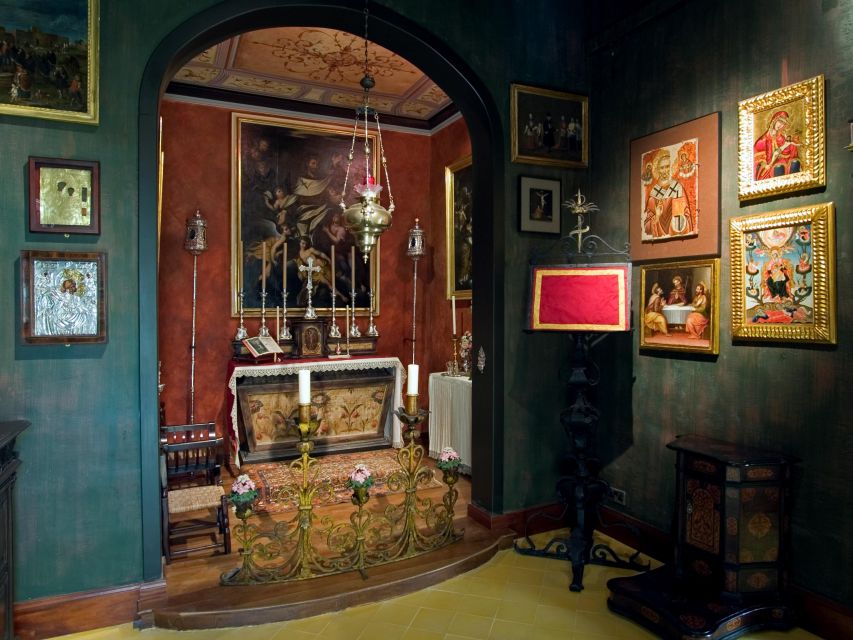
This is why Palazzo Falson feels like a house with a particular personality. Gollcher did not collect only one type of object. His interests covered paintings, silver, furniture, jewellery, Oriental rugs, armour, books and manuscripts. The result is broad, sometimes surprising and very full.
The total collection contains more than 3,500 objects across 45 specific collections. Seventeen rooms may not sound like a huge museum, but 3,500 objects can make the visit surprisingly substantial. I would allow enough time to look carefully rather than racing from room to room.
The collection also rewards different kinds of visitors. You can focus on paintings, use the house to understand noble interiors, search for unusual historical objects, or spend much of your time with the library. You do not have to appreciate every category equally. The range lets you follow your own interests.
At the same time, this variety is the main consideration. A room may present furniture beside decorative pieces, books, silver and art. If you like clean, single-subject displays, the arrangement may feel busy. If you enjoy spotting connections between objects, it becomes part of the appeal.
Seventeen rooms, with plenty to examine
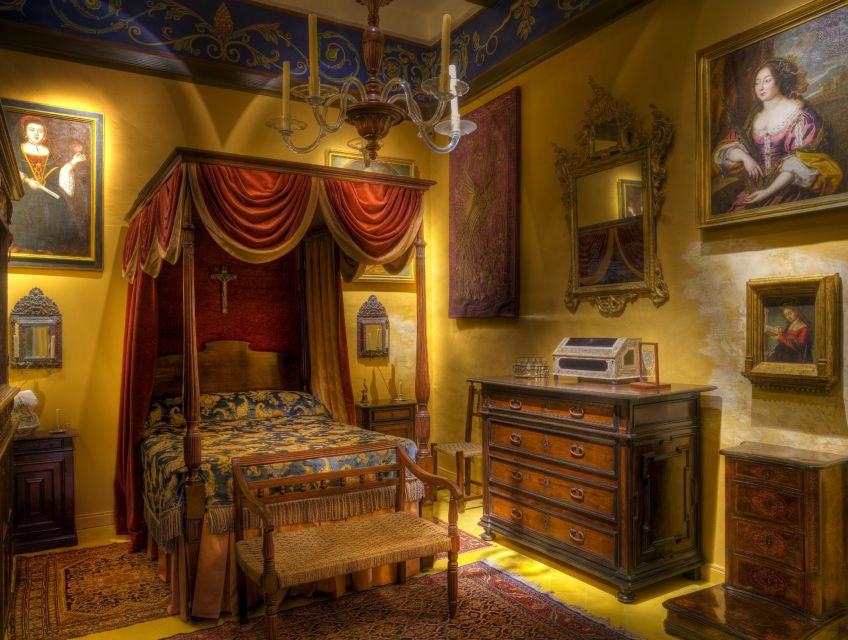
The museum experience is not described as a fixed guided route with timed stops. Instead, your ticket gives you a full day of validity, and you explore the house with an audio guide. That format suits Palazzo Falson because the collection asks you to pay attention to individual rooms and objects.
The audio guide is available in English, French, German, Italian, Maltese and Spanish. It gives you a way to add context without depending on a live tour schedule. An English-speaking host or greeter is also provided, while printed information is available in a wide range of languages, including Arabic, Chinese, Czech, Dutch, Greek, Hungarian, Japanese, Polish, Portuguese, Russian, Slovak and Swedish.
That language support is practical, especially in a collection with so many objects. You can use the audio guide for the main explanation, then rely on the printed material when you want to pause and inspect something at your own pace.
The house is best approached slowly. Look at how furniture occupies the rooms, note the contrast between domestic objects and armour, and give the paintings time rather than treating them as decoration between larger displays. I would also keep some attention for the less obvious items. Silver, jewellery, rugs, manuscripts and books can be as revealing as the major paintings.
You may find that one visit is enough for a general impression but not enough to absorb every collection. That is not a flaw, but it is useful to know before you arrive. The museum offers quantity as well as quality, and quantity requires some patience.
More Entry Tickets in the world:
- Edinburgh: Edinburgh Castle Guided History Tour with Tickets
★ 4.8 · 9,933 reviews - Taormina: Ancient Theater Skip-the-Line Ticket & Audio Guide
★ 4.5 · 2,412 reviews - Historic Milan Tour with Skip-the-Line Last Supper Ticket
★ 4.5 · 1,976 reviews - Prague: Hop-on Hop-Off Historical Tram Ticket for Line 42
★ 4.1 · 1,702 reviews
The paintings, from Mattia Preti to Dutch interiors
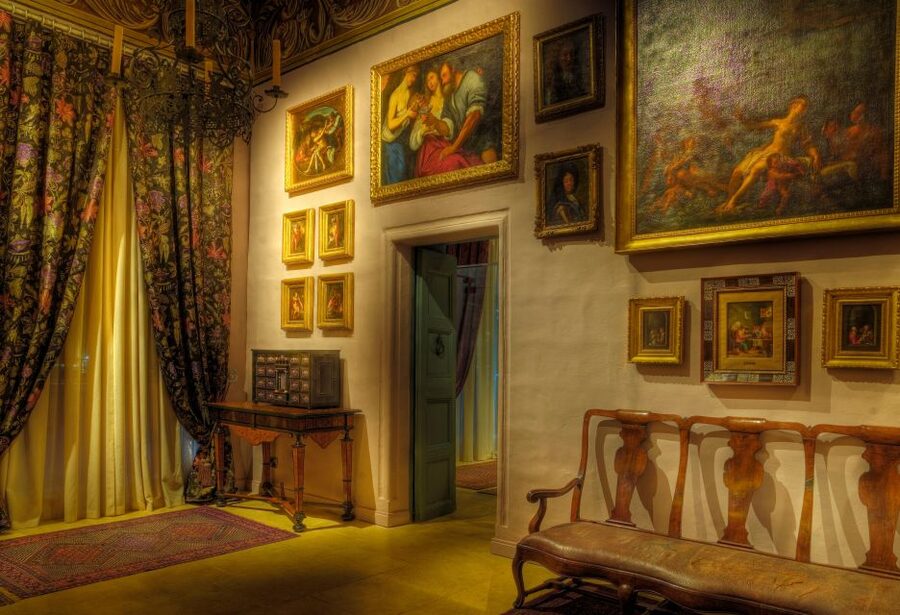
The painting collection gives the house a stronger artistic focus. Several important 17th-century works are attributed to major names, including Mattia Preti, Jusepe de Ribera, Jakob-Ferdinand Voet, Charles Beale and Juriaen van Streeck.
Attributions matter here because they place the paintings within a wider European art setting. You are not looking only at local household decoration. The works connect Malta to artistic currents from Italy, Spain, the Netherlands and beyond.
Mattia Preti has a particularly strong connection with Malta, where his work is an important part of the island’s artistic story. Jusepe de Ribera is associated with dramatic Spanish Baroque painting, while Voet worked as a portrait painter. Beale and van Streeck add different northern European connections, including portraiture and the carefully arranged still-life tradition.
The museum does not promise a single school or period, and that is useful for a visitor who wants variety. You may move from religious or dramatic painting to portraiture and still life, then back into the domestic setting of the palace.
Do not expect a large public gallery with endless wall space. The attraction is the meeting of artwork and house. The paintings matter, but so does the way they live among the other possessions.
The library, manuscripts and the pleasure of slower looking
The library contains more than 4,500 books, along with valuable manuscripts. This is one of the strongest reasons to visit if you enjoy the written word or the physical presence of old books.
A library of this size also changes the mood of the house. Paintings catch your eye quickly, but books ask you to think about ownership, study and collecting over time. Gollcher’s interests were not limited to objects meant for display. The library suggests a person who wanted access to information, ideas and the past.
You may not be able to inspect every volume in detail, and the visit is not a research appointment. Still, the library adds depth to the collection. It shows how a private residence could function as a place for reading, study and careful preservation.
The manuscripts are another reason to slow down. Their value is not only visual. They represent the survival of written material across generations, which fits the palace’s long life particularly well.
Silver, jewellery, armour and Oriental rugs
The non-painting collections prevent the visit from becoming a standard art tour. Silver and jewellery show the decorative side of private ownership, while furniture helps define the rooms as living spaces rather than empty historic shells.
Oriental rugs bring colour and pattern into the interiors, although the supplied details do not identify particular designs or origins. You can expect them to be part of the house’s decorative collection, not a separate specialist exhibition.
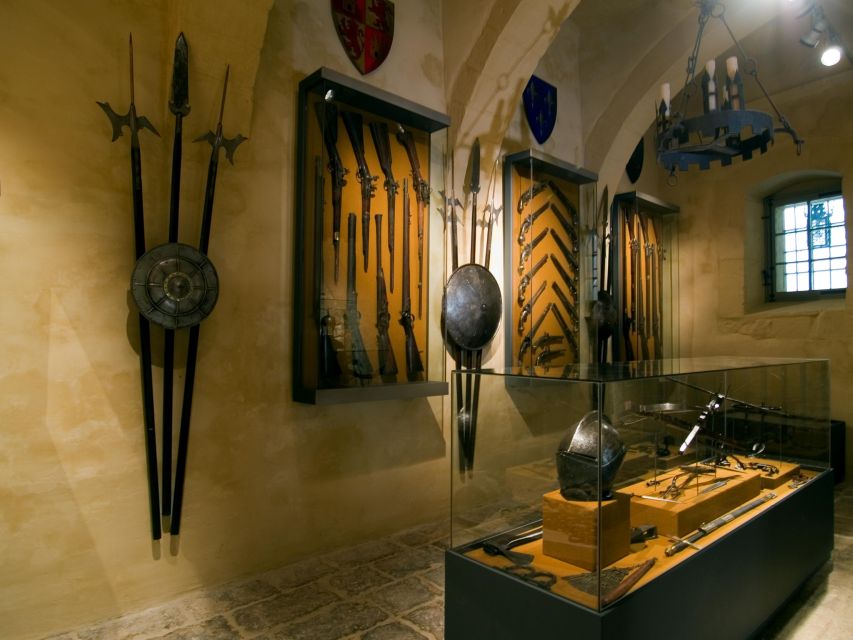
The armoury gives the museum a harder edge. A noble residence could display objects linked to status, protection and military culture alongside items used in daily life. That contrast is useful: it keeps the palace from feeling like a museum of tasteful interiors alone.
I like this mix because it encourages you to change your way of looking. A painting asks for attention to composition and technique. A piece of silver may invite you to study workmanship. Armour points to power and conflict, while furniture shows comfort and social position.
The drawback is that no single category receives the entire visit. If you come mainly for armour, or only for paintings, you may wish the collection were more focused. The strength of Palazzo Falson is its range.
The upper terrace and views beyond Mdina
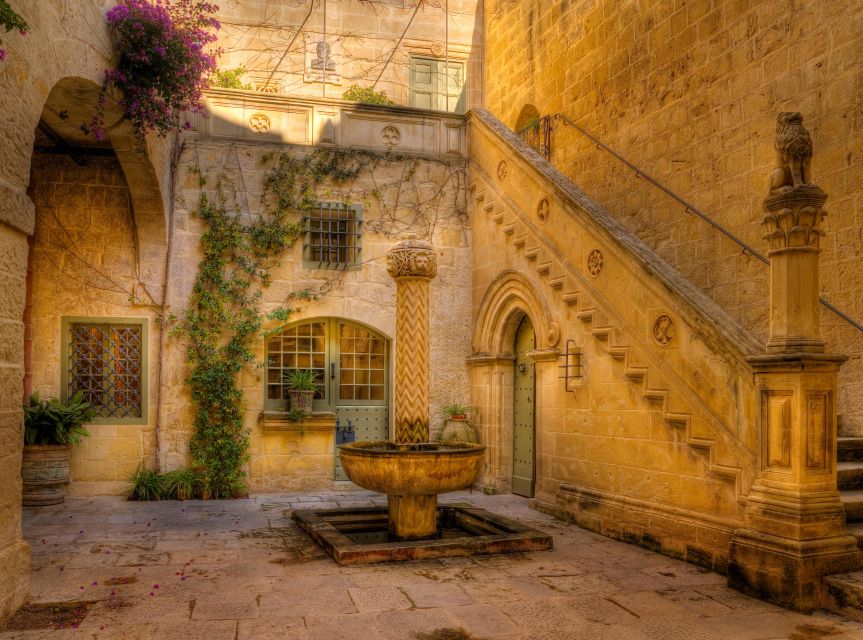
Save time for the cafeteria on the upper-floor terrace. From there, you can enjoy views over Mdina and beyond, with coffee providing a calm finish after the rooms below.
This stop is not an extra sightseeing tour, and the available details do not promise a full meal service or a particular menu. Think of it as a useful pause with a view. A coffee after touring 17 rooms is a sensible plan, especially if you prefer to end a museum visit outdoors.
The terrace also helps you understand Mdina’s position. Inside the palace, you focus on enclosed rooms, collections and family life. Outside, the view shifts your attention to the wider island. That change of scale gives the visit a satisfying final note.
Is $15 a fair price?
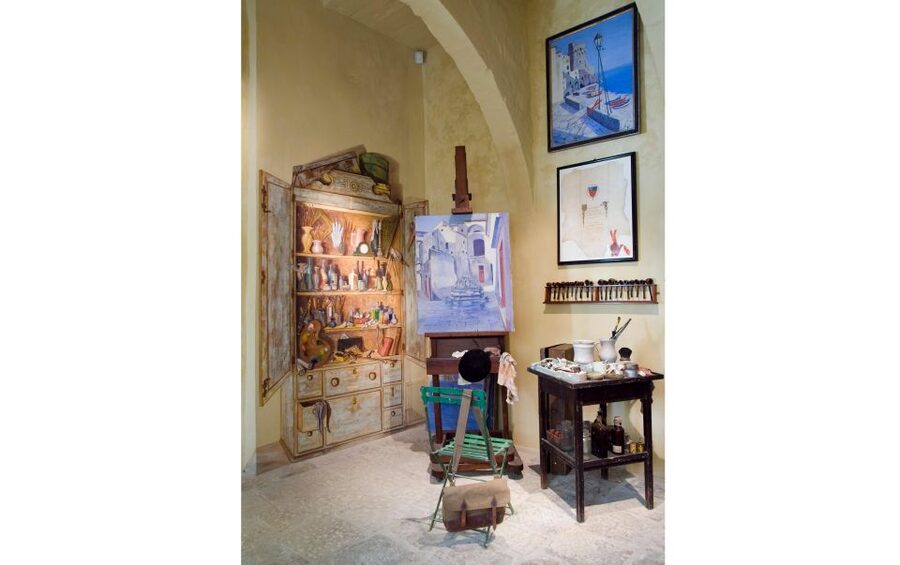
At $15 per person, Palazzo Falson offers good value for an independent museum visit. You receive admission, a multilingual audio guide and printed information in many languages. The ticket is valid for one day, so you have flexibility rather than a tightly compressed time slot.
The price makes the most sense if you plan to give the collection proper attention. A brief walk through the rooms may not justify the same value as a slower visit that includes the paintings, library, household objects and terrace.
The attraction is also a good choice when you want something different from Malta’s major churches, fortifications and archaeological sites. Palazzo Falson adds a private, domestic layer to Mdina.
Booking can remain flexible because you may reserve now and pay later, and cancellation is free up to 24 hours in advance for a full refund. Check the available starting times before you go, since the ticket is valid for one day but the available entry schedule can vary.
Who should visit Palazzo Falson?
I would recommend this museum to you if you enjoy:
- Historic homes with original architectural character
- Paintings and European art of the 17th century
- Books, manuscripts and collecting
- Furniture, silver, jewellery, rugs and armour
- Independent visits with an audio guide
- Quiet places to look carefully rather than rush
- A rooftop coffee stop with views across Mdina
I would be more cautious if you are visiting Mdina with very young children, since children under six are not suitable for the experience. I would also think twice if you want a short attraction with only a few headline objects.
The museum works best for curious adults, older children, art lovers, history fans and anyone who likes the atmosphere of a lived-in house. It is particularly useful for visitors who want to understand Malta through private life, not only grand public monuments.
Should you book Palazzo Falson?
Book it if you want a substantial cultural stop in Mdina for $15. The palace combines a medieval building, a large personal collection, important 17th-century paintings, an impressive library and a terrace with views. That is a strong package for one admission price.
Go with realistic expectations. You will not get a tightly scripted tour or a single blockbuster display. You will get a full house, many kinds of objects and the freedom to set your own pace with an audio guide.
My practical advice is to visit when you can spare time for the rooms and the terrace. If your Mdina schedule allows only a hurried glance, save Palazzo Falson for another day. If you want to see how art, books, furniture and personal collecting fit inside one old Maltese residence, it is an easy choice.
FAQ
Where is Palazzo Falson Historic House Museum?
It is in Mdina, Malta’s former capital city, inside the walled city.
How much does admission cost?
The entrance ticket costs $15 per person.
How long is the ticket valid?
The ticket is valid for one day. Available starting times should be checked when booking.
Is an audio guide included?
Yes. Audio guides are available in English, French, German, Italian, Maltese and Spanish.
Which languages are available for printed information?
Printed information is available in Arabic, Chinese, Czech, Dutch, English, French, German, Greek, Hungarian, Italian, Japanese, Maltese, Polish, Portuguese, Russian, Slovak, Spanish and Swedish.
Are children under six allowed?
No. The experience is not suitable for children under six.
Just added around the world
- The Queenstown Story @ Cobh Heritage Centre , Great Stories of Emigration.★ 4.5 · 181 reviews
- Visit 16 Sites Key Historical Sites And Experience Cobh Rebel Tours★ 5.0 · 167 reviews
- Historical Bicycle Tour of Dunedin★ 5.0 · 44 reviews
- 2.5 Hour Kayaking with Manatee and History Tour in Tarpon Springs★ 5.0 · 24 reviews
- Cincy Brunch History and Streetcar Tour with Riverside Food Tours★ 5.0 · 108 reviews
- Private Tour in Chichen Itza Official History Guide★ 5.0 · 36 reviews
- Dazu Ancient Rock Carvings Private Tour Extension★ 5.0 · 24 reviews
- Chicago River Architecture Tour Aboard a Historic Yacht★ 5.0 · 45 reviews
Museum & Gallery History Tours, compared.
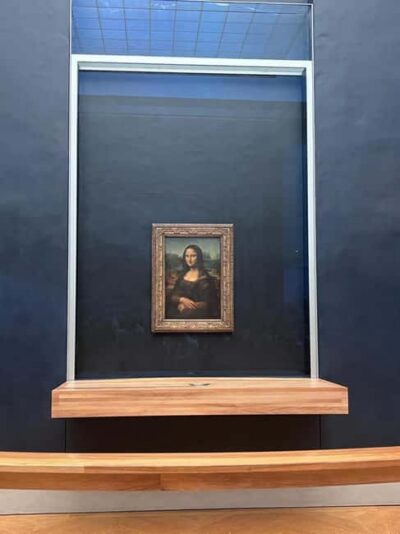
Louvre Museum Entry with History of Mona Lisa
Read our review →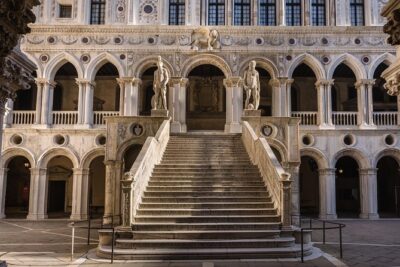
Venice’s Best: Basilica, Doge’s Palace, Gondola & History Gallery
Read our review →
Guided African American History Tour with Reserved Museum Entry
Read our review →
POLIN Museum of the History of Polish Jews Ticket
Read our review →
Bell Tower & St Mark’s Square History Gallery Ticket
Read our review →
Field Museum of Natural History Ticket or VIP Tour
Read our review →
Madrid in a Day Tour:Royal Palace, Historic Center & Prado Museum
Read our review →
Basilica, Doge’s Palace, History Gallery & Bell Tower Option
Read our review →Browse the lists this tour appears in