
Review · MANTUA
Mantova Centro Storico – Tour a piedi con Guida Tiziana Portioli
Mantua rewards a closer look. This private walk with Tiziana Portioli links grand Gonzaga buildings, old market squares, and remarkable churches in a compact route through the city center. I like the personal format for a group of up to six, and I especially like the way Tiziana connects art, local customs, architecture, and Italian history rather than treating each monument as a separate stop. The main consideration is cost: at $217.23 per group, it offers better value when shared by several people, while admission fees are extra.
The advertised tour lasts about 90 minutes, though some groups have spent closer to two hours with Tiziana, especially when the conversation turns to the Ducal Palace. You will walk outdoors in all weather, and the route ends in Piazza delle Erbe rather than returning to the starting point. That makes the tour useful for getting your bearings, but you should wear sensible shoes and plan your next stop from the finish.
Six details that shape the experience
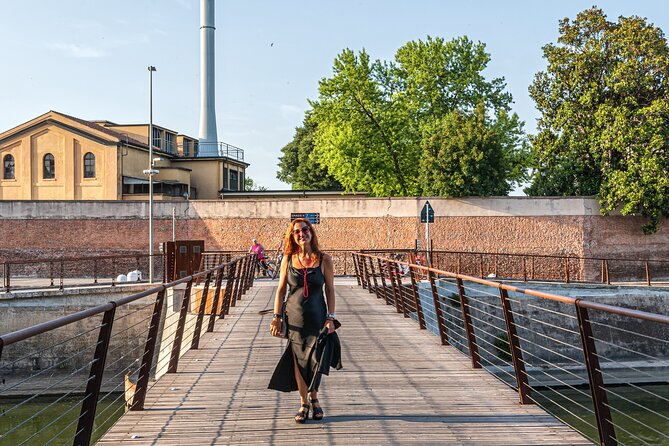
- A private tour for up to six people: You get a guide focused on your group, not a large crowd following a flag.
- Tiziana’s English explanations: Her style combines precise facts with stories, local details, and links between buildings and artworks.
- A route through Mantua’s historic core: The walk covers the Rotonda di San Lorenzo, Sant’Andrea, the cathedral, Piazza delle Erbe, the Ducal Palace, and Piazza Broletto.
- Gonzaga power at the Ducal Palace: The palace complex covers about 34,000 square meters and includes roughly 500 rooms, though a full museum visit needs extra time and money.
- Extra ticket costs matter: The Ducal Palace costs €15 per person, with a €1.50 reservation fee when reservations are required. The Rotonda costs €1.
- A useful first look at Mantua: The route suits anyone who wants historical context before exploring museums, churches, cafés, and squares independently.
Why this walk works in Mantua
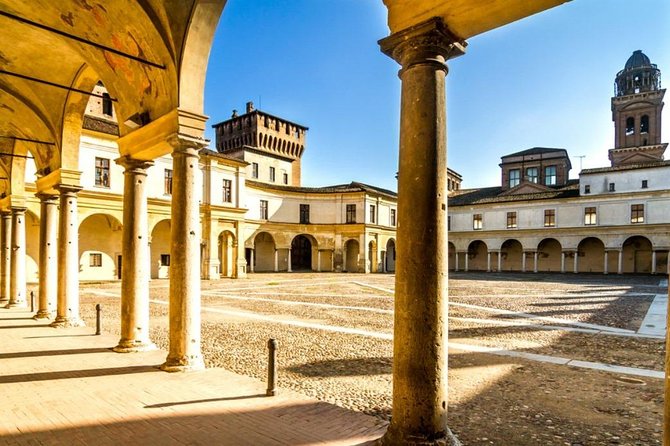
Mantua can feel confusing at first because its main sights are spread through connected squares rather than gathered around one single monument. A guide helps you understand the city as a series of linked centers: religious power around the churches, civic life around the medieval squares, and Gonzaga power around the ducal complex.
I like that this experience does not focus only on famous art. You get architecture, political history, religious traditions, local food culture, and small urban details. One person who took the walk described enjoying the mix of history, curiosities, and good food, including the everyday life around cafés, aperitif bars, and the farmers market.
Tiziana’s greatest strength is her way of explaining. Several comments praise her clear English, friendly manner, punctuality, and ability to connect works of art with the city’s past. That matters in Mantua, where a painted ceiling or brick façade can mean little without the story behind it.
The tour is listed at 90 minutes. That is enough for an introduction, but not enough for a detailed visit to every room of the Ducal Palace. If you want a slower museum experience, allow extra time and budget for entrance. The comments also indicate that Tiziana sometimes spends two hours with a group, but you should not treat that as guaranteed.
A few more history tours around Italy worth a look
- Colosseum: Underground and Ancient Rome Tour
★ 4.7 · 12,691 reviews - Rome: Colosseum with Arena, Roman Forum and Palatine Guided Tour
★ 4.0 · 5,598 reviews - Venice: St. Mark’s Basilica Guided Tour & VR History Intro
★ 3.9 · 4,880 reviews
Starting near the Ducal Palace
The meeting point is the Ducale Palace on Piazza Sordello, 40. This is a sensible place to begin because the square immediately places you in the world of the Gonzaga family, who ruled Mantua for centuries.
Piazza Sordello is also practical for orientation. From here, you are close to the cathedral and the Ducal Palace, and the rest of the historic center is within walking distance. The tour eventually finishes in Piazza delle Erbe, so you can continue with lunch, coffee, shopping, or your own exploration without needing to retrace the route.
Because this is a private activity, your party has the guide’s attention. That is useful if you have children, a family member who needs a slower pace, or a particular interest in painting, architecture, or local history. One family specifically appreciated that the children became interested in Tiziana’s stories.
Rotonda di San Lorenzo and Mantua’s oldest church
The Rotonda di San Lorenzo is a small but striking beginning to the religious side of Mantua. It is considered the city’s oldest church, built in the late 11th century during the rule of the Canossa family.
The building now sits below the level of Piazza delle Erbe. That lower position gives it an unusual feel and hints at how much the city has changed over the centuries. It may have been built on the site of a Roman temple dedicated to Venus, though that earlier connection is presented as a probability rather than a certainty.
The church follows a circular plan inspired by the Church of the Holy Sepulchre in Jerusalem. Inside, you may notice the matronaeum, a raised loggia once associated with female worshippers, along with fragments of Byzantine-style frescoes from the 11th and 12th centuries. A later fresco fragment shows the Martyrdom of St. Lawrence.
Look closely at the materials. The church uses Lombard brickwork, but some columns and marble details came from older Roman buildings. That mix gives Tiziana plenty to explain: medieval building methods, reused ancient materials, and the way Mantua’s religious buildings preserve several periods at once.
Admission is not included and costs €1 per person. The stop itself is scheduled for about five minutes, so you should not expect a long interior visit. Still, it is a good example of why a guide helps. Without context, the church can seem modest beside Mantua’s larger monuments. With context, its age and unusual plan become the point.
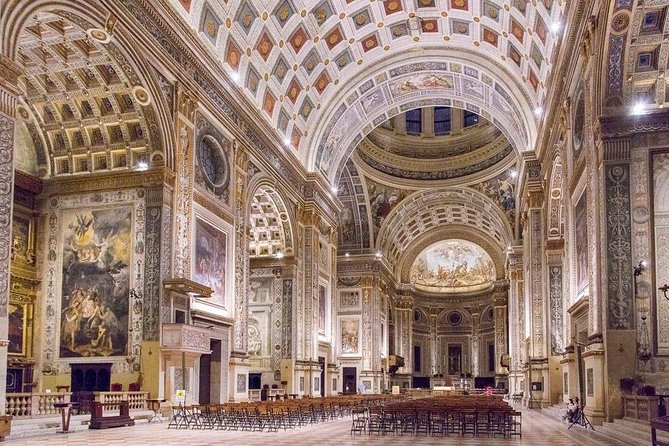
Sant’Andrea and the scale of Renaissance ambition
The Basilica of Sant’Andrea dominates Piazza Mantegna and provides a sharp contrast to the Rotonda. Its broad Renaissance design was begun in 1472 from plans by Leon Battista Alberti, one of the leading architects and thinkers of the period.
Ludovico III Gonzaga commissioned the church on the site of a Benedictine monastery. The monastery’s bell tower, dating from 1414, remains. The basilica itself took far longer to finish than Alberti could have imagined, with work completed 328 years after construction began.
That long building period is worth keeping in mind as you look at the church. Later changes and additions altered the original design, but Sant’Andrea is still regarded as one of Alberti’s most complete works. Tiziana can help you see the building as both an artistic statement and a Gonzaga political project.
The basilica is scheduled for about 20 minutes, and admission is listed as free. That gives you time to appreciate the façade, the relationship between the church and Piazza Mantegna, and the broad interior forms without turning the stop into a full art-history lecture.
The church also helps explain Mantua’s UNESCO status. The city’s importance does not rest on one isolated building. It comes from the way its urban plan, churches, palaces, paintings, and Gonzaga-era monuments work together as a historic center.
Same place, a different slice of the past:
- Colosseum with Arena, Roman Forum and Palatine Hill Guided Tour
★ 4.5 · 3,526 reviews - Colosseum & Ancient Rome with Arena Floor Option I Max 6 People
★ 5.0 · 3,306 reviews - Rome: Colosseum, Ancient Rome Tour or AudioGuided Tour
★ 4.4 · 2,879 reviews - Colosseum Underground & Ancient Rome Guided Tour
★ 4.5 · 2,590 reviews
Mantua Cathedral and the city’s religious center
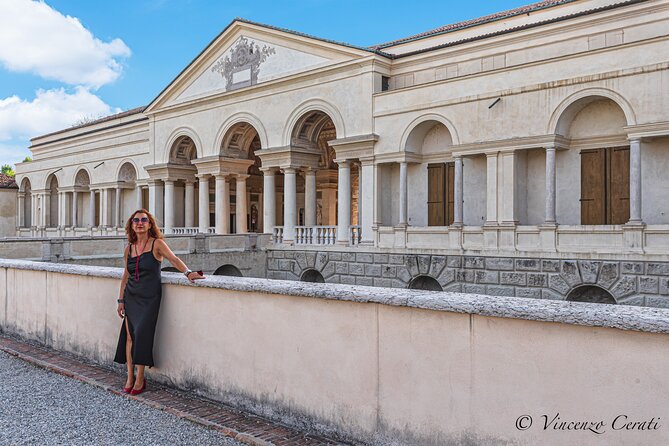
The Duomo, or Cathedral of Saint Peter, is the seat of the Bishop of Mantua. It gives the tour another view of religious authority in the city and sits close to the Ducal Palace and Piazza Sordello.
The cathedral is scheduled for about 20 minutes, with no admission charge listed for this stop. That is enough time for an outside explanation and a look inside if open and accessible at the time of your visit. The tour data does not promise a special interior presentation, so you should see this as a guided orientation rather than a long cathedral visit.
Its location is part of the appeal. The cathedral, the ducal complex, and the surrounding square show how closely church and court life were tied together in historic Mantua. A good guide can make that relationship easier to read in the buildings around you.
Piazza delle Erbe, where daily Mantua takes over
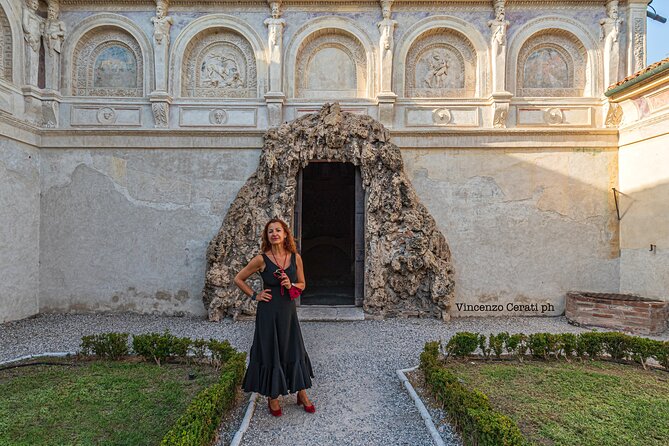
Piazza delle Erbe is one of the most useful stops because it brings the city back to ordinary life. Small eateries line both sides, including the arcade near Sant’Andrea. The square is also home to the Rotonda di San Lorenzo, which you may now understand better after hearing about its age and buried position.
This is perhaps the liveliest center of Mantua, even though Piazza Sordello has greater ceremonial weight. The contrast is useful. Piazza Sordello introduces courtly power, while Piazza delle Erbe feels more connected to meals, markets, coffee, and the daily rhythm of the city.
The tour allows about 20 minutes here. I would use that time to ask Tiziana for suggestions on where to eat or what to notice later. Her local perspective is one of the strongest reasons to choose a private guide rather than rely only on signs and guidebooks.
The walk ends here, which is convenient if you want to stop for food. It also means you should plan ahead if your hotel or train connection is near another part of the city.
The Ducal Palace and the Gonzaga story
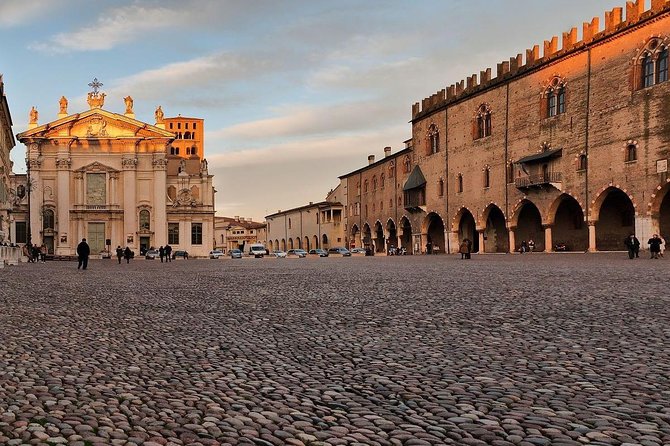
The Palazzo Ducale is the largest and most demanding part of the route. It is not one building in the simple sense. It is a connected group of palaces, corridors, galleries, courtyards, and gardens built mainly by the Gonzaga family between the 14th and 17th centuries.
The scale is hard to grasp from one doorway. The complex contains about 500 rooms and covers roughly 34,000 square meters. The Gonzaga family lived here from 1328 until 1707, when the dynasty ended. Their long residence shaped Mantua’s politics, art, and city plan.
The most famous room is Mantegna’s Camera degli Sposi, or Wedding Room. The palace also contains many other painted and architectural features, so you should not assume that seeing one celebrated fresco completes the visit.
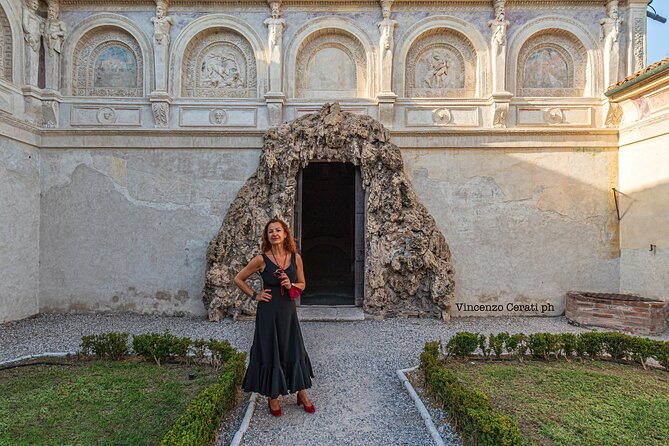
A particularly unusual detail is the discovery of a hidden room in 1998. Palace scholars believe it may have been used for performances of Monteverdi’s music in the late 16th century. That kind of detail gives the palace a human dimension. It was not only a political residence. It was also a place for music, display, ceremony, and private life.
The listed tour time is 20 minutes, but that is best understood as a guided introduction. Entrance to the palace is extra at €15 per person, with people under 18 admitted free. From March through June and from September through October, reservations are necessary, with a €1.50 reservation fee per person.
There is a small inconsistency in the supplied cost information, with one section describing the main city-center stops as requiring no tickets while another clearly lists the Ducal Palace admission separately. The safest reading is simple: the guide’s service does not cover palace admission, so budget for the €15 ticket and reservation fee when applicable.
Some groups have spent about two hours with Tiziana inside the palace. If the Gonzaga story and Mantegna’s art are your main reasons for visiting Mantua, ask about allowing more time. The standard 90-minute route cannot give this huge complex the same attention as a dedicated museum visit.
Piazza Broletto and medieval civic life
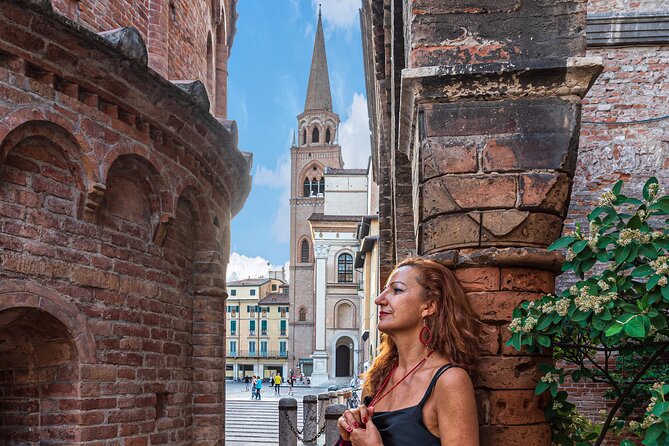
Piazza Broletto shifts the focus from court and church to municipal government. In the medieval town, this square was a center of public life.
The Palazzo Broletto dates from 1227 and was built by the city’s mayor, Laudarengo Martinengo. On the rear façade, you can find a 13th-century statue of Virgil seated in a chair. Locally, it is called la vecia, or the old woman.
The square also includes the Torre del Broletto, sometimes called the Torre del Podestà, and Casa Tortelli. At its center is a 19th-century fountain decorated with dolphins. The Palazzo del Massaro, dating from the 14th century, contains 15th-century frescoes linked to the Pisanello school.
This stop lasts about five minutes, so it is a quick look rather than a full examination of every façade. Still, it adds useful balance. After the grand scale of the Ducal Palace, Piazza Broletto shows how medieval administration shaped the city before the Gonzaga court reached its height.
What the $217.23 price really means
The price is $217.23 per group of up to six people. For six people, that works out to about $36 per person before admission fees. For two people, it is closer to $109 per person, so the value changes sharply with group size.
You are paying for a private professional guide in English, not a package that includes museum tickets. The price makes the most sense for families, two couples, or a small group that wants personal attention and does not want to follow a fixed large-group schedule.
Add the Ducal Palace fee, the reservation fee when required, and the €1 Rotonda ticket. Palazzo Te is listed as another separate option at €15 per person, but it is not part of this walking route. The Theatre Bibiena may also charge €2 per person if you choose to visit it.
If your main goal is to see Mantua’s streets, squares, and major exteriors, the private format gives you strong value. If you want every interior included, this is not an all-in ticket. Think of it as a guided foundation for the city, with paid museum visits added according to your interests.
Who will enjoy this Mantua walk
I would choose this experience if you want historical context delivered in plain English and prefer a small private group. It suits first-time visitors, families, couples, and anyone who wants help connecting Mantua’s Roman, medieval, Renaissance, and Gonzaga periods.
It is also a good choice if architecture and art interest you but you do not want a lecture detached from the streets. Tiziana’s approach, based on the available feedback, includes fun facts, local life, art, buildings, and the history of the people who shaped the region.
You should think twice if you have only a short time and want to enter every monument. The route has many stops, and the Ducal Palace alone deserves more than 20 minutes. You may get more from the tour by treating it as an introduction, then returning to the palace or another museum afterward.
The activity operates in all weather, so dress for rain or heat as needed. It is near public transportation, service animals are allowed, and most people can take part. Confirmation is sent within 48 hours, subject to availability. The tour is often reserved well ahead, around 39 days in advance on average, so last-minute availability may be limited.
Should you book it?
Book this tour if you want Mantua to make sense quickly, especially with a group of four to six people. Tiziana’s clear English, punctual service, friendly manner, and ability to link art with local history are the biggest reasons to choose it.
For the best value, budget separately for the Ducal Palace and decide in advance whether you want a quick introduction or extra palace time. I would book it early, wear comfortable shoes, and keep the rest of your day flexible. You will finish in Piazza delle Erbe with the city’s churches, cafés, and food culture still close at hand.
FAQ
How long does the Mantua walking tour last?
The advertised duration is approximately 1 hour and 30 minutes. Some groups have spent closer to two hours with Tiziana, particularly when discussing the Ducal Palace, but the standard duration is 90 minutes.
How many people can join the private tour?
The tour is private for your group, with up to six people included in the listed price.
What language is the tour offered in?
The tour is offered in English.
Where does the tour start and end?
It starts at the Ducal Palace, Piazza Sordello 40, in Mantua. It ends in Piazza delle Erbe.
Are entrance tickets included?
The guided service is included, but entrance tickets are generally extra. The Ducal Palace costs €15 per person, people under 18 enter free, and the Rotonda di San Lorenzo costs €1 per person. A €1.50 reservation fee applies for the Ducal Palace when reservations are required.
Is the Ducal Palace reservation required?
Reservations are necessary from March through June and from September through October. The reservation fee is €1.50 per person.
What happens if I need to cancel?
You can cancel for a full refund up to 24 hours before the experience starts. Cancellations or changes made less than 24 hours before the start time are not accepted for a refund.
Just added around Italy
- Wine tasting in the historical Cantalici winery★ 4.5 · 47 reviews
- Enjoyable music tour of the historical city of Lucca★ 5.0 · 37 reviews
- Flavours of Lucca, Art, History, Food for Small Groups or Private★ 5.0 · 151 reviews
- 1-Hour Carriage Tour – Historic Center and Renaissance Walls★ 5.0 · 36 reviews
- Lucca Classic – Carriage Tour in the Old Town★ 5.0 · 112 reviews
- We Love Livorno : Cultural Tour★ 4.5 · 26 reviews
- Night Tour in an Ancient Lost City near Lecce★ 5.0 · 35 reviews
- Guided Tour of the Historic Attractions of Lecce Private★ 5.0 · 18 reviews
Italy History Tours, compared.
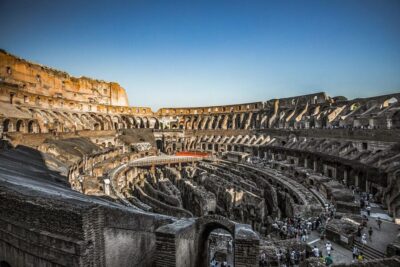
Colosseum: Underground and Ancient Rome Tour
Read our review →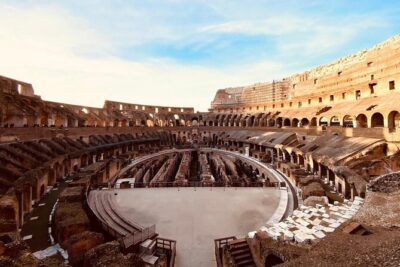
Colosseum with Arena, Roman Forum and Palatine Guided Tour
Read our review →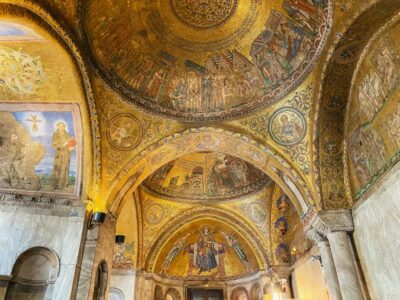
St. Mark’s Basilica Guided Tour & VR History Intro
Read our review →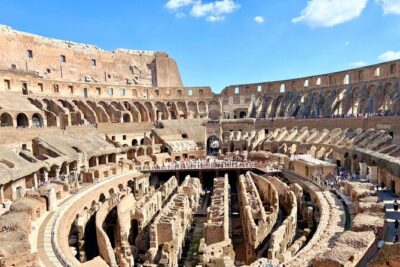
Colosseum with Arena, Roman Forum and Palatine Hill Guided Tour
Read our review →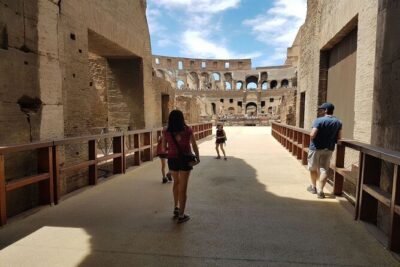
Colosseum & Ancient Rome with Arena Floor Option I Max 6 People
Read our review →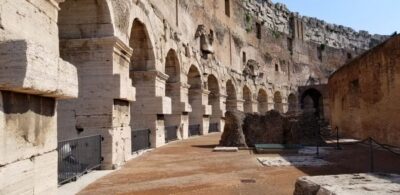
Colosseum, Ancient Rome Tour or AudioGuided Tour
Read our review →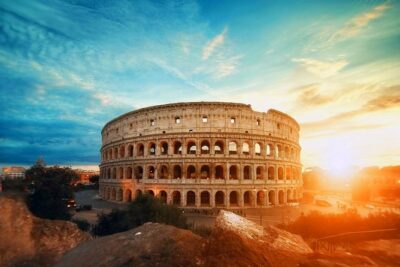
Colosseum Underground & Ancient Rome Guided Tour
Read our review →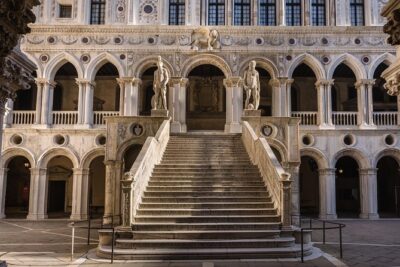
Venice’s Best: Basilica, Doge’s Palace, Gondola & History Gallery
Read our review →Browse the lists this tour appears in