
Review · DONG BAC
Coffee, History, and Architecture of the French Quarter
French colonial Hanoi comes with coffee and questions. This 2.5-hour walk makes the city’s southern quarter easier to read, linking grand buildings with Vietnamese history, the Vietnam War, and daily life. I especially like the coffee in an old French villa and the relaxed, conversational approach. The $31 price also covers Vietnamese coffee or tea and Trang Tien ice cream. The main drawback is simple: you walk outdoors in Hanoi weather, and the colonial period is discussed through a fairly focused historical lens.
Guides such as Mina and Dung have earned praise for clear English, humor, patience, and thoughtful answers. I like that the tour uses historical photos on a phone rather than relying only on a long speech. Still, come ready to walk, cross busy streets, and listen closely. This is an educational outing first, with snacks that make the lesson easier to enjoy.
Key points at a glance
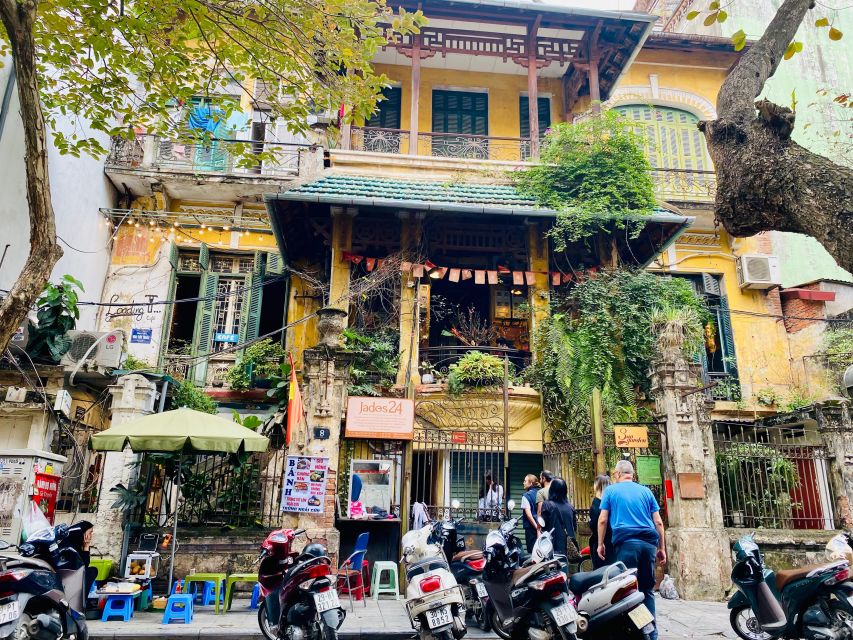
- Start with Vietnamese coffee in a French villa: The opening drink is part of the history lesson, not just a quick refreshment.
- See more than 15 French Quarter sights: The route connects St. Joseph’s Cathedral, the Opera House, Hoan Kiem Lake, the Metropole, Trang Tien Street, and more.
- Expect a conversation, not a speech: Guides invite questions and adjust explanations to the group’s interests.
- Try two distinctly local treats: Vietnamese coffee, including egg or coconut coffee on some tours, and Trang Tien ice cream are included.
- Get context for the good and bad of French rule: The tour looks at architecture and social change without treating colonial Hanoi as a pretty picture alone.
- Plan for heat or rain: Sunscreen, a hat, breathable clothes, good shoes, and an umbrella or raincoat are sensible choices.
Why this Hanoi walk works
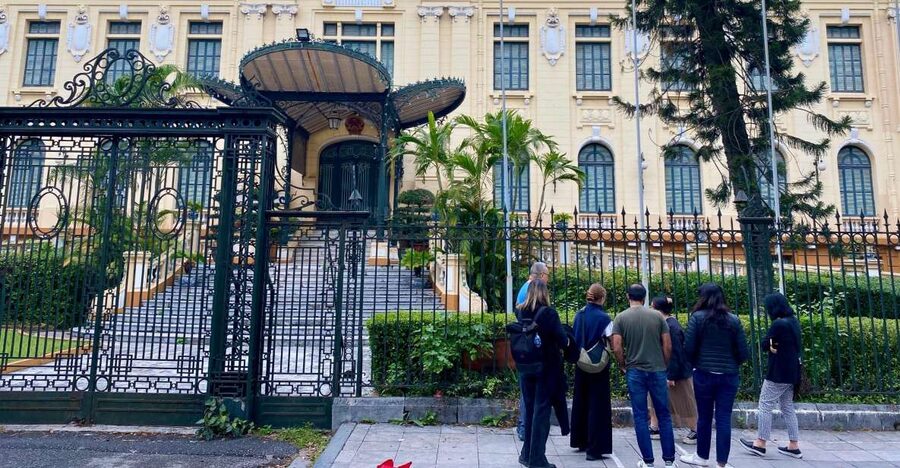
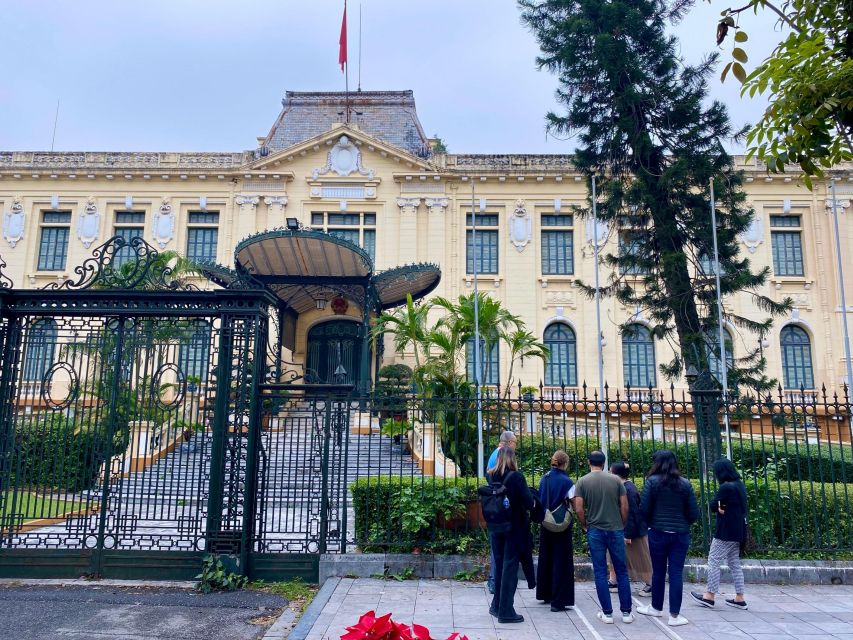
Hanoi’s French Quarter can look like a pleasant collection of yellow buildings, broad streets, churches, hotels, and government offices. That view misses the point. The architecture is tied to power, trade, social change, education, war, and the way Vietnamese culture adapted under foreign rule.
This tour helps you connect those pieces. Instead of pointing at a building and giving you a date, the guide places the building inside Vietnam’s modern story. You hear about French control, changes in Vietnamese society, the Vietnam War, and the continuing influence of French design.
I like the conversational format. You can ask about architecture, coffee, food, pronunciation, or modern Hanoi without waiting for a formal question period. Several guides, especially Mina, are praised for welcoming questions and explaining difficult subjects in plain English.
The use of photographs is another useful touch. Historical events can be hard to picture while looking at a renovated or repurposed building. Showing old images on a phone gives you a clearer sense of how Hanoi changed.
More Architecture and Landmark Tours in Vietnam:
- Venice: St. Mark’s Basilica Guided Tour & VR History Intro
★ 3.9 · 4,880 reviews - Venice’s Best: Basilica, Doge’s Palace, Gondola & History Gallery
★ 4.5 · 2,478 reviews - Córdoba: Skip-the-Line Great Mosque-Cathedral History Tour
★ 4.7 · 1,690 reviews
Starting beside St. Joseph’s Cathedral
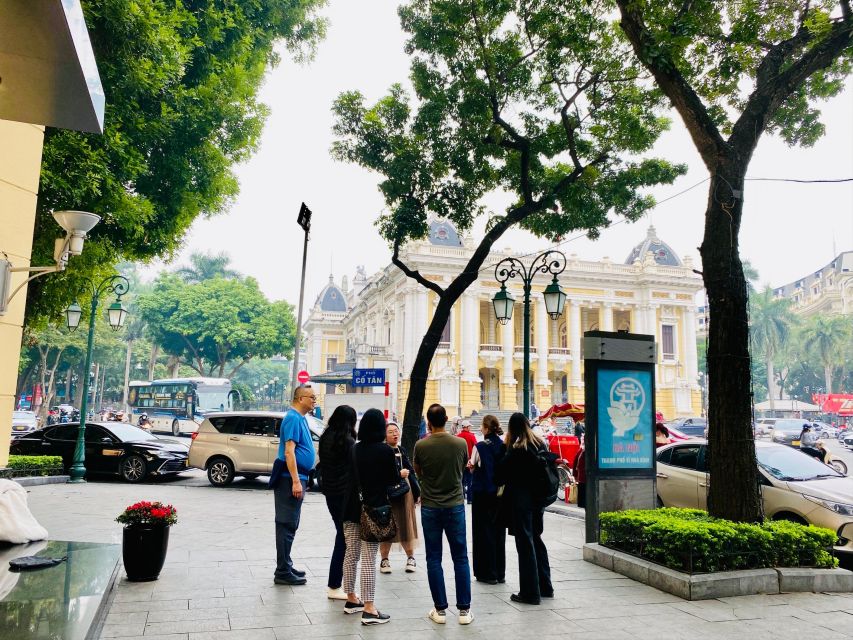
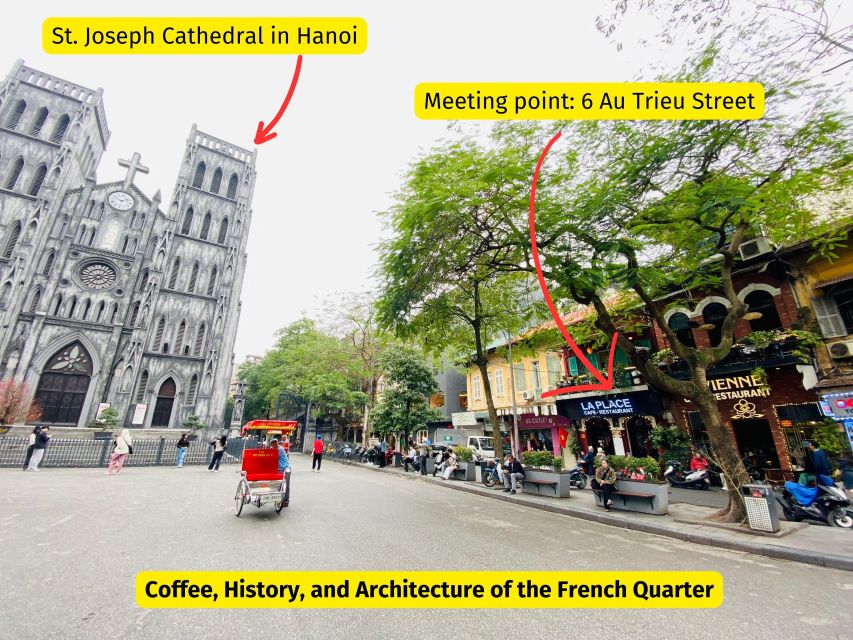
The meeting point is 6 Au Trieu Street, right beside St. Joseph’s Cathedral. This is a convenient place to begin because the cathedral immediately gives you a visual introduction to Hanoi’s French influence.
The cathedral stop lasts about 15 minutes, including a guided explanation and a break. You can expect the guide to discuss the building and use it as a starting point for the wider story of French rule. The setting also makes it easy to find the group, since the cathedral is a prominent landmark.
This is not a cathedral admission tour. The focus is on the quarter around it and on the historical meaning of the architecture. If you want a long interior visit, you would need to plan that separately.
The start time varies, so check availability before booking. I would arrive a few minutes early. Au Trieu is in a busy central area, and finding the correct spot is easier when you are not rushing.
Coffee first, history second
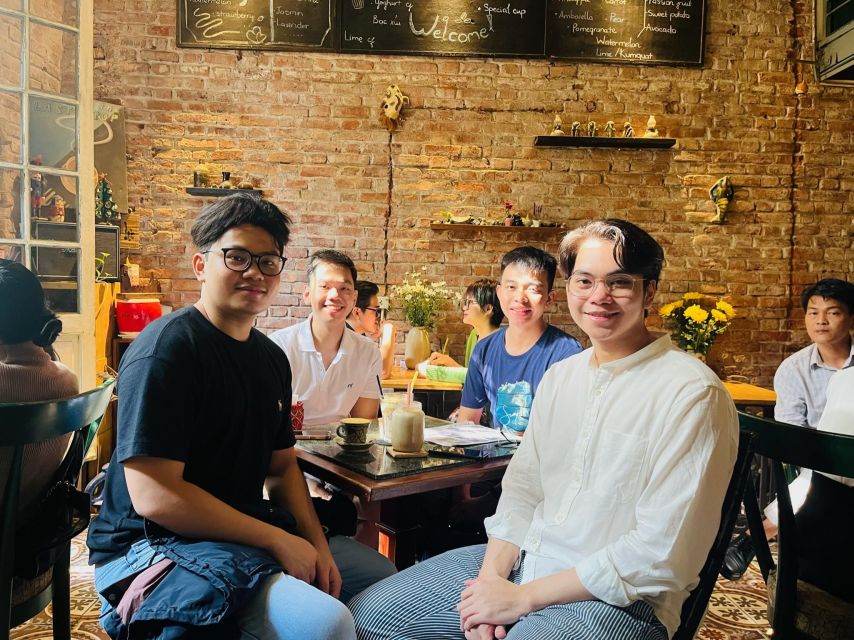
The local café stop lasts around 30 minutes, making it the longest single pause on the route. The café is described as being inside a former French villa, which gives the drink a fitting setting.
You receive a cup of Vietnamese coffee or tea. Some tour experiences include egg coffee or coconut coffee, both of which are useful introductions to Hanoi’s café culture. The exact drink may depend on the day and the guide, so do not assume a particular recipe unless it is confirmed when you book.
I love this part of the experience because it gives you time to settle into the tour. You are not standing on a pavement trying to absorb a rapid lecture. You can sit, drink, ask questions, and get an overview of Vietnamese history before the walking begins.
The coffee stop also adds value to the $31 price. A standard sightseeing walk can feel thin when it only points out buildings from the street. Here, the included drink gives the opening section a social rhythm, and the old villa provides another example of how French architecture appears in Hanoi.
If you do not drink coffee, tea is included. The tour also has a reputation for accommodating dietary needs and personal interests when possible, but you should explain any specific needs in advance.
Reading the French Quarter beyond the facades
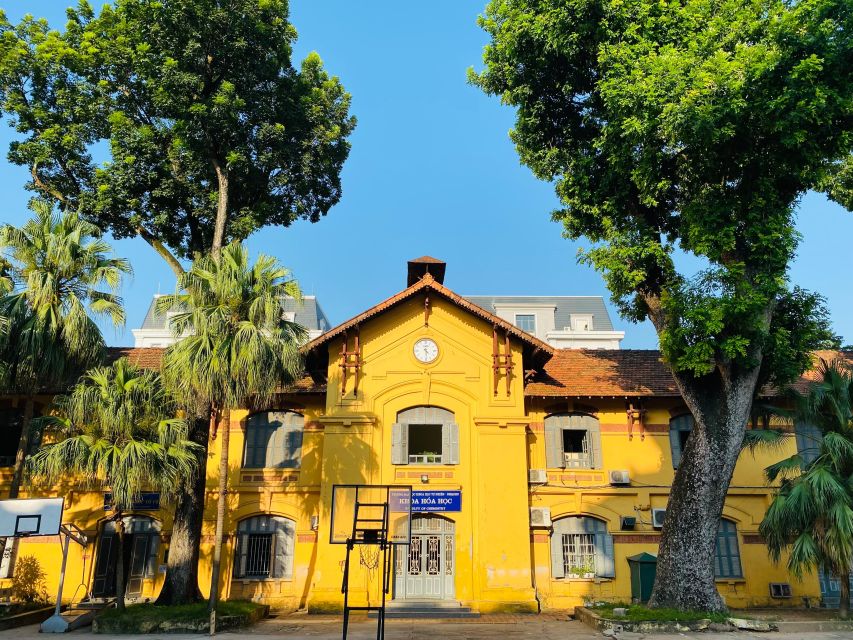
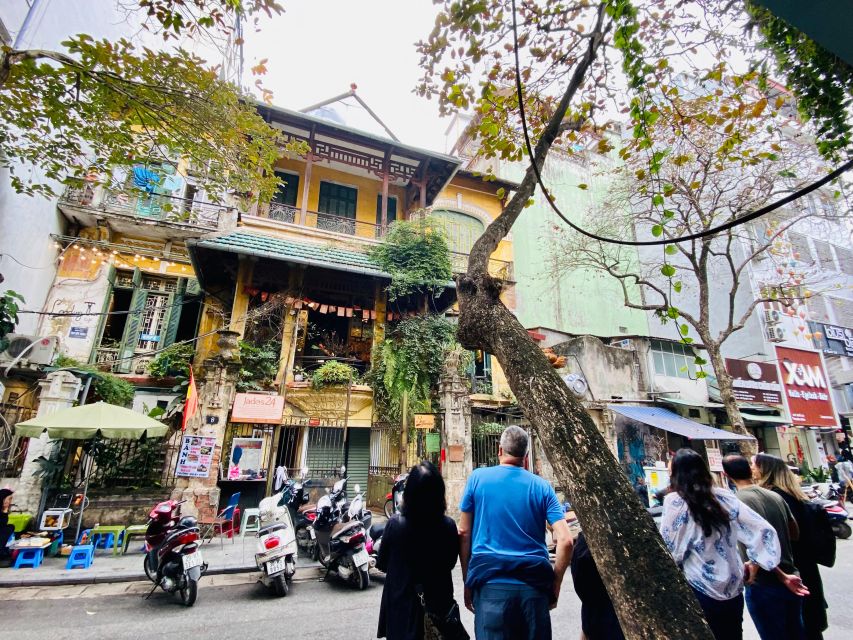
After coffee, the route moves through the French Quarter for about 15 minutes of guided explanation before continuing to larger landmarks. This area rewards slow looking. You will see how architectural details differ from the narrow lanes and dense shopfronts found elsewhere in central Hanoi.
The guide’s role matters here. Many buildings can look impressive without telling you why they were built, who used them, or what their presence meant to Vietnamese residents. Mina is repeatedly praised for explaining architecture alongside political and social history, with enough humor to keep the subject from becoming heavy.
The tour is also useful for correcting a common mistake. French influence in Hanoi was not only about pretty streets and European-style buildings. It also involved unequal power, changes in administration, and changes in society. The walk aims to discuss both the attractive and difficult sides of this period.
You should expect a fair amount of standing while the guide explains a site. Comfortable shoes matter more than fashionable ones. Hanoi’s heat, humidity, traffic, and uneven pavement can make a short walk feel longer than the map suggests.
Same place, a different slice of the past:
- Ninh Binh Heritage Full Day Tour with Buffet Lunch and Limousine
★ 5.0 · 2,692 reviews - Premium Cu Chi Tunnels Tour with Local Expert by SpeedBoat
★ 5.0 · 2,045 reviews - Hanoi Heritage Premium Daily Tour
★ 5.0 · 914 reviews - Halong Heritage Luxury Day Cruise-Buffet lunch&Limousine transfer
★ 5.0 · 846 reviews
Hanoi Opera House and the public face of colonial power
The Hanoi Opera House receives about 15 minutes of guided attention. It is one of the route’s clearest examples of French architectural ambition, and its scale gives you a sense of how colonial authority presented itself in the city.
The important point is not simply that the building looks European. The guide places it within the larger story of French Indochina and the way public architecture communicated status and control.
You should not expect a performance or an interior visit. This is an exterior sightseeing stop with historical interpretation. That keeps the schedule moving, but it also means you are paying for explanation rather than admission to a venue.
For anyone interested in architecture, this is one of the stronger parts of the route. For anyone who prefers markets, food stalls, or local crafts, it may feel more formal. The tour does include food and drinks, but the main subject remains history and buildings.
Hoan Kiem Lake and Hanoi’s changing identity
The Hoan Kiem Lake stop lasts around 15 minutes. The lake gives the tour a break from the architecture and helps connect the French Quarter with the wider center of Hanoi.
The guide discusses the lake as part of the city’s modern story, rather than treating it as a photo stop alone. This is a useful pause because Hanoi’s identity cannot be reduced to French buildings. The city’s Vietnamese traditions, political changes, public spaces, and modern daily life all overlap here.
Bring a hat and water, especially during warmer months. Sunscreen and breathable clothes are listed as useful items, and that advice is practical. The tour operates in rain or shine, so check the forecast the day before and carry an umbrella or raincoat if needed.
The pace is described as easy and relaxed, but the experience is still a walking tour. If you have limited mobility or tire quickly, tell the guide at the beginning. Free admission is available for people assisting visitors with disabilities, though the tour itself remains outdoors and includes walking between stops.
The Metropole and the weight of wartime history
The Sofitel Legend Metropole Hanoi is another 15-minute stop. The hotel links the colonial period with the later history of Hanoi, including the Vietnam War.
This is where the tour’s wider purpose becomes clear. You are not simply looking at old buildings. You are tracing how the same city passed through French rule, war, political change, and modern tourism.
The guide may use photographs to make historical events easier to understand. That is particularly helpful at a site with several layers of meaning. A luxury hotel can represent colonial privilege, while its later history connects to a very different and more troubled period.
Expect the guide to give an overview rather than a museum-level study. If wartime history is your main interest, you may want to visit Hoa Lo Prison separately. One guide also offered this as a useful follow-up suggestion, along with restaurant and food advice for the rest of a Hanoi stay.
Trang Tien Street and ice cream
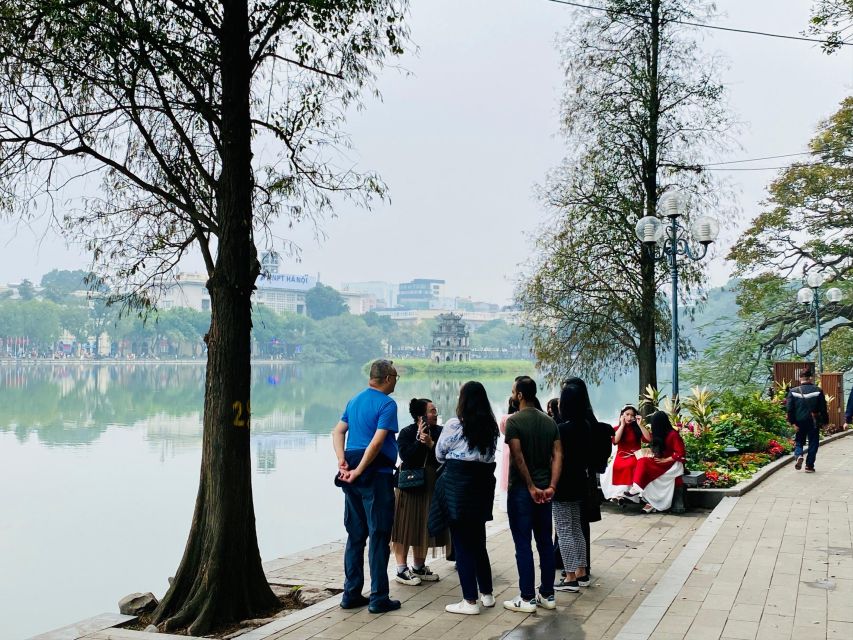
Trang Tien is both a street and a food stop. The walking portion covers another 15 minutes, followed by ice cream at the famous Trang Tien ice cream parlor.
This is a smart finish to a history walk. The ice cream is not merely a reward for surviving the pavement. It introduces a familiar local institution and shows how sightseeing in Hanoi can mix serious history with ordinary pleasures.
Seating and a restroom are available at the ice cream stop, giving you a proper pause before the tour ends. The exact flavor selection is not specified, so choose from what is offered on the day.
I appreciate that the food is simple and local rather than an expensive restaurant meal. It keeps the tour accessible and gives you a taste of Hanoi’s everyday side. The stop may also help families and younger visitors stay interested during the more serious sections.
The listed finish is Hanoi University of Pharmacy. The meeting details also say the activity ends back at the meeting point, so confirm the final return point with your guide at the start. That small inconsistency is worth clearing up if you have another booking afterward.
What the guides do best
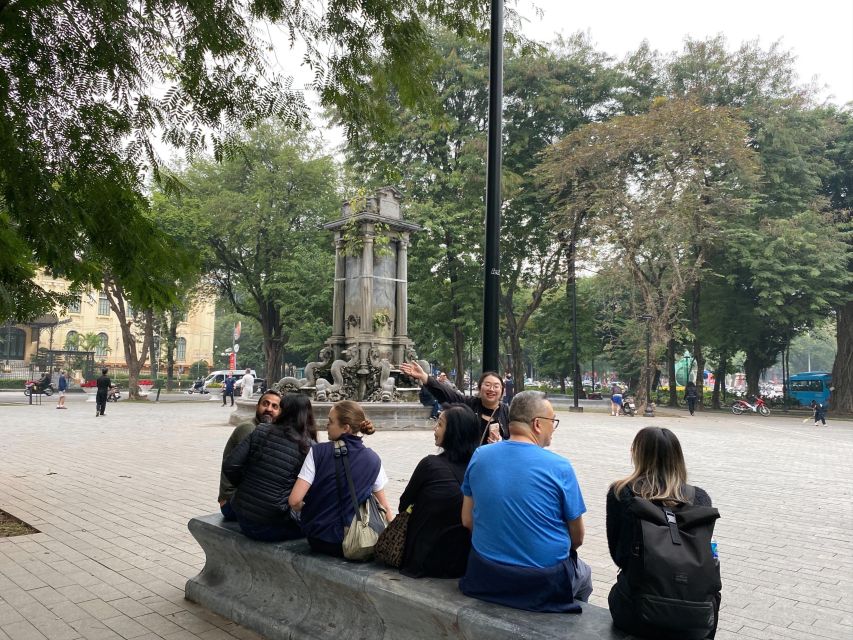
The strongest part of this experience is the guide. Mina receives repeated praise for her command of Vietnamese history and architecture, her humor, and her ability to explain complex subjects without sounding stiff. Dung is also described as warm and enthusiastic, with strong local knowledge and an engaging manner.
English ability matters on a history walk. The descriptions of Mina emphasize clear English, careful answers, and a willingness to explain points in more than one way. That helps if English is not your first language.
The tour appears to work best with a small group. One described outing included a couple and a family with two teenagers, which is a useful picture of the likely atmosphere. A small group makes it easier to hear the guide, ask questions, and adjust the conversation.
The style is not academic in a formal sense. You get an accessible introduction to Vietnam’s modern history, with room to ask about daily life, food, language, and architecture. If you want a specialist lecture with exact dates and extensive documentation, this may feel too casual. If you want a well-informed local guide who can explain the bigger picture, it is a good fit.
Is $31 a fair price?
At $31 per person, the value depends on what you want from a city tour. You receive about 2.5 hours with a live English-speaking guide, a Vietnamese coffee or tea in a French villa, guided stops at major French Quarter sights, historical photographs, and Trang Tien ice cream.
You are not paying for museum tickets or a long interior visit. The price is mainly for the guide’s interpretation, the organized route, and the included food and drink.
I consider that reasonable if you are new to Hanoi or want a clear introduction to the French Quarter. The tour can save you from walking past important buildings without understanding their purpose. It can also give you useful ideas for later visits, including Hoa Lo Prison and local food spots.
The value is weaker if you already know Hanoi’s modern history well, dislike guided walks, or want time for detailed photography. The schedule gives most stops about 15 minutes, so the experience favors connections and context over extended exploration.
Flexible booking helps if your plans are uncertain. You can reserve and pay later, and cancellation is free up to 24 hours before the activity for a full refund.
Who should book this experience?
I would recommend it to first-time visitors who want Hanoi to make more sense. It suits history fans, architecture lovers, couples, families with older children, and anyone who likes asking a local guide direct questions.
It is also a useful early-trip activity. After the walk, you will have a better sense of the French Quarter, the Opera House, the lake, Trang Tien Street, and the Metropole. You may also leave with food ideas and a clearer reason to visit other historical sites.
You should think twice if you want a fast sightseeing checklist or a purely culinary tour. Coffee and ice cream are included, but they support the history lesson rather than replace it.
Bring comfortable shoes, sunscreen, a hat, breathable clothing, and weather protection. Most of all, bring curiosity. The best moments come when you ask about the awkward parts of colonial history, how Vietnamese society changed, and what the buildings mean today.
Should you book the Hanoi French Quarter walk?
Book it if you want a friendly, well-paced introduction to Hanoi’s French Quarter with real historical context. The combination of coffee, architecture, wartime stories, local food, and guides such as Mina or Dung gives the walk more substance than a quick landmark circuit.
Skip it if you prefer to explore silently at your own speed or need extensive indoor sightseeing. For $31, though, the included refreshments and strong guide-led interpretation make this a sensible choice for most first-time visitors. Schedule it early in your Hanoi stay, wear light clothing, and confirm the final meeting point before you set off.
FAQ
How long does the Hanoi French Quarter walking experience last?
The experience lasts about 2.5 hours. Check availability for the exact starting time.
Where does the tour start?
The guide meets you at 6 Au Trieu Street, right beside St. Joseph’s Cathedral of Hanoi.
Where does the tour finish?
The listed itinerary finishes at Hanoi University of Pharmacy, while the meeting information says the activity ends back at the meeting point. Confirm the final location with your guide at the start.
What language is the tour conducted in?
The live tour guide speaks English.
Is coffee included?
Yes. You receive a cup of Vietnamese coffee or tea in a local café inside an old French villa. Some experiences include egg coffee or coconut coffee.
Is Trang Tien ice cream included?
Yes. The tour includes ice cream at the famous Trang Tien ice cream parlor. Seating and a restroom are available there.
What sights are included?
The route includes St. Joseph’s Cathedral, the French Quarter, Hanoi Opera House, Hoan Kiem Lake, Sofitel Legend Metropole Hanoi, Trang Tien Street, Hanoi Post Office, and other French Quarter landmarks. The experience covers more than 15 top sights.
What should I bring?
Bring sunscreen, breathable clothing, a hat, and comfortable shoes. The tour operates rain or shine, so bring an umbrella or raincoat if rain is forecast.
Just added around Vietnam
- Da Nang: Full-day My Son Sanctuary And Hoi An Heritage Tour★ 4.8 · 21 reviews
- Cu Chi Tunnels Guided Tour: Vietnam War History Half-Day★ 4.6 · 189 reviews
- Boat Ride Phong Nha Cave & Vietnam’s Historic Command Cave★ 5.0 · 18 reviews
- 6 Hours Historical Tour in Cu Chi Tunnel with Free Snack★ 5.0 · 312 reviews
- Private Cu Chi Tunnels Tour – Explore History & Off-the-path Local Sites★ 5.0 · 93 reviews
- Marble Mountain – Hoi An Ancient Town Sunset Private Tour★ 5.0 · 36 reviews
- Heritage Adventure Private Tour by Electric Car★ 5.0 · 96 reviews
- Hanoi Full Day A Private Tour With Mix of History and Activities★ 5.0 · 51 reviews
Architecture & Landmark Tours, compared.
St. Mark’s Basilica Guided Tour & VR History Intro
Read our review →
Venice’s Best: Basilica, Doge’s Palace, Gondola & History Gallery
Read our review →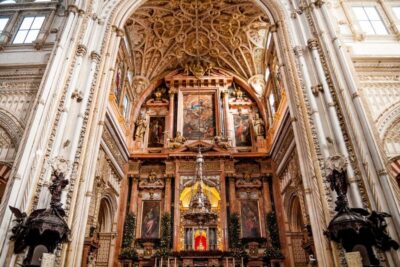
Córdoba: Skip-the-Line Great Mosque-Cathedral History Tour
Read our review →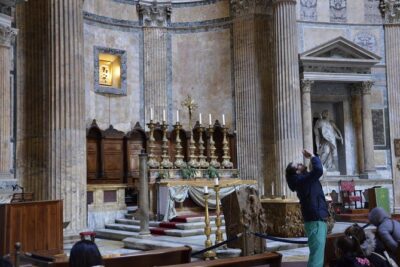
Pantheon Elite Guided Tour – Rome’s Iconic Ancient Temple
Read our review →
Abu Dhabi Grand Mosque, Palace, and Heritage Village
Read our review →
Chicago in a Day: Food, History & Architecture Walking Tour
Read our review →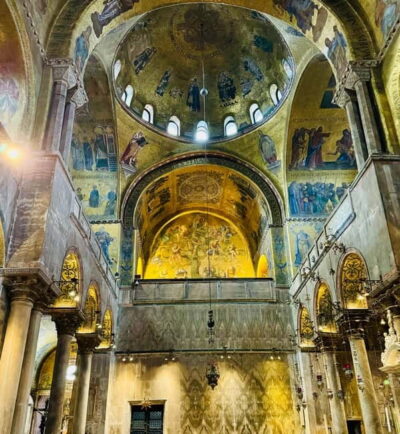

Colosseum Special Access Tour, with Ancient Temples & Tombs
Read our review →Browse the lists this tour appears in