
Review · NORTE REGION
Braga and Guimarães – The Heritage Tour
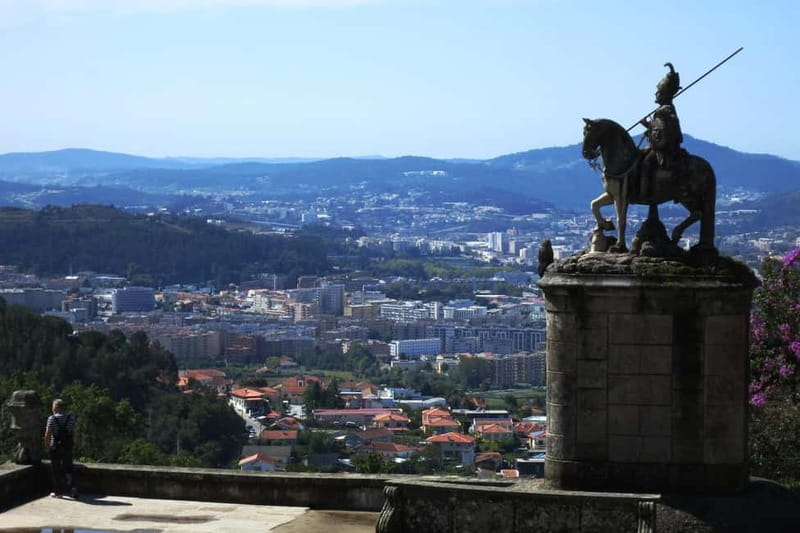
Two northern cities, one full day. This $69 excursion from Porto gives you a useful introduction to Braga and Guimarães, with a panoramic bus, certified guides, and enough free time to enjoy lunch on your own. I especially like the visit to Bom Jesus do Monte, where grand stairs and gardens make the first stop feel memorable, and the walk through Guimarães, where castles, a ducal palace, and medieval streets bring Portugal’s early story close to hand. The main consideration is pace: bilingual guiding can take longer, and some stops may feel generous for what there is to see.
The day is strongest when you want to cover two major northern cities without arranging trains, buses, and local orientation yourself. Guides such as Mafalda, Gabriela, and Karine have been praised for clear explanations, warmth, and good humor. Just remember that lunch and monument entry are extra, and the tour is not suitable for wheelchair users.
Key points at a glance
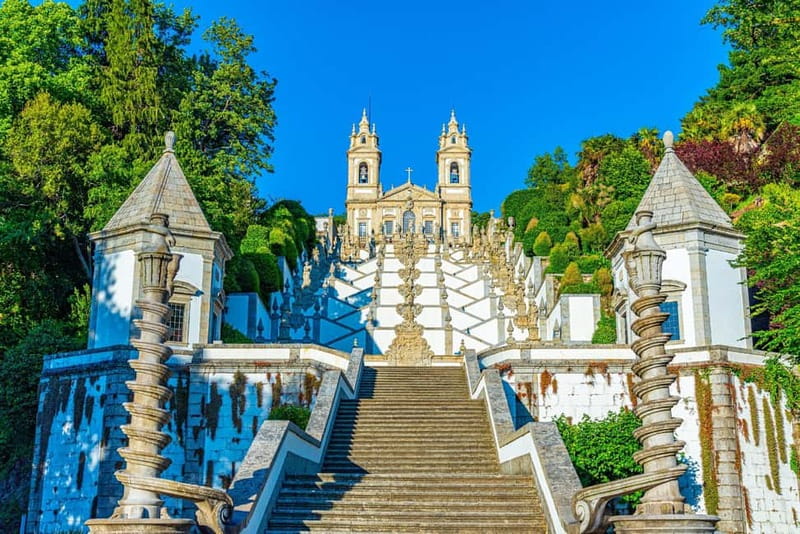
- Bom Jesus begins the day with a grand view: You get about an hour at the famous sanctuary, its Baroque stairway, gardens, and religious artwork.
- Braga combines church interiors with local life: The one-hour city walk includes the Sé de Braga, Portugal’s oldest cathedral, followed by 90 minutes for lunch.
- Guimarães delivers the strongest medieval setting: The route includes the castle park, the Palace of the Dukes of Braganza, São Miguel do Castelo, and Largo da Oliveira.
- The panoramic bus saves you planning time: Transport connects Porto, Braga, Bom Jesus, and Guimarães, then returns to Porto.
- Guiding is available in four languages: English, Spanish, French, and Portuguese are offered, though a multilingual group can make some explanations longer.
- The price is fair for a full day: At $69, the cost covers transport and guiding, but not food or admission fees.
Why this northern Portugal day trip works
Braga and Guimarães are close enough to visit together, yet different enough to make the combination worthwhile. Braga is strongly tied to Catholic tradition and the long influence of its archbishops. Guimarães feels more connected to Portugal’s early royal story and medieval beginnings.
From Porto, the tour handles the practical problem: how to see both places in one day without changing transport in unfamiliar towns. The bus journey to the first stop takes about an hour. Later rides connect Bom Jesus with Braga, Braga with Guimarães, and Guimarães with Porto.
I like this arrangement for a first visit to northern Portugal. You get a broad view rather than a deep visit to one city. That tradeoff matters. If you want time inside every church, museum, and palace, you will need separate day trips. If you want a guided introduction with the major sights in place, this tour gives you a sensible route.
The bus is described as a comfortable yellow panoramic coach. One account from a very wet day praised the driver’s safe driving and the vehicle’s comfort, which matters on a long outing with several road sections. The bus also gives you a chance to rest between walking tours.
A few more history tours around Portugal worth a look
- Lisbon: History, Stories and Lifestyle Walking Tour
★ 4.8 · 10,902 reviews - Douro Valley: Historical Sites, Wine Experience, Lunch & Cruise
★ 5.0 · 5,133 reviews - Lisbon: Live Fado Show with Port Wine in Historic Center
★ 4.7 · 4,166 reviews
Bom Jesus do Monte: a grand first stop
The day opens at the Sanctuary of Bom Jesus do Monte, about an hour from Porto. This is not a quick roadside photo stop. You have about one hour to explore the sanctuary, gardens, and famous stairways with a guide.
Bom Jesus is known for its Baroque design and dramatic approach. The stairway rises through a sequence of religious scenes, ornamental features, and terraces. Even if you are not deeply interested in church architecture, the setting gives you a clear sense of how religion shaped public spaces in northern Portugal.
The stop also provides one of the tour’s best changes of pace. You begin with open views, stone steps, formal gardens, and a monumental church complex before moving into Braga’s tighter city streets.
One practical point: this is a walking stop with stairs. The tour data specifically says it is not suitable for wheelchair users. Anyone with limited mobility should consider that warning carefully, since the sanctuary’s design depends on slopes and stairways.
The timing has drawn mixed reactions. One guest felt that the first pause was longer than necessary for the amount available to see. I can understand that view if you have already visited Bom Jesus or prefer a fast-moving day. On the other hand, the hour gives you room to look around without racing through the sanctuary.
Rain can change the experience. Wet stairs and gardens will make the visit less comfortable, although the guide may help the group find sheltered meeting points. Bring footwear with a firm sole and allow extra care on stone surfaces.
Braga and the oldest cathedral in Portugal
After Bom Jesus, the bus takes about 20 minutes to central Braga. The guided walk lasts about an hour and focuses on the historic center, religious monuments, and the city’s long connection with the archbishops of Braga.
The key sight is the Sé de Braga, widely regarded as Portugal’s oldest cathedral. Its importance is not only architectural. The cathedral helps explain why Braga is often called the City of the Archbishops. Religious authority shaped the city’s buildings, ceremonies, and traditions for centuries.
Your guide provides the context that makes the churches and monuments easier to read. Rather than simply passing a grand facade, you can learn why Braga developed such a strong religious identity and how that identity still appears in the city center.
A one-hour walk is enough for orientation, but not enough for a slow survey of every detail. You may find yourself choosing between listening closely and taking photographs. I suggest staying with the guide during the main explanation, then using free time for anything you want to see again.
The walk is followed by 1.5 hours of free time for lunch. This is a useful part of the schedule because it lets you choose your own meal rather than being tied to a fixed restaurant. Lunch is not included, so keep part of your budget available.
The free period also gives you a little breathing room after the guided walk. You can eat, browse the center, or simply sit down before the afternoon transfer. Still, 90 minutes passes quickly if you want a full meal and extra sightseeing. Treat it as a relaxed lunch break, not a second independent tour of Braga.
What to expect from a bilingual or multilingual tour
Guiding is offered in English, Spanish, French, and Portuguese. That is a strong advantage for mixed groups, particularly if you want historical explanation rather than a simple drive between attractions.
The quality of the guide can shape the day. Mafalda has been praised for making information interesting and funny while remaining professional. Gabriela was described as doing a very good job, and Karine received warm praise along with the driver Manuel. These comments point to a team that can add personality to what might otherwise be a standard sightseeing route.
There is one fair limitation. When a guide speaks to a group in two languages, explanations naturally take longer. One person felt that attention was not always evenly balanced between languages. You may spend more time standing at a site while the same information is repeated.
That is not a serious flaw if you value access to your own language. It does mean the day can feel less brisk than a single-language tour. I would choose this option for clear orientation and convenience, not for a tightly timed private visit.
Same place, a different slice of the past:
- Porto: An Intimate Fado Show in a Historical Tavern
★ 4.8 · 2,055 reviews - Lisbon: Fado Show with Wine in a Historic Venue
★ 4.8 · 1,294 reviews - Porto: Historic City Center Walking Tour
★ 4.7 · 1,172 reviews - Lisbon: Daytime or Sunset Boat Cruise with History and Wine
★ 5.0 · 1,053 reviews
Guimarães, Portugal’s early story
The bus ride from Braga to Guimarães takes about 45 minutes. The afternoon visit includes a guided walk of about 1.5 hours, making this the longest city stop of the day.
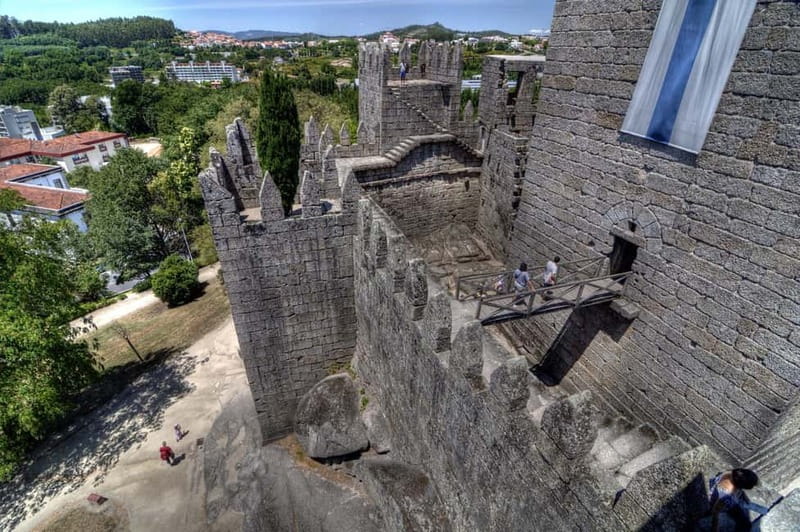
Guimarães is known as the Cradle of the Nation, and the route focuses on places linked to Portugal’s early identity. You visit Guimarães Castle Park, the Palace of the Dukes of Braganza, and the Church of São Miguel do Castelo.
The castle park gives you a setting for the town’s medieval story. The Palace of the Dukes of Braganza adds a grander, more courtly side. São Miguel do Castelo is smaller and more intimate, helping balance the scale of the castle and palace.
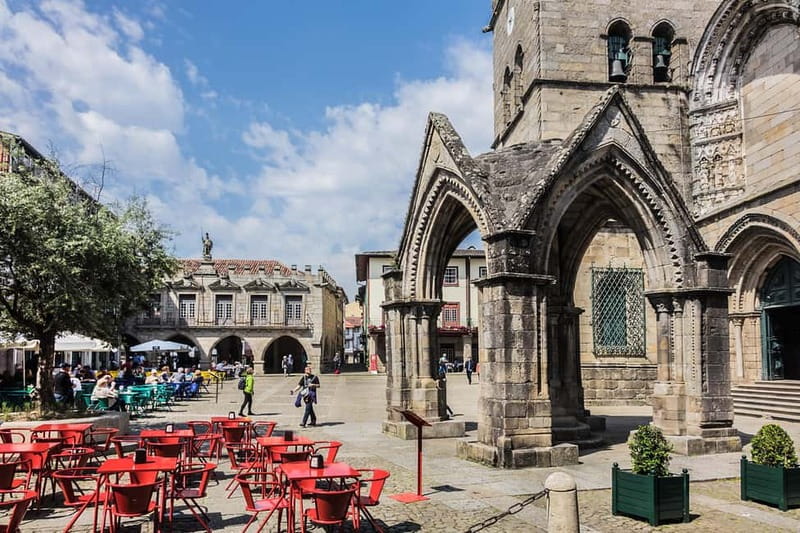
The final point is Largo da Oliveira, a charming medieval square in the historic center. This is a fitting place to finish because it gives you time to see Guimarães as a living town rather than only as a collection of monuments.
The historic center is a UNESCO World Heritage Site. That designation matters here because the appeal is not one isolated building. It is the relationship between squares, streets, stone facades, churches, and older urban spaces.
I would give Guimarães your full attention during the walk. The route covers several sites, and the guide’s explanation helps connect them. If you wander away too soon for photographs, you may miss the story that ties the places together.
The Vinho Verde connection
The tour also introduces you to the Vinho Verde region and the production of its famous green wines. The name can confuse first-time visitors. Vinho Verde does not simply mean that the wine is green. It refers to a northern Portuguese wine region and its distinctive wine styles.
The tour description presents this as part of the wider cultural setting around Braga and Guimarães. You should not assume that a formal winery visit or tasting is included, because neither is listed among the stops. The value is the regional context: you learn that the countryside around these historic cities has its own food and wine traditions.
This is one reason the trip feels broader than a church-and-castle transfer. You see how architecture, religion, national history, and local produce fit into the same northern Portugal story.
How the $69 price measures up
At $69 per person, this is a reasonable price for an eight-hour guided excursion from Porto. The fee includes transport from Porto to Braga and back, the walking tours, and live guiding in four languages.
You are paying mainly for convenience and interpretation. The bus removes the need to plan separate connections, and the guide gives structure to places that can otherwise feel like a series of attractive but disconnected stops.
The cost does not include lunch or entry to monuments. That keeps the base price lower, but you should allow extra money for food and any admission charges available during the day. The exact amount will depend on which monuments you enter and what you choose for lunch.
The value is best for a first visit. If you already know Braga and Guimarães well, the fixed schedule and shared guiding may feel less useful. If you are staying in Porto for a short time, the chance to see both cities in one day makes the price easier to justify.
Timing, comfort, and the real pace of the day
The advertised duration is eight hours. The schedule includes about three hours and 25 minutes of bus travel, plus guided visits and lunch. That makes the day full, though not relentlessly active.
The longest travel section is the opening and closing route between Porto and the northern cities. The shorter transfers break up the walking and let you rest. A panoramic bus also gives you a different view of the towns and countryside than you would get from a train.
Some people will find the schedule well judged. Others may feel that certain pauses are too long, especially at Bom Jesus. The tour works best if you accept that not every minute will be packed with sights.
Weather is worth considering. Braga and Guimarães can be enjoyable in rain, but wet stone, stairs, and open gardens are less pleasant. A guide may identify dry meeting points, as happened during one particularly wet outing, but you should still bring suitable clothing.
The meeting point and drop-off point are listed around Igreja da Lapa in Porto, though the exact option may vary when you book. Check your selected departure details carefully.
Who should book this tour?
I would recommend it to you if you:
- Have limited time in Porto and want to see two major northern cities
- Prefer a guide to explain religious and national history
- Like a mix of monuments, walking, free time, and scenic bus travel
- Want transport arranged from Porto
- Are comfortable with a full day and moderate walking
- Appreciate multilingual support
You may prefer separate visits if you want long museum stops, extended meals, or complete control over your schedule. The tour is also a poor fit if you need wheelchair access, since it is specifically listed as unsuitable for wheelchair users.
Cancellation is flexible up to 24 hours before departure for a full refund, and you can reserve now and pay later. Those terms help if your Porto plans are still shifting.
Should you book Braga and Guimarães?
Book this tour if you want an efficient first look at northern Portugal and value a guide who can connect Bom Jesus, Braga’s cathedral, Guimarães Castle, and the country’s early story. The strongest features are the practical route, the warm guiding style, and the chance to see two very different cities in one day.
Skip it if you want a slow, independent day or already know these places. Also think twice if stairways, wet-weather walking, or multilingual explanations would frustrate you.
For most first-time visitors based in Porto, $69 is a fair exchange for transport, structure, and local context. Keep lunch and monument fees separate, wear comfortable shoes, and treat Guimarães as the afternoon highlight. That approach will help you enjoy the day without expecting private-tour freedom.
FAQ
Where does the tour start?
The listed starting point is Igreja da Lapa at Largo da Lapa 1 in Porto. The exact meeting point can vary depending on the option booked.
Where does the tour end?
The listed drop-off locations are around Igreja da Lapa and Largo da Lapa 1 in Porto.
How long does the experience last?
The tour lasts about eight hours.
Is transport included?
Yes. Transport from Porto to Braga and back is included, with bus or coach travel between the main stops.
Which languages are available?
Live guiding is available in English, Spanish, French, and Portuguese.
Is lunch included?
No. You receive about 1.5 hours of free time in Braga for lunch, but the meal is not included in the price.
Are monument entry fees included?
No. Entry to monuments is not included.
What happens at Bom Jesus do Monte?
You receive a guided visit of about one hour, with time to see the sanctuary, Baroque gardens, and stairways.
What does the Guimarães visit include?
The guided walk includes Guimarães Castle Park, the Palace of the Dukes of Braganza, the Church of São Miguel do Castelo, and Largo da Oliveira.
Is the tour suitable for wheelchair users?
No. The activity is specifically listed as unsuitable for wheelchair users.
Just added around Portugal
- Braga: Private & Flexible Walking Tour in Historic Center★ 4.7 · 50 reviews
- Braga & Guimarães Tour: Small Historical Group Tour★ 4.9 · 98 reviews
- Albufeira: Old Town History Walking Tour with Tapas & Wine★ 4.7 · 96 reviews
- “Porto: Fado Show with Guided Tour in a Historic Monastery”★ 4.9 · 164 reviews
- Porto: Jewish Heritage Walking Tour★ 4.7 · 266 reviews
- Lisbon city tour on history, culture and current topics★ 5.0 · 41 reviews
- Lisbon Jewish Heritage and History – Private Tour Van★ 5.0 · 294 reviews
- Lisbon: Jewish History Tour of Lisbon★ 4.8 · 84 reviews
Portugal History Tours, compared.

Douro Valley: Historical Sites, Wine Experience, Lunch & Cruise
Read our review →
Live Fado Show with Port Wine in Historic Center
Read our review →
Daytime or Sunset Boat Cruise with History and Wine
Read our review →
Private Tour of the Historic City in a Ford T Car
Read our review →Browse the lists this tour appears in