

Review · VIENNA (STATE)
Vienna: Ticket to the Museum of Natural History
Ancient treasures fill a grand palace. Vienna’s Natural History Museum gives you a full day with more than 30 million objects, from meteorites and dinosaurs to prehistoric gold and the famous Venus of Willendorf. I especially like the extraordinary Ringstrasse architecture and the chance to see major archaeological pieces in the same building as rare animals and fossils.
The $21 admission price is fair if you enjoy museums and plan to spend several hours inside. One point to consider: the dinosaur displays are only part of the collection, with one verified review noting that there are few rooms devoted to dinosaurs. If giant reptiles are your main reason for coming, you may want to keep expectations in check.
Key points to know before you go

- The Venus of Willendorf is the star object: This 29,500-year-old figure shares the Venus Cabinet with the 36,000-year-old Venus of Galgenberg.
- The museum occupies a grand 1889 palace: Gottfried Semper and Carl von Hasenauer designed it as a Palace of Natural Science and Evolution.
- Thirty-nine exhibition halls cover two floors: You can move from gemstones and fossils to birds, mammals, and marine life in one visit.
- The meteorite collection is a major attraction: The museum holds the largest and oldest collection of meteorites in the world.
- The ticket lasts for one day: You can take your time instead of rushing through every room.
- A rooftop tour may add a fine city view: The guided rooftop visit is a special opportunity, but it is not listed as part of the admission ticket.
Entering Vienna’s Natural History Palace
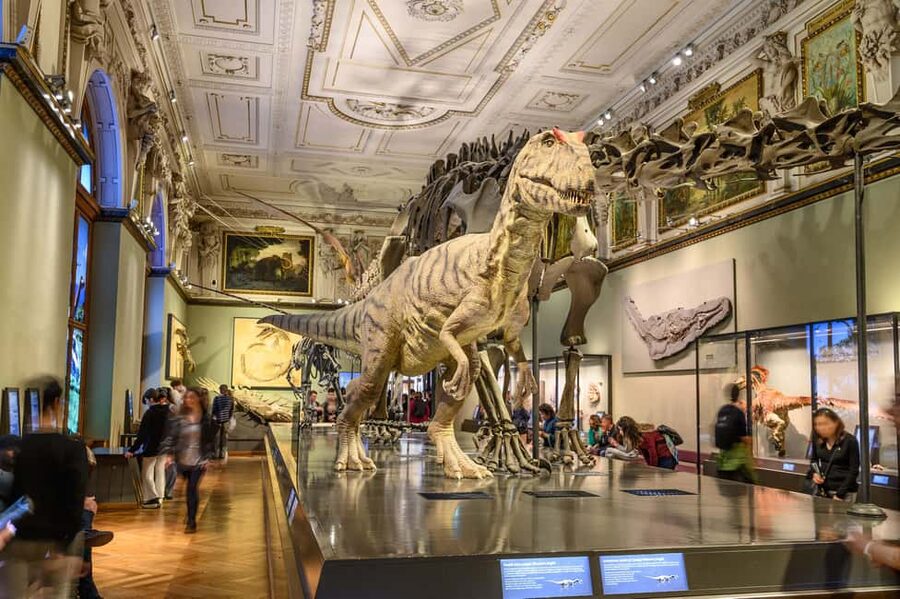
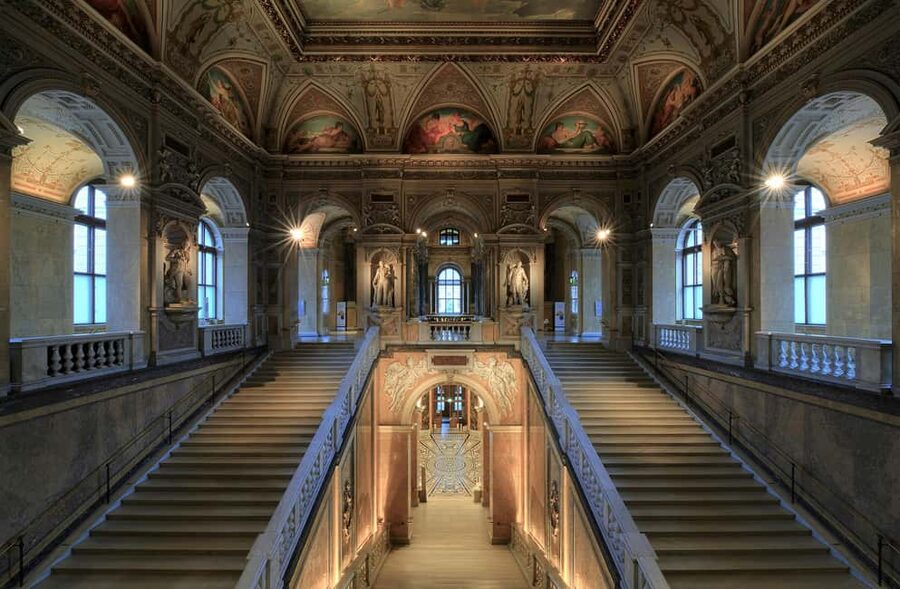
The building is part of the experience. The Natural History Museum sits on Vienna’s Ringstrasse in a grand structure designed by Gottfried Semper and Carl von Hasenauer. Emperor Franz Joseph I officially opened it on August 10, 1889.
I would give yourself a few minutes outside before entering. The exterior helps explain the museum’s original ambition. This was not planned as a plain collection hall. It was conceived as a Palace of Natural Science and Evolution, a place where the story of Earth and life could be presented with the ceremony of a royal building.
That setting gives the museum a different feel from a modern science center. You are looking at old display cases, historic specimens, ornate rooms, and grand architectural details. The museum’s age is part of its charm, though it also means the visit is less sleek and interactive than some newer science museums.
Inside, the collection is arranged across two floors and 39 exhibition halls. The sheer scale can feel a little daunting at first. I suggest treating your visit as a broad tour of natural science rather than trying to memorize every label.
The museum contains more than 30 million objects, but only a fraction can be on public display at one time. That number matters because it explains the wide range of subjects here, from anthropology to mineralogy, zoology, paleontology, and meteorites.
More Museum and Gallery History Tours in the world:
- Paris: Louvre Museum Entry with History of Mona Lisa
★ 3.9 · 2,823 reviews - Venice’s Best: Basilica, Doge’s Palace, Gondola & History Gallery
★ 4.5 · 2,478 reviews - Guided African American History Tour with Reserved Museum Entry
★ 4.5 · 1,180 reviews
The lower floor: fossils, minerals, gold, and early humanity
The lower floor is where many of the most famous individual objects are found. You can expect displays of precious stones, minerals, fossils, dinosaurs, meteorites, prehistoric treasures, and exhibits on the origin and development of humankind.
This section rewards slow looking. A gemstone or fossil may seem small compared with a dinosaur skeleton, but the variety is the point. You are moving through different chapters of Earth’s story, from geological formation to extinct life and human development.
The gemstone bouquet is one of the more unusual objects. Maria Theresa gave it to her husband, Emperor Franz I Stephan of Lorraine. It is a fine example of how the collection is not limited to specimens found in nature. Some objects also tell stories about royal collecting, craftsmanship, and the way science was presented to earlier audiences.
The meteorite collection deserves real attention. It is described as the largest and oldest collection of meteorites in the world, which gives this portion of the museum unusual weight. These pieces connect the building’s displays to events far beyond Earth, and they help widen the visit beyond familiar subjects such as animals and fossils.
If you are visiting with children, the meteorites and dinosaurs may provide an easy starting point. If you are more interested in archaeology, stay longer with the prehistoric collections and the human origins displays.
Meeting the Venus of Willendorf
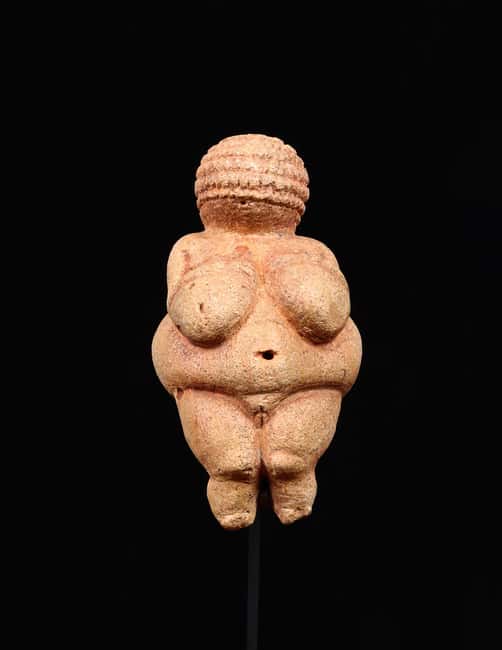
The Venus Cabinet is the museum’s essential stop. It houses the Venus of Willendorf, a 29,500-year-old figure that has become one of the best-known prehistoric objects in Europe.
The small sculpture is famous, but its importance is not just about fame. It gives you a direct connection to human creativity from the distant past. After seeing large mineral specimens and animal remains, this compact human figure brings the collection back to people and their attempts to represent the world around them.
The cabinet also contains the Venus of Galgenberg, dated to 36,000 years ago. It is described as the oldest known human figure made of stone. Seeing the two figures together makes the display stronger than seeing either object alone. You can compare two very early examples of human art and consider how much time separates them from the present.
I would not rush this room. The Venus of Willendorf is not large, and it can be easy to glance at it and move on because the museum contains so many other objects. Give it a quiet moment. Its small size is part of the point: one of the most important objects in the building does not need to be physically imposing.
Prehistoric gold and the Hallstatt collection
The Gold Cabinet presents prehistoric gold and silver treasures, including the second-oldest gold find in the world. This section adds a human, practical side to the museum’s prehistoric story. These are not only raw materials or scientific samples. They show how early communities worked with precious substances and assigned them meaning.
Another room focuses on finds from Hallstatt. The site is linked to 7,000 years of uninterrupted salt mining, and the archaeological remains offer a long record of work, burial, and daily life.
This room is especially useful if you are planning to visit Hallstatt itself. The museum gives you context before you see the famous lakeside town and surrounding region. It also helps you look beyond the postcard scenery. Salt mining shaped the area for thousands of years, and the objects here show the depth of that past.
You may find the archaeological displays more rewarding if you read at least some of the labels. The museum covers a great deal of ground, so the historical meaning of an object can otherwise get lost among the cases.
More Entry Tickets in the world:
- Edinburgh: Edinburgh Castle Guided History Tour with Tickets
★ 4.8 · 9,933 reviews - Taormina: Ancient Theater Skip-the-Line Ticket & Audio Guide
★ 4.5 · 2,412 reviews - Historic Milan Tour with Skip-the-Line Last Supper Ticket
★ 4.5 · 1,976 reviews - Prague: Hop-on Hop-Off Historical Tram Ticket for Line 42
★ 4.1 · 1,702 reviews
The dinosaur question: important, but not the main event
Dinosaurs are included on the lower floor, alongside fossils and other evidence of prehistoric life. They are a natural draw, especially for families, but I would not book this ticket solely for a giant dinosaur hall.
One verified review from February 21, 2026, was very brief and described the museum as having few rooms about dinosaurs. That is a useful warning. The museum contains dinosaurs, but its collection is much broader than dinosaur exhibits. You will also find meteorites, minerals, prehistoric art, human origins, archaeological finds, and many animal specimens.
That wider range is a strength if you want a full natural history museum. It is a limitation if your ideal visit means several large dinosaur galleries. I would set aside enough time to see the dinosaurs, then continue to the sections that make this museum distinctive, especially the meteorites, Venus Cabinet, Gold Cabinet, and Hallstatt finds.
The upper floor: a cabinet of animal life
The upper floor presents the animal world, beginning with simple marine organisms and moving toward highly developed mammals. This arrangement gives you a broad look at animal diversity rather than focusing on one region or one habitat.
The displays include mounted amphibians, reptiles, mammals, and birds. Some are extremely rare or extinct, and many are historic specimens. That combination is important. You are not simply looking at modern replicas or digital reconstructions. The cases preserve an older tradition of natural history collecting, when scientists and museums documented the natural world through physical specimens.
I like this floor as a slower counterpoint to the lower level. The lower floor has obvious headline objects: gold, dinosaurs, meteorites, and prehistoric figures. The upper floor asks you to compare forms and notice variation across animal groups.
The presentation may appeal most to adults who enjoy traditional museums, students, and anyone interested in zoology. Younger children may prefer the more dramatic fossils, but the mounted animals provide plenty to see if you point out the differences between amphibians, reptiles, birds, and mammals.
Because the museum is so large, you do not need to spend equal time in every room. Pick the animal groups that interest you and keep enough energy for the rest of the building.
The museum behind the displays
Around 60 scientists work behind the scenes on human, earth, and life sciences. Their work includes environmental and climate-related questions, and the museum is one of Austria’s largest non-university research institutions.
You will not see most of this research directly during a standard admission visit. Still, it changes how I would view the public displays. The collection is not only a historic storehouse. Current scientific work continues behind it, and the knowledge gained there is used in the design of exhibitions.
That connection gives the museum more purpose than a room full of old specimens. The historic objects remain important, but the institution is also involved in present-day research. If you enjoy science, pay attention to special exhibitions and the way displays explain changing ideas about Earth, life, and humanity.
The supplied information notes that special exhibitions vary. Since their subjects change, you should check what is showing when you plan your visit rather than assuming a particular temporary exhibition will be available.
The rooftop opportunity and Ringstrasse setting
One of the museum’s special visitor opportunities is a guided tour to the rooftop. From there, you can look across Vienna’s city center and see the grand buildings along the Ringstrasse.
This is not simply a higher viewpoint. It helps you understand the museum’s place within Vienna’s monumental central district. After seeing the palace from outside and spending time among its collections, the rooftop view gives you a wider sense of the city around it.
The rooftop tour is described as an opportunity, not as part of the standard admission ticket. I would therefore treat it as an extra possibility and check the current arrangements before counting on it. The museum admission itself includes entry to the Natural History Museum, but the rooftop visit is not listed among the included items.
Even if you do not take the rooftop tour, the exterior deserves attention. The building is one of the most impressive structures on the Ringstrasse, and the architecture is a genuine part of the visit rather than a backdrop for the collections.
How much time should you allow?
The ticket is valid for one day, and that is useful here. The museum has 39 halls on two floors, with enough material for a short highlights visit or a much longer museum day.
I would plan at least several hours if you want to see the major sections without racing. A full day makes sense if you read labels, spend time with the Venus Cabinet, examine the mineral and meteorite collections, and explore the animal displays.
You can also make the visit flexible. Start with the lower floor and see the main archaeological and geological highlights. Then move upstairs for the animal collections. If your attention fades, take a break and return to the sections you most want to see, since the admission is valid for the day.
The museum is listed as wheelchair accessible. That is useful for visitors who need step-free access, although the available information does not provide detailed route or facility information. If you need a specific arrangement, confirm the current access details before your visit.
Is the $21 ticket good value?
At $21 per person, this is a reasonable ticket for a major Vienna museum, especially if you use the full day. The value improves if you enjoy several branches of science rather than one narrow subject.
You are paying for access to a large collection in a historic building, not for a short, guided attraction. The ticket includes admission to the museum, and the one-day validity gives you time to take the visit at your own pace.
I would consider it good value for:
- Families who want dinosaurs, animals, fossils, and eye-catching stones in one place
- Adults interested in archaeology, prehistoric art, or meteorites
- Museum fans who appreciate grand 19th-century interiors
- Visitors looking for an indoor activity with no fixed tour duration
I would be more cautious if your only goal is dinosaurs. The museum does include them, but one verified review specifically noted that there are few dinosaur rooms. In that case, the broader collection needs to interest you too.
The booking terms add flexibility. You can cancel up to 24 hours in advance for a full refund, and a reserve-now, pay-later option is available. Those terms are useful when your Vienna plans may change, but the main value still comes from spending enough time inside to make the most of the ticket.
Who should book this museum visit?
I would recommend it to anyone who likes mixing culture and science in one stop. The Venus of Willendorf, the meteorites, the Hallstatt finds, the Gold Cabinet, and the historic animal specimens create a visit with more variety than the name Natural History Museum might suggest.
It is also a strong choice on a day when you want to avoid a rushed schedule. There is no listed tour group or guide included, so you can move at your own pace and focus on the rooms that fit your interests.
Families should know that not every display will have the same impact. Dinosaurs and animals may catch attention first, while the prehistoric figures, gold, and meteorites reward a little more patience. Adults may appreciate the building and archaeological context more than children do.
Should you book the Vienna Natural History Museum?
Book it if you want a large, traditional museum with major prehistoric objects, rare specimens, and beautiful Ringstrasse architecture. The Venus of Willendorf, the meteorite collection, and the Hallstatt displays give the visit real substance, while the one-day ticket lets you set your own pace.
Think twice only if you want a museum focused almost entirely on dinosaurs. There are dinosaur exhibits, but they form just one part of a much wider collection. For most visitors, that variety is exactly why the $21 ticket makes sense.
FAQ
Where is the Museum of Natural History located?
The museum is in Vienna, Austria, on the Ringstrasse.
How much does admission cost?
The listed price is $21 per person.
How long is the ticket valid?
The admission ticket is valid for one day.
What does the ticket include?
The ticket includes admission to the Museum of Natural History in Vienna.
Can I cancel the booking for a refund?
Yes. You can cancel up to 24 hours in advance for a full refund.
Can I reserve now and pay later?
Yes. A reserve-now, pay-later option is available.
Is the museum wheelchair accessible?
Yes. The museum is listed as wheelchair accessible.
Just added around the world
- The Queenstown Story @ Cobh Heritage Centre , Great Stories of Emigration.★ 4.5 · 181 reviews
- Visit 16 Sites Key Historical Sites And Experience Cobh Rebel Tours★ 5.0 · 167 reviews
- Historical Bicycle Tour of Dunedin★ 5.0 · 44 reviews
- Cincy Brunch History and Streetcar Tour with Riverside Food Tours★ 5.0 · 108 reviews
- 2.5 Hour Kayaking with Manatee and History Tour in Tarpon Springs★ 5.0 · 24 reviews
- Private Tour in Chichen Itza Official History Guide★ 5.0 · 36 reviews
- Dazu Ancient Rock Carvings Private Tour Extension★ 5.0 · 24 reviews
- Chicago River Architecture Tour Aboard a Historic Yacht★ 5.0 · 45 reviews
Museum & Gallery History Tours, compared.
Louvre Museum Entry with History of Mona Lisa
Read our review →
Venice’s Best: Basilica, Doge’s Palace, Gondola & History Gallery
Read our review →
Guided African American History Tour with Reserved Museum Entry
Read our review →
POLIN Museum of the History of Polish Jews Ticket
Read our review →
Bell Tower & St Mark’s Square History Gallery Ticket
Read our review →
Field Museum of Natural History Ticket or VIP Tour
Read our review →
Madrid in a Day Tour:Royal Palace, Historic Center & Prado Museum
Read our review →
Basilica, Doge’s Palace, History Gallery & Bell Tower Option
Read our review →Browse the lists this tour appears in