
Review · ISTANBUL
Historic Balat and Chora Tour with Sunset Cruise
Balat rewards curious walkers. This five-hour Istanbul outing pairs Kariye Mosque and Balat’s old religious quarter with a two-hour sunset cruise past palaces, bridges, and waterfront neighborhoods. I like the compact group size, capped at 12, and the way the day connects lesser-seen streets with Istanbul’s grandest water views. The main drawback is that admission to Kariye Mosque is not included, and the walking portion may feel brisk if you want long visits inside every building.
I also like the relaxed cruise format, with indoor and outdoor areas, fruit, cookies, baklava, and a guide or host to explain the sights. Feedback gives the experience a perfect 5 rating from 40 reviews, with 100 percent recommending it. Still, winter weather can be cold and rainy, and the advertised traditional dinner with alcoholic drinks is not clearly listed among the included items, so I would confirm exactly what is served before booking.
Key points to know before booking
- Balat’s religious landmarks come first: See the Ahrida and Yanbol synagogues, Greek Orthodox churches, the Patriarchate, and the Iron Church.
- The group is limited to 12 people: That makes street walking and guide interaction easier than on a large coach tour.
- The cruise lasts about two hours: You pass Dolmabahçe Palace, Ortaköy, Rumeli Fortress, the two Bosphorus bridges, and Maiden’s Tower.
- Snacks are included on the boat: Expect cookies, baklava, and fruit plates. The full meal and drinks need clarification.
- There is an extra museum cost: Kariye Mosque admission is listed at €20 per person, with about €5 more for public transportation and related expenses.
- The tour ends at Kabataş Square: Hotel pickup and drop-off are promoted, but the stated meeting point is in front of Kariye Mosque, so confirm pickup arrangements.
Starting at Kariye Mosque in Istanbul’s old quarter
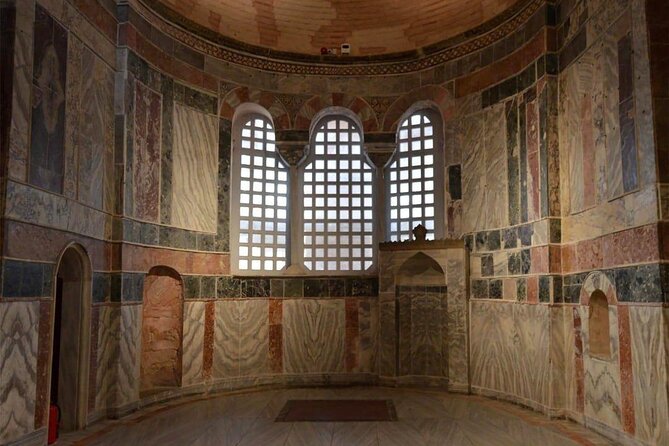
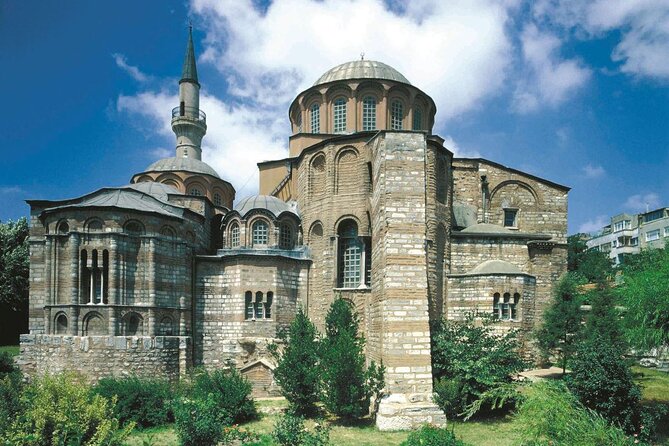
The meeting point is in front of Kariye Mosque, at Derviş Ali, Kariye Cami Sk. No. 18, in Fatih. The tour allows about an hour here, although the admission ticket is separate and listed at €20 per person.
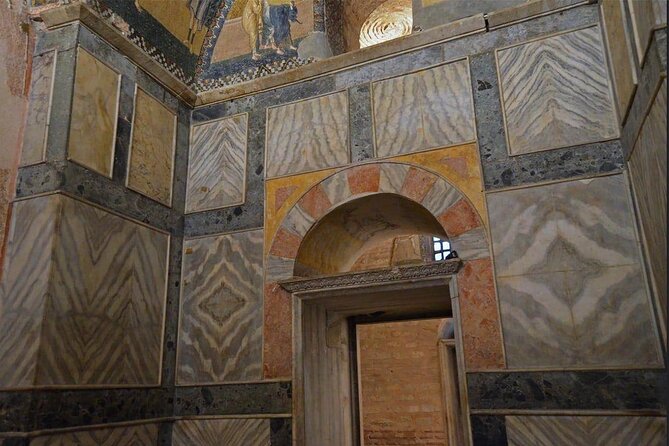
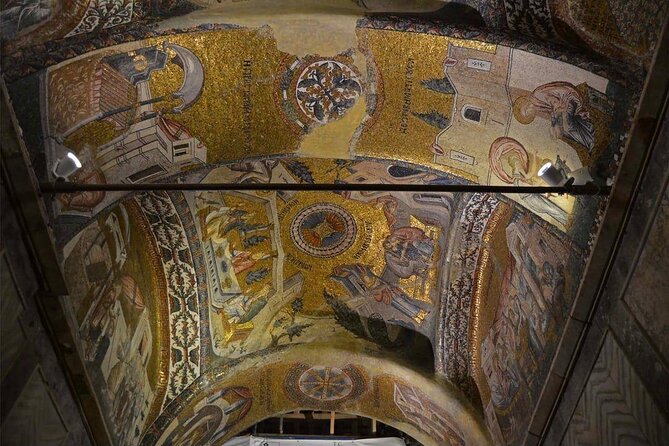
Kariye Mosque is one of the most important stops because the building carries Byzantine church decoration into the Ottoman and modern eras. The supplied details do not specify exactly how much time is spent inside or whether the ticket is purchased as a group, so I would ask the operator about current entry arrangements before the morning begins.
The first hour gives the tour a useful focus. Instead of starting with a general city drive, you begin beside a major monument, then move through Balat on foot. Public transportation and expenses are listed separately at about €5 per person, so the group may use local transport between parts of the experience. The exact method is not stated.
A professional English-speaking guide leads the walk. Erdem received especially warm praise for explaining Chora, while Betul was repeatedly appreciated as a friendly and entertaining cruise host. You may not have either person on your departure, but their names give you a sense of the personal approach the company aims for.
A few more history tours around Istanbul worth a look
- Istanbul Gedikpasa Historical Turkish Bath with Privacy Option
★ 5.0 · 1,285 reviews - Istanbul: Acemoglu Historical Turkish Bath w/Private Options
★ 4.6 · 1,190 reviews - Istanbul: Gedikpasa Historical Hammam with Privacy Add-On
★ 4.8 · 918 reviews
Walking Balat through Jewish and Greek heritage
Balat is at its best on foot. The streets bring together several communities that shaped Istanbul, and this tour gives you a quick route through that mix rather than treating the neighborhood as only a collection of colorful façades.
Ahrida Synagogue dates from the 15th century and was founded by Jews from Ohrid. It is described as one of Istanbul’s oldest and largest synagogues. Yanbol Synagogue came later, built in the 18th century by Jews from Yambol in Bulgaria. These names and origins help you see Balat as part of a wider network of migration across the Ottoman world.
Do not expect every religious building to function as a normal sightseeing interior. Some may require permission, have restricted access, or be viewed mainly from outside. The supplied schedule names the stops, but it does not promise interior entry at each one. Modest dress and respectful behavior are sensible for this section.
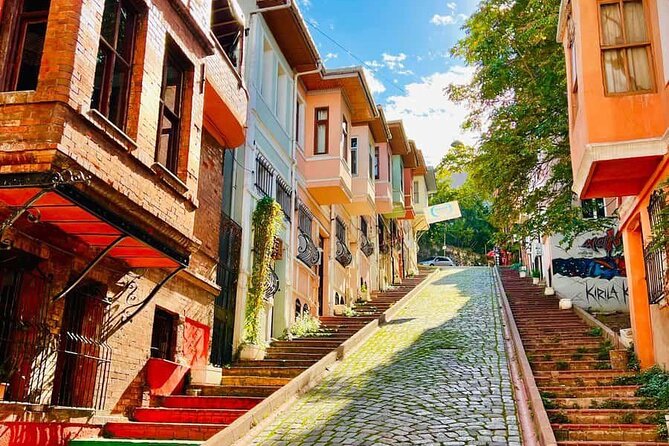
The route continues through Balat Bazaar, with cafés, small shops, and local street life. The colorful stairs are a natural photo stop, though they are popular and may be crowded. You will want comfortable shoes because the neighborhood includes slopes, steps, and uneven streets.
The Virgin Mary Greek Orthodox Church adds another layer to the walk. Its roots reach back to the Byzantine era, making it a useful reminder that Balat’s religious map predates the modern Republic by many centuries.
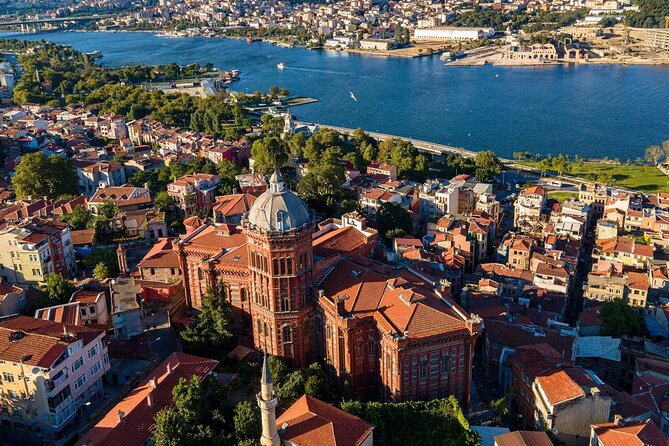
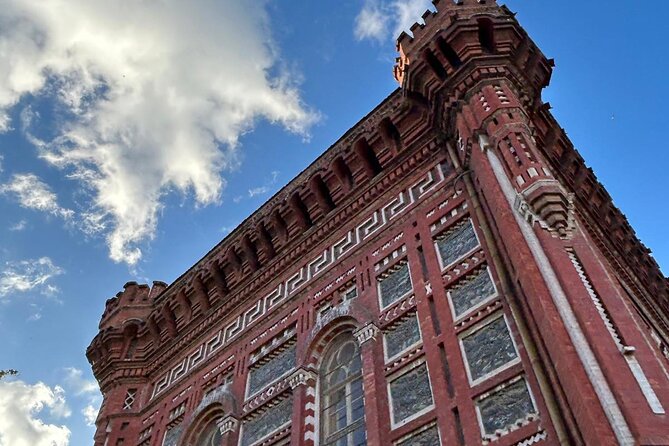
The red-brick Fener Greek Girls’ High School is one of the area’s most striking buildings. Its large façade photographs well, but the value here is architectural and historical rather than a guaranteed school visit. The route is designed to show you the outside character of the district and explain what you are seeing.
St. George Cathedral and the Iron Church
St. George Cathedral is the center of the Ecumenical Patriarchate and one of the major Orthodox Christian sites in the world. This is an important stop even for visitors who are not religious, since it helps explain the continuing role of Fener and Balat within Orthodox Christianity.
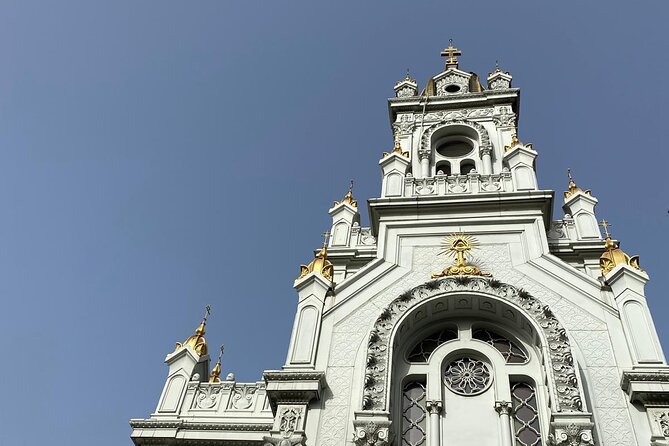
The tour then reaches Sveti Stefan Church, often called the Iron Church. Its cast-iron construction makes it unlike the stone churches and wooden waterfront mansions elsewhere in Istanbul. That unusual material is the reason to keep this stop on your mental checklist. It is a memorable contrast after the synagogue and Greek Orthodox sites.
The walk packs many landmarks into a short time. That is its strength and its limit. You get a strong introduction to Balat’s overlapping communities, but you may not have time for extended photography, café stops, or quiet exploration. If you prefer a slow neighborhood walk, think of this as an orientation tour, not a full afternoon in Balat.
Moving from Balat to the Bosphorus boat
The cruise meeting point is the next stage of the outing. The schedule does not give a precise transfer time or pier name, so you should confirm where and when the group gathers after the walking route.
The boat portion lasts two hours and is described as a luxury sunset cruise. It includes both interior and exterior areas, which matters in Istanbul. You can step outside for photographs, then retreat indoors when the wind rises or the temperature drops.
Included refreshments are cookies, baklava, and fruit plates. Several comments specifically praise the food and drinks, and one notes that the atmosphere remained enjoyable even in rainy January weather. The most useful practical point is to bring a warm layer in winter. Another comment describes the scenery after snow as beautiful but also very cold.
The tour highlights live cultural performances during the cruise. It also promotes a traditional Turkish dinner with alcoholic drinks, but the detailed included-items list names snacks rather than a full dinner. I would treat the meal as something to verify, especially if the food and drinks are a major reason you are booking.
Same place, a different slice of the past:
- Istanbul Historical Tour with Guide, Lunch and Transfers
★ 4.5 · 561 reviews - All in One Day Istanbul – Historical Tour of Istanbul with Bosphorus Cruise
★ 5.0 · 489 reviews - Istanbul Heritage Tour – Incl. Lunch
★ 4.5 · 416 reviews - Historical Peninsula
★ 4.5 · 362 reviews
Sailing past Dolmabahçe and Çırağan Palace
Once on the Bosphorus, the boat turns the city into a moving history lesson. The strait is about 30 kilometers long and links the Sea of Marmara with the Black Sea while separating the European and Asian sides of Istanbul. Its average depth is about 60 meters, reaching roughly 120 meters at its deepest point.
Dolmabahçe Palace is one of the first grand waterfront sights. The palace occupies a large site between Kabataş and Beşiktaş, directly along the European shore. Its location beside the water explains its appeal: the Ottoman court transformed a former anchorage into a setting of ceremony and royal display.
Çırağan Palace follows. Commissioned by Sultan Abdülaziz and designed by Sarkis Balyan, it was completed in 1871. Its past is unusually dramatic. It served as a place of confinement for deposed rulers and their families, later became a parliament building, suffered a fire, was used for a period as a sports stadium, and was restored as a luxury hotel in the 1990s.
From a boat, you cannot explore palace rooms or gardens. What you gain is the broader picture: Ottoman power was displayed directly on the water, where passing boats and residents could see it.
Ortaköy, Bebek, and the Bosphorus bridges
Ortaköy is one of the more social stretches of the route, with cafés, restaurants, souvenir shops, and a bazaar. The area is known for its lively market activity later in the morning and throughout the day. At sunset, the waterfront position matters more than shopping, especially when the mosque, bridge, and water line up for photographs.
The Bosphorus Bridge links Ortaköy on the European side with Beylerbeyi on the Asian side. Opened on October 29, 1973, the bridge was the first major bridge built across the strait. It remains one of Istanbul’s strongest visual symbols.
Bebek offers a different mood. The historic neighborhood is known for waterfront mansions, restaurants, Bosphorus views, and the presence of Boğaziçi University. From the boat, you see Istanbul as a lived-in city rather than only a museum district.
The route continues toward Rumeli Fortress, built in 1453 on the narrowest point of the Bosphorus by order of Sultan Mehmet the Conqueror. Construction took only three months, a remarkable speed for a fortress of this scale. It first helped control naval movement before the conquest and later served as an inspection point for ships.
Today, Rumeli Fortress is also an open-air museum and concert venue. A cruise gives you a clear view of its towers and walls, though not the chance to walk through them. The second bridge, Fatih Sultan Mehmet Bridge, appears farther along. Opened in 1988, it carries a large share of traffic between the two continents.
Asian-side sights and the return toward Kabataş
The boat passes Anadolu Hisarı, or the Anatolian Fortress, built in 1395 by Beyazıt I. It occupies the Asian side at the strait’s narrowest point, opposite Rumeli Fortress. The castle’s outer walls can be seen, but the information supplied says it is not open to the public for a full interior visit.
Küçüksu Palace is another small Ottoman waterfront palace. Sultan Abdülmecid ordered it as a place for rest, and architect Nikogos Balyan designed it. Its furnishings, carpets, paintings, and detailed decoration later led to its opening as a museum.
Beylerbeyi Palace sits beneath the Bosphorus Bridge on the Asian shore. Built in the 1860s, it mixes Western and Ottoman design elements and includes six halls, 24 rooms, a hamam, and a bathroom. Its gardens and lily pond are worth visiting on a separate day, but from the boat you mainly appreciate its position beneath the bridge.
Maiden’s Tower appears on a small island near Üsküdar. Its legends include the well-known story of a sultan who tried to protect his daughter from a prophecy about a snakebite. The tale ends badly, as old palace legends often do, but the tower itself remains one of the Bosphorus’s most recognizable sights.
The cruise then returns toward the Golden Horn and the Galata Bridge. The bridge has linked the two sides of the Golden Horn in different forms since 1845. Its lower level is lined with restaurants and cafés, while pedestrians, trams, and fishers create a lively scene above.
The final major waterfront sight is Galataport in Karaköy, a modern district with shopping, restaurants, and a cruise port. The tour ends at Kabataş Square, on the European side. That final location is convenient for continuing into central Istanbul, but it is not the same as returning to your hotel unless a specific drop-off has been arranged.
Price, group size, and practical value
At $95.86 per person, this experience is not the cheapest way to take a Bosphorus cruise. Its value comes from combining a guided Balat walk, a small group, transportation between sections, a two-hour boat ride, refreshments, and live entertainment in one half-day.
A public ferry costs much less, but it will not provide a guide explaining Ahrida Synagogue, St. George Cathedral, Rumeli Fortress, and the palace shoreline in one connected route. A private guide would offer more time and flexibility, but normally at a higher total cost.
The 12-person limit is useful in Balat. Narrow streets and crowded photo points are easier with a small group, and you have a better chance to hear the English guide. The five-hour length also fits neatly into a day with other sightseeing, though the schedule is full enough that you should not expect long independent breaks.
The main added costs are clear: €20 for Kariye Mosque admission and about €5 for public transportation and expenses. Since the cruise inclusions mention snacks rather than a full dinner, ask for a precise food and beverage description before you pay.
Free cancellation is available if you cancel at least 24 hours before the start time. Changes or cancellations inside that window are not refundable, and the activity requires a minimum number of participants.
Who should book this Istanbul experience?
I would choose this tour if you want a guided introduction to Balat and prefer a scenic evening on the Bosphorus over a long museum visit. It suits first-time visitors who want Ottoman palaces, Orthodox landmarks, Jewish heritage, bridges, and waterfront neighborhoods without arranging several separate outings.
It is also a good fit if you value a small group and social hosting. Betul was praised for keeping the boat atmosphere friendly and entertaining, while Erdem was singled out for his explanations at Chora. The crew and smooth ride also received repeated praise.
I would hesitate if you dislike fixed schedules or want deep access inside every landmark. The walking route covers a lot, and many sights may be viewed from outside. I would also think twice for a cold-weather departure unless you bring a warm coat, since the open deck is a major part of the experience.
Should you book it?
Book it if your ideal Istanbul afternoon mixes neighborhood history with a picture-ready sunset cruise. The combination is strong, the group size is sensible, and the route shows parts of the city that a standard old-town tour often misses.
Before booking, confirm hotel pickup, the exact boat meeting point, current Kariye admission, and whether a traditional dinner with alcoholic drinks is truly included. If those details match your expectations, $95.86 is a fair price for a tightly organized half-day that finishes with Istanbul’s best natural stage: the Bosphorus at sunset.
FAQ
How long does the Historic Balat and Chora Tour with Sunset Cruise last?
The experience lasts approximately five hours, including the Balat walking section and a two-hour sunset cruise.
Where does the tour begin?
The stated meeting point is in front of Kariye Mosque at Derviş Ali, Kariye Cami Sk. No. 18, 34087 Fatih, Istanbul.
Where does the tour end?
The cruise ends at Kabataş Square on the European side of Istanbul.
Is hotel pickup and drop-off included?
Complimentary hotel pickup and drop-off are promoted as features, but the stated meeting information gives Kariye Mosque as the start and Kabataş Square as the end. Confirm the pickup and drop-off details when booking.
Is Kariye Mosque admission included?
No. Admission is not included and is listed at €20 per person.
What food is included on the cruise?
The included refreshments are cookies, baklava, and fruit plates. The experience also promotes a traditional Turkish dinner with alcoholic drinks, so confirm whether those are part of your specific booking.
Is the cruise indoors or outdoors?
The boat has interior and exterior areas. You can choose between the open-air views and shelter inside, which is useful in cold or rainy weather.
How many people can join the tour?
The maximum group size is 12 participants.
Is cancellation free?
You can cancel for a full refund up to 24 hours before the experience starts. Cancellations or changes made less than 24 hours before the start time are not accepted for a refund.
Just added around Istanbul
- WONDERS of ISTANBUL: PRIVATE Full-Day Guided City Tour★ 5.0 · 295 reviews
- Local Food, History and Hidden Places Walking Tour in Istanbul★ 4.5 · 81 reviews
- Old City Tour Professional Guide All Entrance Tickets Included★ 4.5 · 20 reviews
- Gedikpasa Historical Turkish Bath Experience in Istanbul★ 5.0 · 40 reviews
- Istanbul Revealed: Historic Pathways & Bosphorus Serenity★ 5.0 · 21 reviews
- ISTANBUL Full-Day PRIVATE Guided Tour: For the Top Historic Sites★ 5.0 · 199 reviews
- Private Guided Istanbul Walking Tour Old City Highlights★ 5.0 · 30 reviews
- Istanbul: Fener Balat Historical Walking Tour★ 5.0 · 25 reviews
Istanbul History Tours, compared.
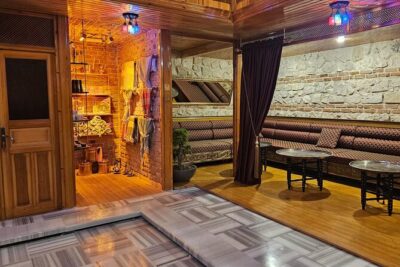
Istanbul Gedikpasa Historical Turkish Bath with Privacy Option
Read our review →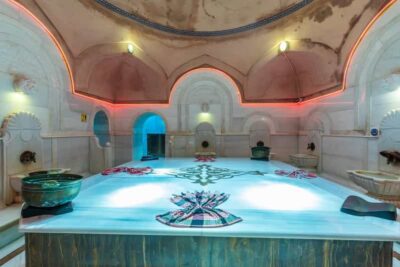
Acemoglu Historical Turkish Bath w/Private Options
Read our review →
Gedikpasa Historical Hammam with Privacy Add-On
Read our review →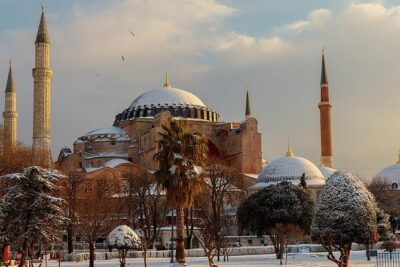
Istanbul Historical Tour with Guide, Lunch and Transfers
Read our review →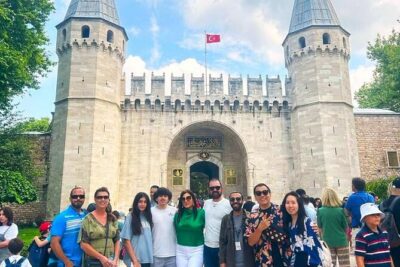
All in One Day Istanbul – Historical Tour of Istanbul with Bosphorus Cruise
Read our review →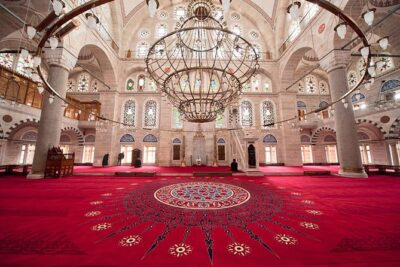
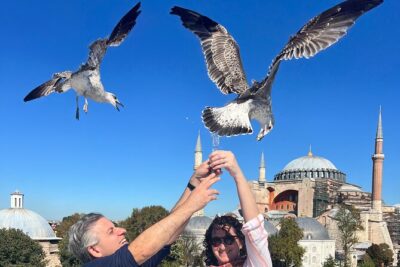
WONDERS of ISTANBUL: PRIVATE Full-Day Guided City Tour
Read our review →Browse the lists this tour appears in