
Review · BUSAN
Old Korea Thousand History Tour of Gyeongju from Busan
A thousand years fits into one long day. This Gyeongju day tour from Busan links temples, royal tombs, old streets, and an illuminated palace pond without making you plan every transfer yourself. For $64, round-trip transport, attraction admission, and a guide are included.
I especially like the easy coach transport and the way the route saves the atmospheric sights for evening. Guides such as Bada, Erica, Kayla, Hyony, Katrina, and Eva are repeatedly praised for clear explanations, humor, photo help, and good energy. The catch is the schedule: this is a genuine 12-hour outing, with plenty of walking and little room for lingering at each stop.
The key points
- Five major historical areas plus Hwangridan-gil: You get Bulguksa Temple, Gyochon Village, Daereungwon Tomb Complex, Donggung Palace and Wolji Pond, and Woljeonggyo Bridge.
- An evening finish: The lit palace pond and bridge are among the most memorable photo stops.
- Strong guide presence: Guides including Bada, Erica, Kayla, Hyony, Katrina, and Eva are praised for history, humor, organization, and taking photos.
- Good value at $64: Transport and admission are covered, while meals and personal spending are not.
- A full physical day: Some visitors report more than 18,000 steps, and summer heat in inland Gyeongju can be stronger than in Busan.
- Best for first-time visitors: This is a practical way to see many famous sites in one day, though independent explorers may find the pace tight.
Why Gyeongju works as a day trip from Busan
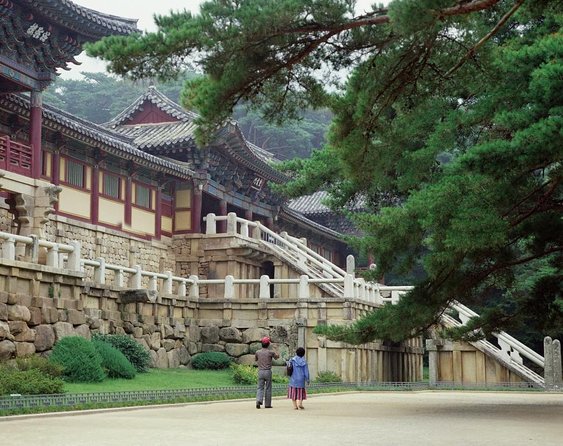
Busan is Korea’s lively port city, but Gyeongju tells a much older story. It served as the capital of the Silla kingdom for centuries, and its sights are spread across a wide area. That distance is the main reason this organized trip makes sense.
You do not need to work out separate bus routes between a mountain temple, central tombs, traditional houses, and an evening pond. The coach gives you air conditioning between stops, which matters on hot and humid days. It also lets you see the city’s major sights in one day rather than choosing only one or two.
The tour starts with pickups at Busan Station, Seomyeon Station, and Haeundae Station. During the April to September summer schedule, the listed pickup times begin at 10:00 at Busan Station, 10:20 at Seomyeon, and then Haeundae. Check the exact meeting point and time on your booking confirmation, since the pickup schedule can change.
The day usually runs into the evening. One person described a 10 a.m. to 10 p.m. schedule, so do not book dinner, a show, or a train immediately afterward. The long hours are not a flaw by themselves, but you should treat this as your main activity for the day.
Bulguksa Temple brings Silla Korea into view
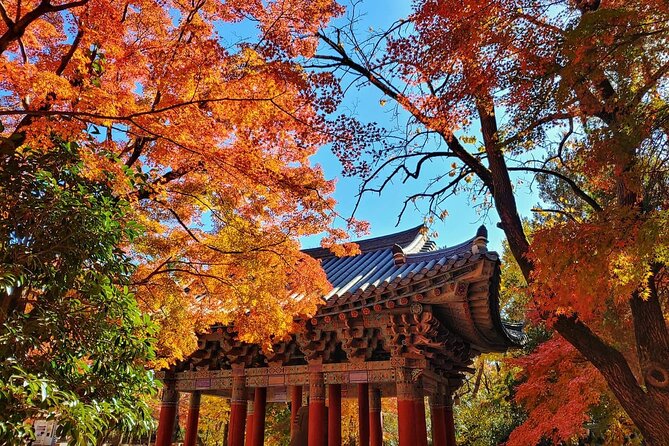
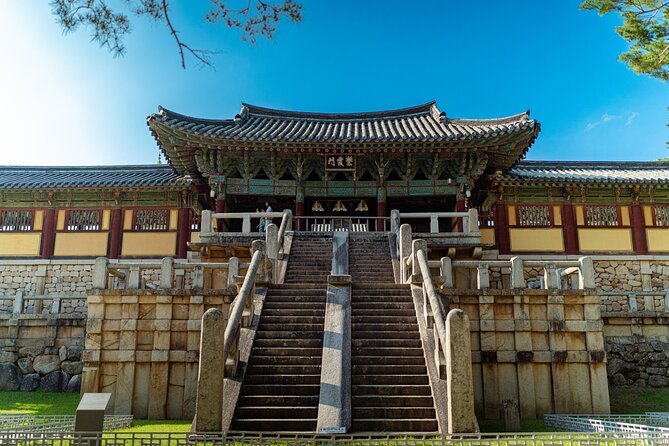
Bulguksa Temple is the strongest opening stop. This UNESCO World Heritage site represents Silla-era Buddhist design, and its stone terraces, stairways, wooden halls, and mountain setting give the tour a serious start.
You have about one hour here, with admission included. That is enough to see the principal areas and hear the guide explain the temple’s role, but it is not enough for a slow study of every detail. I would keep your camera ready and wear shoes that handle uneven walking surfaces.
Bulguksa is not simply an old building placed on a sightseeing route. It shows how religion, royal power, craftsmanship, and natural surroundings worked together in Silla Korea. The temple’s design rewards looking up and down: stonework underfoot, carved details around the buildings, and the wooded setting beyond.
This stop receives the clearest praise from people who felt the later parts of the route were less substantial. If you are choosing the tour mainly for one major cultural site, Bulguksa gives you a good reason to come.
A few more history tours around Korea worth a look
- From Busan: Gyeongju UNESCO World Heritage Guided Day Tour
★ 4.8 · 1,250 reviews - Gyeongju UNESCO World Heritage Guided Day Tour from Busan
★ 5.0 · 660 reviews - Seoul: Evening Dark History, Folklore & Ghost Story Walking Tour
★ 5.0 · 593 reviews
Gyochon Village and Woljeonggyo connect old and newer Gyeongju
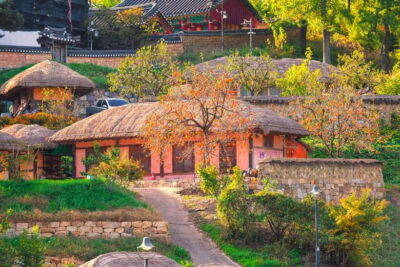
The next stop is Gyeongju Gyochon Traditional Village, near Woljeonggyo Bridge. The area includes hanok houses, stone walls, Gyeongju Hyanggyo, local restaurants, and views toward the bridge.
You get about an hour here. That time allows a walk through the village and a look at the traditional architecture, but it may feel brief if you want to enter several buildings or explore every lane. One criticism of the schedule is that the guide may focus on one house rather than giving you a long, open-ended village visit.
That is useful to know before booking. This is not a slow village-life experience with hours for wandering. It is a compact introduction to an old neighborhood, followed later by a return to Woljeonggyo for nighttime photographs.
The village helps break up the formal monuments. After a temple and before the tombs, you see how traditional homes, school buildings, restaurants, and stone walls shape the city center. I like this contrast because Gyeongju feels less like a string of museum stops and more like a living town with layers of age.
Daereungwon shows the scale of Silla burial grounds
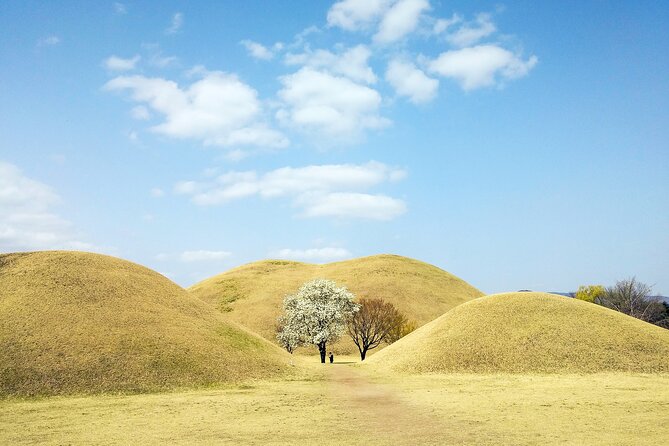
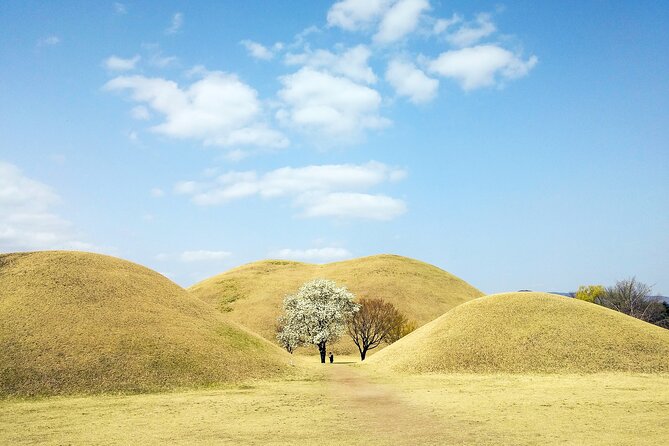
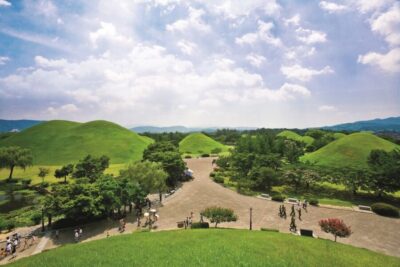
Daereungwon Tomb Complex is one of Gyeongju’s most recognizable areas. Large grassy mounds mark the burial places of Silla kings, queens, and aristocrats. Admission is included, and the scheduled visit lasts about an hour.
The main appeal is scale. The tombs are not underground chambers waiting to be entered, and they do not look like conventional stone mausoleums. They are rounded earthen mounds spread across open ground. For some people, that makes the stop feel quiet and striking. For others, the lack of visible interiors makes it seem less rewarding.
Your guide can give meaning to what you are seeing, including the social rank reflected in the size and placement of the tombs. Without that context, the site can look like a collection of small hills. With it, the area becomes a reminder that the Silla capital was filled with royal power, ceremony, and carefully planned burials.
Bring water here, especially in summer. The open setting offers less shade than the temple, and the heat can build quickly.
Hwangridan-gil adds food, shops, and a break from monuments
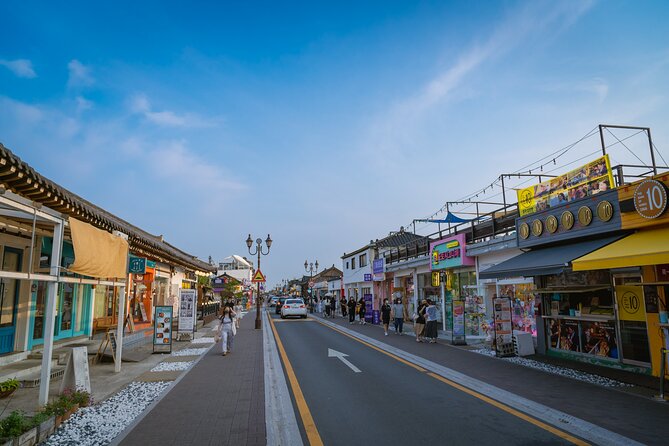
Hwangridan-gil receives the longest scheduled visit, about two hours, and admission is free. The street preserves older buildings from the 1960s while filling them with shops, cafés, and places to eat.
This is the least ancient part of the route, but it gives you a needed change of pace. After several historic sites, you can browse, find food at your own expense, and see how Gyeongju presents its past in a modern town setting.
Do not expect a vast downtown district. It is mainly a street and market area, so the experience depends on how much you enjoy browsing shops and taking a relaxed break. If you prefer archaeological sites to cafés and retail, two hours may feel long. If you need lunch, shade, a drink, or a chance to sit down, this is a useful part of the day.
Meals are not included. The schedule allows time for food here, but the supplied details do not specify a fixed restaurant or meal arrangement. Plan to pay separately and keep an eye on the meeting time.
Same place, a different slice of the past:
- Hanbok Photoshoot and History Tour at Gyeongbokgung Palace
★ 5.0 · 276 reviews - From Seoul: Dae Jang Geum Park Historic K-Drama Set Tour
★ 4.9 · 143 reviews - Gyeongju: UNESCO Heritage Tour Including Bulguksa Temple
★ 4.8 · 104 reviews - Seoul: City Highlights and Historical Experience No Shopping
★ 5.0 · 74 reviews
Donggung Palace and Wolji Pond reward the long day
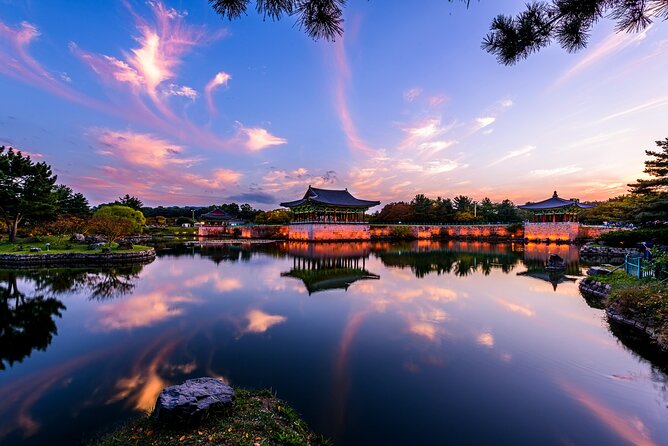
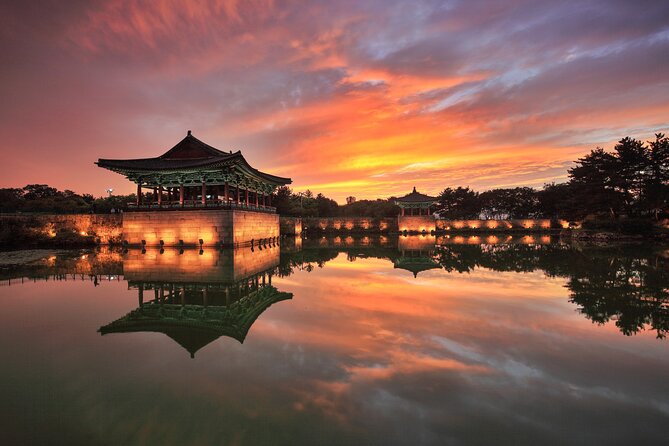
Donggung Palace and Wolji Pond is the late highlight. The site dates to the Unified Silla period and was connected to a palace complex used for important events. Much of the palace no longer survives, but reconstructed structures sit beside the pond.
The water is the main attraction. Reflections of the buildings and lights create a scene that changes as evening arrives. You get about an hour, with admission included, and the timing is well chosen for photographs.
This is also where the day’s long schedule starts to make sense. The tour does not simply take you from one daytime monument to another. It finishes with a different mood, cooler air, and a site designed to be admired across the water.
Keep your expectations realistic. This is an archaeological palace site, not a fully preserved royal residence. Only a few structures have been rebuilt, so the guide’s explanation helps you picture what once occupied the grounds.
Several guides receive special praise for making this stop memorable. Erica is often described as upbeat and helpful with photographs. Kayla is praised for humor and energy, while Hyony receives credit for explaining Korean history and helping solo visitors with pictures. The guide can make a large site feel easier to understand, especially when the visible remains are limited.
Woljeonggyo Bridge is a short but photogenic finale
The final stop is Woljeonggyo Bridge, with about 30 minutes and no separate admission charge. Its traditional form and nighttime lighting look especially good from the water’s edge.
Half an hour is enough for photographs and a short walk, but it is not a full bridge visit. You may need to move efficiently, especially if the group is large. Still, the timing gives you a polished ending after the more serious temple, tomb, and palace sites.
I like this final stop because it offers a simple visual payoff. You do not need a long lecture to appreciate the lights reflected in the water. After a day packed with dates and cultural details, a beautiful night view is a welcome finish.
The guides are a major part of the value
The tour is much more than a bus ride between monuments. The guide determines how much the route feels like a connected story rather than a checklist.
Bada is praised for clear speech, humor, historical detail, heat reminders, and taking good photos. Erica receives repeated praise for positive energy, patience, explanations, and helping solo visitors. Kayla is noted for funny stories, kindness, and keeping the day lively. Hyony is praised for cultural explanations and practical help on a very hot day.
Katrina, Eva, Jino, Jiny, and Noah are also mentioned positively for explanations, organization, and care with the group. Guide assignments can vary, so you should not book expecting one particular person. The consistent pattern is useful: the strongest guides combine historical information with timing, photo help, and reminders to stay hydrated.
There is one important caution. One account describes pressure to tip and to give a five-star score. Tipping is optional, and Korea is generally not a tipping culture. You should decide for yourself based on the service, not because someone tells you what rating to give.
What the $64 price really includes
At $64 per person, the tour offers solid value if you want to see several distant sites without handling transport. Round-trip transfers, a professional guide, and admission to the paid attractions are included.
The value is strongest for first-time visitors staying in Busan. Independent transport may cost less in cash, but it takes planning and gives you less historical explanation. You also risk spending time finding the right connection instead of looking at the sites.
The price does not include meals, drinks, or personal purchases. Hwangridan-gil is your natural chance to buy food, and lunch may be available at additional cost. Bring a payment method and budget for snacks, particularly in warm weather.
The group can reach up to 400 people, although some departures may feel smaller, especially within the English-speaking section. A large group can mean waiting at meeting points and less freedom at each stop. On the other hand, a guide-led structure helps keep the day moving.
Heat, walking, and the practical side of the day
Take the physical demands seriously. One person logged more than 18,000 steps, and the route includes temple paths, open tomb grounds, village streets, and evening sightseeing.
Wear comfortable walking shoes. Carry water, sunscreen, and a hat or parasol in summer. Gyeongju is inland and can feel hotter than Busan, with heat and humidity making the long day more tiring.
The tour requires a moderate level of physical fitness. Service animals are allowed, and the meeting points are near public transportation, but hotel pickup and drop-off are not included. You need to reach one of the designated Busan pickup locations yourself.
Free cancellation is available if you cancel at least 24 hours before the start time. Changes or cancellations inside that window are not accepted for a refund. If poor weather causes the operator to cancel, you are offered another date or a full refund.
Who should book this Gyeongju tour?
I would choose this trip if you have limited time in Busan and want a broad introduction to Silla Korea. It suits first-time visitors, solo visitors who appreciate photo help, families with older children, and anyone who prefers having transport and history handled in one package.
It is less suitable if you dislike long days, need a slow pace, or want to spend half a day at one temple. The one-hour stops can feel rushed, and the tomb complex may not satisfy you if you want buildings you can enter. The two-hour Hwangridan-gil break helps, but the overall schedule remains packed.
Should you book it?
Book it if your goal is to see the main Gyeongju sights in one organized day from Busan. Bulguksa, Wolji Pond, and the illuminated Woljeonggyo Bridge give the outing real payoff, while the guide adds context that can be hard to gain on your own.
Skip it if you want complete independence or an unhurried archaeological visit. For most first-time visitors, though, $64 is a fair price for the transport, admissions, guide, and sheer amount of ground covered. Pack water, accept the long hours, and save your best energy for the evening pond.
FAQ
How long does the Old Korea Thousand History Tour last?
The tour lasts approximately 12 hours. Some schedules run from around 10 a.m. until about 10 p.m., so you should keep the entire day and evening free.
Where does the tour depart from in Busan?
Pickup points include Busan Station, Seomyeon Station, and Haeundae Station. During the April to September schedule, the listed times begin at 10:00 at Busan Station and 10:20 at Seomyeon, followed by Haeundae.
Is transportation included?
Yes. Round-trip transportation from Busan is included. Hotel pickup and drop-off are not included.
Are attraction admission fees included?
Yes. Admission is included for Bulguksa Temple, Gyochon Traditional Village, Daereungwon Tomb Complex, and Donggung Palace and Wolji Pond. Hwangridan-gil and Woljeonggyo Bridge have no separate admission charge.
Are meals included?
No. Meals and personal expenses are not included. Food may be available during the Hwangridan-gil portion at an additional cost.
How much walking is involved?
The tour requires a moderate level of physical fitness. You should expect substantial walking, and one account recorded more than 18,000 steps during the day.
Is the tour suitable in hot weather?
The tour operates in summer, but Gyeongju can be hotter and more humid than Busan. Bring water, sunscreen, and a hat or parasol, and wear comfortable shoes.
What happens if the weather is poor?
If the experience is canceled because of poor weather, you can choose a different date or receive a full refund. For your own cancellation, you must cancel at least 24 hours before the start time for a full refund.
Is the tour available with a mobile ticket?
Yes. A mobile ticket is available, and confirmation is provided when you book.
Just added around Korea
- Busan history and market food tour with local chef★ 5.0 · 58 reviews
- Gyeongju Historic Areas Day Tour with Sky Capsule from Busan★ 5.0 · 18 reviews
- Seoul: Street Photoshoot and Hidden Gem History Walking Tour★ 5.0 · 25 reviews
- Seoul: Suwon Hwaseong & Waujeongsa & Starfield Heritage Tour★ 4.8 · 27 reviews
- Seoul: UNESCO Heritage Palace, Shrine, and More Tour★ 4.8 · 18 reviews
- Gyeongju: UNESCO Heritage Tour Including Bulguksa Temple★ 4.8 · 104 reviews
- From Busan: Echoes of Silla Gyeongju Historical Day Tour★ 4.8 · 55 reviews
- From Seoul: Dae Jang Geum Park Historic K-Drama Set Tour★ 4.9 · 143 reviews
Korea History Tours, compared.
From Busan: Gyeongju UNESCO World Heritage Guided Day Tour
Read our review →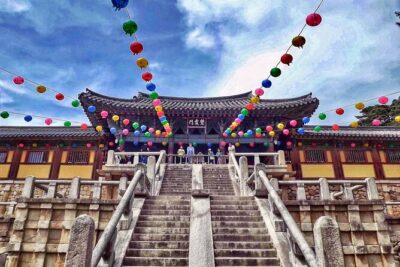
Gyeongju UNESCO World Heritage Guided Day Tour from Busan
Read our review →
Evening Dark History, Folklore & Ghost Story Walking Tour
Read our review →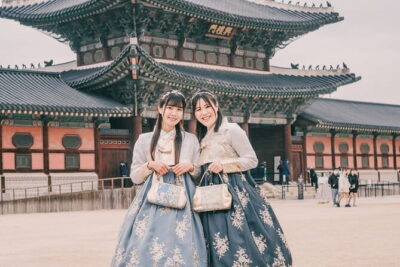
Hanbok Photoshoot and History Tour at Gyeongbokgung Palace
Read our review →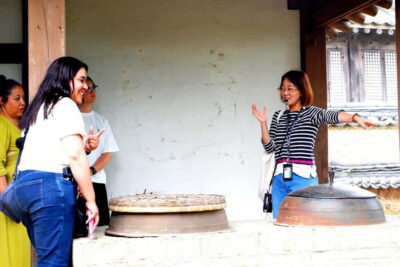
Gyeongju: UNESCO Heritage Tour Including Bulguksa Temple
Read our review →
City Highlights and Historical Experience No Shopping
Read our review →
Busan history and market food tour with local chef
Read our review →Browse the lists this tour appears in